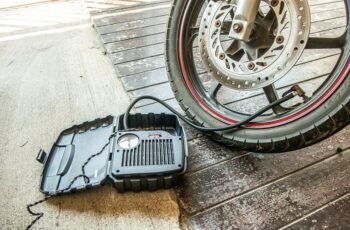
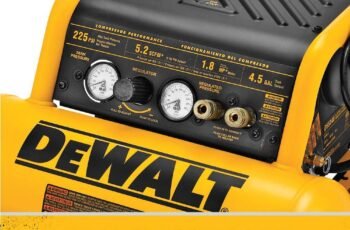
Have we been wishing for a powerful air compressor that doesn’t sound like a jet engine every time we turn it on?
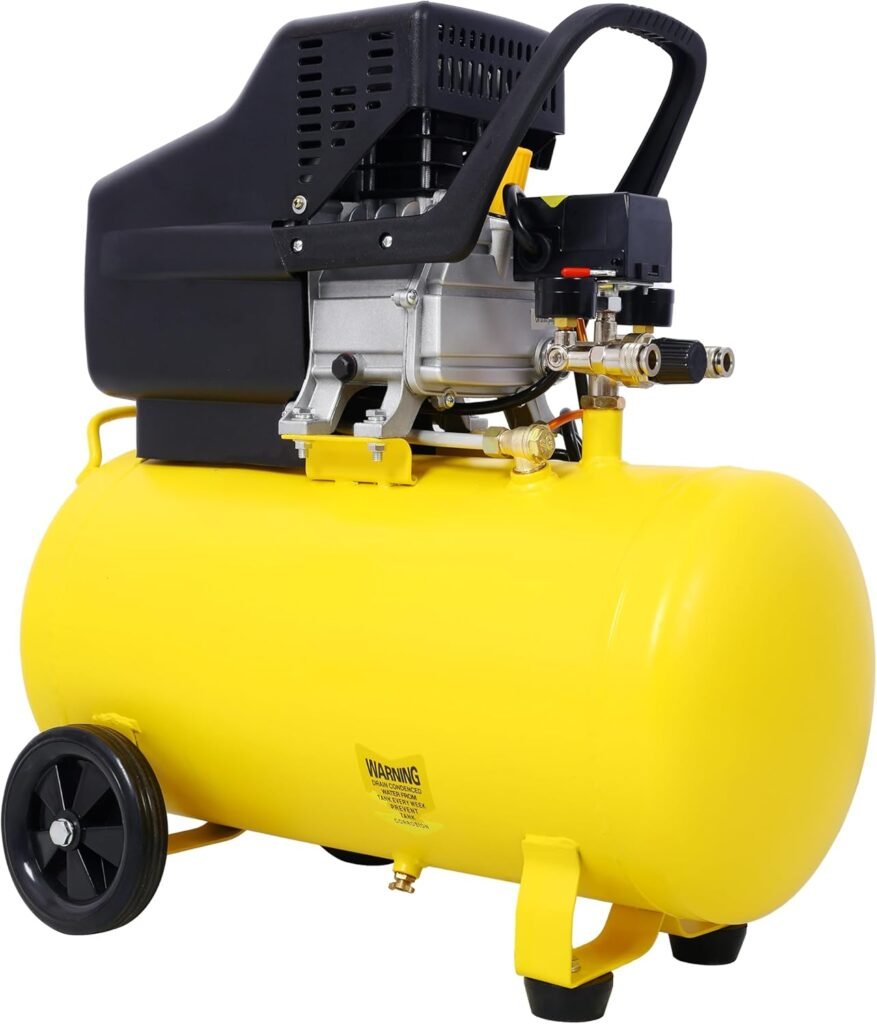

Why This 4.5hp Ultra Quiet Air Compressor Caught Our Attention
When we look for an air compressor, we usually juggle several priorities at once: noise level, power, tank size, portability, and durability. This 4.5hp 13 Gallon Ultra Quiet Air Compressor Horizontal Oil Lubricated Portable Air Compressor with Wheels 115 Psi Adjustable Pressure for Nail and Bolt Connections Staple Fixing Inflation in Yellow promises to check all of those boxes.
We were especially interested because it offers a strong 4.5HP motor, a sizable 13-gallon tank, and ultra-quiet operation—all wrapped in a portable, wheeled design. That combination positions it as a serious option for home workshops, small businesses, and even light professional use.
Key Features at a Glance
Before we get into the deeper details, it helps to lay out the core specifications and benefits. Seeing everything side by side gives us a quick sense of whether this compressor fits our needs.
| Feature | Details |
|---|---|
| Motor Power | 4.5 HP industrial-grade motor |
| Tank Capacity | 13-gallon horizontal tank |
| Maximum Pressure | Up to 115 PSI adjustable pressure |
| Noise Level | Ultra-quiet operation (around 50% less noise than many standard models) |
| Lubrication Type | Oil-lubricated pump for longer life and smoother operation |
| Portability | Horizontal frame with heavy-duty wheels and handle |
| Primary Uses | Nailing, bolt connections, stapling, inflation, light painting, and general air tool support |
| Safety Features | Automatic shut-off and large replaceable automotive-style air filter |
| Ideal Environment | Indoor workshops, garages, and noise-sensitive areas |
| Color | Yellow (high visibility and easy to spot in a busy workspace) |
This quick breakdown shows the compressor is designed as a balance between professional capability and home-shop practicality. It’s not just about power; it’s about usable, quieter power in everyday spaces.
Noise Level: How Quiet Is “Ultra-Quiet”?
Working Around 50% Less Noise
One of the main selling points of this air compressor is its ultra-quiet operation, reportedly around 50% less noise than typical compressors in its class. While exact decibel ratings are not listed in the description provided, the emphasis on quiet running tells us it’s built with noise-sensitive spaces in mind.
We know from experience that conventional compressors can be loud enough to rattle windows and disrupt conversations. With this one, we can still talk at a normal volume, listen to music, or answer a quick phone call while it’s running nearby.
Why Reduced Noise Matters in Real Use
When we run an air compressor indoors—especially in a garage attached to our home—the noise affects more than just us. Family members, neighbors, and even pets feel it. Quieter operation means:
- We can work earlier in the morning or later at night without complaints.
- We can use it in semi-enclosed spaces without feeling overwhelmed by noise.
- We reduce long-term hearing fatigue, especially during extended projects.
For those of us who like to work in short bursts throughout the day, quiet operation is not just a luxury; it becomes a core usability feature.
Power and Performance: 4.5HP and 115 PSI
What 4.5HP Really Means in Our Workshop
A 4.5HP motor places this compressor firmly in the “serious tool” category. This is not a tiny inflator or a basic hobby unit. It’s engineered to deliver enough power to support demanding air tools within its pressure and capacity range.
In practical terms, that 4.5HP motor helps the compressor:
- Build pressure quickly, reducing waiting time between cycles.
- Recover faster when we’re running tools that draw a lot of air.
- Maintain consistent pressure closer to the maximum rating during continuous use.
That kind of power is valuable when we’re running multiple short bursts from nail guns or staplers, or when we’re filling larger tires or using certain spray tools.
115 PSI Adjustable Pressure: What Can We Do With It?
The maximum working pressure of 115 PSI, combined with adjustable output, gives us enough flexibility for a wide range of tools. While some heavy industrial pneumatic tools may need higher PSI, 115 is more than adequate for many common workshop applications.
Here are typical uses we can comfortably expect:
- Nail guns and brad nailers for trim work, framing, or cabinetry
- Staple guns for upholstery, insulation, and light construction tasks
- Inflation of car tires, bike tires, sports equipment, and inflatable items
- Bolt connections and impact tasks within moderate torque ranges, depending on tool requirements
- Light spray painting and finishing work, provided the air consumption of the spray gun matches the compressor’s output
The adjustable pressure control lets us fine-tune the output so we’re not overdriving more delicate tools or underpowering tougher ones. Being able to match pressure to the specific task is key to both safety and consistency.
Tank Capacity: The 13-Gallon Horizontal Design
Why 13 Gallons Makes a Difference
The 13-gallon tank gives us a nice middle ground between small portable units (like 3–6 gallons) and large stationary shop compressors. It’s larger than many common 10-gallon models, and that extra capacity can matter more than we might think at first glance.
With a 13-gallon tank, we get:
- Longer run time before the compressor needs to kick back on.
- Smoother pressure delivery, especially for tools that need a steady supply.
- Fewer interruptions, which makes us more efficient during extended tasks.
For example, when we’re running a nailer during a trim job, we may be able to complete a full section before the motor needs to restart. This makes the work feel more fluid and less stop-and-go.
Horizontal Layout Benefits
The horizontal tank arrangement keeps the unit low, stable, and easier to maneuver. It reduces the risk of tipping and fits well under benches or along walls. In smaller workshops and garages, that horizontal footprint can be easier to store than a tall vertical unit, especially if ceiling height is limited.
We also find that horizontal compressors often sit more naturally in the back of a vehicle or trailer when needed for mobile jobs.
Oil-Lubricated Pump: Efficiency and Longevity
Why Oil-Lubricated Beats Oil-Free for Many Users
This compressor uses an oil-lubricated pump. Compared to oil-free designs, oil-lubricated pumps commonly provide:
- Smoother internal operation
- Reduced wear on moving parts
- Longer potential lifespan with proper maintenance
- Often quieter, more refined sound during operation
The trade-off is that we need to check and change oil periodically. For many of us, that’s a small price to pay for extended durability and better performance, especially if we see this as a long-term investment.
Maintenance Expectations for the Pump
Since the pump is oil-lubricated, we should plan for:
- Regular oil level checks (a quick visual inspection before big projects)
- Periodic oil changes, following the intervals recommended in the product manual
- Monitoring for leaks or unusual sounds, which could indicate worn seals or other issues
This is standard practice for oil-lubricated compressors and generally straightforward. If we’re comfortable maintaining a lawnmower or small engine, we’ll find this routine familiar and manageable.
Portability: Wheels, Handle, and Horizontal Frame
Designed to Move Around Our Space
Even though it’s more substantial than tiny portable units, this compressor is clearly built with mobility in mind. The heavy-duty wheels and integrated handle let us roll it without much effort, and the horizontal frame makes it feel stable during movement.
We can:
- Wheel it from one side of the garage to the other as we shift projects
- Move it closer to a vehicle in the driveway when inflating tires
- Take it from a home workshop to a client site or job area when needed
This level of portability is especially useful for those of us who don’t have a fully fixed, dedicated workspace.
Balancing Size and Maneuverability
A 13-gallon tank and 4.5HP motor mean this will not be as feather-light as a small pancake compressor. However, because of the smart design and wheels, we don’t need to physically lift it often. As long as we have relatively smooth surfaces, moving it is simple.
For many of us, the added weight is a fair trade-off for increased power and capacity. We’re essentially getting a “shop-grade” performance level in a form factor that we can still reposition as needed.
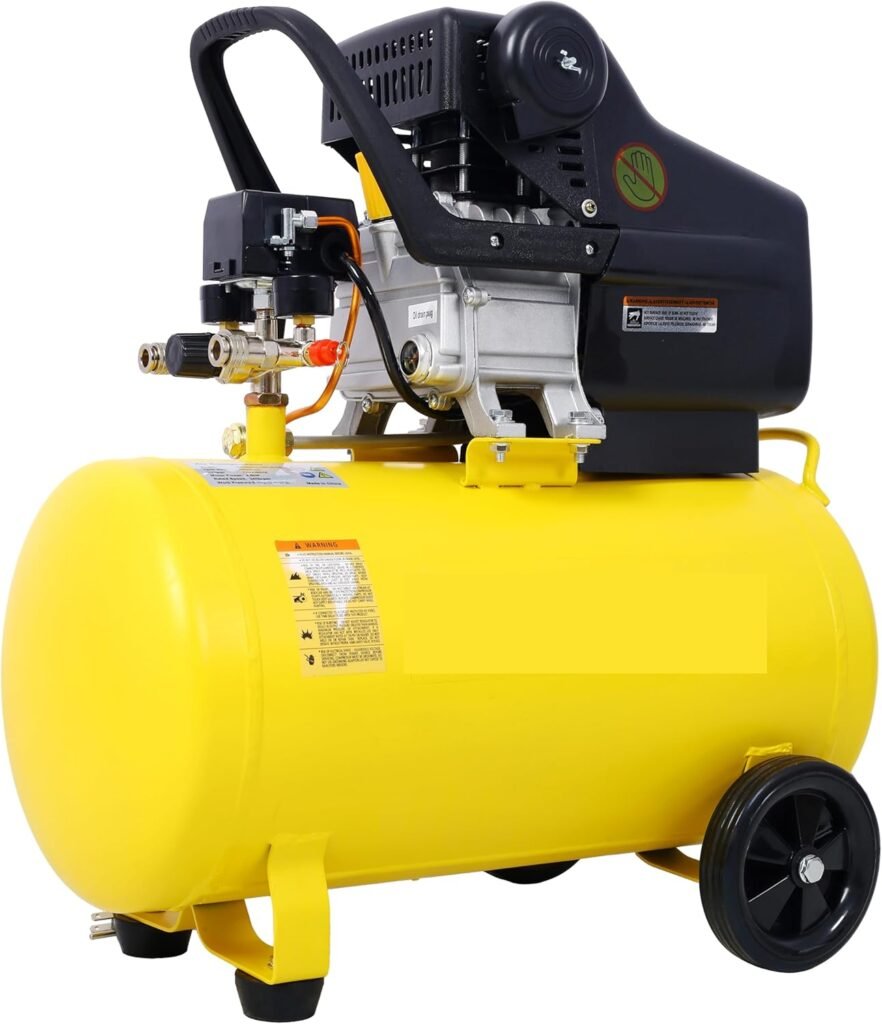

Safety and User-Friendly Features
Automatic Shut-Off: Peace of Mind Built In
We appreciate that this compressor includes an automatic shut-off feature. Auto shut-off typically engages when the tank reaches its preset maximum pressure level, and the motor restarts when the pressure falls below a certain threshold.
This gives us:
- Protection against over-pressurization
- Less need for constant monitoring
- Improved component longevity due to controlled pressure cycles
For those of us who might get absorbed in a project, knowing that the compressor will manage its own pressure limits is reassuring.
Large, Replaceable Automotive-Style Air Filter
The inclusion of a large, replaceable automotive-style air filter is another smart touch. A good air filter helps:
- Protect the compressor from dust and debris
- Improve air quality entering the pump
- Extend pump life and maintain performance
Replacement filters are generally easy to find and simple to swap out. This makes long-term ownership more convenient and helps us keep the compressor running like new with minimal effort.
Everyday Uses: What We Can Actually Do With It
Nailing, Stapling, and Bolt Connections
In the category of construction and woodworking tasks, this compressor is well-equipped. With its 4.5HP motor and 115 PSI max pressure, we can comfortably support:
- Finish nailers and brad nailers for trim, cabinetry, and finish carpentry
- Framing nailers for light framing jobs, decking, and structural projects (within tool specs)
- Staple guns for insulation, roofing felt, and upholstery
- Impact wrenches or ratchets for moderate bolt tightening and loosening, depending on air demand
For typical homeowner or light professional work, this capability covers a lot of ground. It allows us to tackle many renovation and repair projects without renting extra equipment.
Inflation and General Shop Tasks
As a general-purpose shop air source, we can use this compressor for:
- Inflating car tires, truck tires (within PSI limits), and bicycle tires
- Filling sports balls, air mattresses, and inflatable toys
- Blowing dust and debris off workbenches and tools using a blow gun
- Assisting with small painting or staining projects using compatible spray guns
This flexibility is especially helpful in households where we want one main compressor to handle multiple roles, from weekend projects to routine maintenance.
Comparing to Smaller and Larger Compressors
Against Smaller Models (3–6 Gallon Units)
Compared to small pancake or hot-dog compressors typically rated under 2 HP, this 4.5HP 13-gallon compressor offers:
- Significantly more air volume and power
- Less frequent cycling during demanding tasks
- Better support for tools that need sustained airflow
- Quieter operation in many cases, despite its larger size
If we currently own a small portable unit and frequently run into its limitations—for example, waiting for it to catch up with our nailer or not having enough capacity for even moderate spray painting—this 13-gallon compressor is a substantial and meaningful upgrade.
Against Large Stationary Shop Compressors
On the other end, industrial or large stationary compressors might offer:
- Bigger tanks (20–60+ gallons)
- Higher maximum PSI ratings in some cases
- Greater continuous-duty capabilities for heavy commercial use
However, they often:
- Take up more permanent space
- Are louder
- Lack true portability
- Require more complex installation (wiring, placement, sometimes noise abatement)
This 4.5HP 13-gallon unit strikes a practical balance. We get respectable power and capacity without committing to a permanently installed system.
Build Quality and Design Considerations
Sturdy Horizontal Frame and Wheels
The horizontal frame pairs nicely with the heavy-duty wheels. The low center of gravity reduces the chance of tipping when moving it across the floor, and the overall construction feels designed for repeated use in a workshop or garage environment.
We can expect:
- Better stability when rolling it over small floor imperfections
- More confidence when parking it on slightly uneven surfaces
- Fewer worries about accidental tip-overs compared to tall vertical tanks
For anyone who has had to wrestle an unwieldy vertical compressor, this design feels more forgiving and user-friendly.
High-Visibility Yellow Finish
The bright yellow color may seem like a cosmetic detail, but it has practical advantages. In a cluttered or busy workspace:
- The compressor is easy to spot
- It’s less likely someone will accidentally bump or trip over it
- We can visually check for damage, leaks, or dirt on the surface more easily
For shared or multi-user environments, high visibility is a small but helpful safety feature.
Setup and Day-to-Day Use
Getting Started Out of the Box
While the description states it’s “ready to power a wide range of air tools right out of the box,” we should still expect to:
- Check and possibly top off the oil level
- Attach any included fittings or couplers
- Ensure the air filter is properly installed
- Connect to a suitable power source matching the voltage requirements
- Run an initial break-in period if recommended by the manufacturer
These steps are fairly standard for compressors of this type and help ensure a smooth start and long-term reliability.
Using the Adjustable Pressure Controls
Once it’s set up, we simply:
- Plug it in and switch it on.
- Allow it to build tank pressure up to its preset cut-out level (near 115 PSI).
- Adjust the regulator to match our tool’s recommended operating pressure.
- Attach air tools with appropriate quick-connect fittings.
We should always match the tool’s PSI requirements and never exceed the manufacturer’s specified maximum. Proper matching gives us optimal performance and prolongs tool life.
Maintenance: What We Need to Plan For
Routine Maintenance Tasks
To keep this compressor running well, we’ll want to maintain a simple routine:
- Check oil level regularly and add compressor oil as needed
- Change the oil at intervals recommended in the manual
- Inspect and replace the air filter when it appears dirty or clogged
- Drain the tank periodically to remove condensation and prevent rust
- Check hoses and fittings for leaks or wear
Each of these tasks only takes a few minutes when done regularly and can dramatically extend the lifespan of the unit.
Long-Term Durability Expectations
Thanks to its oil-lubricated design, sturdy tank, and automotive-style filter, we can reasonably expect many years of service if we follow basic upkeep. The quiet operation also suggests reduced internal stress and better engineering of moving components, which often correlates with longevity.
Who This Compressor Is Best Suited For
Ideal Users and Environments
This 4.5hp 13 Gallon Ultra Quiet Air Compressor is especially well-suited for:
- Homeowners and DIY enthusiasts who want a step up from small hobby compressors
- Woodworkers and cabinet makers who prioritize quieter operation and steady power
- Auto enthusiasts and small garage users who need reliable air for tires and tools
- Light professional users such as handymen, small contractors, or remodelers working in occupied spaces
If we value a quieter, more capable compressor but don’t need a huge industrial system, this model aligns well with those needs.
When It Might Not Be the Best Fit
We might want to consider other options if:
- We require very high PSI for specialized industrial tools
- We run multiple high-demand air tools simultaneously all day (e.g., large body shops)
- We have extremely limited storage space that cannot accommodate a 13-gallon horizontal unit
In those edge cases, either a larger stationary compressor or a smaller ultra-compact unit might be more appropriate.
Pros and Cons Summary
Main Advantages
Let’s summarize the strongest points we see in this compressor:
- Ultra-quiet operation: Around 50% less noise for more comfortable indoor use.
- Powerful 4.5HP motor: Strong performance for many air tools and tasks.
- 13-gallon tank: More capacity than smaller units for smoother, less interrupted work.
- Oil-lubricated pump: Better efficiency and durability with proper maintenance.
- Portable design: Horizontal frame, heavy-duty wheels, and handle for easy movement.
- Automatic shut-off: Added safety and peace of mind.
- Large replaceable air filter: Improved air quality and pump protection.
Overall, it brings together noise control, power, and usability in a well-balanced package.
Potential Drawbacks
On the other side, we should keep in mind:
- Requires oil maintenance: Not as maintenance-free as some oil-free compressors.
- Larger and heavier than small models: Even with wheels, it’s more substantial.
- 115 PSI limit: Adequate for most uses, but not for high-PSI specialty tools.
For typical workshop and garage users, these trade-offs are often acceptable and even expected at this performance level.
Practical Tips to Get the Most Out of It
Matching Tools to Compressor Capacity
To get the best results, we should:
- Check our air tools’ CFM (cubic feet per minute) requirements at a given PSI.
- Ensure the compressor’s output (listed in the full specs) meets or exceeds those values.
- Avoid running tools continuously at or above the compressor’s maximum capacity for long periods.
By pairing it with suitable tools—like nailers, staplers, moderate-impact tools, and compatible sprayers—we avoid overtaxing the compressor and ensure smoother operation.
Creating a Comfortable, Efficient Workspace
Since this compressor is designed for quieter use, we can comfortably place it:
- In a corner of our garage with enough ventilation
- Under a sturdy workbench, leaving access to controls and drain valve
- Near a wall outlet with an air hose long enough to reach our typical work zones
Adding hose reels or quick-connect manifolds can further improve convenience, making it easy to swap tools without constant trips back to the unit.
Final Thoughts: Is This Compressor Worth It for Us?
If we’re looking for a well-balanced compressor that combines quiet operation, real power, and convenient portability, the 4.5hp 13 Gallon Ultra Quiet Air Compressor Horizontal Oil Lubricated Portable Air Compressor with Wheels 115 Psi Adjustable Pressure for Nail and Bolt Connections Staple Fixing Inflation Yellow stands out as a strong contender.
We gain:
- A genuinely more pleasant noise profile compared to many traditional compressors
- Enough power and capacity for serious DIY and light professional tasks
- A design that supports long-term reliability through oil lubrication and a replaceable filter
- Portability that lets us shift it wherever our next project takes place
For many of us working in garages, basements, small shops, or shared spaces, this unit offers a thoughtful mix of comfort, capability, and convenience. As long as we’re ready to handle simple routine maintenance and we match it with compatible air tools, it can serve as a reliable core of our workshop for years to come.

Disclosure: As an Amazon Associate, I earn from qualifying purchases.