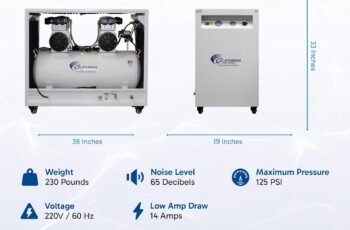
Have we ever wished our dental practice or workshop could stay peaceful and quiet, even while the air compressor is running non-stop in the background?

Understanding What This Compressor Really Offers
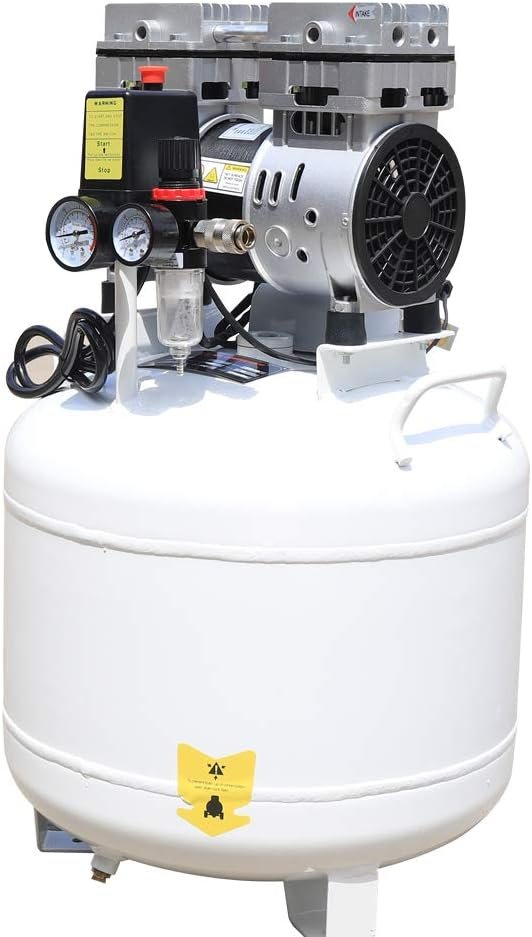
When we look at the 750W 40L min Noiseless Oil Free Oilless Air Compressor Dental Chair Device, 165 (L/min) Electric Quiet Dental Air Compressor, 58 dB Noise Level, we are essentially looking at a compact, quiet, and maintenance-friendly machine designed to support dental chairs and other equipment that need clean, consistent air.
This model focuses on low noise, portability, and reliability, which can make our daily work smoother, calmer, and more professional.
Key Specifications at a Glance
Before we go deeper into real-world performance and usability, it helps to lay out the essential specs in an easy-to-read format. These numbers give us a snapshot of what we are getting and whether it matches our needs in a clinical or workshop environment.
Core Specs and Technical Details
The following table breaks down the main technical information into clear categories so we can quickly match them with our own requirements.
| Feature | Specification |
|---|---|
| Product Name | 750W 40L min Noiseless Oil Free Oilless Dental Air Compressor |
| Capacity (Tank Volume) | 40 L |
| Power | 0.75 kW (750 W) |
| Voltage / Frequency | 110 V / 60 Hz |
| Air Volume (Output) | 165 L/min |
| Working Pressure | 8 psi (noted; typical system may reach higher bar/psi) |
| Noise Level | 58 dB |
| Net Weight | 27 kg |
| Gross Weight | 31 kg |
| Product Dimensions | 41 × 41 × 65 cm (16.14 × 16.14 × 25.59 in) |
| Packing Size | 45 × 45 × 70 cm |
| Power Plug Type | US Delta Plug |
| Type | Oil-free, oilless, quiet dental air compressor |
| Application | Dental chairs, inflation needs, general clean air supply |
These core details already show that this compressor is aimed at users who care about noise, cleanliness of air, and portability rather than extreme industrial power.
Quiet Operation: Working Comfortably at 58 dB
A quiet workspace is not only about comfort; it also affects patient confidence, employee focus, and overall experience. This compressor specifically targets that issue.
How Quiet Is 58 dB Really?
At 58 dB, we are looking at a noise level comparable to a normal conversation, a quiet office, or a background hum. That means we can keep the compressor running in the same room without it becoming the dominant sound.
Because this model includes an air filter muffler with high filtration efficiency and low flow resistance, the sound is softened instead of creating harsh mechanical noise. That can make a big difference in a dental office where patients might already feel anxious.
Oil-Free, Oilless Design: Cleaner Air and Less Maintenance
An oil-free compressor is particularly important in clinical and precision environments where clean air is non-negotiable. This is exactly what we get with this machine.
Why Oil-Free Matters for Dental and Medical Use
With an oil-free / oilless design, the air generated is free from oil mist and contamination. This is especially important when we are using air for:
- Driving dental handpieces
- Powering dental chairs and instruments
- Cleaning surfaces or equipment where oil residue would be undesirable
Because there is no need to add or change oil, our maintenance routine becomes simpler. We spend less time servicing and more time working with confidence that the air is cleaner and more suitable for sensitive applications.
Capacity and Performance: 40L Tank and 165 L/min Air Volume
Performance is where we check if this compressor will actually keep up with our daily requirements. The numbers here aim for a balance between compact size and dependable output.
What 40L Capacity Means for Daily Work
The 40-liter tank gives us a good buffer of compressed air. In practice, this means:
- Fewer start–stop cycles compared to very small compressors
- More stable air flow for continuous or intermittent tools
- Better responsiveness when multiple small instruments operate in sequence
For one or two dental chairs or light workshop tasks, 40 liters is a comfortable mid-size option that does not dominate the room but still offers practical capacity.
165 L/min Air Volume: Matching Tools and Needs
With an air-volume of 165 L/min, this compressor can support:
- Dental chairs and common dental tools
- Light to moderate pneumatic tools
- Inflation tasks (tires, equipment, inflatable items)
For demanding industrial applications with many tools running at once, 165 L/min may not be enough. But for targeted clinical use or a small studio or lab, this performance level generally covers routine needs.
Safety and Protection Features
A compressor that runs regularly must be safe, reliable, and protected against overheating or electrical issues. This model comes with some thoughtful features in that area.
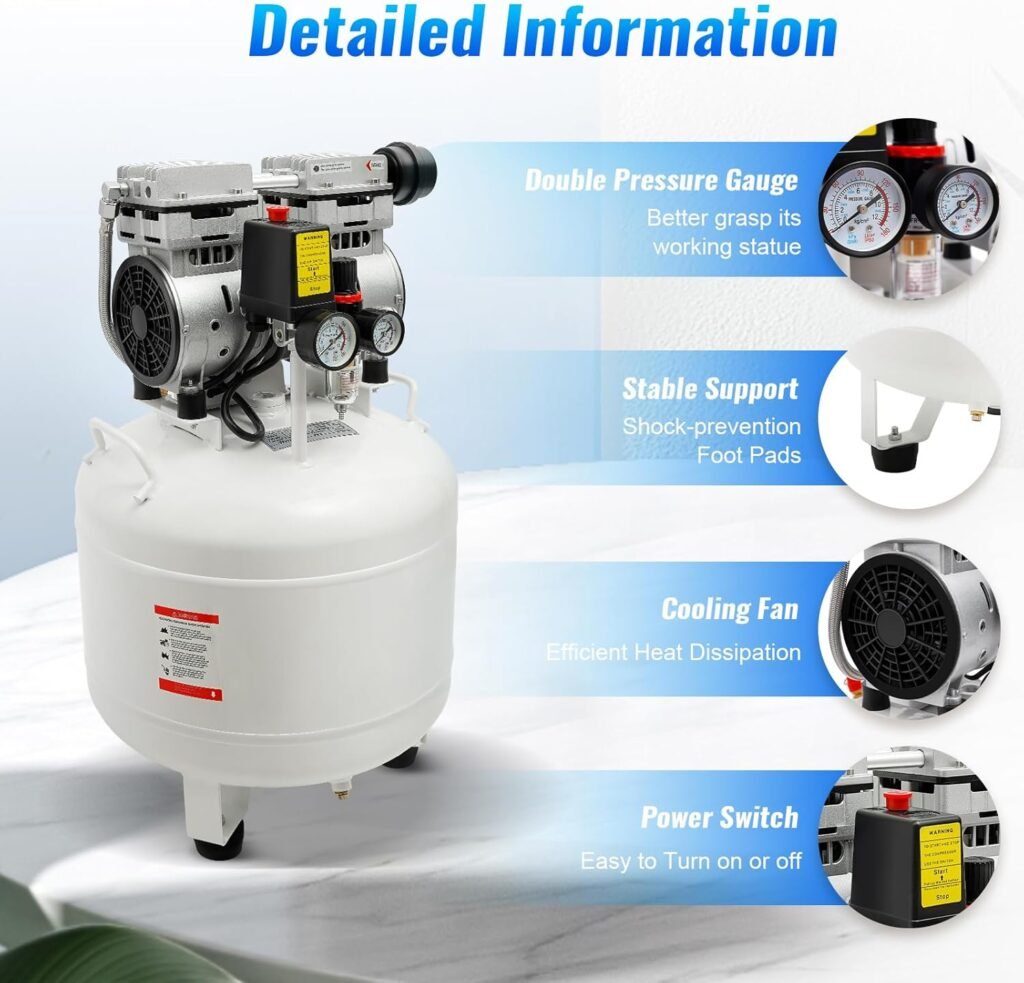
Large-Caliber Heat Dissipation
The compressor incorporates a large caliber heat dissipation design, which increases airflow around the motor and other components. As a result:
- Heat escapes more quickly
- The motor is less likely to overheat
- The overall system can run for longer periods with more stability
Fast heat dissipation supports efficiency and extends the working life of the compressor, especially when we run it multiple times a day or for extended sessions.
Solenoid Valve Protection
The solenoid valve protects the motor, especially during sudden power-off situations. When the power is cut off:
- The solenoid valve helps release pressure safely
- The motor avoids the stress that can come from trapped pressure or abrupt stop conditions
- We reduce the risk of internal component damage
This contributes to longer life for the motor and more dependable restarts when power returns or when we turn the unit back on after a break.
Noise Control: Air Filter Muffler and Design
Silencing a compressor is not only about enclosing it; it also involves managing how air enters and exits. This machine addresses that through specific parts.
Air Filter Muffler for Quieter Operation
The compressor uses an air filter muffler with:
- High filtration efficiency
- Low flow resistance
This means:
- Air is cleaned as it enters
- The flow is smoothed, which reduces turbulence and sound
- The system operates more quietly at about 58 dB without severely reducing air volume
The manufacturer highlights that this filter does not require maintenance, which simplifies our upkeep tasks while still delivering a good mute effect.
Portability and Space Requirements
For many of us, space is valuable, and moving equipment around should not feel like a major workout. This unit addresses both size and weight reasonably well.
Size and Footprint
The compressor measures approximately 41 × 41 × 65 cm (16.14 × 16.14 × 25.59 in). In real terms, this means:
- It takes up less floor space than a typical small office chair
- It can fit in a corner, under a counter, or beside existing cabinets
- It is compact enough for small clinics or workshops
The packing size of 45 × 45 × 70 cm suggests that even transport and storage are manageable.
Weight and Handling
With a net weight of 27 kg and gross weight of 31 kg, this compressor is not feather-light, but it is still portable for two adults or one person with a cart. Once placed:
- It stays stable due to its weight
- It feels solid and sturdy in everyday use
- We can reposition it if our room layout changes
This balance between portability and stability is practical for settings where layout may be adjusted over time.

Power Requirements and Plug Type
Power compatibility is straightforward but important, especially if we are in North America or regions using similar standards.
Voltage, Frequency, and Plug
The compressor operates at 110 V / 60 Hz, which fits standard US electrical systems. It uses a US Delta Plug, making it plug-and-play for most outlets in the United States, Canada (with compatible sockets), and other regions with similar standards.
We should ensure that:
- The outlet we use can handle the 0.75 kW (750 W) load
- We avoid overloading a power strip with many other high-draw devices
Having a dedicated or appropriately rated circuit is always a good practice when running motor-driven equipment like compressors.
Instructions for Use and Motor Protection
Correct usage can greatly extend the life of our compressor. The manufacturer includes a specific instruction about the shutdown procedure.
Proper Switch-Off Procedure
We are instructed to:
- First turn off the air compressor switch
- Then unplug the power supply
If we unplug first while the compressor is under load, the sudden loss of power with ongoing airflow can stress the motor and internal parts. Over time, this can:
- Increase the risk of motor damage
- Shorten overall service life
By following the recommended order—switch off, then unplug—we help preserve the integrity of the motor and make full use of the built-in safety features, such as the solenoid valve.
Real-World Use Cases and Applications
Although designed especially with dental environments in mind, this compressor can serve a variety of roles wherever quiet, clean air is necessary.
Dental and Medical Environments
For dental chairs and equipment, this compressor is a natural fit because:
- The oil-free design supports clean air for handpieces and tools
- The quiet 58 dB operation helps keep patients calm
- The 40 L tank and 165 L/min flow provide enough capacity for typical chair-side operations
We can run it in the same room as the dental chair, in a nearby utility room, or in a back office, depending on space and layout.
Laboratories, Studios, and Workshops
In non-clinical settings, the compressor also works well for:
- Small laboratories needing clean air for instruments
- Art or craft studios using airbrushes or delicate pneumatic tools
- Workshops that want a quieter compressor for light tools and inflation
Its quietness and oil-free operation keep the space more pleasant and reduce smell or residue associated with oiled compressors.
Inflation and General Household / Small Business Use
The product description also mentions it being ideal for inflation needs. That includes:
- Vehicle and bicycle tires
- Inflatable beds, rafts, or sports equipment
- Light pneumatic devices that need periodic pressurization
While it may be more sophisticated than a basic consumer inflator, having a reliable, quiet unit in a small garage, shop, or business can be a long-term asset.
Reliability, Durability, and Long-Term Use
We always want to know if a compressor will last and how much attention it will demand from us over the years.
Components Designed for Longevity
Several features serve longevity:
- Oil-free technology reduces messy maintenance and risk of lubrication failures
- Large caliber heat dissipation protects against overheating
- Solenoid valve safeguards the motor during power interruptions
- Filter muffler does not require frequent maintenance
Combined, these elements aim to make the compressor both low-maintenance and durable, provided we follow the basic operating guidelines.
Expected Wear and Basic Care
Like any compressor, we can extend its life by:
- Keeping it in a well-ventilated area to support heat dissipation
- Avoiding overloading by running too many high-demand tools at once
- Respecting the on/off and unplugging procedure
- Ensuring power supply matches the specified 110 V / 60 Hz standard
By treating it as a serious piece of equipment rather than a disposable gadget, we can expect stable performance over a long working life.
User Comfort and Experience
Beyond technical performance, user comfort matters as much as decibels or liters per minute. This compressor tries to make daily use straightforward and pleasant.
Noise Perception and Working Atmosphere
Because it runs at 58 dB, we can:
- Hold conversations near it without shouting
- Treat it as background noise, similar to an air conditioner
- Maintain a professional and calm atmosphere, especially in clinical settings
This is particularly important in dental clinics, where sudden loud compressor sounds could unnervingly remind patients of harsh tools or treatments.
Operational Simplicity
We benefit from:
- Standard power plug and clear on/off switching
- No oil to check or replace
- No complex filter maintenance, as the muffler filter is designed for low-maintenance use
This simplicity reduces daily friction and helps staff operate the compressor with minimal training.
Pros and Cons: Honest Perspective
No product is perfect for everyone. It helps to lay out strengths and potential limitations clearly so we can make an informed decision.
What We May Appreciate Most
Some key advantages include:
- Very quiet operation (~58 dB) suitable for clinics and offices
- Oil-free, oilless design for clean air and reduced maintenance
- 40 L tank providing a solid air reserve
- 165 L/min air-flow adequate for dental chairs and light tools
- Safety features such as solenoid valve and enhanced heat dissipation
- Compact footprint that fits easily into small spaces
- US Delta plug and 110 V / 60 Hz compatibility for standard North American use
These points make the compressor especially attractive for dental professionals, small labs, and users who want quiet, low-maintenance performance.
Things We Should Consider Carefully
On the other side, there are some considerations:
- The stated 8 psi in the product details seems low for typical compressor systems; it may reflect a simplified or partial specification rather than the full maximum pressure in bar/psi that we usually see. We may want to confirm the actual working pressure range with the seller or documentation.
- For heavy industrial use or multiple high-demand pneumatic tools, the 165 L/min output may not be enough.
- The 27 kg weight is portable, but still substantial enough that we might want a cart or a second person to move it comfortably over longer distances or stairs.
These points do not negate the strengths but help us align expectations with real-world needs.
Suitability for Different Users
Choosing the right compressor depends heavily on who we are and what we use it for. This model is tailored more for certain types of users than others.
Ideal Users
This compressor will likely be a strong match for:
- Dental clinics with one or more chairs needing reliable, quiet air supply
- Dental labs using air tools and needing oil-free air
- Medical or paramedical offices requiring clean compressed air for instruments
- Home or small-business workshops that prioritize low noise and cleanliness
- Studios and labs where odor-free, oil-free air is essential
In these contexts, the balance between quietness, cleanliness, and moderate capacity is especially valuable.
Less Ideal Situations
Those who might need to think twice:
- Large industrial shops running multiple heavy pneumatic tools continuously
- Environments requiring very high pressure or air volume beyond the 165 L/min output
- Users who want an ultra-light, handheld inflator rather than a serious compressor
For such cases, either a larger industrial compressor or a smaller portable inflator might be more appropriate.
Customer Support and After-Sales Service
The description notes that if we have any questions or quality problems, we are invited to contact the seller or provider.
Why Support Matters
Even a well-built compressor may need:
- Clarification on installation or power compatibility
- Assistance with troubleshooting noise, pressure, or startup behavior
- Replacement of parts under warranty if any quality issue emerges
Having an open invitation to reach out for help contributes to confidence in the purchase and offers reassurance that we are not left alone if something goes wrong.
Practical Tips for Getting the Best Out of This Compressor
To make the most of the 750W 40L min Noiseless Oil Free Oilless Air Compressor Dental Chair Device, we can follow some practical recommendations in day-to-day use.
Setup Tips
When we first set it up, we should:
- Place it on a stable, level surface to reduce vibration
- Ensure good ventilation around the unit for optimal heat dissipation
- Use a properly rated outlet and avoid daisy-chaining power strips
- Check hoses and connectors for secure, airtight fitting
This foundation helps the compressor perform as intended right from the start.
Operating and Maintenance Habits
Over time, we can protect our investment by:
- Respecting the switch-off before unplugging rule
- Listening for unusual sounds that might signal a problem
- Keeping dust and debris away from air intakes and cooling areas
- Periodically checking for hose wear or fitting leaks
Even with a low-maintenance design, a bit of attentive care can significantly extend the compressor’s working life.
Comparison with Typical Compressors in Its Class
To put this unit into perspective, it helps to compare it conceptually with other common compressor types.
Compared to Traditional Oiled Compressors
Compared to standard oiled models, this compressor:
- Produces cleaner air, better suited to dental and medical use
- Avoids oil changes and oil leak risks
- Often runs quieter, especially with the integrated muffler system
However, oiled compressors can sometimes offer higher durability for very heavy industrial use; for our targeted dental and lab applications, oil-free is usually the better choice.
Compared to Small Consumer Inflators
Compared to simple consumer portable inflators, this unit:
- Offers a much larger 40 L tank
- Delivers higher and more consistent 165 L/min output
- Is quieter and more stable for long-term repeated operation
Yet, small inflators are lighter and cheaper; they are better suited for occasional tire inflation but not for running dental or lab instruments.
Our Overall Impression
Looking at the features, specifications, and intended usage, we see the 750W 40L min Noiseless Oil Free Oilless Air Compressor Dental Chair Device, 165 (L/min) Electric Quiet Dental Air Compressor, 58 dB Noise Level as a solid choice for anyone who needs quiet, clean, and dependable air in a small to medium-scale professional setting.
Why We Would Choose It
We would lean toward this compressor if:
- Our priority is maintaining a quiet, calm environment
- We need oil-free air for dental or precision tasks
- We have limited space and want a compact footprint
- We prefer a unit that keeps maintenance simple and does not require constant attention
In those circumstances, this machine strikes a practical balance between performance, noise control, and user comfort.
Final Thoughts
We see this compressor as a specialized tool that fits particularly well in dental clinics, labs, and studios where silence, cleanliness, and reliability matter more than extreme industrial capacity. With its 40 L tank, 165 L/min flow, 58 dB noise level, and oil-free design, it is positioned as a quiet partner that can support our work day after day without drawing too much attention to itself.
By following the operating instructions and giving it a suitable home in our workspace, we can expect it to provide steady, clean air and contribute to a more comfortable, professional environment for both us and the people we serve.

Disclosure: As an Amazon Associate, I earn from qualifying purchases.