It’s astonishing how quickly an air compressor can fail to build pressure, disrupting your entire operation. Often, the cause isn’t obvious but can stem from a variety of complex issues like leaks, faulty valves, or worn mechanical parts. Identifying the root of the problem requires precise troubleshooting and understanding of the system’s components. If your compressor isn’t reaching the desired pressure, the key to fixing it lies in systematically examining each potential failure point.
Key Takeaways
- The pressure switch may be malfunctioning, preventing proper activation or deactivation of the compressor.
- Leaks in hoses, fittings, or seals can cause air to escape, preventing pressure buildup.
- Mechanical wear on pistons, valves, or seals reduces compression efficiency, leading to low pressure.
- Blockages in filters or intake vents restrict airflow, hindering pressure formation.
- Faulty unloader valves or relief valves can prevent proper pressurization or cause pressure to release prematurely.
What Causes Your Air Compressor to Fail Building Pressure?
When an air compressor fails to build pressure, several mechanical and operational issues could be at fault. The most common cause is a malfunctioning pressure switch, which inaccurately signals when to shut off or activate, preventing proper pressure buildup. Additionally, a faulty unloader valve can hinder the compressor’s ability to pressurize by not releasing trapped air. Mechanical problems such as worn piston rings, cylinder walls, or valves compromise compression efficiency, leading to inadequate pressure. Blockages in the intake filter or condenser can restrict airflow, reducing overall performance. Ultimately, issues with the motor, like electrical faults or inadequate power supply, can impede compressor operation, preventing pressure from reaching desired levels. Identifying these root causes is essential for effective troubleshooting and repair.
How Do Leaks and Seal Failures Impact Pressure?
Leaks and seal failures directly compromise the compressor’s ability to maintain or increase pressure by allowing compressed air to escape or preventing a proper seal from forming. When leaks occur, pressurized air escapes through small openings in hoses, fittings, or valves, resulting in pressure loss. Seal failures, such as damaged piston rings or faulty gaskets, disrupt the airtight environment necessary for efficient compression. These issues cause a continuous drop in pressure as the compressor works harder to compensate for air loss. Consequently, the compressor cannot build or sustain the required pressure levels, leading to inadequate performance. Identifying and sealing leaks promptly, along with replacing failed seals, is essential to restore proper pressure dynamics and guarantee maximum compressor operation.
Is the Pressure Switch or Relief Valve the Problem?
A malfunctioning pressure switch or relief valve can prevent your compressor from building pressure effectively. The pressure switch regulates when the compressor turns on or off based on pressure thresholds, while the relief valve prevents over-pressurization. If either component fails, pressure buildup may be hindered or prematurely released.
| Component | Potential Issue |
|---|---|
| Pressure Switch | Stuck open or closed, misadjusted |
| Relief Valve | Stuck open, debris blockage |
| Symptoms | No pressure increase, constant release |
| Testing Method | Manually actuate, check for leaks |
| Solution | Repair or replace faulty components |
Diagnosing these parts guarantees proper pressure regulation, avoiding ineffective compression.
Could Mechanical Wear or Damage Be the Culprit?
Mechanical wear or damage to compressor components can considerably impair pressure buildup, even if the pressure switch and relief valve are functioning correctly. Over time, components such as pistons, cylinders, valves, and seals experience friction, corrosion, or fatigue, reducing their efficiency. Worn piston rings or damaged valves can lead to inadequate sealing, allowing compressed air to escape and preventing pressure from reaching desired levels. Similarly, compromised bearings or damaged cylinders may cause misalignment or excessive vibration, hindering compression cycles. These issues diminish the compressor’s ability to generate and sustain pressure. Identifying worn or damaged parts requires close inspection of internal components, looking for scoring, cracks, or deformation. Addressing such damage often involves replacing affected parts to restore proper compression and pressure buildup.
How Can You Troubleshoot and Fix Common Pressure Issues?
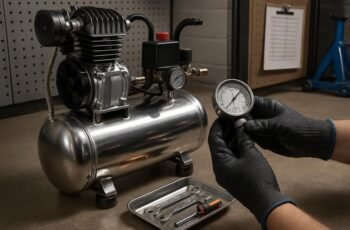
To effectively troubleshoot and fix common pressure issues in an air compressor, we must systematically evaluate each component involved in the compression process. Begin by inspecting the intake filter for clogs or debris, as restricted airflow reduces pressure. Next, check the pressure switch settings and operation; a malfunctioning switch can prevent proper system pressurization. Examine the compressor’s valves and seals for leaks or damage, which can cause pressure loss. Also, verify the integrity of hoses and connections for leaks or obstructions. If the compressor runs but fails to build pressure, assess the piston or rotor for wear or damage. Finally, ensure the pressure relief valve is functioning correctly and not releasing excess pressure prematurely. Addressing these areas with precision helps identify and resolve most pressure-related issues efficiently.
Frequently Asked Questions
How Often Should I Perform Maintenance on My Air Compressor?
We recommend inspecting and replacing filters, draining moisture traps, and checking oil levels monthly, with thorough servicing every 3 to 6 months, depending on usage intensity, to guarantee peak performance and prevent pressure issues in your air compressor.
Can Temperature Affect My Air Compressor’s Pressure Buildup?
Temperature markedly influences pressure buildup; higher temperatures diminish air density and compressor efficiency, hindering pressure development, while lower temperatures elevate air density, potentially enhancing pressure; maintaining ideal ambient temperatures guarantees accurate pressure regulation and compressor performance.
What Type of Oil Is Best for Lubricating My Compressor?
We recommend using the manufacturer’s specified compressor oil, typically a high-quality, synthetic or mineral-based oil with the correct viscosity. Regularly check and change the oil to guarantee ideal lubrication, cooling, and performance of your compressor.
How Do I Choose the Right Pressure Regulator for My System?
We select the right pressure regulator by matching its maximum pressure rating to our system’s required pressure, considering flow capacity, regulator type, and compatibility with existing components, ensuring precise control and safety for ideal compressor performance.
Are There Safety Precautions I Should Follow When Repairing Compressors?
Yes, we always wear protective gear, disconnect power before repairs, release stored pressure, and follow manufacturer instructions meticulously. We guarantee proper ventilation and avoid high-pressure components, minimizing risks of injury or equipment damage during compressor repairs.
Conclusion
When we troubleshoot pressure issues, it’s like tuning a finely crafted instrument—each component must function perfectly for best sound. We’ve seen compressors with minor leaks or worn valves that, when addressed, restore full pressure, much like tuning a guitar string brings harmony. Regular maintenance and careful inspection help us avoid these pitfalls. Ultimately, understanding each part’s role ensures our equipment operates efficiently—keeping us productive and our systems in tune for the long haul.