When selecting an air compressor, understanding the fundamental differences between oil-free and oil-lubricated models is essential. Each type offers distinct advantages and trade-offs in performance, maintenance, and application suitability. As we examine these options, it becomes clear that choosing the right compressor depends on specific operational needs and environmental considerations. Exploring these differences thoroughly can help guarantee maximum long-term efficiency and reliability for your particular use case.
Key Takeaways
- Oil-free compressors produce cleaner air, ideal for sensitive environments, while oil-lubricated models offer longer lifespan and better efficiency.
- Oil-free units require more frequent maintenance of filters and seals, whereas oil-lubricated compressors need regular oil changes.
- Oil-free compressors operate more quietly, making them suitable for noise-sensitive settings.
- Oil-lubricated compressors generally have higher initial costs but lower operating expenses due to durability.
- Environmental impact favors oil-free models, as they eliminate risks of oil leaks and disposal issues.
What Are the Key Differences Between Oil-Free and Oil-Lubricated Compressors?
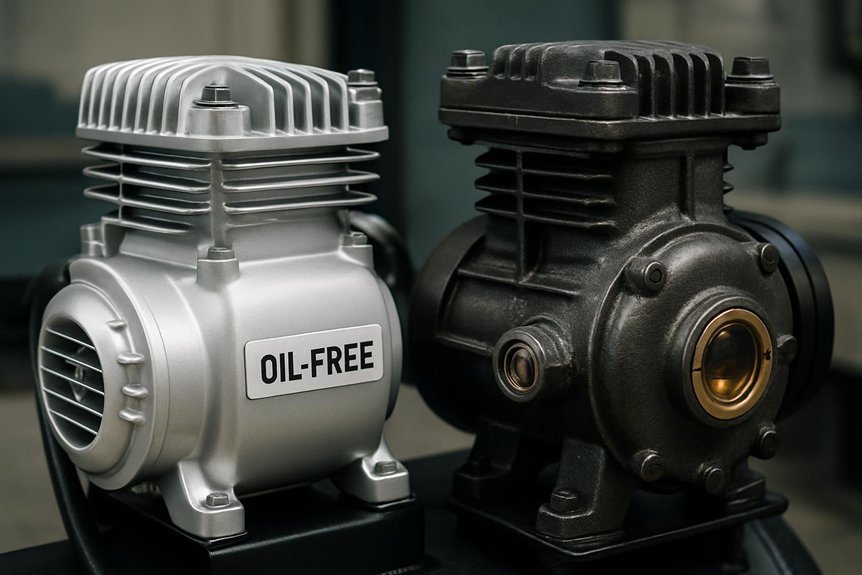
Understanding the fundamental differences between oil-free and oil-lubricated compressors is essential for selecting the right equipment for specific applications. The core distinction lies in lubrication technology: oil-lubricated compressors use oil to reduce friction and wear, enhancing longevity and efficiency. Conversely, oil-free compressors employ alternative lubrication methods, such as Teflon or dry-running technology, eliminating the need for oil. This difference impacts environmental impact profoundly; oil-free models produce cleaner, oil-free air with minimal contamination risks, making them suitable for sensitive environments. Oil-lubricated compressors, while often more durable, pose potential environmental concerns due to oil leaks and disposal. Understanding these technical and environmental factors helps in making informed decisions aligned with operational needs and sustainability goals.
Why Choose an Oil-Free Air Compressor for Your Home or Workplace?
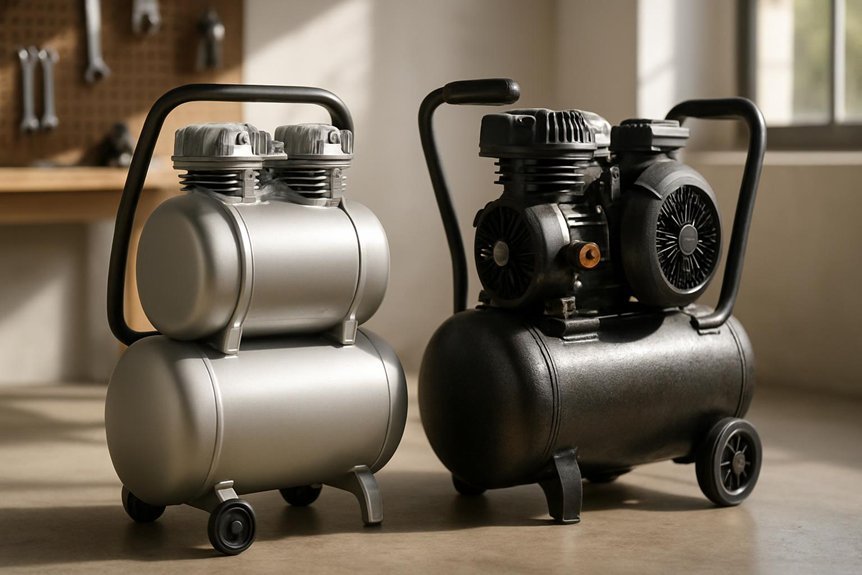
Choosing an oil-free air compressor for your home or workplace offers several practical advantages, primarily due to its ability to produce clean, contaminant-free air without the risk of oil contamination. This enhances safety and reduces the need for additional filtration, improving overall system reliability. From an energy efficiency perspective, oil-free models often operate with lower maintenance requirements and less downtime, leading to more consistent performance and reduced power consumption over time. Additionally, their minimal environmental impact is significant; without oil lubrication, there’s no risk of oil leaks or disposal concerns, making them more eco-friendly. This combination of high energy efficiency and reduced environmental footprint makes oil-free compressors especially suitable for environments where air purity and sustainability are priorities.
What Are the Main Advantages of Oil-Lubricated Compressors?
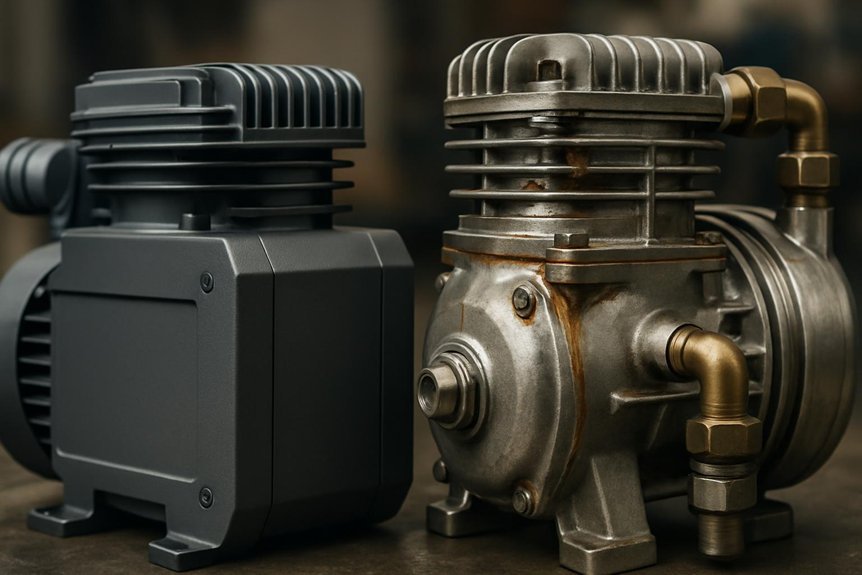
Oil-lubricated compressors offer distinct advantages that often make them the preferred choice for demanding industrial applications and continuous operation. Their lubrication system reduces friction and wear, enhancing durability and efficiency over long periods. This reliability minimizes downtime and maintenance costs, ensuring consistent performance. From an environmental impact perspective, these compressors typically produce lower oil aerosol emissions, but lubricant disposal remains a critical concern. Proper handling and disposal of lubricants are essential to prevent soil and water contamination. Additionally, the use of high-quality lubricants can improve compressor efficiency, reducing energy consumption. Overall, oil-lubricated compressors deliver superior operational longevity and performance, but they require careful management of lubricant disposal to mitigate environmental risks.
How Do Maintenance Needs Differ for Oil-Free and Oil-Lubricated Models?
Because oil-free compressors lack a lubrication system, their maintenance primarily centers on ensuring the integrity of non-lubricated components, such as seals and filters, which must be regularly inspected and replaced to prevent contamination and maintain airflow quality. Maintenance frequency for oil-free models tends to be higher, as filters and seals require consistent monitoring to prevent airflow degradation. In contrast, oil-lubricated models demand less frequent attention to seals, but they require regular oil changes, involving specific lubricant types like synthetic or mineral oils. These lubricants must be carefully selected based on compressor specifications to optimize performance. Overall, oil-free compressors focus on component cleanliness and filter replacement, while oil-lubricated models emphasize periodic oil maintenance, each with distinct schedules influenced by their lubrication requirements.
Which Type Offers Better Durability and Longevity?
While both oil-free and oil-lubricated compressors are engineered for durability, oil-lubricated models generally offer a longer lifespan by reducing wear on moving parts through continuous lubrication. This ongoing lubrication minimizes metal-to-metal contact, enhancing material compatibility and reducing the risk of premature component failure. Oil-lubricated units tend to withstand higher operational stresses, making them suitable for demanding applications. However, their environmental impact is higher due to oil consumption and potential leaks, which can pose disposal challenges. Conversely, oil-free compressors, with fewer moving parts and no oil, often have lower maintenance needs but may experience increased wear over time, affecting overall longevity. Thus, when evaluating durability, one must weigh material compatibility and environmental considerations alongside operational demands.
Is Noise Level a Consideration When Choosing Between These Compressors?
Noise levels are a significant factor to contemplate when selecting between oil-free and oil-lubricated air compressors, especially in environments where noise pollution can impact safety, productivity, or comfort. Noise reduction plays a crucial role in operational settings, influencing worker well-being and communication. Oil-free compressors typically operate more quietly due to their design, which minimizes moving parts and eliminates the need for oil circulation that can generate additional noise. Sound insulation features further enhance noise reduction, particularly in industrial or shared spaces. When choosing, it’s essential to consider how sound insulation can mitigate noise transmission, ensuring compliance with workplace regulations and improving overall environment quality. Ultimately, evaluating noise levels helps identify the compressor that best aligns with your noise management needs.
How Do Cost and Operating Expenses Compare for Both Types?
When comparing the costs and operating expenses of oil-free versus oil-lubricated air compressors, it’s essential to analyze both initial investment and ongoing maintenance. The cost comparison typically shows that oil-free compressors have higher upfront costs due to specialized components and materials designed for contaminant-free operation. Conversely, oil-lubricated units often have lower initial purchase prices. However, operating expenses differ markedly: oil-lubricated compressors incur ongoing costs for oil changes, filter replacements, and potential repairs, which can add up over time. Oil-free compressors generally have higher energy efficiency and lower maintenance requirements, reducing long-term operating expenses. Hence, a thorough cost comparison must weigh initial investment against projected maintenance and energy costs to determine the most economical option for specific applications.
Which Compressor Is Best Suited for Your Specific Application?
Choosing the right compressor depends heavily on your specific application requirements, including factors like air quality, duty cycle, budget, and maintenance capacity. For applications demanding ultra-pure air, oil-free compressors are advantageous due to their minimal risk of contamination, supporting better air quality standards. Conversely, oil-lubricated units often provide higher energy efficiency and durability for continuous, heavy-duty operations, which can reduce long-term operational costs. When evaluating environmental impact, oil-free compressors typically generate fewer pollutants, aligning with eco-friendly initiatives. However, oil-lubricated models may have a lower initial cost but could contribute more to environmental concerns through potential oil emissions. Ultimately, selecting the appropriate compressor hinges on balancing energy efficiency, environmental impact, and application-specific performance needs.
Frequently Asked Questions
Are Oil-Free Compressors Suitable for Industrial Heavy-Duty Use?
We believe oil-free compressors are suitable for heavy-duty industrial use, but they demand higher maintenance and tend to have increased noise levels. It’s crucial to evaluate these factors against your operational needs for peak performance.
How Environmentally Friendly Are Oil-Free Versus Oil-Lubricated Compressors?
We find oil-free compressors more environmentally friendly due to lower emissions and no oil spills, but they require more maintenance, which can increase environmental impact over time. Both types have distinct sustainability considerations.
Can Oil-Free Compressors Handle Continuous Operation Efficiently?
Oil-free compressors excel in continuous operation, with 24/7 uptime capabilities. They require less maintenance, often resulting in lower noise levels, making them ideal for consistent, reliable performance even under demanding, nonstop loads.
What Safety Considerations Are Associated With Each Compressor Type?
We prioritize safety protocols and proper lubrication maintenance, noting that oil-free compressors eliminate oil-related risks, while oil-lubricated ones require careful handling of lubrication systems. Both demand adherence to safety standards for ideal, risk-free operation.
How Does Compressor Size Impact Performance and Selection?
Larger compressors enhance performance for high-demand applications but require more maintenance, increasing frequency and noise levels. Smaller units are quieter with less maintenance needs, making them suitable for low-demand environments, yet they may limit output capacity.
Conclusion
In choosing between oil-free and oil-lubricated compressors, we see it’s like selecting the right tool for a precise job—each has strengths tailored to specific needs. For instance, just as a scalpel offers precision in surgery, oil-free models excel in clean environments, while oil-lubricated units are akin to a robust industrial drill. Analyzing your application’s demands guarantees we select the most reliable, efficient compressor, maximizing performance and longevity.