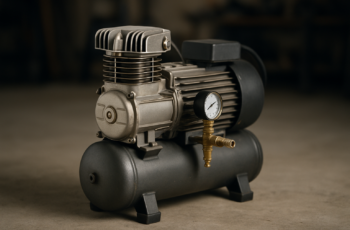
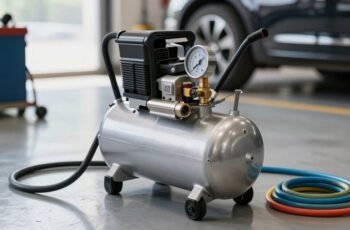
When selecting an energy-efficient air compressor, understanding the balance between initial costs, operational efficiency, and long-term savings is essential. We recognize that performance depends on key features like variable speed drives and suitable sizing, but choosing the right type and brand also impacts sustainability and durability. To optimize your investment, a thorough analysis of these factors is necessary—and exploring these elements will help you make a more informed choice.
Key Takeaways
- Assess your airflow (CFM) and pressure (PSI) requirements to select appropriately sized compressors, avoiding over- or under-sizing.
- Prioritize models with Variable Speed Drives (VSDs) and efficient motors for optimal energy savings.
- Consider the compressor’s type (scroll, centrifugal, reciprocating) based on your application and load demands.
- Evaluate total lifecycle costs, including purchase price, energy consumption, maintenance, and warranty support.
- Choose reputable brands with proven durability, industry certifications, and positive customer reviews for long-term reliability.
Understanding the Benefits of Energy-Efficient Air Compressors
While traditional air compressors have served their purpose, energy-efficient models offer tangible operational advantages that cannot be overlooked. These compressors optimize energy consumption by utilizing advanced motor designs, variable speed drives, and improved thermal management. This results in reduced power usage and lower operational costs over the unit’s lifespan. Additionally, energy-efficient models deliver more consistent air pressure, minimizing fluctuations that can impair tool performance and process stability. They also reduce heat generation, decreasing cooling requirements and extending equipment longevity. From an environmental perspective, these compressors markedly lower carbon emissions and energy waste. Overall, adopting energy-efficient air compressors enhances operational reliability while aligning with sustainability goals, making them a strategic investment for businesses seeking cost-effective, environmentally responsible solutions.
Key Features to Look for in an Energy-Saving Air Compressor
When selecting an energy-saving air compressor, focusing on specific key features can greatly enhance efficiency and performance. First, variable speed drives (VSDs) optimize power consumption by adjusting motor speed to match demand, reducing energy waste. Second, high-efficiency motors minimize electrical losses during operation, providing consistent performance with lower energy input. Third, advanced control systems enable precise regulation of pressure and airflow, preventing unnecessary cycling and maintaining peak operation. These features collectively guarantee the compressor operates at top efficiency under varying load conditions. Prioritizing VSDs, efficient motors, and intelligent controls can markedly decrease energy consumption, lowering operational costs and environmental impact. Careful evaluation of these technical attributes is essential when selecting an energy-efficient compressor for demanding applications.
How to Calculate Your Air Compressor’s Energy Consumption?
To accurately assess your air compressor’s energy consumption, we start by determining its power requirements based on specifications. Next, we measure the actual operating hours during typical use to estimate total energy use. Finally, calculating the compressor’s energy efficiency allows us to identify potential operational savings and select the most cost-effective model.
Determine Power Requirements
Understanding the power requirements of your air compressor is vital for selecting a model that meets your operational needs efficiently. To accurately determine this, consider three critical factors:
- Flow Rate (CFM): Measure the volume of air your application consumes at specific pressures to ensure the compressor can sustain continuous operation without overloading.
- Working Pressure (PSI): Identify the maximum pressure your tools or processes require, as this directly influences compressor size and energy use.
- Duty Cycle: Evaluate how frequently and for how long the compressor runs within a given period, affecting its power consumption and sizing.
Measure Operating Hours
Accurately measuring your air compressor’s operating hours is key to calculating its energy consumption and operational costs. Precise data enables effective energy management and cost estimation. To track operating hours, use hour meters or log activity manually, noting start and stop times. This data helps determine average daily and monthly usage patterns.
| Operating Mode | Typical Duration | Frequency per Day |
|---|---|---|
| Continuous Use | 8 hours | 5 days |
| Intermittent Use | 2 hours | 3 times |
| Standby Mode | 16 hours | 7 days |
Calculate Energy Efficiency
Calculating your air compressor’s energy consumption involves analyzing its power usage relative to its operational hours, allowing for precise efficiency assessment. To do this effectively, we focus on key data points:
- Power Rating (kW or HP): Know the compressor’s rated power, which indicates energy input per hour.
- Operational Hours: Record precise run times during typical usage periods.
- Energy Consumption Formula: Multiply power rating by operational hours, then convert to kilowatt-hours (kWh), providing a direct measure of energy used.
This process reveals the compressor’s actual energy efficiency, enabling comparisons across models. By understanding these figures, you can identify energy-saving opportunities, optimize operational schedules, and reduce overall energy costs. Accurate calculations form the foundation for making informed, cost-effective purchasing decisions.
Comparing Different Types of Energy-Efficient Compressors
When evaluating energy-efficient compressors, it’s essential to compare the core technologies that influence their performance and operational costs. Variable speed drive (VSD) compressors modulate motor speed to match demand, markedly reducing energy consumption during partial loads. Scroll compressors employ helical motion to generate compression with fewer moving parts, enhancing efficiency and reliability. Centrifugal compressors utilize high-speed impellers for continuous, high-volume airflow, offering superior efficiency at large scales. Reciprocating compressors, while traditional, can be optimized with advanced valve designs and electronic controls to improve efficiency. Each type’s energy performance hinges on its ability to adapt operation to load variations, minimize losses, and maintain consistent output. Proper comparison involves analyzing these technological differences in relation to specific application demands and operational conditions.
Tips for Selecting the Right Size and Capacity for Your Needs
Choosing the correct size and capacity for your air compressor is essential to maximizing performance and minimizing operational costs. To determine the appropriate specifications, consider these factors:
- Average airflow demand: Measure your equipment’s continuous CFM (cubic feet per minute) requirements at operating pressure to ensure the compressor can sustain production without excessive cycling.
- Peak demand periods: Identify maximum airflow needs during short-term surges, selecting a capacity that accommodates these without over-sizing, which leads to inefficiency.
- Future expansion plans: Account for potential increases in demand, choosing a compressor that offers scalability without compromising efficiency or increasing operational costs.
Precise matching of size to demand reduces energy waste and prolongs equipment lifespan, guaranteeing peak performance.
The Role of Variable Speed Drive Technology in Saving Energy
Variable Speed Drive (VSD) technology optimizes energy consumption by adjusting motor speed to match demand precisely, substantially reducing power use during partial loads. This dynamic control enhances operational flexibility, allowing compressors to respond swiftly to fluctuating process requirements. Implementing VSDs consequently delivers measurable energy savings while maintaining consistent performance.
Energy Consumption Reduction
Have you considered how variable speed drive (VSD) technology substantially enhances energy efficiency in air compressors? VSDs optimize power consumption by adjusting motor speed to match demand, minimizing unnecessary energy expenditure. This dynamic control results in significant reductions in energy consumption, especially during fluctuating load conditions. Specifically, VSDs enable:
- Precise matching of compressor output to system requirements, preventing over-pressurization.
- Reduced idle and low-load operation, cutting standby power use.
- Elimination of energy waste inherent in fixed-speed units operating at constant speeds.
Operational Flexibility Enhancement
By integrating variable speed drive (VSD) technology, air compressors gain enhanced operational flexibility, allowing them to adapt swiftly to fluctuating demand levels. VSDs modulate motor speed in real-time, aligning compressor output precisely with system requirements. This dynamic adjustment prevents unnecessary energy consumption associated with constant-speed operation, especially during low-demand periods. The precise control reduces wear and tear, extending component lifespan and maintaining ideal performance. Additionally, VSDs enable more stable pressure regulation, minimizing pressure fluctuations that can compromise system efficiency. This flexibility ensures the compressor operates at peak efficiency across varying load conditions, directly translating into energy savings. Overall, VSD technology not only enhances operational responsiveness but also considerably contributes to the overall energy efficiency of compressed air systems.
Maintenance Practices to Maximize Compressor Efficiency
Regular maintenance is essential for guaranteeing ideal compressor performance and preventing costly downtime. Proper upkeep directly impacts efficiency by reducing energy consumption and mechanical wear. To maximize compressor performance, focus on these critical practices:
- Routine filter and separator inspection: Ensures clean airflow, reducing pressure drops and energy loss.
- Lubrication management: Maintains optimal operating temperatures and minimizes component friction.
- Leak detection and repair: Prevents air loss, conserving energy and maintaining system pressure.
Adhering to these practices not only prolongs equipment lifespan but also sustains peak operational efficiency. Consistent monitoring and proactive adjustments enable early identification of issues, minimizing unplanned outages. A disciplined maintenance routine is a strategic investment in the compressor’s energy performance and overall reliability.
Cost vs. Savings: Evaluating the Total Cost of Ownership
When evaluating total cost of ownership, we must consider both upfront purchase price and ongoing operational expenses. Operating and maintenance costs can considerably influence long-term affordability and efficiency. A thorough analysis guarantees informed decisions that optimize value over the compressor’s lifespan.
Upfront Purchase Price
How does the initial purchase price influence the overall cost-effectiveness of an air compressor? A lower upfront cost may seem advantageous but can lead to higher long-term expenses if the unit is less efficient or less durable. Conversely, a higher initial investment often correlates with advanced features that reduce operational costs and enhance reliability. To evaluate this, consider:
- Initial Investment vs. Expected Lifespan – a higher-quality compressor may have a higher purchase price but offers longer service life.
- Energy Efficiency – models with better efficiency ratings reduce energy costs over time, offsetting upfront expenses.
- Warranty and Support – extensive coverage minimizes future repair costs and downtime, influencing total ownership costs.
Balancing purchase price with these factors ensures a more accurate assessment of a compressor’s true value.
Operating and Maintenance Costs
While the initial purchase price sets the foundation for affordability, understanding the ongoing operating and maintenance costs is key to evaluating a compressor’s true value. These costs include energy consumption, routine servicing, parts replacement, and potential downtime. Energy efficiency greatly impacts total expenses; higher-efficiency units typically reduce operational costs over their lifespan. Regular maintenance—such as filter changes, lubrication, and inspections—prevents costly breakdowns and prolongs equipment life. Additionally, the durability of components influences long-term expenses; more robust designs often incur higher upfront costs but lower maintenance needs. Carefully analyzing these factors allows us to estimate the total cost of ownership accurately. Ultimately, investing in a compressor with optimized operating efficiency and manageable maintenance demands yields better financial performance over its service life.
Environmental Benefits of Choosing an Energy-Efficient Air Compressor
Choosing an energy-efficient air compressor considerably reduces environmental impact by lowering greenhouse gas emissions and decreasing energy consumption. These units optimize operational efficiency, resulting in tangible ecological benefits. Specifically:
Energy-efficient air compressors cut emissions, save resources, and promote eco-friendly operation.
- Reduced Carbon Footprint: Lower energy use translates directly into fewer greenhouse gases released during operation.
- Decreased Resource Depletion: Improved efficiency conserves electricity, diminishing reliance on fossil fuels and finite resources.
- Minimized Waste and Pollution: Enhanced precision reduces operational waste, leading to less environmental contamination from compressor components or leaks.
How to Find the Best Deals and Reputable Brands
Finding the best deals and reputable brands requires careful research and comparison. We analyze price points across multiple suppliers, considering both initial costs and long-term operational expenses. Reputable brands demonstrate consistent quality, verified through industry certifications, customer reviews, and warranty offerings. We evaluate specifications such as CFM (cubic feet per minute), PSI (pounds per square inch), and energy efficiency ratings to guarantee compatibility with your operational demands. Comparing product lifecycle costs, including maintenance and energy consumption, helps identify true value. Discounted prices are attractive, but we prioritize products from established manufacturers with proven reliability. By systematically appraising these factors, we can select air compressors that balance affordability with durability, guaranteeing optimal performance while maximizing return on investment.
Frequently Asked Questions
How Long Is the Typical Lifespan of an Energy-Efficient Air Compressor?
Typically, energy-efficient air compressors last between 10 to 15 years, depending on usage, maintenance, and build quality. Regular servicing and proper operation can extend their lifespan, ensuring peak performance and energy savings over time.
Can an Energy-Efficient Compressor Operate Effectively in Extreme Temperatures?
Yes, energy-efficient compressors can operate effectively in extreme temperatures when equipped with appropriate thermal management systems, such as enhanced insulation and temperature controls, ensuring reliable performance and longevity despite environmental challenges.
How Often Should I Perform Maintenance on My Energy-Efficient Air Compressor?
We suggest performing maintenance on your energy-efficient air compressor every 3 to 6 months, depending on usage intensity and operating conditions. Regular inspections, filter changes, and lubrication guarantee ideal performance, energy savings, and prolonged equipment lifespan.
Are There Government Incentives for Purchasing Energy-Efficient Air Compressors?
Yes, we find government incentives akin to a lighthouse guiding us through financial fog, offering rebates and tax credits that make investing in energy-efficient air compressors more affordable and justifiable within our operational budgets.
What Warranty Options Are Available for Energy-Efficient Air Compressors?
We find that warranties for energy-efficient air compressors typically include standard manufacturer coverage, often ranging from one to five years, with some models offering extended or optional service plans for added security and maintenance assurance.
Conclusion
By understanding the benefits, evaluating key features, calculating energy use, and considering long-term costs, we can make informed decisions that optimize performance and sustainability. Selecting the right compressor type, size, and brand guarantees efficiency, reliability, and environmental responsibility. The process becomes a clear pathway—an investment in technology, a commitment to savings, and a step toward greener operation. Together, we can achieve operational excellence through strategic, data-driven choices.