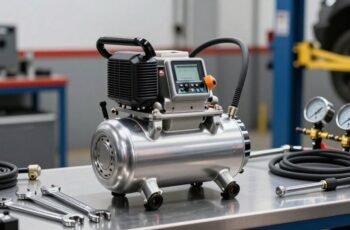
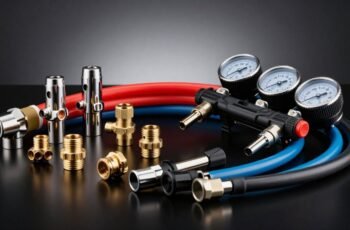
When it comes to selecting an air compressor for automotive work, it’s not just about matching tools to power; it’s about understanding the specific demands of your projects. Precise knowledge of CFM and PSI requirements, along with considerations of size, portability, and power compatibility, can make or break your efficiency. With so many options, knowing which features align with your tasks is essential—yet, steering through this landscape requires careful analysis of your needs and constraints to guarantee optimal performance.
Key Takeaways
- Determine the required CFM and PSI based on the tools and tasks you’ll be performing.
- Choose a compressor size and portability that match your workshop space and mobility needs.
- Select the appropriate compressor type (reciprocating, rotary screw) for your workload intensity.
- Ensure compatibility with your power source, considering voltage, amperage, and noise levels.
- Balance capacity, durability, and maintenance features to maximize performance and lifespan.
How Do You Determine Your Automotive Air Compressor Needs?
To accurately determine your automotive air compressor needs, it’s essential to take into account the specific tasks you plan to perform, as these directly influence the required airflow and pressure. Different applications demand varying CFM (cubic feet per minute) and PSI (pounds per square inch). For example, tire inflation requires lower pressure and airflow, while sanding or spray painting demands higher pressure and volume. Assess the tools you’ll use regularly and their manufacturer specifications. Consider the duty cycle, which indicates how long the compressor can operate before needing rest. Precise evaluation of these factors guarantees you select a compressor capable of maintaining consistent performance without overloading or underperforming, thereby optimizing efficiency and lifespan.
What Are Key Factors Like CFM and PSI for Auto Work?
Understanding key factors like CFM (cubic feet per minute) and PSI (pounds per square inch) is crucial when selecting an air compressor for auto work, as these specifications directly impact performance and tool compatibility. CFM measures the volume of air delivered per minute, which determines whether the compressor can sustain continuous operation of air tools such as impact wrenches or paint sprayers. PSI indicates the maximum pressure the compressor can generate, guaranteeing tools operate at the most effective efficiency. For automotive applications, most air tools require 90-110 PSI, with CFM ranging from 4 to 12 depending on tool demands. Accurate assessment of these parameters ensures consistent performance, prevents tool malfunction, and maximizes workflow efficiency during automotive repairs and maintenance.
How to Choose the Right Size and Portability for Your Projects
Selecting the appropriate size and portability of an air compressor depends largely on the scope and mobility requirements of your projects. For stationary setups in a workshop, larger units with higher CFM and tank capacity are ideal, providing continuous airflow and minimizing downtime. Conversely, for mobile or on-site work, compact, lightweight models improve ease of transportation and setup.
Consider these factors:
- Project scale: Larger projects demand higher CFM and tank volume.
- Mobility needs: Frequent movement favors smaller, portable units.
- Power supply: *Guarantee* compatibility with available electrical outlets.
- Storage space: Select a size that fits within your workspace constraints.
Choosing the right balance optimizes performance, efficiency, and convenience for your automotive tasks.
Which Types of Air Compressors Are Best for Automotive Tasks?
When choosing an air compressor for automotive tasks, it’s important to take into account the specific demands of the tools and applications involved. For high-demand tasks like tire inflation and spray painting, a portable reciprocating compressor with a minimum of 6 CFM at 90 PSI is suitable. For continuous use, such as operating impact wrenches or air ratchets, a rotary screw compressor provides higher efficiency and consistent airflow. Oil-lubricated models typically offer greater durability and quieter operation, making them ideal for prolonged use. Conversely, oil-free compressors are maintenance-friendly and better suited for intermittent tasks. In all cases, selecting a compressor with appropriate CFM and PSI ratings guarantees maximum performance, prevents tool lag, and supports the reliability of automotive work.
How to Assess Power Source Compatibility and Noise Levels?
Evaluating the compatibility of your power source is essential before choosing an air compressor, as mismatched voltage, phase, or outlet type can impair operation or cause damage. To guarantee proper compatibility, consider the following:
- Confirm voltage and amperage ratings match your power supply specifications.
- Verify the phase requirement (single-phase or three-phase) aligns with your electrical system.
- Check outlet type and plug configuration for proper fit and grounding.
- Assess circuit capacity to support the compressor’s startup current without tripping breakers.
Regarding noise levels, measure ambient sound and compare compressor decibel ratings, especially if working in noise-sensitive environments. Selecting a model with appropriate sound levels helps maintain a safe, comfortable workspace while ensuring efficient operation.
What Additional Features and Budget Considerations Should You Keep in Mind?
When selecting an air compressor, we must consider additional features like moisture separation, pressure gauges, and automatic shutoff for efficiency. Budget allocation should prioritize initial costs versus long-term operational expenses to optimize total cost of ownership. Evaluating long-term cost efficiency guarantees the compressor delivers sustained performance without unexpected financial burdens.
Additional Features to Consider
While selecting an air compressor, it’s essential to take into account additional features that can enhance functionality and safety, all within your budget constraints. These features improve efficiency, durability, and user control, ensuring peak performance for automotive tasks. Consider the following:
- Automatic shut-off and thermal overload protection to prevent overheating and extend lifespan.
- Pressure gauges and regulators for precise control of output pressure.
- Quick-connect fittings for fast tool changes and reduced downtime.
- Noise reduction features such as sound enclosures or mufflers to minimize operating noise and improve safety.
Focusing on these features allows us to optimize our investment, ensuring the compressor meets our specific automotive needs without unnecessary expense.
Budget Allocation Strategies
Have you considered how your budget influences the selection of additional features in an air compressor? Budget allocation requires prioritizing essential specifications such as CFM and PSI to guarantee compatibility with automotive tools. Extra features like continuous run-time, noise reduction, or portable designs should be weighed against their impact on overall cost. It’s crucial to establish a clear cost-to-benefit ratio; for example, investing in a higher-capacity tank may improve performance but increase initial expense. We recommend setting a baseline for core attributes before allocating funds toward auxiliary features, which can be added later if necessary. Effective budgeting involves balancing immediate operational needs with future scalability, ensuring that the compressor’s capabilities align with both current projects and potential growth without overspending.
Long-Term Cost Efficiency
Considering long-term cost efficiency involves evaluating how additional features impact ongoing expenses and operational performance. Features like automatic shut-off, thermal overload protection, and variable speed control can notably reduce energy consumption and maintenance costs over time. Additionally, choosing a compressor with a durable motor and high-quality components minimizes repair frequency and prolongs lifespan. Budget considerations should include initial purchase price, energy efficiency, and potential replacement parts. Investing in a compressor with integrated filtration or moisture control reduces external accessories and maintenance needs. Moreover, selecting models with modular designs allows for future upgrades without complete replacement. Prioritizing these features ensures sustained operational efficiency and minimizes total ownership costs, making your investment more cost-effective in the long run.
Frequently Asked Questions
What Is the Average Lifespan of an Automotive Air Compressor?
The average lifespan of an automotive air compressor ranges from 10,000 to 20,000 hours of service, depending on usage, maintenance, and build quality. Proper upkeep can markedly extend its operational life.
How Often Should I Perform Maintenance on My Air Compressor?
We recommend inspecting and replacing filters, draining moisture, and checking belts weekly, or after heavy use, to guarantee peak performance and longevity, preventing costly breakdowns and keeping your compressor running like a well-oiled machine.
Can I Use a Home Air Compressor for Professional Auto Repairs?
You can use a home air compressor for professional auto repairs if it meets required CFM and PSI specifications, but typically, commercial-grade compressors offer better durability and consistent performance essential for frequent, high-demand automotive tasks.
Are There Safety Precautions Specific to Automotive Air Compressors?
Like tuning a fine engine, safety precautions are essential; always wear protective gear, confirm proper grounding, check for leaks, and follow manufacturer guidelines meticulously. Regular maintenance and correct pressure settings prevent accidents and prolong compressor lifespan.
What Are Common Signs My Compressor Needs Replacement or Repair?
We notice signs like decreased airflow, abnormal noises, overheating, or persistent leaks, indicating our compressor needs repair or replacement. Regularly inspecting pressure gauges and checking for unusual vibrations helps us maintain ideal performance and prevent costly failures.
Conclusion
In summary, choosing the appropriate air compressor for automotive tasks is vital for efficiency and safety. Did you know that the average auto shop uses compressors with CFM ratings between 10-15? Ensuring your compressor meets the specific PSI and CFM requirements for your tools, while considering size, power, and noise levels, can greatly influence your workflow. Making an informed choice helps optimize performance, reduce downtime, and extend your equipment’s lifespan.