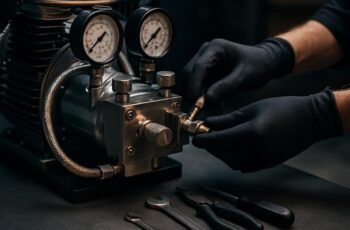
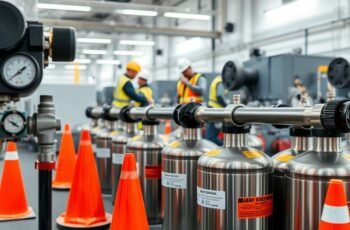
When operating an air compressor, safety isn’t optional—it’s essential. Proper personal protective equipment (PPE) shields us from potential hazards like flying debris, loud noise, and hot surfaces. Ensuring we select, fit, and maintain the right gear is critical to preventing injuries and complying with safety standards. Understanding the specific PPE needed can make all the difference in creating a safe, efficient work environment. Let’s explore the key components and best practices to keep everyone protected.
Key Takeaways
- Essential PPE includes safety glasses, hearing protection, gloves, steel-toed boots, and protective clothing for safe air compressor operation.
- Select PPE according to standards like OSHA and NIOSH, ensuring proper fit, inspection, and maintenance.
- Use earplugs or earmuffs to protect against high noise levels generated by compressors.
- Wear eye and face shields to prevent injuries from flying debris and spray during maintenance.
- Develop and enforce PPE protocols to promote safety, proper use, and regular inspection in compressor work environments.
What Personal Protective Equipment Do You Need for Air Compressor Use
When operating an air compressor, wearing the appropriate personal protective equipment (PPE) is essential to guarantee safety and prevent injuries. We must prioritize safety gear like safety glasses or goggles to shield our eyes from flying debris or compressed air blasts. Hearing protection is crucial to guard against high noise levels, and gloves help protect our hands from sharp edges and hot surfaces. Steel-toed boots provide foot safety in case of dropped components, while long sleeves and durable clothing prevent skin abrasions. Respirators or masks may be necessary when working with materials that generate dust or fumes. By consistently using this PPE, we minimize risks and maintain a safe working environment, ensuring both efficiency and safety during air compressor operation.
Why Hearing Protection Is Critical When Operating an Air Compressor
Operating an air compressor exposes us to high noise levels that can cause immediate and long-term hearing damage if we don’t wear proper protection. The noise produced by compressors often exceeds safe decibel levels, putting our hearing at serious risk without adequate safeguards. Prolonged exposure can lead to permanent hearing loss, tinnitus, and reduced auditory perception, impacting our overall safety and communication. Hearing protection, such as earplugs or earmuffs, effectively reduces noise exposure, safeguarding our auditory health. It’s vital to choose the right protective gear suited for the noise level and to wear it consistently during compressor operation. Protecting our hearing isn’t optional—it’s a critical safety measure that preserves our health and ensures we can remain alert and effective in our work.
The Importance of Eye and Face Shields During Air Compressor Tasks
While hearing protection safeguards our long-term health, protecting our eyes and face is equally important during air compressor tasks. High-pressure air and flying debris pose significant risks to unprotected eyes and skin. Eye and face shields serve as essential barriers, preventing injuries caused by unexpected projectiles or chemical splashes. Proper PPE guarantees that any accidental debris does not penetrate or cause damage, which could lead to temporary or permanent vision loss. We must select shields that fit securely and provide full coverage without impairing visibility or movement. Consistently wearing appropriate eye and face protection reduces injury risk, maintains safety standards, and promotes a responsible work environment. In high-risk tasks, these shields are non-negotiable for safeguarding our most crucial sensory organs.
Protecting Your Hands and Body From High-Pressure Air and Flying Debris
Protecting your hands and body from high-pressure air and flying debris is essential for safety during compressor operation. We recommend using appropriate hand protection gear and body coverage equipment to prevent injury. Implementing strict safety precautions minimizes risks and guarantees a safer working environment.
Hand Protection Gear
Have you considered how essential hand protection is when working with air compressors? Proper gloves are critical to prevent injuries from high-pressure air and flying debris, which can cause cuts, abrasions, or even punctures. Effective hand protection must be resistant to punctures, provide a secure grip, and maintain dexterity for precise tasks.
Key considerations include:
- Material durability, such as Kevlar or leather, for puncture resistance
- Fit and comfort to avoid fatigue during extended use
- Compatibility with other PPE, ensuring no compromise in safety
Choosing the right gloves ensures safety without sacrificing control or flexibility. Always select PPE designed specifically for compressed air environments, and regularly inspect gloves for signs of wear or damage.
Body Coverage Equipment
Proper body coverage is essential when working with air compressors to shield against high-pressure air blasts and flying debris. We must wear appropriate protective clothing to minimize injury risks. Heavy-duty coveralls or long-sleeved shirts made from durable, abrasion-resistant materials provide critical protection against flying particles. Safety helmets or hard hats safeguard the head from impacts, while steel-toed boots protect the feet from falling objects and punctures. Additionally, full-length gloves should be used to prevent cuts and abrasions, especially during handling of compressed air hoses or debris. Ensuring complete coverage reduces the chance of injury from unexpected high-pressure discharges or debris dislodgement. Always verify that your body coverage equipment fits properly and is in good condition before operating the compressor.
Safety Precautions Measures
When working with air compressors, implementing safety precautions is essential to safeguard your hands and body from the dangers of high-pressure air and flying debris. Proper measures prevent serious injuries and guarantee safe operation. Always wear appropriate PPE, such as gloves and protective clothing, to minimize exposure. Use high-quality eye protection to guard against debris and potential air blasts. Additionally, maintain a secure stance and keep a safe distance from the nozzle to avoid accidental injuries.
- Confirm all fittings are tight and secure before operation
- Use barriers or shields to contain flying debris
- Regularly inspect hoses and connections for damage
Choosing the Right Respiratory Equipment for Air Compressor Work
Choosing the right respiratory equipment is essential for effective protection during air compressor work. We must guarantee proper fit, select appropriate filters and cartridges, and comply with regulatory standards. These steps guarantee safety and maximize the efficiency of your respiratory gear.
Proper Fit Importance
Ensuring a proper fit for respiratory equipment is essential to maximize protection and comfort during air compressor work. Ill-fitting gear compromises both safety and effectiveness, increasing risk of exposure to harmful particles or fumes. A well-fitted respirator seals the face properly, preventing leaks that can allow contaminants to bypass filtration. Correct sizing ensures the mask stays secure during movement and work tasks, reducing discomfort and fatigue.
Key considerations include:
- Verifying the seal through fit testing procedures
- Adjusting straps for snug, but not tight, fit
- Selecting the right mask shape and size for facial features
Proper fit is non-negotiable for effective respiratory protection and must be prioritized in PPE selection and use.
Filter and Cartridge Options
Selecting the appropriate filter or cartridge is critical for effective respiratory protection during air compressor work. The right choice depends on the specific contaminants you’ll encounter, such as dust, fumes, or vapors. Particulate filters efficiently block airborne particles like dust and debris, while gas and vapor cartridges protect against chemical fumes and odors. It’s essential to match the filter or cartridge to the airborne hazards present in your environment. Using incompatible filters can compromise your safety and reduce the respirator’s effectiveness. Always verify that your chosen filters meet relevant standards and are compatible with your respirator model. Proper selection guarantees excellent protection, maintaining your health and safety during demanding compressor tasks.
Regulatory Standards Compliance
To ensure we’re adequately protected during air compressor operations, it’s essential to comply with regulatory standards governing respiratory equipment. These standards ensure equipment effectiveness and worker safety. We must select PPE that meets specific certifications, such as NIOSH approval or OSHA compliance, to guarantee quality and reliability. Understanding the classifications of respirators—like filtering facepieces versus powered air-purifying respirators—helps us choose appropriately. Additionally, regular inspection, proper fit testing, and maintenance are mandatory to uphold certification standards. Compliance with these regulations not only minimizes health risks but also aligns with legal requirements. Staying informed about updates from agencies like OSHA and NIOSH ensures our respiratory protection remains effective and compliant at all times.
How to Properly Fit and Maintain Your PPE for Maximum Safety
Proper fit and regular maintenance are critical to maximizing the protective benefits of PPE when working with air compressors. Ill-fitting gear compromises safety, while neglecting maintenance diminishes effectiveness. To guarantee ideal protection, check the fit of masks, helmets, and ear protection before each use. Clean and inspect PPE regularly for damage or wear. Replace any compromised items immediately. Use the table below to understand key fit and maintenance practices:
| Practice | Purpose |
|---|---|
| Proper sizing and adjustment | Ensures PPE forms a secure seal and fits comfortably |
| Routine cleaning and inspection | Maintains hygiene and detects damage early |
| Timely replacement of worn PPE | Prevents failure during critical moments |
| Storage in a clean, dry area | Extends PPE lifespan and preserves integrity |
Common PPE Mistakes to Avoid When Using an Air Compressor
Even when wearing PPE, common mistakes can considerably compromise safety during air compressor use. These errors undermine your protective measures and increase risk of injury. Key mistakes include:
- Neglecting proper PPE fit: Ill-fitting gear reduces protection and can cause distractions or accidents.
- Using damaged or expired PPE: Worn or compromised equipment fails to provide adequate safety barriers.
- Forgetting to wear all recommended PPE: Omitting essential gear, like eye protection or gloves, leaves essential areas exposed.
Avoid these pitfalls by ensuring PPE fits correctly, inspecting equipment regularly, and never skipping any protective items. Proper use and maintenance of PPE are essential for safe operation. Recognizing and correcting these mistakes safeguards health and prevents avoidable accidents.
When and Why Should You Use Ear Plugs Versus Ear Muffs?
Choosing the right hearing protection depends on the specific conditions and the duration of exposure to loud noise. Ear plugs are ideal for short-term tasks or when a lightweight, discreet option is needed, especially in tight or confined spaces. They provide excellent noise reduction when properly inserted and are suitable for intermittent use. Ear muffs, on the other hand, are better for prolonged exposure, offering consistent protection and comfort when worn over extended periods. They are easier to put on and adjust, making them suitable for continuous operation. We recommend ear plugs for quick, temporary tasks and ear muffs for sustained noise exposure. Selecting the appropriate PPE guarantees maximum hearing protection, reduces fatigue, and maintains safety during compressor use.
How to Create a Safe Work Environment With Proper PPE Protocols
Implementing effective PPE protocols is essential for creating a safe work environment around air compressors. Proper procedures minimize exposure to hazards and prevent injuries. To achieve this, we recommend establishing clear PPE guidelines, ensuring consistent use, and training workers on PPE importance. Regularly inspecting PPE for damage and replacing worn items maintains protection levels. Enforce strict compliance, and lead by example to foster a safety-conscious culture.
Key points include:
- Conducting routine PPE training sessions
- Clearly labeling PPE storage areas
- Monitoring adherence and addressing non-compliance promptly
Frequently Asked Questions
Are There Specific PPE Requirements for Different Types of Air Compressors?
Yes, different air compressors require specific PPE, like hearing protection for loud compressors, eye protection for flying debris, and respiratory masks for dust or fumes, ensuring safety tailored to each compressor’s type and operational environment.
How Often Should PPE Be Inspected and Replaced During Compressor Use?
We inspect PPE daily before use, like a vigilant guardian watching over us, substituting any worn or damaged gear immediately. Regular checks ensure safety, maintaining the shield that protects us from potential hazards during compressor operation.
What Are the Potential Hazards Without Proper PPE During Maintenance?
Without proper PPE during maintenance, we risk severe injuries from flying debris, burns, or electrical shocks. PPE acts as our critical barrier, preventing accidents and ensuring safety while handling potentially dangerous components and high-pressure systems.
Can PPE Prevent All Injuries Related to Air Compressor Operation?
PPE considerably reduces injury risk during air compressor operation, but it can’t prevent all accidents. We must combine PPE with proper training, safety procedures, and maintenance to guarantee thorough protection and minimize hazards effectively.
How Does PPE Usage Differ for Indoor Versus Outdoor Air Compressor Tasks?
We wear PPE indoors for dust, fumes, and limited space, and outdoors for weather, debris, and noise. We choose appropriate gear, stay vigilant, and prioritize safety, adapting our protective measures to each environment’s unique risks.
Conclusion
In summary, selecting the right PPE and ensuring proper use are vital for safe air compressor operation. Are we truly prioritizing safety enough to prevent avoidable injuries? By consistently inspecting, fitting, and maintaining our protective gear, we can create a safer work environment for everyone. Remember, safety isn’t just about compliance—it’s about protecting ourselves and our colleagues. Stay vigilant, stay protected, and always put safety first in every task we undertake.