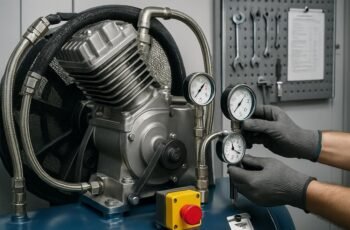
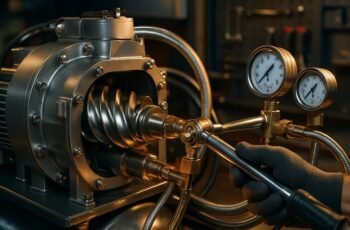
Imagine a compressor working tirelessly, its surface glowing with heat, while internal components struggle to dissipate that heat efficiently. This overexertion often signals underlying mechanical issues or operational stress, risking failure and costly downtime. Understanding the causes behind overheating is essential, as even minor overlooked signs can escalate into serious problems. Exploring these factors systematically can help us prevent failures and extend the lifespan of our equipment—so, let’s examine the key elements involved.
Key Takeaways
- Overheating can result from mechanical issues like worn piston rings, damaged valves, or insufficient lubrication.
- Signs include excessive surface heat, unusual noises, reduced airflow, and frequent cycling, indicating cooling system problems.
- Regular maintenance of ventilation, heat exchangers, and filters helps prevent overheating.
- Overloading the compressor increases internal friction and heat, risking thermal damage and shutdowns.
- Continuous overheating and abnormal vibrations require professional inspection to identify internal component damage or electrical faults.
Causes of Air Compressor Overheating and How to Recognize Them
Overheating in air compressors often results from a combination of mechanical and operational factors that impair heat dissipation. Mechanical issues like worn piston rings, damaged valves, or insufficient lubrication increase internal friction, generating excess heat. Operational causes include extended run times, high ambient temperatures, or operating the compressor beyond its capacity. Recognizing these causes involves monitoring temperature gauges and listening for abnormal noises, such as knocking or rattling, which indicate mechanical strain. Visible signs like excessive heat on compressor surfaces, frequent cycling, or warning lights also signal potential overheating. Regular inspection of components, proper maintenance, and adherence to operational guidelines help identify early signs of trouble. Understanding these causes enables timely intervention, preventing damage and ensuring reliable compressor performance.
The Importance of Proper Ventilation and Cooling for Your Compressor
Maintaining an effective ventilation system is vital to prevent heat buildup and guarantee consistent airflow around the compressor. Adequate cooling solutions, such as proper fans or heat exchangers, help dissipate heat efficiently and maintain ideal operating temperatures. Regular inspection and maintenance of these components are imperative to avoid overheating-related failures.
Ventilation System Maintenance
Proper ventilation and cooling are essential components of compressor operation, as they directly influence the system’s ability to dissipate heat effectively. Regular maintenance of the ventilation system guarantees unobstructed airflow, which prevents heat buildup and reduces overheating risks. This involves inspecting intake and exhaust vents for dirt, debris, or blockages, and cleaning or replacing filters as needed. Additionally, checking fans and louvers for proper function is indispensable to maintain ideal airflow. Corrosion or mechanical wear can compromise ventilation efficiency, so routine inspection and preventive repairs are necessary. A well-maintained ventilation system not only enhances cooling capacity but also prolongs compressor lifespan by minimizing thermal stress. Consistent maintenance practices are imperative to sustain effective heat dissipation under varying operational loads.
Adequate Cooling Solutions
Have you considered how essential effective ventilation and cooling are for guaranteeing your compressor operates reliably? Proper cooling solutions prevent overheating, reduce wear, and extend lifespan. Implementing targeted methods like enhanced airflow, heat exchangers, or additional fans can optimize thermal management. The table below summarizes key cooling strategies:
| Cooling Method | Application |
|---|---|
| Forced Air Ventilation | Improves airflow around the compressor unit |
| Water-Cooled Systems | Dissipates heat more efficiently in high-load conditions |
| Heat Exchangers | Transfers heat away from critical components |
Choosing the right combination depends on your compressor’s size, workload, and environment. Precise cooling management ensures stable operation, minimizes downtime, and maintains consistent performance.
How Overloading the Compressor Leads to Excess Heat
Overloading a compressor causes it to work beyond its designed capacity, which substantially increases the workload on its motor and internal components. This excess demand forces the motor to operate at higher currents, generating more electrical resistance and heat. Additionally, the compressor’s internal components, such as pistons, valves, and bearings, experience increased friction and mechanical stress, accelerating wear and heat buildup. Overloading also impairs proper airflow and cooling efficiency, further trapping heat within the system. As a result, the compressor’s thermal limits are exceeded, causing rapid temperature rise. This process not only diminishes operational efficiency but also heightens the risk of component failure, ultimately leading to overheating and potential system shutdowns. Proper load management is essential to prevent these thermal issues.
Signs Your Air Compressor Is Overheating and What They Mean
We can identify overheating in an air compressor through specific signs that indicate underlying issues. Unusual noises during operation often signal mechanical stress, while excessive heat emission suggests thermal overload. Additionally, a sudden reduction in performance levels typically reflects compromised components due to high temperatures.
Unusual Noises During Operation
Unusual noises during operation often indicate that an air compressor is experiencing stress, potentially due to overheating. These sounds can signal mechanical issues or internal component failures caused by excessive heat. Common noises include whining, knocking, or hissing, each suggesting different problems. For example:
| Noise Type | Possible Cause |
|---|---|
| Whining | Bearing wear or lubrication failure |
| Knocking | Piston or valve issues |
| Hissing | Air leaks or pressure release faults |
| Rumbling | Motor or compressor imbalance |
| Squealing | Belt slippage or misalignment |
Identifying these noises early helps diagnose overheating-related stress, preventing further damage and ensuring efficient operation. Monitoring sound patterns is vital in maintaining compressor longevity and peak performance.
Excessive Heat Emission
Excessive heat emission from an air compressor is a clear indicator that the unit is operating beyond its ideal thermal limits, risking damage to internal components. Elevated temperatures often manifest as visible heat waves emanating from the housing or a noticeable increase in surface temperature when touched. Internally, this heat results from friction within moving parts, inadequate cooling, or overloading of the system. Persistent overheating can lead to oil breakdown, seal degradation, and even motor failure if unaddressed. Monitoring temperature gauges and feeling for abnormal heat buildup are essential diagnostic tools. Recognizing these signs promptly allows for timely intervention, such as improving ventilation, reducing load, or scheduling maintenance. Addressing excessive heat emission is critical to prevent catastrophic component failure and ensure reliable compressor operation.
Reduced Performance Levels
When an air compressor begins to operate below its ideal performance levels, it often signals underlying issues related to overheating. Reduced performance can manifest as decreased airflow, lower pressure output, increased cycle times, or inconsistent operation. These symptoms suggest the compressor’s internal components are experiencing thermal stress, affecting efficiency.
- Drop in airflow rate indicates airflow restriction due to thermal expansion of parts or internal fouling.
- Lower pressure output reflects compromised sealing or pressure regulation caused by overheated seals or valves.
- Extended cycle times suggest the thermal cutoff is activating prematurely, halting operation more frequently.
- Inconsistent operation points to uneven temperature distribution, impacting component performance and stability. Recognizing these signs enables timely intervention to prevent further damage.
Troubleshooting Common Overheating Problems Step-by-Step
To effectively troubleshoot overheating issues in an air compressor, we must systematically evaluate each component that influences thermal regulation. Start by inspecting the cooling system, including fans and heat exchangers, for blockages or damage. Check for airflow obstructions, refrigerant levels, and proper ventilation. Use the following table to visualize critical components:
| Component | Common Issue | Diagnostic Step |
|---|---|---|
| Cooling Fan | Malfunction or failure | Test fan operation, replace if faulty |
| Heat Exchanger | Clogging or buildup | Clean thoroughly, inspect for leaks |
| Lubrication System | Insufficient lubrication | Check oil levels and quality |
Preventative Maintenance Tips to Keep Your Compressor Cool
Regular preventative maintenance is essential for guaranteeing your air compressor remains within safe operating temperatures and avoids overheating. Consistent checks and adjustments enhance performance and prevent thermal stress.
Regular maintenance keeps your air compressor safe, efficient, and protected from overheating.
To maintain ideal cooling, consider these key steps:
- Regularly inspect and clean cooling fins and radiator surfaces to prevent debris buildup that impairs heat dissipation.
- Check and replace lubricants periodically, as degraded oil reduces cooling efficiency and increases heat generation.
- Ensure proper airflow around the compressor by verifying ventilation and avoiding obstructions.
- Monitor temperature gauges and pressure relief valves to detect early signs of overheating, enabling timely intervention.
Adhering to these practices ensures efficient heat management, prolongs equipment lifespan, and minimizes downtime caused by thermal issues.
When to Seek Professional Repair for Overheating Issues
Even with diligent preventative maintenance, certain overheating issues may indicate underlying problems that require professional intervention. Persistent high temperatures, unusual noises, or frequent shutdowns suggest deeper mechanical or electrical faults. Recognizing these signs early can prevent further damage and costly repairs.
| Symptom | Significance |
|---|---|
| Continuous overheating | Possible cooling system failure or blockage |
| Sudden compressor shutdown | Electrical faults or thermal overload |
| Excessive vibration | Bearing wear or misalignment |
| Unusual noises | Internal component damage |
| Frequent pressure drops | Valve malfunction or pressure sensor issues |
If these symptoms persist despite basic troubleshooting, it’s crucial to consult a qualified technician to diagnose and resolve the root cause efficiently.
Tips for Choosing an Overload Protection System to Avoid Overheating
Selecting an appropriate overload protection system is essential for preventing compressor overheating, especially under variable load conditions. To optimize protection, consider these key factors:
Choosing the right overload protection ensures reliable compressor operation under varying loads.
- Rated Current Compatibility: Ensure the system’s trip settings match the compressor’s full-load current to prevent false trips or overloads.
- Response Time: Choose devices with fast response times for immediate cutoff during overheating, minimizing damage.
- Adjustability: Opt for systems allowing calibration to specific load patterns, enhancing tailored protection.
- Environmental Suitability: Select protection systems rated for the operating environment—temperature, humidity, and dust levels—to maintain reliability.
Frequently Asked Questions
Can Environmental Factors Cause Air Compressor Overheating?
Environmental factors can cause air compressor overheating by increasing ambient temperature, reducing cooling efficiency, and trapping heat. We analyze how high temperatures, poor ventilation, and humidity levels impact compressor performance, emphasizing the need for appropriate environmental controls to prevent overheating.
How Does Altitude Affect Compressor Temperature?
Altitude lowers air density, which reduces cooling efficiency, causing compressor temperature to rise. We observe that, at higher elevations, the compressor works harder to maintain performance, increasing overheating risks unless adjustments like enhanced cooling are implemented.
Are Certain Compressor Types More Prone to Overheating?
Certain compressor types, like reciprocating and rotary screw units, are more prone to overheating due to design and operational factors. We analyze their cooling efficiencies, load capacities, and maintenance practices to identify vulnerabilities, ensuring ideal performance and reduced overheating risks.
What Role Does Lubricant Quality Play in Overheating?
Lubricant quality acts as the heartbeat of compressor efficiency; poor oil leads to increased friction and heat, causing overheating. We emphasize high-quality lubricants to maintain ideal thermal regulation, safeguarding machinery and ensuring consistent performance.
How Long Can an Air Compressor Operate Safely Before Overheating?
We typically monitor compressor operation for 30-60 minutes before overheating risks increase, depending on load and maintenance. Regular checks and proper cooling are essential for safe operation durations, ensuring ideal performance and preventing damage.
Conclusion
By understanding the causes of overheating and implementing proper maintenance, ventilation, and overload protection, we can markedly reduce downtime and extend our compressor’s lifespan. While some may worry these measures are costly or complex, investing in regular upkeep and professional inspections proves cost-effective over time. Proactively addressing overheating issues isn’t just about avoiding damage; it’s about optimizing performance and ensuring reliable operation under demanding conditions.