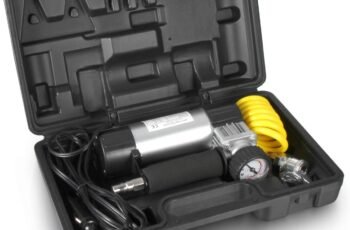
Ironton Air Compressor: Quick Overview and Best Uses
Can a compact compressor priced at $79.99 handle everyday inflation, stapling, nailing, and light cleaning? The Ironton Air Compressor is aimed at exactly that narrow but useful job: it combines a 3-gallon pancake tank, a/3 HP motor, PSI maximum pressure, and an oil-free pump in a portable format. We see it as a sensible option for intermittent tasks, not a substitute for a larger workshop compressor running demanding tools continuously.
The product is currently listed as in stock, making it relevant for shoppers comparing small compressors in 2026. The Ironton Air Compressor should suit homeowners, DIY users, and mobile users who value simple operation, low maintenance, and easy storage more than high sustained airflow.
Our review examines operating convenience, storage, realistic tool compatibility, customer-feedback evidence, and value. The central buying decision is straightforward: if most of your work involves short bursts of air, this compact design deserves consideration; if your tools need uninterrupted airflow, its small tank will likely become the limiting factor.

Specifications and Physical Design Explained
The Ironton Air Compressor uses a 3-gallon pancake-style tank and a 0.3 HP, oil-free motor. Its published maximum pressure is PSI, while the low-profile body, wide base, fold-down handle, and lightweight construction are all intended to make the unit easier to position and carry than a larger workshop compressor.
Maximum PSI describes the highest pressure the tank is designed to reach; it doesn’t tell us how much air the pump can deliver continuously. A nailer may work acceptably between firing cycles yet still cause the motor to run frequently if the tool consumes air faster than the pump can replenish it. For that reason, we shouldn’t select the Ironton Air Compressor by PSI alone.
The wide base is useful on a workshop or jobsite floor because it helps resist tipping as the motor cycles or a hose pulls sideways. Before ordering, we recommend checking the intended outlet power, hose arrangement, and available workspace against the product setup. Those practical details can matter as much as the headline pressure rating when a compressor must fit beside a bench, inside a vehicle, or on a crowded floor.
Key Features Deep-Dive: Oil-Free Pump and User Controls
The main ownership advantage of the Ironton Air Compressor is its oil-free pump. Under normal use, owners don’t need routine oil changes, oil-level checks, or the handling of compressor oil. That makes the unit more approachable for occasional users who may leave it stored for weeks between projects.
There is a trade-off. Compact oil-free compressors can sound more noticeable during operation than larger oil-lubricated designs, and the supplied information doesn’t provide a decibel rating. We therefore wouldn’t promise quiet running. The large regulator knob should make pressure adjustment easier, but regulated outlet pressure is separate from the tank’s maximum pressure: the knob controls what reaches the tool, not a permanent change to the tank rating.
The quick coupler is designed to connect a compatible pneumatic hose or tool without repeatedly threading fittings. Our preferred setup is simple:
- Place the unit on a stable surface with ventilation around it.
- Connect the hose at the quick coupler and confirm it locks securely.
- Turn the regulator gradually to the tool’s required pressure.
- Test the connection and tool briefly before starting the project.
That sequence reduces the chance of applying unnecessary pressure to a tool or discovering a loose connection halfway through the job.
Portability, Stability, and Built-In Storage
The Ironton Air Compressor is designed for users who move equipment between a garage, vehicle, workshop, and small jobsite. Its fold-down handle gives us a defined carrying point, while the low-profile body should be easier to position beneath a bench or alongside other equipment than a tall vertical unit. The product data describes the construction as lightweight, but it does not supply an exact weight or set of dimensions, so we won’t invent those figures.
A wide base matters when the motor starts and stops or when a connected hose tugs against the housing. Stability isn’t just about preventing a dramatic tip-over; it also makes connecting tools and adjusting the regulator less awkward. The integrated cord wrap and hose retainer help keep the immediate storage area neater, although they aren’t a replacement for a separate tool bag or organized accessory case.
For storage, disconnect the tool first, wrap the cord and hose without sharp bends, keep the compressor dry, and place it where the handle won’t be struck by vehicles or falling items. The Ironton Air Compressor makes the most sense where floor space is limited and portability is used regularly rather than merely advertised as a convenience.


How the Ironton Air Compressor Performs for Common Tasks
The Ironton Air Compressor is naturally suited to inflation jobs involving vehicle tires, sports equipment, air mattresses, and small inflatables, provided we use the appropriate nozzle or inflation adapter. The tank provides a short reserve of air, while the pump can recover between brief tasks. Exact inflation time will depend on the item, attachment, and pressure required.
Stapling and light-duty nailing are also reasonable applications when the specific tool’s airflow requirement matches the compressor’s published performance. Intermittent firing is the key distinction. A brad or finish nailer used for occasional fastening may be a better match than a tool operated continuously for production work.
Short blow-off bursts can help remove dust from a workpiece, but extended cleaning may require recovery pauses because a 3-gallon tank has limited reserve. Spray painting, sanding, grinding, and impact-wrench work are more questionable: these tools commonly demand sustained airflow, so the Ironton Air Compressor shouldn’t be treated as suitable without checking the tool specifications.
- Find the tool’s required CFM and operating pressure.
- Compare those figures with the compressor’s published performance, not only its maximum PSI.
- Allow for the tool’s duty cycle and expected frequency of use.
- Choose a larger compressor if the application requires continuous airflow or rapid recovery.
What Customers Are Saying
The supplied product information does not include the listing’s visible star rating or review count, so we cannot responsibly quote a rating or claim that a specific number of buyers reported a recurring issue. That limitation matters: customer feedback is most useful when the review total, rating, and detailed comments can be checked together rather than summarized with invented figures.
For the Ironton Air Compressor, shoppers should look for repeated, detailed comments about carrying convenience, oil-free ownership, cord and hose storage, startup, pressure recovery, noise, coupler engagement, and durability. A single complaint about a damaged package should be separated from several independent reports describing weak airflow. Similarly, one comment calling the compressor loud has less weight than a consistent pattern from buyers using it in comparable settings.
Verified buyers using inflation equipment or occasional fastening tools provide more useful evidence than reviewers expecting a small pancake compressor to run a grinder or impact wrench. The sensible reading of the Ironton Air Compressor feedback is to identify whether reviewers consistently describe a small-task machine or claim it replaces a larger workshop unit. Before ordering, we would check the current star rating, review count, newest detailed reviews, and comments from users running the same type of tool.
Who Should Buy This Compressor?
The Ironton Air Compressor is aimed at homeowners, DIY users, hobbyists, mobile repair users, and occasional workshop operators. It makes sense when compact storage and simple operation matter more than continuous airflow. Inflation, intermittent stapling, compatible brad or finish nailing, and brief blow-off work fit the intended category better than production-level pneumatic work.
At $79.99, the best match is a buyer who wants an oil-free unit with a handle, integrated storage, and a stable pancake-style base without paying for a larger machine they rarely need. We would still check each tool’s CFM requirement before assuming compatibility. A PSI ceiling doesn’t guarantee adequate volume for every tool that lists a pressure requirement below that figure.
Users planning to run impact wrenches, grinders, sanders, large spray guns, or other high-demand equipment should proceed cautiously. Our decision test is practical: list your three most frequent air tasks, mark which require continuous airflow, then choose the Ironton Air Compressor only if most of the list involves intermittent, light-duty work. If the main task needs sustained air, a larger model is the better starting point.
Price, Ownership Costs, and Overall Value
At $79.99, the Ironton Air Compressor offers a focused feature set: a 3-gallon tank,/3 HP motor, PSI maximum pressure, oil-free pump, quick coupler, regulator knob, fold-down handle, cord wrap, and hose retainer. That combination is attractive for a buyer who needs occasional compressed air but doesn’t want a maintenance-heavy or bulky machine.
The oil-free design can reduce routine ownership effort because there are no normal oil changes or oil-level checks. However, the compressor may not include every item needed for a project. We should budget separately for a hose, fittings, inflation adapters, nailers, staples, and other accessories unless the current listing clearly identifies them as included.
Value should be measured by task coverage rather than the pressure number alone. A low purchase price is useful if the unit handles regular intermittent jobs without forcing an immediate upgrade, but it becomes false economy when a tool repeatedly outruns the pump.
Before purchase, check the current listing price, in-stock status, included accessories, warranty terms, and return conditions. The Ironton Air Compressor is worth considering when portability and light-duty capability are priorities; spend more on a larger model when sustained airflow or faster recovery is central to the work.
Setup, Safety, and Maintenance Guidance
Before using the Ironton Air Compressor, inspect the tank, power cord, hose, coupler, and fittings for visible damage. Put the unit on a stable, ventilated surface, connect the hose, confirm that fittings engage properly, and run a brief test before attaching a demanding tool. This first check can reveal a leak or connection problem while the setup is still unloaded.
Adjust pressure gradually with the regulator and follow the connected tool’s operating-pressure instructions. Don’t automatically use the tank’s maximum pressure, and never modify the pressure-control system or attach accessories rated below the compressor’s capability. Wear suitable eye and hearing protection, keep hands away from moving parts, avoid wet locations, and stop using any damaged cord, hose, fitting, or tank.
Basic oil-free care means keeping air vents clear, limiting dust buildup, checking connections for leaks, and following the manufacturer’s instructions for tank drainage and storage. If tool performance is weak, check the hose and coupler first, confirm the regulator setting, inspect for leaks, compare the tool’s CFM demand, and see whether the tank is still recovering.
These checks help distinguish a setup issue from an airflow mismatch. The Ironton Air Compressor cannot compensate for a tool that requires sustained delivery beyond the pump’s published performance.

Final Buying Guidance for the Ironton Air Compressor
Ironton Air Compressor — a compact, oil-free 3-gallon compressor for portable intermittent tasks. Its verified specification set includes a/3 HP motor, PSI maximum pressure, fold-down handle, wide base, quick coupler, regulator knob, cord wrap, and hose retainer. At $79.99, those features create a credible entry-level package for inflation, light fastening, and brief cleaning bursts.
The boundary is sustained airflow. A buyer running an impact wrench, grinder, sander, large spray gun, or another continuous-use pneumatic tool should consider a larger compressor after checking CFM and duty-cycle requirements. The Ironton Air Compressor is more convincing for occasional users who are comfortable allowing the tank to recover between demanding bursts.
Before ordering in 2026, check the listing’s current customer rating and review count, warranty information, included accessories, availability, and competitor pricing. Since those retail details can change, they should be confirmed at the point of purchase rather than assumed from an older comparison.
Our practical recommendation is to choose it for a garage, hobby bench, vehicle, or small jobsite when storage space is limited and most tasks are light and intermittent. If your three main jobs include continuous airflow, choose a larger model instead of expecting this compact unit to perform like a workshop compressor.
Pros and Cons
Pros
- Oil-free pump avoids routine oil changes and oil-level checks.
- Portable design includes a fold-down handle and low-profile pancake format.
- Wide base, cord wrap, and hose retainer support stable and tidy operation.
- 110 PSI maximum pressure suits many light-duty inflation and fastening applications.
- Listed price of $79.99 is accessible for occasional-use buyers.

Cons
- The 3-gallon tank may require recovery pauses during extended blow-off or fastening work.
- Maximum PSI does not confirm suitability for high-CFM tools such as grinders or impact wrenches.
- Oil-free compact operation may be more noticeable than larger oil-lubricated compressors.
- The supplied product data does not confirm included accessories, customer rating, review count, or exact weight and dimensions.
- Users may need to purchase compatible hoses, fittings, adapters, or pneumatic tools separately.
Final Verdict
Key Takeaways
- The $79.99 Ironton Air Compressor combines a 3-gallon tank,/3 HP motor, PSI maximum pressure, and an oil-free pump.
- Its fold-down handle, wide base, cord wrap, and hose retainer support portable storage and straightforward setup.
- It is a better match for inflation, intermittent fastening, and brief blow-off work than for continuous high-CFM tools.
- Maximum PSI does not replace checking a tool’s CFM requirement and duty cycle.
- Confirm current listing details, customer rating, review count, warranty, and included accessories before ordering.
Frequently Asked Questions
What is the Ironton Air Compressor best used for?
It is best suited to intermittent tasks such as inflating tires and sports equipment, stapling, compatible brad or finish nailing, and short blow-off bursts. High-CFM tools that need continuous airflow are less suitable unless their published requirements match the compressor’s performance.
Does the Ironton compressor require oil changes?
No. The product uses an oil-free pump, so normal ownership does not require oil changes or oil-level checks. Owners should still keep vents clear, inspect fittings, check for leaks, and follow the manufacturer’s instructions for tank drainage and storage.
Is PSI enough for pneumatic tools?
110 PSI may be sufficient for some inflation tools, staplers, and nailers, but maximum pressure alone doesn’t determine compatibility. Check the tool’s required CFM, operating pressure, and duty cycle, then compare those requirements with the compressor’s published output.
Can it run an impact wrench or grinder?
Those tools commonly require sustained airflow and may exceed the practical capability of a small 3-gallon compressor. Check the exact tool specifications before purchase; frequent cycling and long recovery pauses are likely if demand exceeds the pump’s delivery.
What should we check before buying?
Confirm the current $79.99 price, in-stock status, included accessories, warranty, return conditions, customer rating, and review count. Then list your three most frequent air tasks and verify each tool’s CFM and pressure requirements.
Disclosure: As an Amazon Associate, I earn from qualifying purchases.