When safety is at stake, overlooking the critical role of air compressor safety valves can lead to catastrophic failures. These valves act as the final safeguard against overpressure, yet their proper selection, installation, and maintenance are often underestimated. Understanding their operation and potential failure points is essential for reliable performance. As we explore the fundamentals and best practices, you’ll see why meticulous attention to safety valve management is crucial for protecting both personnel and equipment.
Key Takeaways
- Understand the function of safety valves in preventing overpressure and safeguarding the compressor system.
- Select safety valves based on pressure ratings, flow capacity, and material compatibility for optimal performance.
- Regularly inspect, calibrate, and maintain safety valves to ensure proper operation and prevent malfunctions.
- Recognize signs of valve failure, such as leakage or improper response, and replace faulty valves promptly.
- Follow proper testing and troubleshooting procedures to address overpressure incidents effectively and maintain system safety.
Understanding How Air Compressor Safety Valves Work
Although air compressor safety valves are simple devices, understanding their function is crucial for safe operation. These valves are designed to protect the system by releasing excess pressure, preventing potential failures or hazards. Valve operation relies on a spring-loaded mechanism that remains closed under normal pressure levels. When the pressure exceeds the preset limit, the force overcomes the spring tension, causing the valve to open and vent compressed air. This process ensures that the pressure within the compressor stays within safe boundaries. Once the excess pressure is released, the valve closes automatically, maintaining peak performance. Proper understanding of air compressor safety and valve operation is essential for effective pressure regulation and overall system safety.
Signs Your Safety Valve Needs Inspection or Replacement
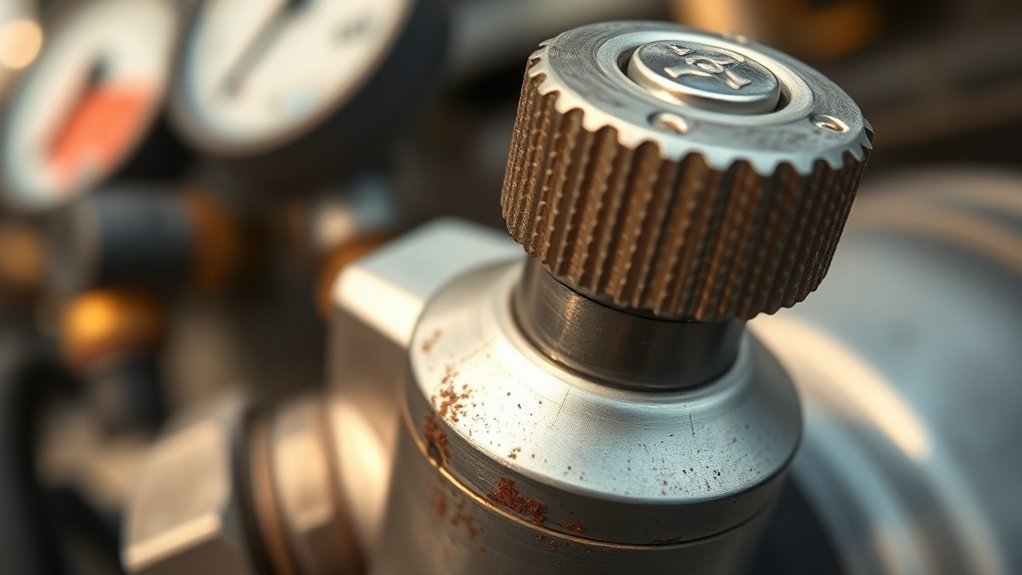
Identifying when your safety valve requires inspection or replacement is essential for maintaining compressor safety and preventing system failures. Safety hazards can arise if a valve’s calibration becomes inaccurate, leading to improper pressure release. Signs include frequent or unexpected valve discharge, which indicates it’s opening prematurely or not at all. Additionally, if the valve exhibits corrosion, physical damage, or leakage when shut, these are clear indicators it’s compromised. A valve that doesn’t respond appropriately during pressure fluctuations jeopardizes system integrity. Regularly inspecting for these signs ensures your safety valve maintains proper calibration and functions reliably. Ignoring these indicators can result in catastrophic failure, making timely inspection or replacement critical for safe compressor operation.
How to Properly Test Your Air Compressor Safety Valve
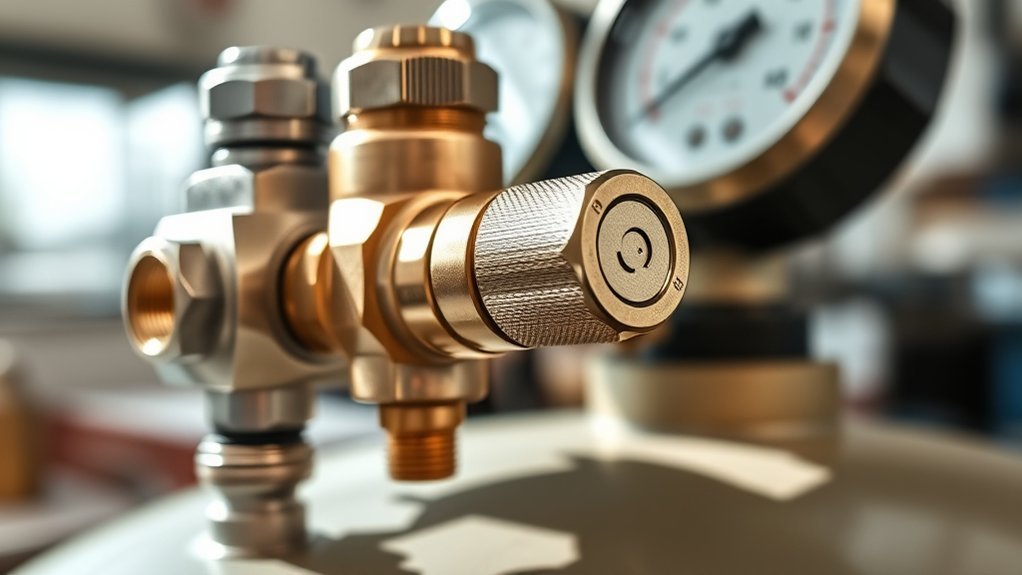
To test your air compressor safety valve properly, we first make certain all necessary safety equipment is in place and the system is depressurized. Next, we release pressure safely according to manufacturer guidelines before conducting the functional test. This process confirms the valve’s operational integrity and safety compliance.
Prepare Safety Equipment
Before testing your air compressor safety valve, it’s essential to gather the appropriate safety equipment to guarantee a safe and accurate procedure. Proper protective gear, including safety goggles and gloves, is critical to shield against potential released pressure or debris. Make sure your workspace is clear and well-ventilated. Familiarize yourself with emergency procedures beforehand, such as quickly shutting off the compressor if abnormal pressure is detected. Use a pressure gauge and testing tools that meet safety standards to accurately assess valve function. Confirm all connections are secure before beginning. Having these safety measures in place minimizes risk and ensures a controlled testing environment. Prioritizing protective gear and emergency preparedness is crucial for a safe, effective safety valve test.
Release Pressure Safely
Ensuring the safety valve is properly tested requires carefully releasing pressure in a controlled manner. We do this by gradually venting compressed air, allowing us to observe the pressure regulation process accurately. Before testing, verify that the valve is correctly calibrated for the designated set pressure. This ensures the valve opens at the specified pressure threshold, maintaining safety and operational integrity. During the process, monitor the pressure gauge closely; a proper safety valve should release pressure smoothly without abrupt fluctuations. If the valve does not release pressure at the correct point or exhibits inconsistent venting, calibration adjustments or replacements are necessary. Proper pressure regulation during testing confirms the safety valve’s reliability and helps prevent over-pressurization, safeguarding both equipment and personnel.
Conduct Functional Test
Performing a functional test of your air compressor safety valve is essential to confirm it operates correctly under pressure conditions. To do this accurately, follow established calibration procedures to guarantee the test setup reflects operational parameters. Begin by gradually pressurizing the system while monitoring pressure gauges, comparing readings against historical safety data to identify any discrepancies. When the pressure reaches the valve’s set point, the valve should release to prevent overpressure. Document the response time and release pressure, then compare these results against manufacturer specifications. Regular testing using these calibrated procedures helps verify the valve’s proper function, ensuring ongoing safety. This process not only confirms operational integrity but also provides critical data to inform maintenance schedules and safety compliance.
Choosing the Right Safety Valve for Your Air Compressor
Selecting the appropriate safety valve for your air compressor is crucial to maintain safe operating pressures and prevent equipment failure. Safety valve selection involves evaluating pressure ratings, flow capacity, and compatibility with your compressor system. It’s important to take into account valve material considerations, such as brass, stainless steel, or bronze, to ensure durability under operating conditions and resistance to corrosion. The material choice influences the valve’s longevity, responsiveness, and suitability for specific environments, such as humid or aggressive atmospheres. Precise calibration of the valve’s set pressure and understanding the manufacturer’s specifications are essential for maximum performance. By carefully evaluating these factors, we can select a safety valve that guarantees reliable pressure relief, enhances safety, and prolongs the lifespan of the air compressor system.
Installation Best Practices for Safety Valves
Proper installation of safety valves is critical to guaranteeing reliable pressure relief and maintaining system safety. Correct mounting techniques prevent installation pitfalls that could compromise valve performance. Mount the valve vertically to ensure proper function and prevent potential leakages. Use appropriate gaskets and torque specifications to avoid leaks and damage. Avoid overtightening, which can distort the valve seat, or undertightening, which risks dislodgement. The table below summarizes key mounting considerations:
| Aspect | Best Practice | Common Pitfall |
|---|---|---|
| Orientation | Vertical installation | Horizontal mounting |
| Torque Specifications | Follow manufacturer’s recommended settings | Overtightening or undertightening |
| Connection Method | Use compatible fittings and proper sealing | Improper sealing or incompatible fittings |
Common Mistakes to Avoid With Safety Valve Maintenance
One of the most common mistakes in safety valve maintenance is neglecting regular inspection and testing, which can lead to undetected wear or malfunction. Proper safety training guarantees personnel understand inspection protocols and testing procedures, reducing human error. Additionally, inconsistent maintenance scheduling often results in overlooked components or delayed replacements, compromising safety. It’s essential to establish a rigorous maintenance calendar aligned with manufacturer recommendations and operational demands. Failing to adhere to scheduled inspections can cause valve failures under pressure, risking equipment damage or injury. We emphasize that continuous safety training reinforces proper handling and troubleshooting techniques. Regular, well-documented maintenance, combined with thorough safety training, minimizes the risk of safety valve failure and guarantees reliable operation within specified pressure limits.
Troubleshooting Safety Valve Failures and Overpressure Incidents
When safety valves fail or overpressure incidents occur, targeted troubleshooting is essential to identify the root cause and prevent recurrence. We start by verifying proper safety valve calibration, as inaccurate calibration can lead to improper pressure relief. If the valve opens prematurely or fails to open at the designated pressure, calibration adjustments are necessary. Persistent failures may require inspecting for debris, corrosion, or mechanical damage. Overpressure conditions often trigger emergency shutdown procedures, but these should not replace thorough diagnostics. We also evaluate the relief set points and compare them to manufacturer specifications. If issues persist, replacing the safety valve might be necessary. Accurate troubleshooting ensures reliable pressure control and prevents potential system failures, safeguarding personnel and equipment effectively.
Frequently Asked Questions
How Long Do Air Compressor Safety Valves Typically Last?
Typically, safety valves last 5-10 years, but regular maintenance schedules and safety valve testing are essential to guarantee proper function; replace them sooner if they show signs of wear or malfunction during testing.
Can Safety Valves Be Repaired or Only Replaced?
We believe safety valves primarily require replacement due to material deterioration, as maintenance procedures rarely allow effective repairs. Regular inspection guarantees durability, but once compromised, replacing safety valves guarantees reliable, safe operation aligned with material resilience and technical standards.
Are Safety Valves Compatible Across Different Air Compressor Brands?
Safety valves generally aren’t universally compatible across different brands due to variations in design and specifications. Valve interchangeability depends on precise brand compatibility, so we recommend verifying manufacturer guidelines to guarantee maximum safety and performance before replacing or installing safety valves.
What Are the Environmental Factors Affecting Safety Valve Performance?
Think of safety valves as vigilant guardians, affected by environmental factors like corrosion and testing conditions. We recommend corrosion prevention measures and thorough environmental testing to guarantee their reliable performance amid humidity, temperature fluctuations, and corrosive elements.
How Often Should Safety Valves Be Recalibrated?
We recommend recalibrating safety valves annually, considering calibration frequency and valve inspection results, to guarantee peak performance. Regular inspections help identify potential issues early, maintaining safety standards and preventing pressure-related failures in air compressor systems.
Conclusion
In essence, safety valves are the vigilant guardians of our systems, preventing catastrophic overpressure events. Proper understanding, regular inspection, and diligent maintenance are our shields against failure. When we treat these valves with the care they deserve, we guarantee the integrity of our equipment and safety of everyone involved. Like a finely tuned instrument, a well-maintained safety valve keeps our operations running smoothly, safeguarding our investments and lives with unwavering precision.