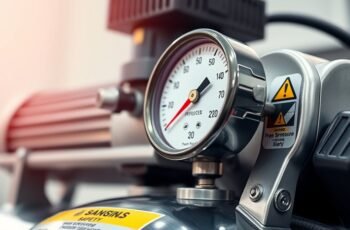
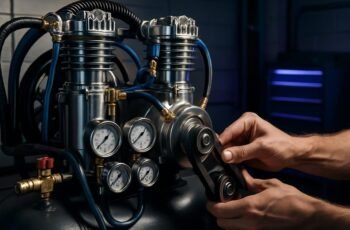
When it comes to stationary air compressors, energy efficiency isn’t just a matter of choosing the right model—it’s a complex interplay of design, operation, and maintenance. Each component and practice plays a critical role in minimizing waste and optimizing performance. Understanding these factors can markedly impact operational costs and equipment longevity. Yet, many overlook the subtle strategies that reveal true efficiency, prompting us to explore the key elements that drive sustainable compression systems.
Key Takeaways
- Optimizing compressor load and operating at partial loads improves overall energy efficiency.
- Implementing variable speed drives (VSD) adjusts motor speed based on demand, reducing energy consumption.
- Regular maintenance, including lubrication and noise management, minimizes friction and mechanical inefficiencies.
- Advanced control systems and digital twins enable real-time monitoring and predictive performance optimization.
- Upgrading to energy-efficient components and sound-dampening features reduces waste and enhances operational efficiency.
How Do Stationary Air Compressors Consume Energy and Why Does It Matter?
Although stationary air compressors are essential for industrial operations, their energy consumption is a critical factor that directly impacts operational costs and environmental sustainability. Energy consumption depends heavily on compressor load, which refers to the proportion of the compressor’s capacity being utilized at any given time. When operating at high compressor load, energy efficiency diminishes, as the system consumes more power relative to the actual compressed air output. Conversely, partial load operation often results in lower energy efficiency due to increased cycling and heat losses. Understanding how compressor load influences energy consumption allows us to optimize operation, reducing waste and lowering costs. Monitoring load patterns enables targeted adjustments, ensuring that energy use aligns with real demand, ultimately enhancing overall system efficiency.
Key Design Features That Boost Compressor Efficiency
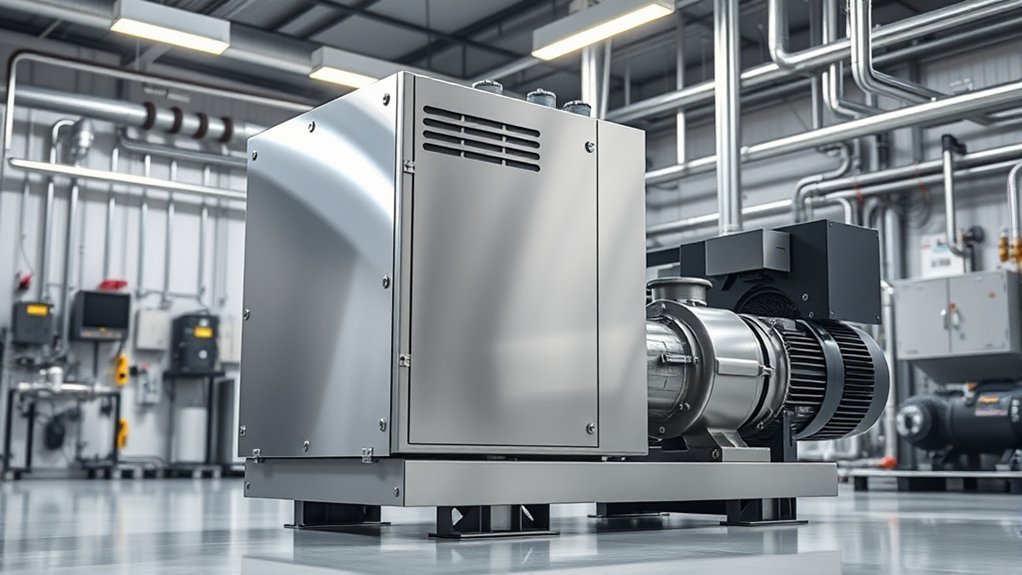
Design features that enhance compressor efficiency focus on minimizing energy losses and optimizing performance under varying load conditions. Effective lubrication systems are vital, reducing friction and wear, which maintains ideal operating temperatures and prevents unnecessary energy consumption. Advanced lubrication also extends component lifespan, guaranteeing consistent efficiency over time. Noise reduction is another key feature; incorporating sound-dampening enclosures and vibration isolators minimizes energy loss due to mechanical vibrations and airflow turbulence. These measures improve overall system stability and reduce auxiliary power demands. Additionally, precision-engineered components—such as variable speed drives and optimized inlet valves—further reduce energy waste. Together, these design elements guarantee the compressor operates efficiently, reliably, and with minimal energy expenditure, aligning with the goal of sustainable and cost-effective compressed air generation.
Best Operational Practices for Saving Energy With Stationary Compressors
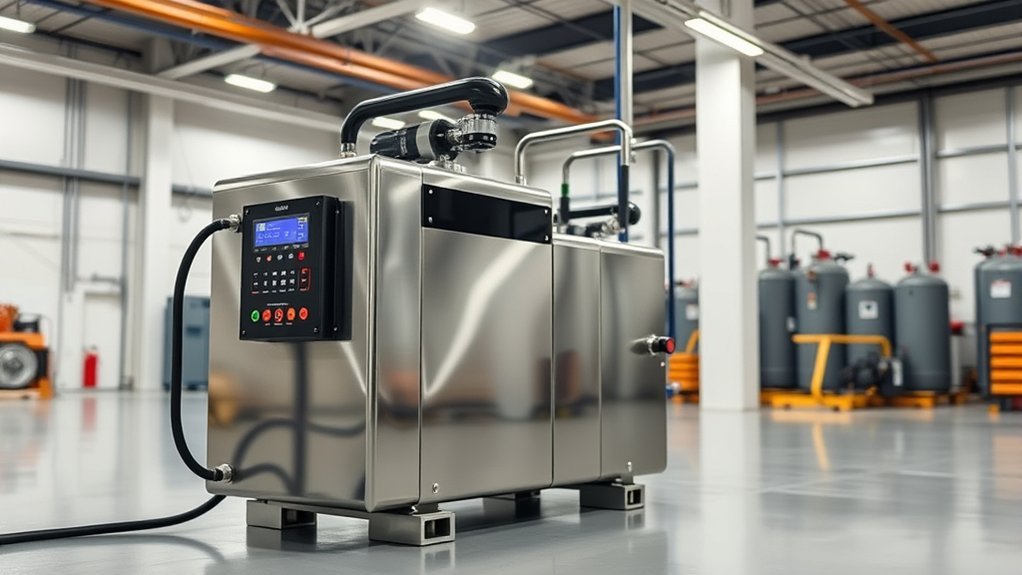
Optimizing compressor operation requires more than just advanced design; it depends heavily on adherence to effective practices during daily use. Lubrication optimization ensures minimal friction and wear, reducing energy consumption and preventing unnecessary load on the compressor. Proper lubrication schedules and selecting suitable lubricants improve efficiency and extend component lifespan. Noise reduction is also vital, as excessive noise often indicates inefficient operation or misalignment, which can increase energy use. Maintaining ideal operating conditions, such as controlling inlet air temperature and eliminating leaks, further enhances energy savings. Regularly monitoring compressor performance enables early detection of inefficiencies, allowing corrective actions before energy is wasted. By integrating lubrication optimization and noise reduction strategies, we can markedly improve the operational efficiency of stationary compressors while reducing overall energy costs.
Maintenance Strategies to Maximize Compressor Performance and Minimize Energy Use
Have you considered how proactive maintenance directly impacts compressor efficiency and energy consumption? Implementing lubrication optimization reduces friction and wear, which minimizes energy losses and extends equipment lifespan. Regular oil analysis and timely lubrication adjustments ensure peak performance, preventing unnecessary energy use caused by mechanical inefficiencies. Additionally, noise reduction is a key indicator of proper maintenance; excessive noise often signals bearing issues or misalignment that increase power draw. Monitoring and addressing noise levels help identify underlying problems early, allowing targeted interventions that enhance performance. Combining lubrication optimization with vigilant noise management creates a maintenance strategy that keeps compressors running smoothly, reduces energy consumption, and prevents costly downtime. This proactive approach ensures maximum efficiency and operational reliability over the compressor’s lifespan.
Innovative Technologies and Upgrades for Enhanced Compressor Energy Efficiency
Emerging technologies are transforming the landscape of compressor efficiency by enabling more precise control and smarter operation. These innovations focus on energy saving innovations and compressor upgrade technologies that optimize performance and reduce energy consumption. For example:
- Variable Speed Drive (VSD) systems adjust motor speed to match demand, notably lowering energy use during partial loads.
- Advanced control systems leverage real-time data and predictive analytics to optimize compressor operation and prevent inefficiencies.
- Digital twin technology allows for virtual modeling of compressor performance, facilitating targeted upgrades and maintenance.
Frequently Asked Questions
How Does Ambient Temperature Affect Stationary Air Compressor Efficiency?
Ambient temperature impacts efficiency through ambient cooling and temperature regulation; higher temperatures reduce heat dissipation, causing increased energy consumption, while cooler environments enhance compressor performance by maintaining ideal operating conditions, ultimately improving overall energy efficiency.
What Role Does Compressor Size Play in Energy Consumption?
Think of compressor size as the engine’s horsepower—larger isn’t always better. Proper compressor sizing guarantees energy optimization, preventing wasteful overcapacity and reducing unnecessary energy consumption, ultimately making your system more efficient and cost-effective.
Are There Specific Industries That Benefit Most From Energy-Efficient Compressors?
We find industries with high, continuous air demand, like manufacturing and healthcare, benefit most from energy-efficient compressors. Implementing advanced maintenance strategies and optimizing industrial applications considerably reduces energy consumption and operational costs.
How Quickly Can Energy Savings Be Realized After Upgrades?
We typically see energy savings within weeks of upgrading, especially when optimizing maintenance schedules and reducing compressor noise, which enhances efficiency. Continuous monitoring guarantees sustained benefits, allowing us to analyze performance improvements over time for maximum operational gains.
What Are the Environmental Impacts of Inefficient Compressor Operation?
Inefficient compressors pollute our environment like silent leaks, with refrigerant leaks harming ozone layers and noise pollution disrupting ecosystems; optimizing energy use reduces these impacts, ensuring sustainable operation and safeguarding our planet’s health and balance.
Conclusion
By embracing these advanced strategies and cutting-edge technologies, we can unlock unparalleled energy efficiency in stationary air compressors. Implementing optimal designs, rigorous maintenance, and innovative upgrades transforms our systems into ultra-efficient powerhouses, drastically reducing operational costs and environmental impact. This isn’t just improvement; it’s a revolution in compressed air management. Together, we’re pushing the boundaries of what’s possible, ensuring our compressors run at peak performance—faster, smarter, and more sustainably than ever before.