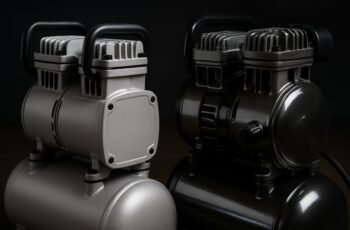
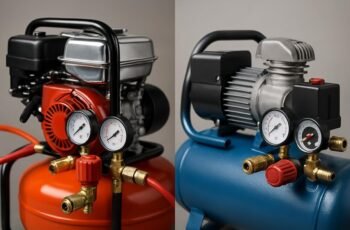
Consider a manufacturing plant choosing between an oil-lubricated and an oil-free compressor; each offers distinct advantages and limitations that can greatly impact performance and maintenance. We recognize that selecting the right type requires a careful analysis of factors such as application demands, environmental standards, and long-term costs. To make an informed decision, it’s essential to examine how these compressors compare across various operational aspects—something we’ll explore in detail.
Key Takeaways
- Oil-lubricated compressors offer greater durability and are suitable for heavy-duty, continuous industrial applications.
- Oil-free compressors provide higher air purity, ideal for sensitive environments like food, pharmaceuticals, and electronics.
- Oil-lubricated units require regular maintenance and pose environmental concerns due to oil disposal and carryover risks.
- Oil-free compressors are typically quieter, lighter, and more portable, making them suitable for low-noise and mobile uses.
- Long-term operational costs favor oil-lubricated models due to energy efficiency and durability, despite higher initial investment.
What Are the Main Differences Between Oil-Lubricated and Oil-Free Compressors?
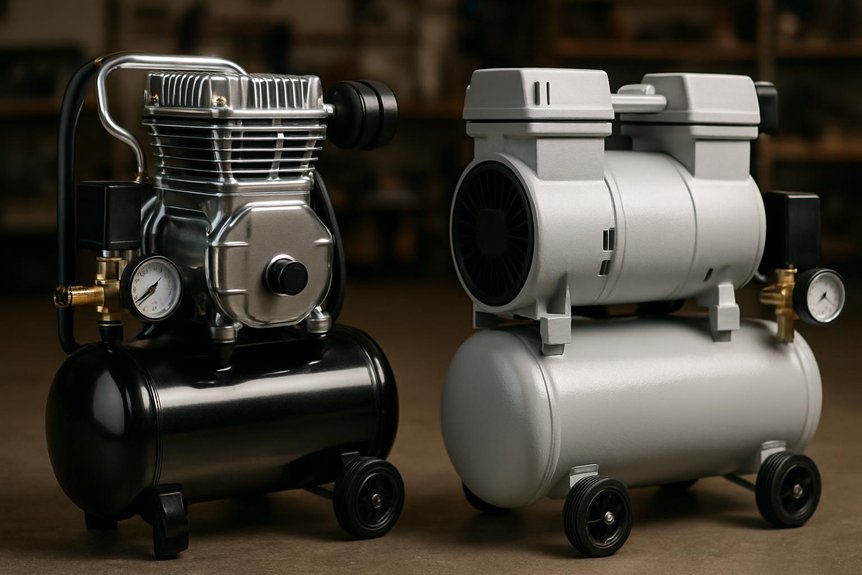
While both oil-lubricated and oil-free air compressors serve the same fundamental purpose of generating compressed air, they differ particularly in design and operational characteristics. The key distinction lies in lubrication techniques: oil-lubricated compressors use oil to reduce friction and wear, which influences their compressor design by incorporating oil reservoirs and filtration systems. Conversely, oil-free compressors eliminate oil entirely, often employing alternative materials like Teflon or other coatings to minimize friction, resulting in a more streamlined design. This fundamental difference affects maintenance, reliability, and air purity. Oil lubrication provides enhanced cooling and durability, but adds complexity. Oil-free designs prioritize cleanliness and simplicity, making them suitable for applications demanding contaminant-free air.
How Do Oil-Lubricated Compressors Perform in Heavy-Duty Applications?
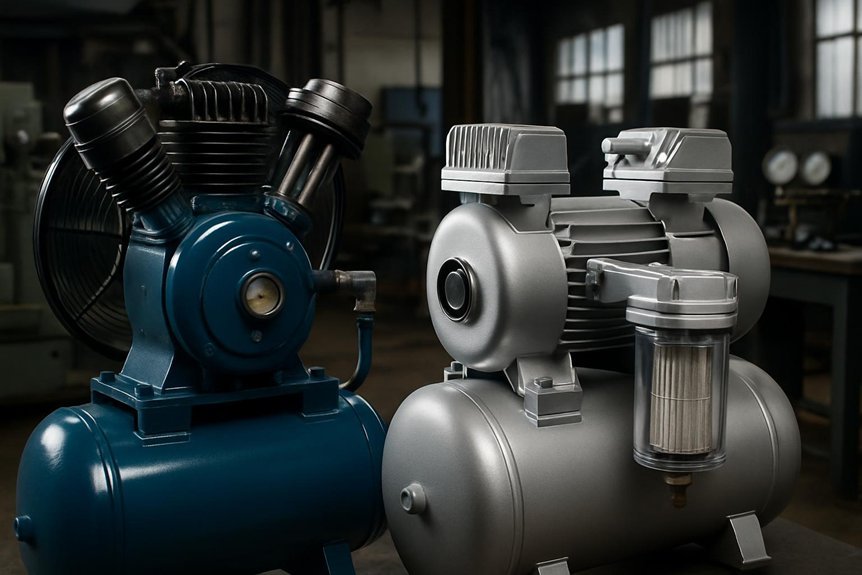
In heavy-duty applications, oil-lubricated compressors generally offer enhanced durability under sustained pressure, thanks to their robust lubrication systems. However, they pose higher risks of oil contamination, which can compromise product quality and safety. Maintenance demands are also increased to guarantee ideal performance and to manage potential oil-related issues.
Durability Under Pressure
Oil-lubricated compressors are renowned for their robustness in heavy-duty applications due to their ability to withstand sustained operational stresses. Their superior pressure endurance stems from lubrication chemistry that maintains ideal film thickness, reducing metal-to-metal contact under high loads. This consistent lubrication minimizes wear and prevents overheating during extended operation. The design allows these compressors to handle fluctuating pressures without compromising structural integrity. Their durability under pressure is further enhanced by the ability to dissipate heat efficiently, ensuring stable performance during continuous use. Overall, the combination of advanced lubrication chemistry and engineered pressure endurance makes oil-lubricated compressors highly reliable in demanding environments, where long-term resilience and consistent output are critical.
Oil Contamination Risks
Oil contamination remains a significant concern in heavy-duty applications involving oil-lubricated compressors, as the presence of oil carryover can compromise system integrity and product quality. Oil carryover can lead to equipment fouling, increased maintenance, and contamination of downstream processes. From an environmental perspective, improper oil disposal poses risks such as soil and water contamination, highlighting the importance of effective oil management. Additionally, residual oil in compressed air systems can reduce efficiency and increase operational costs. In heavy-duty settings, the risk of oil contamination necessitates rigorous filtration and separation systems, but these measures also generate waste that must be responsibly managed. Overall, oil contamination risks in heavy-duty applications present both operational and environmental challenges, emphasizing the need for careful control and disposal strategies.
Maintenance Requirements
Maintaining oil-lubricated compressors in heavy-duty applications demands rigorous attention to their operational and mechanical integrity. Regular monitoring of oil levels and quality is essential to sustain peak performance, directly influencing energy efficiency. Proper lubrication reduces wear and tear, extending equipment lifespan and minimizing unplanned downtime. However, these compressors require routine oil changes and filter replacements, which impact environmental impact due to oil disposal concerns. Ensuring precise maintenance also guarantees consistent airflow and reduces energy consumption, promoting energy efficiency. While the maintenance process can be intensive, it ultimately enhances reliability and operational costs. Heavy-duty use underscores the importance of systematic upkeep, balancing performance with environmental considerations, and guaranteeing the compressor operates within ideal parameters for demanding applications.
What Are the Benefits of Oil-Free Compressors for Clean Environments?
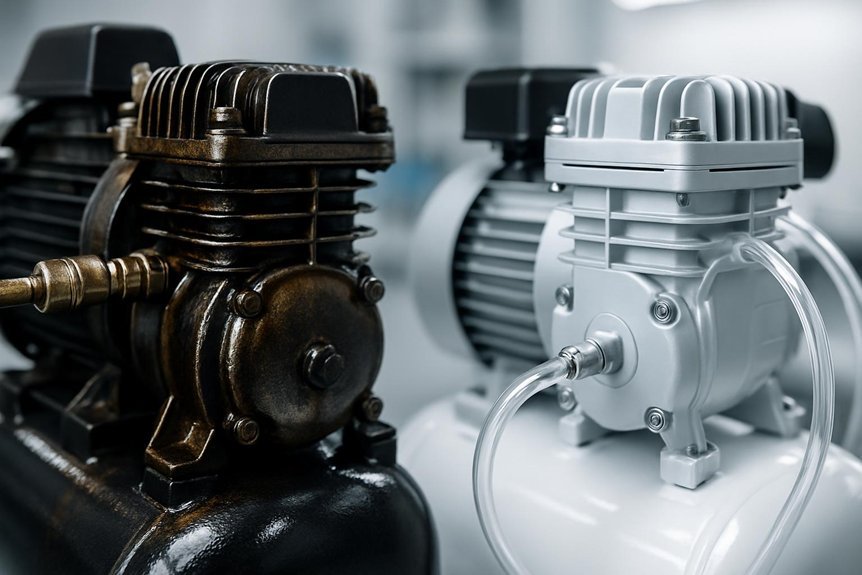
Because contaminants from oil-lubricated compressors can compromise air purity, oil-free compressors provide a clear advantage in maintaining clean environments. They eliminate the risk of oil carryover, ensuring higher air quality essential for sensitive applications like pharmaceuticals, food processing, and electronics manufacturing. This reduction in airborne oil particles minimizes contamination, resulting in safer, more consistent product outcomes. Additionally, oil-free systems tend to have a lower environmental impact by removing the need for oil disposal and reducing potential pollutant release. Their design supports compliance with strict regulations on air purity and emissions, making them especially suitable for industries requiring contaminant-free compressed air. Overall, oil-free compressors safeguard both air quality and environmental integrity, making them a strategic choice for clean, responsible operations.
How Do Maintenance Requirements Compare Between the Two Types?
While both oil-lubricated and oil-free compressors require regular maintenance, their specific needs differ markedly. Oil-lubricated units demand routine oil changes, filter replacements, and inspection of lubrication systems, which can lead to increased downtime but often enhance efficiency improvements by reducing internal wear. Conversely, oil-free compressors have minimal lubrication components, resulting in lower maintenance frequency and simpler procedures. This reduction translates to less environmental impact due to fewer oil disposal concerns and decreased risk of oil contamination. However, oil-free models may experience higher wear rates, potentially impacting long-term efficiency. Overall, oil-lubricated compressors involve more complex maintenance routines focused on oil system health, while oil-free units emphasize straightforward upkeep that supports environmental sustainability and consistent operation.
Which Compressor Type Is More Cost-Effective Over Time?
Evaluating the long-term cost-effectiveness of oil-lubricated versus oil-free air compressors involves analyzing both initial investment and ongoing operational expenses. A detailed cost analysis reveals that oil-lubricated models typically have higher upfront costs due to complex components and lubrication systems. However, they often excel in energy efficiency, consuming less power during extended operation, which reduces operational costs over time. Conversely, oil-free compressors usually have lower initial costs but tend to be less energy-efficient, leading to higher energy bills. Maintenance costs also differ; oil-lubricated units require periodic oil changes and filter replacements, but these costs are offset by their durability and lower energy consumption. Ultimately, the more cost-effective choice depends on specific application demands and long-term operational priorities.
What Are the Common Use Cases for Oil-Lubricated Compressors?
Oil-lubricated compressors are primarily used in industrial manufacturing and heavy-duty construction due to their durability and ability to handle continuous, high-demand operation. Their lubrication system reduces wear, ensuring reliable performance in demanding environments. Understanding these use cases highlights their suitability for applications requiring longevity and consistent output.
Industrial Manufacturing Applications
Have you considered why oil-lubricated air compressors are preferred in many industrial manufacturing processes? Their ability to deliver consistent, high-quality airflow makes them ideal for applications requiring precise control and reliability. These compressors excel in manufacturing environments such as assembly lines, packaging, and pneumatic tool operation, where continuous operation and durability are critical. Their design often results in better energy efficiency over extended periods, reducing operational costs. Additionally, oil lubrication helps minimize wear and tear, extending equipment lifespan. From an environmental impact perspective, well-maintained oil-lubricated compressors can produce lower emissions and less particulate matter, especially when using biodegradable oils. Overall, their robustness and efficiency make them a preferred choice in demanding industrial applications.
Heavy-Duty Construction Tasks
Heavy-duty construction tasks commonly rely on oil-lubricated compressors due to their durability and ability to sustain continuous, high-demand operation. These compressors excel in applications like foundation drilling, heavy-duty jackhammers, and large-scale pneumatic tools, where consistent airflow and reliability are critical. Their robust design ensures long operational life, but they also have notable environmental impacts, primarily related to oil leaks and disposal. When evaluating energy efficiency, oil-lubricated units tend to consume more power due to their complex lubrication systems, but their durability can offset initial costs by reducing downtime. Careful consideration of environmental impact and energy efficiency is vital for selecting the appropriate compressor for heavy-duty construction, especially in projects prioritizing sustainable practices and regulatory compliance.
When Should You Choose an Oil-Free Compressor for Your Project?
Choosing an oil-free compressor becomes essential when your project demands high air purity or operates in environments sensitive to oil contamination. These compressors are particularly advantageous in applications requiring strict contamination control, such as food processing, pharmaceuticals, or electronics manufacturing. Additionally, oil-free models often offer improved energy efficiency, reducing operational costs over time. From an environmental standpoint, they produce fewer emissions and eliminate the risk of oil spills, minimizing ecological impact. When minimizing maintenance and ensuring consistent air quality are priorities, an oil-free compressor is the best choice. Ultimately, selecting an oil-free system aligns with goals of sustainability, compliance, and operational reliability, especially in settings where air purity and environmental considerations are paramount.
What Are the Key Factors to Consider When Deciding?
When deciding between oil-lubricated and oil-free air compressors, we must carefully evaluate several technical and operational factors to guarantee excellent performance and cost-effectiveness. Key considerations include energy efficiency, as oil-free models typically consume less power due to simpler design, but may have higher operational costs over time. Environmental impact is also critical; oil-free compressors produce fewer emissions and eliminate the risk of oil contamination, making them more eco-friendly. Conversely, oil-lubricated models often offer longer service life and better cooling, which can enhance reliability in demanding environments. We should also consider maintenance requirements, initial investment, and specific application needs. Balancing these factors ensures an informed decision aligned with operational goals, environmental standards, and budget constraints.
How Do Noise Levels and Portability Differ Between Oil-Lubricated and Oil-Free Models?
Oil-free air compressors generally operate more quietly than their oil-lubricated counterparts, primarily due to their simplified design and lack of internal oil reservoirs and lubrication systems. This results in a favorable noise comparison, making them suitable for environments requiring lower sound levels. Regarding portability differences, oil-free models are typically lighter and more compact, enhancing ease of transport and setup. They often feature integrated handles or carry cases, which simplify their movement across job sites or workshops. Conversely, oil-lubricated compressors tend to be bulkier and heavier because of their internal oil systems, reducing portability. These distinctions are critical when selecting a model based on mobility needs, especially in settings where noise reduction and ease of transport are priorities.
Frequently Asked Questions
Are Oil-Free Compressors More Energy-Efficient Than Oil-Lubricated Ones?
Oil-free compressors are generally more energy-efficient due to lower maintenance costs and reduced noise levels, which minimizes operational disruptions. Their design often leads to less energy wastage, making them advantageous for energy-conscious applications.
How Do Oil-Free Compressors Impact Air Quality for Sensitive Applications?
We find oil-free compressors enhance air purity by minimizing lubricant contaminants, which is essential for sensitive applications. Their design considerably improves contaminant control, ensuring cleaner, safer compressed air, especially important in health, pharmaceutical, and electronic industries.
Can Oil-Free Compressors Handle Continuous Operation Effectively?
Oil-free compressors handle continuous operation effectively with lower maintenance frequency and quieter noise levels, making them ideal for sensitive environments; their design minimizes wear and tear, ensuring consistent performance without the need for frequent lubrication.
What Are the Long-Term Durability Differences Between the Two Types?
Like a fine-tuned engine, oil-lubricated compressors typically outlast oil-free ones, thanks to superior lubrication maintenance. They also tend to have better noise reduction, making them more durable long-term in demanding applications.
Are There Specific Industries That Predominantly Use One Type Over the Other?
We observe that industries prioritizing environmental impact and lower maintenance requirements, like healthcare and food processing, mainly use oil-free compressors, while manufacturing and construction often favor oil-lubricated models for durability and efficiency.
Conclusion
In weighing oil-lubricated against oil-free compressors, the choice hinges on your specific needs—durability versus purity, power versus portability. Like a carefully balanced equation, understanding each type’s strengths and limitations allows us to optimize performance and cost-efficiency. By analyzing application demands and environmental considerations, we can select the compressor that not only meets but exceeds expectations, turning the complex calculus of choice into a strategic advantage. After all, the right compressor isn’t just equipment; it’s an investment in precision.