Did you know that proper maintenance can extend an air compressor’s lifespan by up to 50%? Regular servicing is essential for peak performance, safety, and cost efficiency. Ensuring that routine inspections and component checks are consistently performed can prevent costly downtime and equipment failure. Understanding the core principles of compressor upkeep helps us avoid avoidable issues and maximize operational reliability—yet many overlook these critical steps. Let’s explore what it takes to keep your compressor running smoothly and safely.
Key Takeaways
- Conduct routine visual inspections of hoses, belts, filters, and safety devices to detect wear or damage early.
- Regularly replace or clean filters, cooling fins, and components to ensure optimal airflow and prevent overheating.
- Monitor operating parameters like pressure and temperature for deviations and perform timely adjustments or repairs.
- Use vibration isolators and proper mounting to minimize noise, vibration, and mechanical stress during operation.
- Follow scheduled maintenance, safety protocols, and professional troubleshooting to extend compressor lifespan and ensure safe operation.
Understanding the Basics of Air Compressors and Why Proper Maintenance Matters
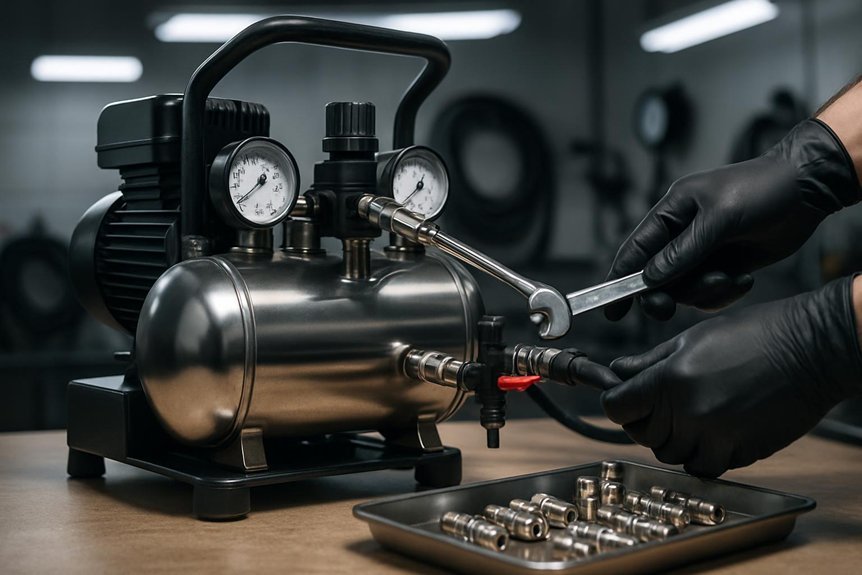
Understanding the basics of air compressors is vital for guaranteeing their ideal performance and longevity. The air compressor history reveals a progression from simple piston devices to advanced rotary and centrifugal models, each suited for specific applications. Familiarity with the various types of compressors—reciprocating, rotary screw, and centrifugal—enables us to select and maintain the right equipment. Proper maintenance prevents performance decline, minimizes downtime, and extends service life. Regular inspection of key components such as valves, belts, and filters is essential. Recognizing how different compressor designs operate helps us identify potential issues early and implement effective servicing routines. Ultimately, understanding these fundamentals ensures maximum functionality and reduces costly repairs, emphasizing why diligent maintenance is indispensable for reliable operation.
How to Perform Routine Inspections and Keep Your Compressor in Top Shape
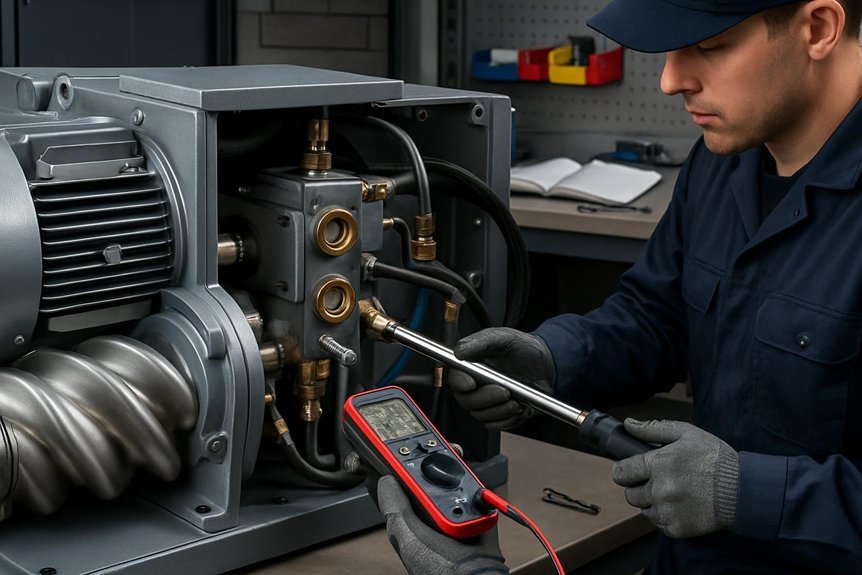
Routine inspections require systematic visual checks of components such as hoses, belts, and filters to detect wear or damage early. We also monitor operating parameters like pressure, temperature, and vibration levels to guarantee ideal performance. Consistent documentation of these observations helps maintain compressor efficiency and prevents unexpected failures.
Visual Inspection Techniques
Performing regular visual inspections is essential for maintaining ideal compressor performance and preventing costly breakdowns. We focus on identifying visual cues that indicate potential issues, such as oil leaks, corrosion, or worn belts. Inspection tools like flashlights, mirrors, and magnifying glasses help enhance visibility in hard-to-reach areas. We examine connections, gauges, and safety devices for signs of deterioration or misalignment. Look for discoloration, cracks, or abnormal residue that could signal underlying problems. Consistent inspection of cooling fins, filters, and vents guarantees proper airflow and prevents overheating. Using these inspection tools and paying close attention to visual cues allows us to detect early warning signs, enabling timely intervention and ensuring the compressor operates reliably and efficiently.
Monitoring Operating Parameters
How can we guarantee our air compressor operates at peak efficiency through effective routine inspections? Regularly monitoring operating parameters such as air pressure and temperature regulation is essential. We should verify that the pressure gauges align with manufacturer specifications, ensuring consistent output and preventing over-pressurization. Monitoring temperature levels at key points helps identify overheating risks or cooling system failures. Precise measurement of these parameters allows us to detect deviations early, facilitating timely adjustments or maintenance. Maintaining ideal air pressure maximizes energy efficiency, while proper temperature regulation prolongs component lifespan. Routine inspections focused on these parameters enable us to sustain stable operation, prevent downtime, and optimize compressor performance. Accurate, consistent monitoring is critical for effective compressor management and long-term reliability.
Step-by-Step Guide to Changing Air Filters and Cleaning Compressor Components
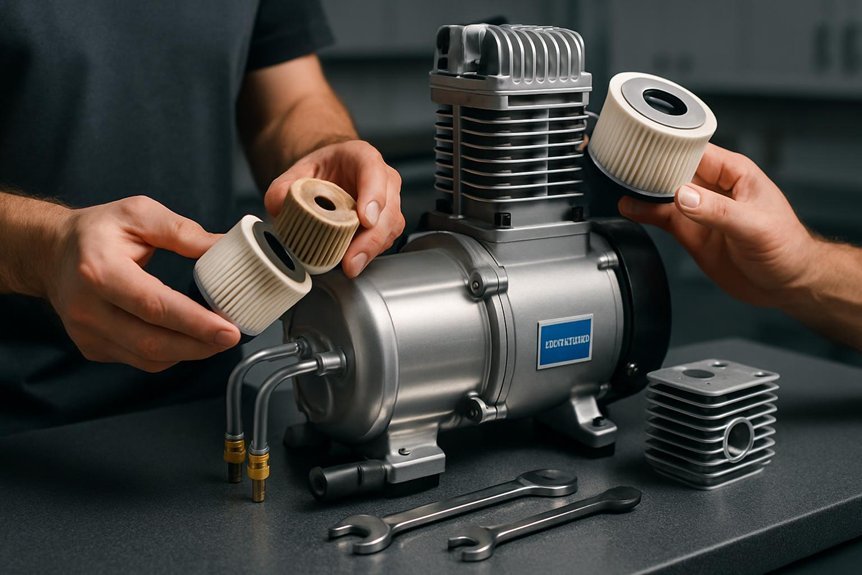
We will now outline the process for replacing air filters and cleaning compressor components to guarantee ideal performance. Proper removal and installation of filters, along with thorough cleaning of parts, are critical steps in maintenance. Following these procedures accurately helps prevent system inefficiencies and prolongs compressor lifespan.
Removing and Replacing Filters
To guarantee peak compressor performance, regularly removing and replacing air filters is essential. Different filter types—such as paper, foam, or mesh—require specific handling. Replacement frequency depends on operating conditions, typically every 1,000 to 2,000 hours of use or monthly in dusty environments.
| Filter Type | Replacement Frequency |
|---|---|
| Paper | 1,000–1,500 hours or monthly |
| Foam | Every 2,000 hours or quarterly |
| Mesh | Every 6–12 months |
| Synthetic | Every 1,500–2,000 hours |
Proper removal involves disconnecting the filter housing, inspecting for damage, and installing a fresh filter to maintain ideal airflow and compressor efficiency.
Cleaning Compressor Parts
Have you ever wondered why regular cleaning of compressor components is vital for peak performance? Proper maintenance prevents buildup that can impair efficiency and cause damage. Start by removing the air filter and inspecting it for dirt and debris. Clean or replace it as needed, guaranteeing no contaminants enter the system. Next, carefully access the compressor blades, which can accumulate dust and contaminants. Use a soft brush or compressed air to remove debris, avoiding damage to delicate surfaces. Pay close attention to cooling fins and other components that may trap dirt. Regular cleaning of these parts maintains ideal airflow and prevents overheating. Consistent maintenance ensures the compressor operates smoothly, extending its lifespan and safeguarding its performance.
Checking and Replacing Compressor Oil and Other Essential Fluids
Regularly checking and replacing compressor oil and other essential fluids is vital for maintaining peak performance and preventing costly damage. Proper oil viscosity ensures adequate lubrication under operating conditions, while fluid contamination can lead to corrosion, increased wear, and decreased efficiency. To maintain the system:
Regular fluid checks prevent damage, ensuring optimal compressor performance and longevity.
- Verify oil levels periodically and top up with the correct viscosity oil specified by the manufacturer.
- Drain and replace the oil when it becomes dark, viscous, or contaminated with dirt or moisture.
- Inspect for signs of fluid contamination, such as water presence or particulate matter, and service immediately to prevent damage.
Consistently monitoring these fluids ensures smooth operation, reduces wear on internal components, and extends compressor lifespan.
Troubleshooting Common Air Compressor Issues and When to Call a Professional
When an air compressor exhibits performance issues, identifying the root cause promptly is essential to prevent further damage and costly repairs. Unusual air compressor noise often indicates mechanical problems such as loose components, worn belts, or bearing failure. Power fluctuation issues may signal electrical faults, inadequate power supply, or motor overloads. If these symptoms persist despite basic troubleshooting, it’s critical to call a professional. Attempting repairs without expertise risks further damage or safety hazards. Professionals can accurately diagnose complex problems like internal component wear or electrical irregularities, ensuring proper fixes. Recognizing when to escalate issues helps maintain compressor efficiency and lifespan, preventing downtime and expensive repairs. Always address persistent noise and power fluctuations with expert assistance.
Tips for Extending Your Compressor’s Lifespan and Ensuring Safe Operation
Maintaining ideal operating conditions and adhering to proper usage protocols can greatly extend the lifespan of your air compressor while guaranteeing safe operation. To optimize energy efficiency and reduce noise, consider these strategies:
- Regularly perform scheduled maintenance, including filter replacements and lubrications, to prevent strain on components.
- Monitor operating pressure and temperature levels to avoid overheating and unnecessary wear.
- Install sound dampening enclosures or vibration isolators to achieve noise reduction, and ensure proper ventilation for consistent airflow.
Implementing these practices minimizes mechanical stress and energy consumption, prolongs component life, and enhances safety. Proper maintenance and monitoring are essential for maximizing efficiency, reducing operational costs, and maintaining a safe working environment.
Frequently Asked Questions
How Often Should I Schedule Professional Compressor Servicing?
We recommend scheduling professional compressor servicing every 6 to 12 months, depending on usage. Our maintenance checklist guarantees peak performance, while troubleshooting techniques help identify issues early, preventing costly repairs and ensuring reliable operation.
What Are the Signs of a Failing Compressor Motor?
We notice signs like motor overheating, where it feels excessively hot to touch, and unusual vibrations that shake the unit, indicating the compressor motor’s failing. Prompt inspection helps prevent costly damage and guarantees ideal operation.
Can I Use Generic Replacement Parts for My Compressor?
We recommend against using generic replacement parts due to material compatibility issues and potential warranty implications. Using OEM parts guarantees proper fit, function, and preserves your compressor’s warranty, maintaining ideal performance and avoiding costly repairs.
How Do Environmental Conditions Affect Compressor Performance?
Environmental impact, particularly temperature fluctuations, greatly influences compressor performance by affecting cooling efficiency and lubrication. We monitor environmental conditions closely to prevent overheating, guarantee ideal operation, and extend the lifespan of the compressor system.
Is There a Recommended Storage Method for Off-Season Use?
Think of storage techniques like tucking your compressor into a cozy, climate-controlled nest. We recommend storing in a dry, cool environment, protecting from moisture and extreme temperatures, ensuring ideal performance when it’s time to power up again.
Conclusion
In summary, diligent maintenance isn’t just about prolonging your compressor’s life—it’s essential for ensuring safety and ideal performance. While some believe that minimal intervention suffices, research shows that consistent, thorough upkeep reduces failure rates and operational costs considerably. By adhering to recommended inspection and servicing protocols, we can mitigate risks associated with equipment failure, confirming that proactive maintenance is both a practical and a scientifically supported approach to maximizing compressor reliability and safety.