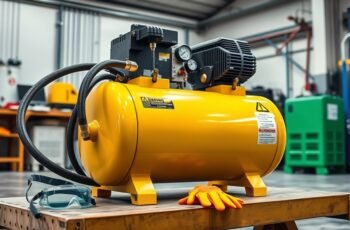
Maintaining an air compressor requires a disciplined, step-by-step approach to guarantee safety, efficiency, and long-term performance. We understand that neglecting routine checks can lead to costly repairs or downtime. To prevent this, we focus on precise inspection, timely replacements, and systematic scheduling. Each task plays a critical role in extending equipment lifespan and optimizing operation. Let’s explore the essential components and procedures that form an all-encompassing maintenance checklist, starting with what you need to know about air filters.
Key Takeaways
- Regularly inspect and replace air filters to ensure optimal airflow and prevent contamination.
- Drain moisture from tanks and check drain valves for proper operation to avoid corrosion.
- Monitor belt alignment and tension weekly to prevent wear and mechanical failure.
- Conduct safety and electrical inspections, and lubricate moving parts quarterly for smooth operation.
- Follow a scheduled maintenance plan including daily, weekly, and monthly tasks to extend equipment lifespan and improve performance.
Why Regular Air Compressor Maintenance Is Essential
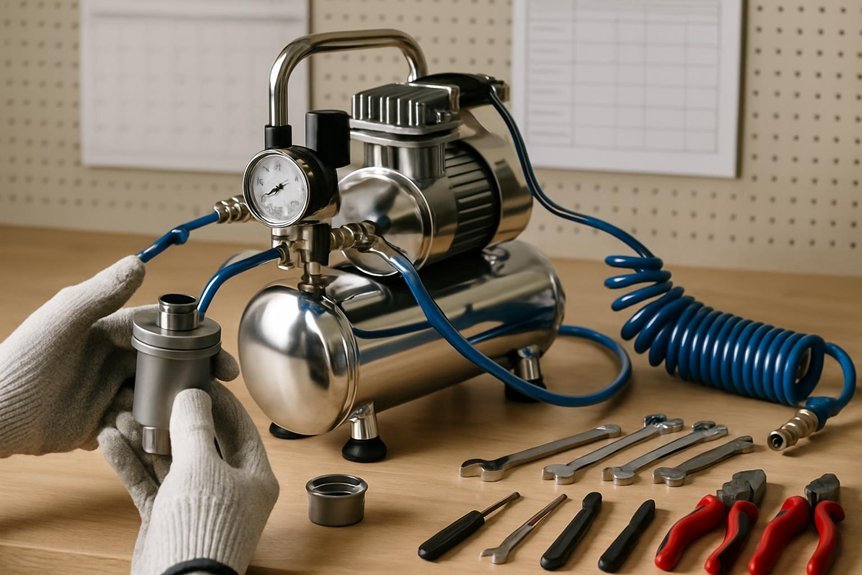
Regular maintenance of air compressors is essential because it guarantees peak performance, safety, and longevity of the equipment. Addressing air compressor noise levels regularly helps identify issues early, preventing excessive noise that can signal mechanical problems or misalignment. Proper maintenance also guarantees correct compressor size selection, which is critical for maximum operation; an undersized unit strains under load, while an oversized one wastes energy and increases wear. By systematically inspecting and maintaining components, we assure the compressor runs smoothly, reduces unnecessary vibration, and minimizes noise disturbances. Precise maintenance routines help prevent costly breakdowns, extend lifespan, and maintain consistent airflow. Ultimately, diligent upkeep keeps your system efficient, safe, and reliable, making regular maintenance an essential aspect of responsible compressor management.
How to Inspect and Replace Air Filters for Optimal Performance
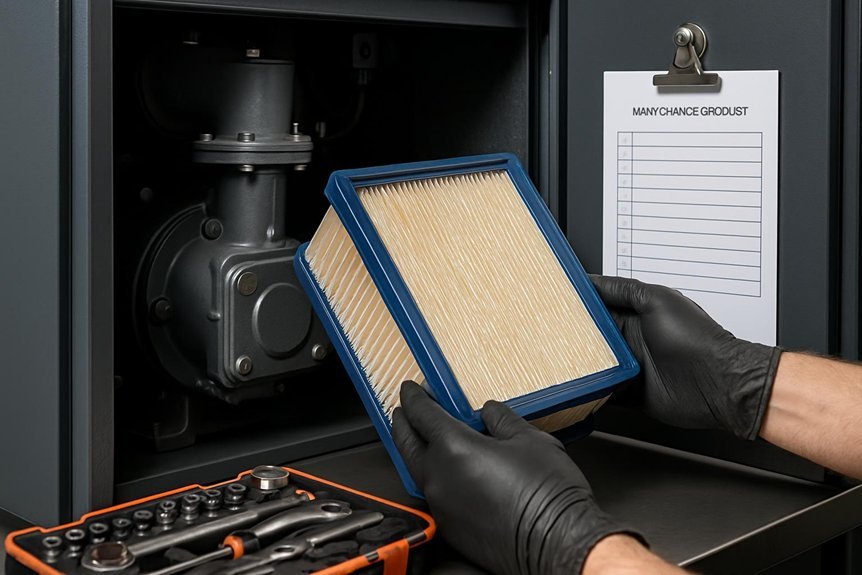
To guarantee your air compressor operates at peak efficiency, inspecting and replacing air filters must become a routine part of maintenance. First, identify the air filter types in your system—such as paper, foam, or reusable filters—and understand their specific replacement needs. Regularly check the filters for dirt buildup, discoloration, or damage, which indicate they’re clogged and less effective. The filter replacement frequency depends on usage and environment but typically ranges from every 1,000 to 3,000 hours of operation or quarterly. When replacing, assure the system is off, carefully remove the old filter, and install the new one securely, avoiding damage. Precise inspection and timely replacement maintain airflow, reduce strain, and optimize compressor performance.
Checking and Draining Moisture From the Tank and Lines
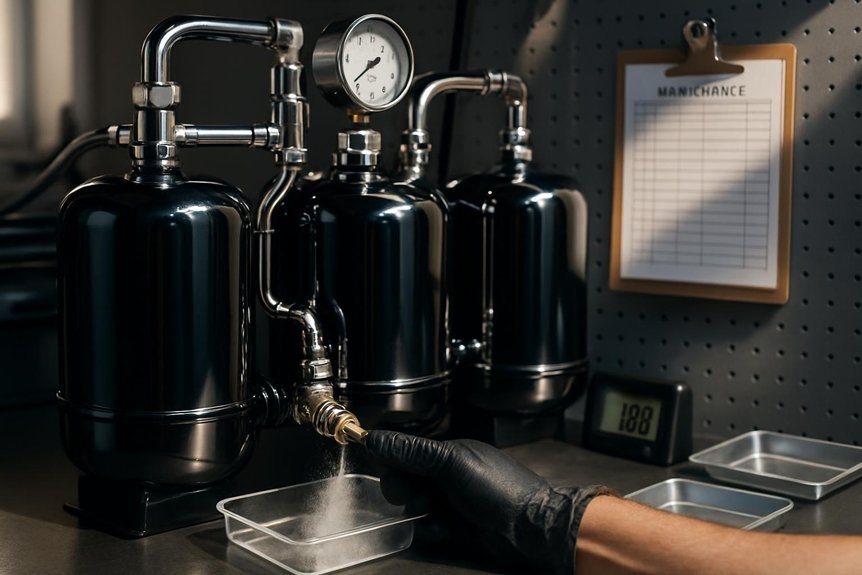
Regularly draining moisture from the tank and lines prevents corrosion and maintains air quality. We carefully inspect the drain valves for proper function and signs of leaks during each maintenance cycle. Precise removal of accumulated water guarantees the compressor operates efficiently and prolongs its lifespan.
Drain Moisture Regularly
Moisture accumulation in the compressor tank and lines can cause corrosion, reduce efficiency, and lead to equipment failure if not addressed promptly. Regularly draining the moisture from the tank and lines is essential to prevent this buildup. We recommend checking the drainage system daily, especially after extended use. Use the drain valve to release accumulated moisture carefully, ensuring complete drainage. Make sure the drainage system is free of obstructions and functioning properly, as any blockage can hinder moisture removal. Always verify that the drain valve seals tightly after draining to prevent air leaks. Consistent, methodical drainage minimizes moisture buildup, preserves compressor longevity, and maintains peak performance. Proper maintenance of the drainage system is a vital step in preventing long-term damage and ensuring reliable operation.
Inspect Drain Valves
Inspecting drain valves thoroughly guarantees that moisture removal remains effective and prevents potential blockages. During drain valve inspection, we check for corrosion, leaks, or damage that could hinder moisture drainage. It’s vital to confirm the valve opens and closes smoothly, allowing moisture to escape without obstruction. We also verify that the drain line is clear, preventing water buildup inside the tank or lines. Regularly draining moisture from the tank and lines reduces corrosion and maintains peak compressor performance. When inspecting, we pay close attention to any signs of rust or grime and clean or replace faulty components immediately. Proper moisture drainage relies on a well-maintained drain valve, so meticulous inspection is essential for reliable, long-term compressor operation.
Monitoring and Adjusting Belt Tension and Drive Components
We regularly inspect belt alignment to guarantee it runs true and minimizes wear on drive components. It is crucial to tighten drive belts and pulleys to manufacturer specifications, preventing slippage and inefficient operation. Precise adjustment and secure fastening of all drive components are vital for maintaining ideal compressor performance.
Inspect Belt Alignment Regularly
How often should we check belt alignment to guarantee ideal compressor performance? Regular alignment checks are essential to prevent uneven belt wear and ensure smooth operation. We recommend inspecting the belt every 2 to 4 weeks, depending on usage intensity. During each check, follow these steps:
- Remove any debris or dust near the belt and pulleys.
- Visually inspect for signs of belt wear or cracks.
- Use a straightedge or alignment tool to verify proper belt alignment with pulleys.
- Adjust the belt position if misalignment is detected, ensuring it runs centrally on pulleys.
Consistent alignment checks help identify issues early, preventing costly repairs and maintaining optimal performance. Properly aligned belts prolong component lifespan and ensure efficient compressor operation.
Tighten Drive Components Properly
Maintaining proper belt tension and ensuring the drive components are correctly adjusted are essential steps in compressor upkeep, as they directly influence performance and component longevity. We carefully inspect the drive belt for signs of wear or slack, then perform tension adjustment by applying moderate pressure to the belt’s midpoint; it should deflect about half an inch. Proper tension prevents slipping and reduces undue strain on the drive pulley and motor. Next, we verify drive component alignment, ensuring pulleys are parallel and the belt runs true. We tighten drive components gradually, avoiding overtightening that can cause premature bearing wear. Consistent tension adjustment and precise component tightening promote efficient operation, reduce downtime, and extend the life of the compressor’s drive system.
Inspecting Safety Devices and Electrical Connections
Have you thoroughly checked the safety devices and electrical connections on your air compressor? Ensuring safety device testing and electrical connection inspection is essential for reliable operation. Follow these steps:
- Verify that all safety valves are functioning correctly and free of obstructions.
- Test emergency shutoff switches to confirm they activate properly under fault conditions.
- Inspect electrical connections for loose wires, corrosion, or signs of wear, tightening any loose terminals.
- Check protective covers and grounding points to guarantee they are secure and intact.
Meticulously review each component, noting any irregularities or damage. Regular safety device testing prevents accidents, while thorough electrical connection inspection avoids potential electrical failures. Consistent attention to these details enhances operational safety and extends the compressor’s lifespan.
Lubricating Moving Parts and Keeping Components Clean
Regular lubrication of moving parts is critical to reducing friction, preventing wear, and ensuring smooth operation of the air compressor. We recommend applying the correct lubrication techniques, using manufacturer-approved oils or greases, and avoiding over-lubrication, which can attract dirt and debris. Consistently check lubrication points and replenish or replace lubricants as needed. Equally important are cleaning procedures; we suggest removing dust, dirt, and residual grease from components with a clean, lint-free cloth or compressed air. Pay close attention to areas such as pistons, valves, and bearings, ensuring no buildup that could hinder performance. A precise, routine approach to lubrication and cleaning maintains efficiency, minimizes downtime, and extends the lifespan of your compressor.
Developing a Maintenance Schedule to Extend Your Compressor’s Lifespan
To effectively extend your compressor’s lifespan, establishing a thorough maintenance schedule is essential. A well-planned routine ensures best air quality and noise reduction, minimizing wear and preventing costly repairs.
- Daily Checks: Inspect air filters for dirt buildup and replace if necessary to maintain air quality.
- Weekly Maintenance: Test safety valves and monitor noise levels, addressing any unusual sounds promptly.
- Monthly Inspection: Examine belts and hoses for wear, ensuring they’re properly tensioned and secure.
- Quarterly Service: Drain moisture from tanks, lubricate moving parts, and calibrate pressure settings to maximize performance.
Following this precise schedule helps detect issues early, prolongs equipment life, and keeps noise levels down, promoting efficiency and safety.
Frequently Asked Questions
How Often Should I Calibrate My Air Compressor’s Pressure Gauges?
We recommend calibrating your pressure gauge at least once every six months to verify compressor accuracy. Regular pressure gauge calibration maintains precise readings, prevents over-pressurization, and guarantees your compressor operates safely and efficiently over time.
What Are the Signs of a Failing Pressure Relief Valve?
A failing pressure relief valve often whispers warning signs like frequent leaks, inconsistent pressure release, or sticking during operation. Keep a close eye on failure signs, ensuring the pressure valve functions correctly and prevents dangerous over-pressurization.
Can I Upgrade Parts for Better Compressor Efficiency?
Yes, we can upgrade parts for better efficiency by enhancing oil filtration and focusing on lubrication optimization, which reduces wear and energy consumption, ensuring your compressor operates smoothly and extends its lifespan with precise, targeted improvements.
How Do Environmental Conditions Affect Compressor Maintenance?
Environmental impact and climate considerations directly influence compressor maintenance by demanding more frequent inspections for corrosion, moisture, and temperature-related issues, ensuring ideal performance, longevity, and adherence to safety standards amidst varying environmental conditions.
What Safety Precautions Should I Follow During Maintenance?
We prioritize safety by wearing personal protective equipment and following electrical safety protocols, even while focusing on meticulous maintenance. This careful approach guarantees we prevent accidents, protect ourselves, and keep the compressor functioning reliably and safely.
Conclusion
By adhering to a meticulous maintenance routine, we can guarantee our air compressors operate smoothly and reliably for years to come. Regular inspections and timely adjustments serve as the subtle guardians of efficiency, quietly preventing potential issues before they arise. Embracing this disciplined approach allows us to preserve the integrity of our equipment, safeguarding both safety and performance. Ultimately, a well-maintained compressor becomes a silent partner in our productivity, quietly supporting our success with unwavering dependability.