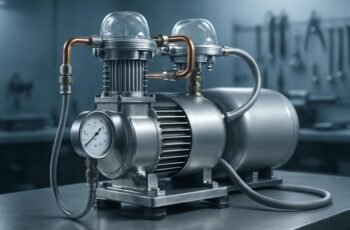
Maintaining air compressor dryers is critical to ensuring their ideal performance and extending their operational lifespan. Proper upkeep involves systematic inspections, timely filter replacements, and monitoring key performance indicators to prevent system inefficiencies. Neglecting these tasks can lead to costly downtime and equipment failure. Understanding the specific maintenance procedures and schedules is essential, but knowing where to start can be challenging—this overview aims to clarify those fundamental steps for reliable, efficient operation.
Key Takeaways
- Regularly inspect and replace filters, desiccants, and drain traps to ensure optimal moisture removal and airflow.
- Monitor dew point, temperature, and pressure levels continuously to detect early system issues.
- Check and clean drain valves, condensate drains, and vents to prevent blockages and leaks.
- Perform routine calibration and control system adjustments to maintain energy efficiency and performance.
- Schedule systematic maintenance, including inspecting for leaks, corrosion, and wear to prolong equipment lifespan.
Understand the Basics of Air Compressor Dryer Maintenance
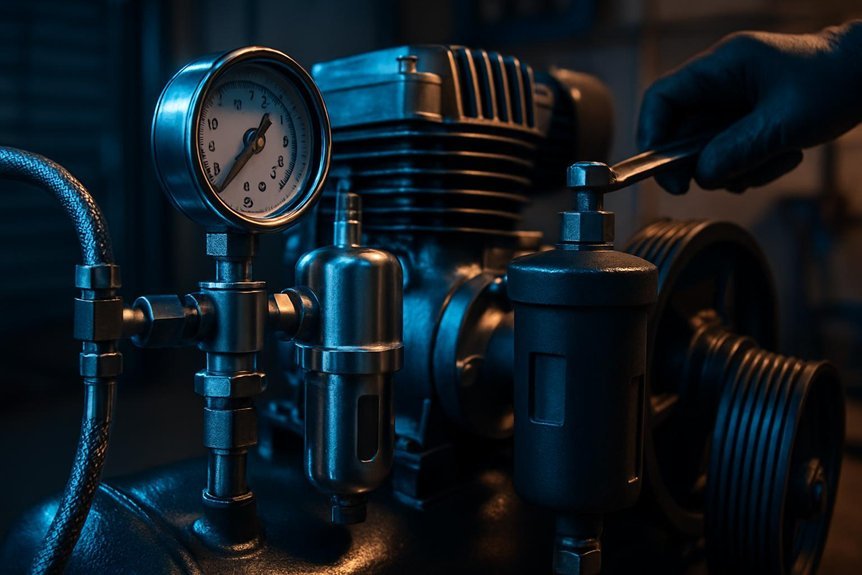
Understanding the basics of air compressor dryer maintenance is essential for guaranteeing peak performance and longevity of the system. Proper maintenance directly impacts air quality by reducing moisture, contaminants, and particulate buildup, which can compromise downstream processes. Additionally, maintaining the dryer maximizes energy efficiency by preventing unnecessary strain on the compressor caused by moisture-related issues. Regular inspection of components like condensate drains, heat exchangers, and control systems ensures the dryer operates within specified parameters. Precise calibration and timely adjustments minimize energy consumption while maintaining ideal dew points. By adhering to these fundamental practices, we can sustain high air quality standards and maximize operational efficiency, ultimately extending the lifespan of the dryer and reducing operational costs.
Regularly Check and Replace Dryer Filters and Desiccants
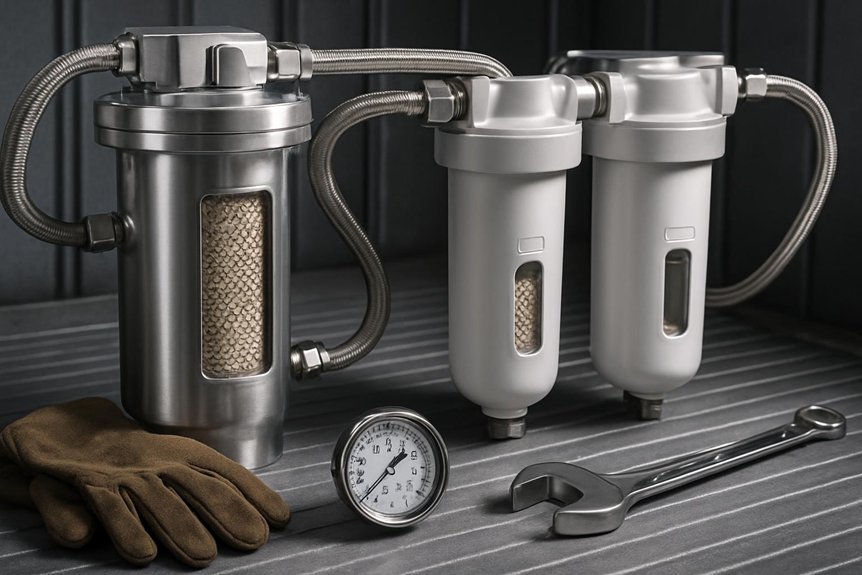
Regular inspection and timely replacement of dryer filters and desiccants are vital to maintaining ideal dryer performance. Filter replacement prevents the buildup of particulate contaminants that can impair moisture removal efficiency. We recommend inspecting filters at regular intervals, replacing them once they show signs of clogging or reduced airflow, typically every few months. Desiccant renewal involves replacing or regenerating the desiccant material when its moisture adsorption capacity diminishes, which can be monitored through dew point measurements. Consistent filter replacement and desiccant renewal guarantee maximum moisture removal, reduce compressor load, and prevent downstream equipment corrosion. Proper maintenance of these components is essential for reliable, efficient operation and extends the lifespan of the air dryer system.
Inspect and Clean Drain Valves to Prevent Water Buildup
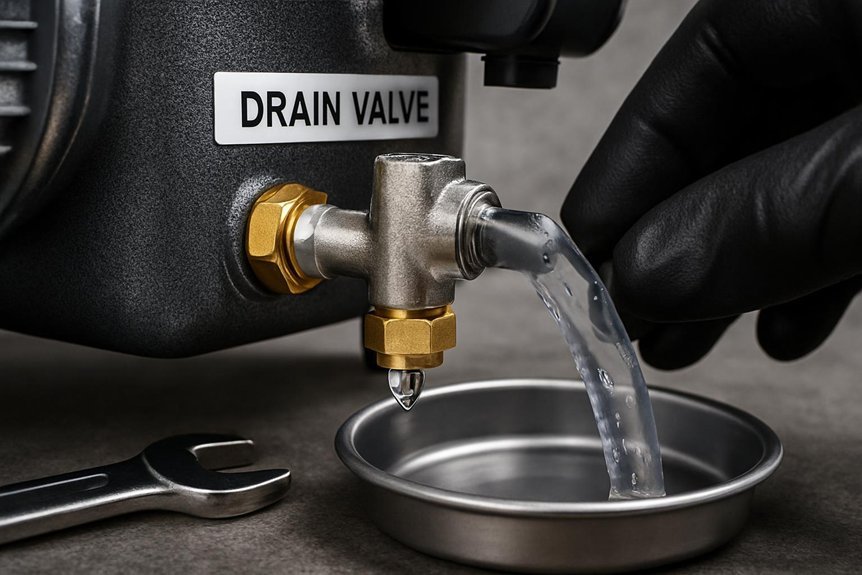
Regular inspection of drain valves is essential to guarantee proper operation and prevent water accumulation. We should promptly clear any blockages or debris to maintain efficient drainage. Consistent maintenance of drain valves minimizes the risk of water buildup that can compromise dryer performance.
Regular Drain Valve Checks
Because accumulated water can impair the efficiency of an air compressor dryer, we must routinely inspect and clean the drain valves. Regular drain valve checks ensure proper water removal, which is critical for airflow enhancement and preventing moisture-related issues. During inspection, verify that drain valves open and close correctly, and look for signs of corrosion or leaks that could compromise their function. Cleaning the valves removes debris and mineral deposits that hinder drainage, maintaining peak operation. Effective leak detection around drain fittings helps identify potential failure points early, reducing unnecessary water buildup. Consistent maintenance of drain valves ensures reliable moisture separation, preserves compressor efficiency, and prevents damage caused by excess water. This proactive approach supports stable system performance and prolongs equipment lifespan.
Clear Blockages Promptly
To maintain ideal performance, we must promptly inspect and clear any blockages in the drain valves, preventing water from accumulating within the system. Blockage prevention is essential for consistent airflow optimization and avoiding system downtime. Regularly check for debris or sediment obstructing the drain valves, and clean them with appropriate tools. A clogged drain can cause water buildup, leading to corrosion and reduced dryer efficiency.
| Action | Purpose |
|---|---|
| Inspect drain valves | Detect potential blockages early |
| Clean with compressed air or tools | Remove debris, ensure free flow |
Monitor Dryer Operating Conditions and Performance Metrics
Monitoring dryer operating conditions and performance metrics is vital to guarantee ideal function and prevent potential failures. Implementing real-time monitoring allows us to track essential parameters such as dew point, temperature, and pressure, providing immediate insights into dryer performance. Performance analytics enable us to identify deviations from ideal conditions, facilitating prompt adjustments and reducing downtime. Consistent data collection helps detect early signs of component wear or malfunction, supporting proactive maintenance strategies. Accurate measurement of key metrics ensures the dryer operates within specified ranges, maximizing energy efficiency and prolonging equipment lifespan. By continuously monitoring these parameters, we can maintain reliable operation, minimize unexpected failures, and guarantee the compressed air system’s overall efficiency and effectiveness.
Schedule Routine System Inspections and Preventive Maintenance
Scheduling regular system inspections and preventive maintenance is crucial for peak dryer performance and reliability. We recommend establishing a detailed maintenance plan that aligns with manufacturer specifications and operational demands. Consistently monitoring system performance during inspections ensures early detection of potential issues and maintains efficiency.
Regular Inspection Scheduling
Regularly scheduled inspections are essential for maintaining the most favorable performance and longevity of air compressor dryers. Consistent inspection scheduling ensures early detection of issues, minimizes downtime, and optimizes system efficiency. An effective inspection checklist should include checks for moisture traps, filter conditions, electrical connections, and overall system integrity. Regular inspections should follow a predetermined maintenance schedule aligned with manufacturer recommendations and operational demands.
| Inspection Area | Key Tasks | Frequency |
|---|---|---|
| Moisture traps | Drainage, replace if necessary | Weekly |
| Filters | Clean or replace filters | Monthly |
| Electrical systems | Verify connections and circuit integrity | Quarterly |
| System components | Look for wear, leaks, corrosion | Biannual |
Preventive Maintenance Planning
Implementing a structured preventive maintenance plan is vital for guaranteeing consistent performance and extending the lifespan of air compressor dryers. Regularly scheduled system inspections help identify issues that could compromise air quality or reduce energy efficiency. By planning routine maintenance, such as filter replacements and condensate drain checks, we can prevent contamination and maintain ideal drying conditions. This systematic approach minimizes unexpected downtime and guarantees the dryer operates at peak efficiency, conserving energy and reducing operational costs. Consistent preventative measures also safeguard air quality by preventing moisture buildup and particulate ingress. Ultimately, a detailed maintenance schedule promotes reliable system performance, supports compliance with air quality standards, and maximizes energy use, making preventive maintenance planning an essential aspect of thorough dryer management.
Monitor System Performance
How can we guarantee our air compressor dryer maintains peak performance over time? Regular monitoring of system performance is essential. By scheduling routine system inspections and preventive maintenance, we assure optimal air quality and energy efficiency. Key actions include:
- Checking dew point readings to confirm effective moisture removal
- Inspecting filters and desiccants for saturation or damage
- Monitoring pressure drops across components to identify blockages
- Reviewing control systems and sensors for calibration accuracy
These steps help identify deviations early, preventing efficiency losses and contamination issues. Maintaining precise system operation ensures consistent air quality, reduces energy consumption, and prolongs equipment lifespan. Systematic performance monitoring provides the necessary data to make informed maintenance decisions, keeping the dryer running efficiently and reliably.
Troubleshoot Common Dryer Problems Before They Escalate
Identifying and addressing common dryer problems early can prevent costly repairs and operational downtime. Start by inspecting for moisture carryover, which degrades air quality and reduces system efficiency. Check for excessive pressure drops or unusual noises, indicating possible blockages or component failures. Monitor the temperature and dew point levels; deviations suggest malfunctioning refrigeration or desiccant systems, impacting both air quality and energy efficiency. Regularly verify that drain traps and filters are clear to prevent moisture buildup. Addressing these issues promptly maintains the best dryer performance, ensuring consistent air quality and reducing energy consumption. Preventative troubleshooting minimizes the risk of compressor overloads or shutdowns, preserving system integrity and operational efficiency over time.
Keep Your Dryer Environment Clean and Free of Dust
Maintaining a clean environment around your air compressor dryer is essential for ideal performance and longevity. Dust accumulation can impair heat exchange and clog filters, leading to reduced efficiency. Additionally, dust can negatively impact the environmental impact of the system by increasing energy consumption and wear. To mitigate these issues, consider the following practices:
- Regularly clean surrounding surfaces to prevent dust buildup.
- Use sealed enclosures or barriers to limit airborne dust ingress.
- Ensure proper ventilation to reduce dust circulation in the area.
- Schedule routine inspections of filters and vents for debris accumulation.
Implementing these measures minimizes dust-related performance issues, preserves the integrity of the dryer, and reduces the environmental footprint of your compressed air system. A clean environment directly correlates with ideal equipment operation.
Extend Your Dryer’s Lifespan With Proper Maintenance Practices
To maximize your air compressor dryer’s lifespan, implementing consistent and thorough maintenance practices is essential. Regular checks and upkeep guarantee ideal air quality and energy efficiency, preventing costly repairs. Key practices include monitoring desiccant or refrigerant levels, inspecting for leaks, and cleaning or replacing filters. Proper maintenance reduces moisture carryover, maintains dry air output, and avoids corrosion.
| Maintenance Task | Benefit |
|---|---|
| Regular filter replacement | Improves air quality and system efficiency |
| Inspect for leaks | Prevents energy loss and moisture ingress |
| Desiccant or refrigerant checks | Ensures steady drying performance |
Adhering to these practices prolongs equipment life, sustains excellent performance, and minimizes operational costs. Proper care directly supports energy efficiency and maintains high air quality standards essential for your system’s reliable operation.
Frequently Asked Questions
How Often Should I Calibrate My Air Compressor Dryer?
We recommend calibrating your air compressor dryer annually, following a strict calibration schedule as part of your maintenance checklist. Regular calibration guarantees peak performance, accuracy, and efficiency, preventing costly downtime and maintaining compliance with industry standards.
What Are Signs of a Failing Dryer Desiccant?
We notice signs of a failing dryer desiccant through visual vapor, decreased drying efficiency, and moisture indicator alerts. Desiccant degradation causes this, compromising moisture removal and signaling the need for desiccant replacement or regeneration to maintain peak performance.
Can Outdoor Environmental Factors Affect Dryer Performance?
Outdoor exposure can substantially affect dryer performance, as environmental impact from moisture, dust, and temperature fluctuations can compromise desiccant efficiency and increase maintenance needs, emphasizing the importance of protective measures to guarantee consistent, ideal operation.
How Do I Choose the Right Replacement Filters?
We choose replacement filters based on filter material compatibility with specific dryer models and operating conditions, adhering to a recommended replacement schedule to guarantee peak filtration efficiency and prevent performance degradation.
What Safety Precautions Are Necessary During Maintenance?
Think of maintenance as steering a ship’s deck; we wear personal protective equipment like sturdy gloves and eye protection, and follow lockout/tagout procedures, anchoring safety firmly before working to prevent accidents and guarantee precise, secure repairs.
Conclusion
Regular maintenance is vital, as studies show that properly maintained air compressor dryers can reduce energy costs by up to 30%. By consistently checking filters, drain valves, and system performance, we prevent costly breakdowns and extend equipment lifespan. Staying proactive with routine inspections and environmental cleanliness guarantees peak performance and moisture control. Implementing these practices not only safeguards your investment but also maximizes efficiency, ultimately delivering reliable, cost-effective compressed air systems for your operations.