We recognize that cleaning an air compressor filter might seem like a minor task, but neglecting it can considerably impair your equipment’s performance. Proper maintenance guarantees ideal airflow and extends the filter’s lifespan, ultimately saving you time and money. If you’re unsure about the correct procedure or worried about causing damage, it’s essential to follow precise steps. Let’s explore how a systematic approach can help you achieve effective cleaning without compromising your compressor’s efficiency.
Key Takeaways
- Turn off and unplug the compressor before removing the filter for safety.
- Carefully detach the filter following manufacturer instructions, inspecting for damage.
- Use compressed air or a soft brush to gently remove dust and debris from the filter.
- Wash the filter with mild soap and water if applicable, then allow it to dry completely.
- Reinstall the clean filter and perform regular inspections to maintain optimal performance.
How Does a Dirty Air Compressor Filter Affect Performance?
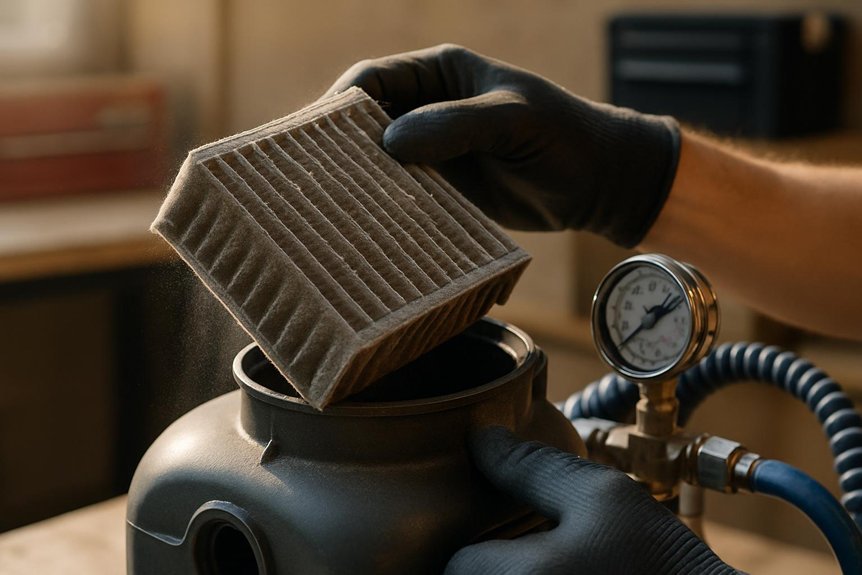
A dirty air compressor filter substantially impairs the system’s performance by restricting airflow and increasing pressure drop across the filter. This restriction forces the compressor to work harder, reducing efficiency and increasing energy consumption. Over time, the buildup of debris and particulates can lead to inadequate filter replacement, which diminishes air quality and allows contaminants to enter the system. Poor air quality can cause internal wear and damage to compressor components, resulting in costly repairs and downtime. Additionally, reduced airflow hampers cooling and lubrication processes, further compromising system reliability. Regular inspection and timely filter replacement are essential to maintain peak performance, ensure consistent air quality, and prevent productivity losses caused by compressor inefficiency.
Tools and Materials Needed to Clean Your Filter
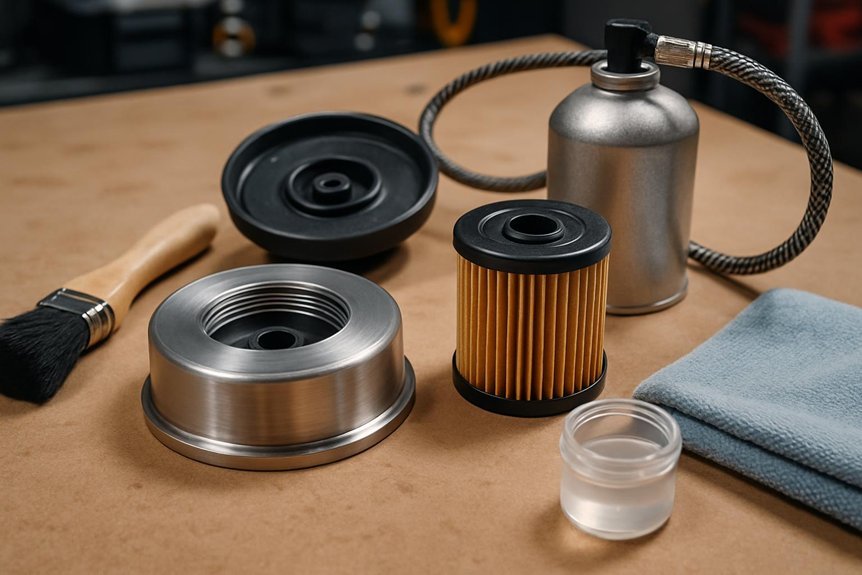
To effectively clean your air compressor filter, gather the necessary tools and materials beforehand to guarantee a smooth process. Essential items include a soft-bristled brush for debris removal, compressed air or a gentle blower for dislodging dust, and a mild cleaning solution or soap if wet cleaning is required. You’ll also need a clean cloth or towel for drying, and a replacement filter if the current one is beyond cleaning or shows signs of damage. It’s important to note the recommended cleaning frequency, typically every few months, to prevent performance issues. For filter replacement, confirm compatibility with your compressor model. Having these tools and materials ready ensures efficient cleaning and ideal compressor performance, thereby extending the filter’s lifespan and maintaining consistent airflow.
Step-by-Step Guide to Cleaning the Air Compressor Filter
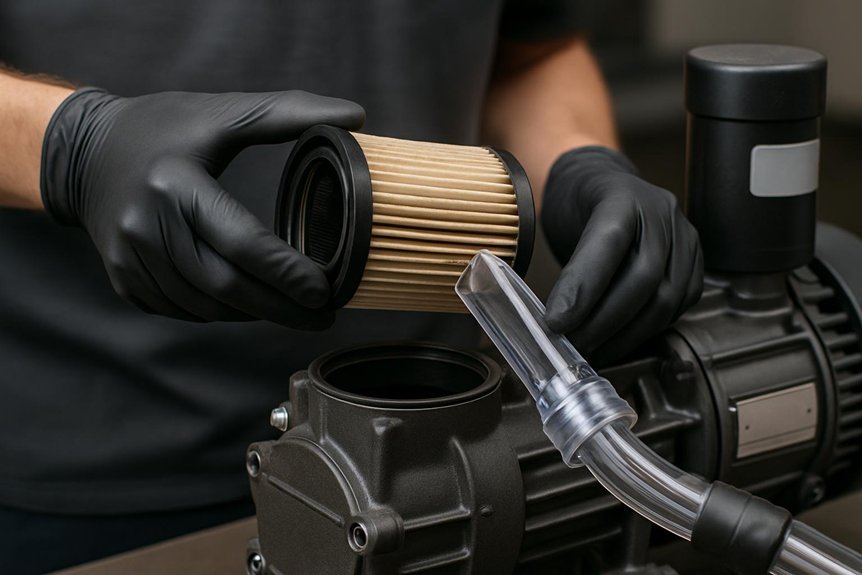
Begin by turning off the compressor and unplugging it from the power source to guarantee safety during the cleaning process. Remove the filter carefully, following your manufacturer’s instructions. Inspect the filter for damage; if it’s torn or excessively dirty, consider filter replacement to maintain the best air quality. Use compressed air or a gentle brush to remove dust and debris, making sure airflow pathways are clear. Avoid using harsh chemicals that could damage the filter medium. After cleaning, allow the filter to dry completely before reinstalling. Properly cleaned filters improve air quality and compressor efficiency, but routine filter replacement remains crucial for sustained performance. Regular maintenance ensures the compressor operates safely, efficiently, and with minimal contaminants.
Tips to Maintain a Clean Filter and Extend Its Life
Regular inspections and timely maintenance are essential to keep your air compressor filter clean and functioning at its best. We recommend establishing a routine schedule for filter replacement based on operating hours and manufacturer guidelines. Regularly checking for signs of clogging or dirt accumulation guarantees maximum airflow and prevents pressure drops. Proper filter maintenance directly impacts air quality, reducing contaminants in the compressed air system. Use compressed air or gentle brushing to remove surface dust, but avoid harsh chemicals that may degrade filter media. Replacing filters before they become excessively dirty prolongs their lifespan and maintains system efficiency. Consistent upkeep minimizes the risk of equipment damage and guarantees the compressor operates within specified parameters, ultimately supporting the longevity and reliability of your air compression system.
Troubleshooting Common Issues During Filter Cleaning
When cleaning air compressor filters, we often encounter issues such as difficulty removing the filter, unexpected damage, or incomplete cleaning, which can compromise system performance. If the filter resists removal, applying gentle, controlled force along with proper tools can prevent damage. Visible cracks or tears indicate a need for filter replacement to maintain best air quality. Incomplete cleaning may result from stubborn debris or improper techniques, reducing filtering efficiency. Regular inspection helps identify these issues early. Damaged filters must be replaced promptly to guarantee the compressor operates efficiently and maintains air quality standards. Troubleshooting these common problems ensures the filter functions correctly, preventing contaminants from entering the system and safeguarding overall compressor performance.
Frequently Asked Questions
How Often Should I Replace My Air Compressor Filter?
We suggest replacing your air compressor filter every 6 to 12 months, following a maintenance checklist that emphasizes regular filter replacement. Timely filter change guarantees peak performance, reduces wear, and maintains air quality standards efficiently.
Can I Use Water to Clean the Filter?
We advise against water cleaning for filter maintenance, as moisture can damage the filter and reduce its effectiveness. Instead, use compressed air to remove debris, ensuring ideal filtration without risking water-related damage or contamination.
What Are Signs That My Filter Needs Cleaning Immediately?
We notice filter buildup causing airflow restriction, which signals it’s time for cleaning. Reduced compressor efficiency, increased noise, or overheating also indicate your filter needs immediate attention to prevent system damage.
Are There Different Cleaning Methods for Different Filter Types?
When it comes to filter materials, different cleaning techniques are necessary; for example, foam filters can be rinsed, while paper filters require replacement. We tailor our approach to guarantee thorough cleaning without damaging the specific filter type.
Is It Safe to Run the Compressor During Filter Cleaning?
Running the compressor during filter cleaning isn’t safe; always adhere to your maintenance schedule and safety precautions. Turn off and disconnect the compressor, ensuring no pressure remains, before cleaning to prevent accidents and equipment damage.
Conclusion
Maintaining a clean air compressor filter isn’t just about prolonging its lifespan; it’s about ensuring the machine operates at peak performance. Like the lungs of our equipment, a pristine filter sustains ideal airflow and efficiency. Regular inspections and diligent cleaning are essential. Remember, neglecting this crucial task can lead to reduced power, increased energy consumption, and costly repairs. In the symphony of machinery, a clean filter keeps the performance harmonious and efficient.