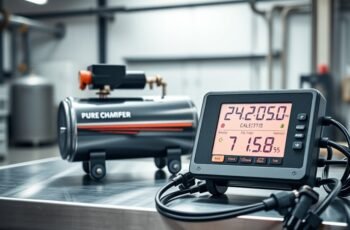
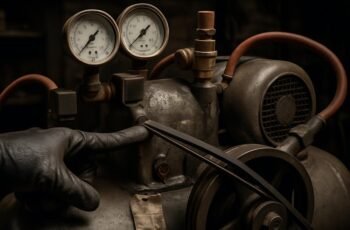
A well-maintained stationary air compressor is the backbone of many industrial processes, yet neglecting routine upkeep can quietly compromise performance and safety. We recognize that consistent inspections, proper lubrication, and timely part replacements are critical, but the complexity of these tasks often leads to oversight. To guarantee reliability and cost-efficiency, it’s essential to adopt a systematic maintenance approach—one that anticipates issues before they escalate. The question is, are you following best practices to keep your system operating at peak condition?
Key Takeaways
- Perform daily inspections to check for obstructions, leaks, and unusual noises, preventing minor issues from escalating.
- Follow a regular schedule for lubrication and filter replacements to maintain efficiency and prolong compressor lifespan.
- Troubleshoot common problems promptly by listening for abnormal sounds and inspecting for air leaks or worn components.
- Conduct safety procedures during maintenance, including system depressurization, PPE use, and proper ventilation.
- Establish maintenance schedules based on operational hours and manufacturer guidelines to ensure optimal performance and safety.
Why Regular Maintenance Matters for Stationary Air Compressors
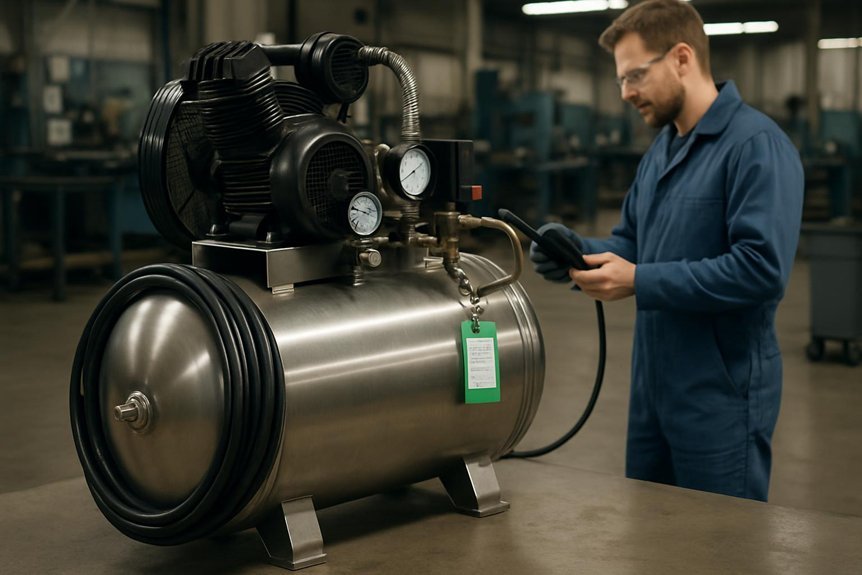
Regular maintenance is essential for guaranteeing the best performance and longevity of stationary air compressors. Consistent upkeep maximizes energy efficiency by preventing component wear that causes power loss, reducing operational costs over time. Proper lubrication, filter replacement, and system calibration maintain ideal airflow, which enhances compressor efficiency and minimizes energy consumption. Additionally, regular maintenance contributes considerably to noise reduction. By addressing loose fittings, worn belts, and vibrating parts early, we can greatly decrease operational noise levels, creating a safer, more comfortable work environment. Neglecting routine checks accelerates wear and diminishes efficiency, leading to increased energy use and noise pollution. Hence, proactive maintenance not only extends equipment lifespan but also guarantees energy-efficient operation and quieter performance, ultimately supporting safer and more economical facility operations.
How to Perform Daily Inspections to Catch Issues Early
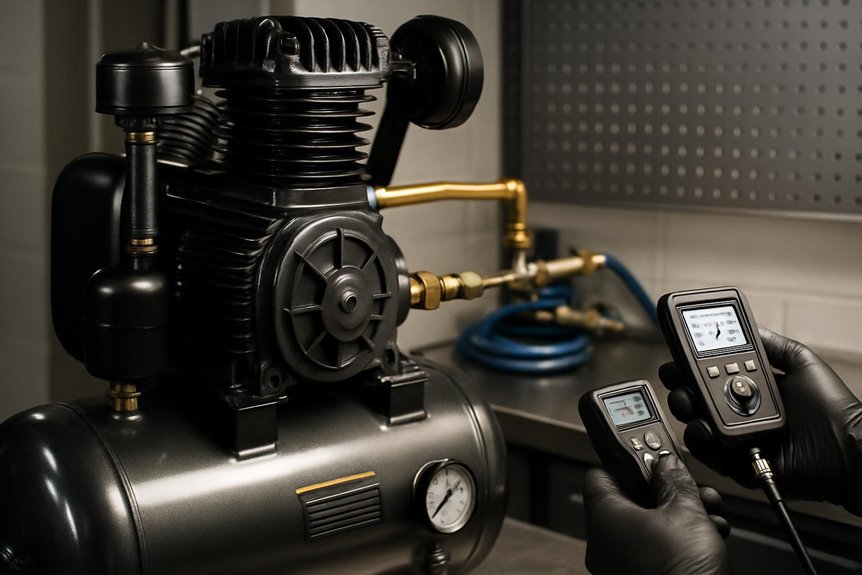
Conducting daily inspections of stationary air compressors allows us to identify potential issues before they escalate into costly repairs or downtime. We focus on airflow enhancement by checking for obstructions in filters, vents, and intake areas that could restrict airflow, reducing efficiency. Monitoring noise levels is also critical; unusual or increased noise may indicate mechanical wear or imbalance. We inspect for leaks, loose fittings, and vibrations, which can impair compressor performance and signal early component failure. Addressing these issues promptly ensures peak operation and longevity. Regularly evaluating these parameters helps maintain consistent airflow and minimizes noise pollution, directly contributing to energy efficiency. These proactive measures allow us to catch minor problems early, avoiding major repairs and ensuring reliable, efficient compressor operation.
Essential Lubrication and Filter Replacement Practices
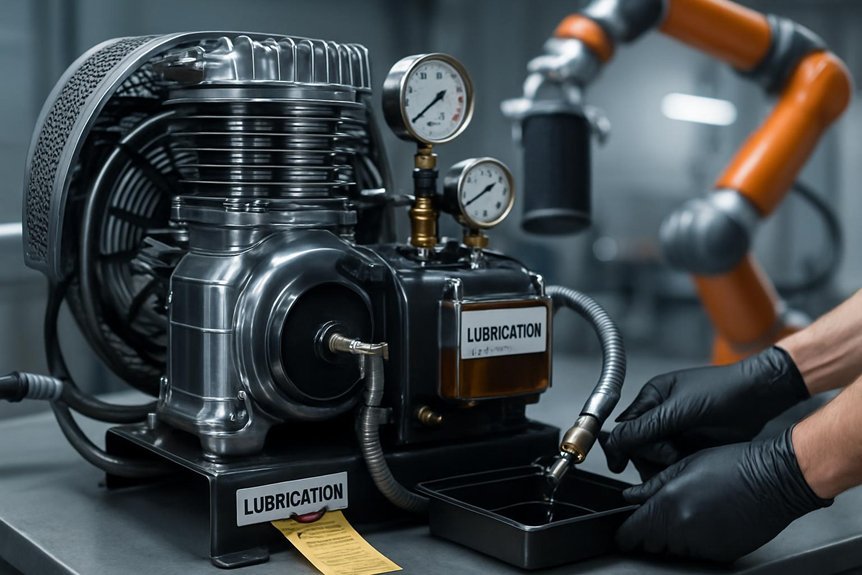
Selecting the appropriate lubricant is critical to minimizing wear and ensuring ideal compressor performance, requiring careful consideration of viscosity and additive compatibility. Regular filter inspections prevent contamination buildup that can impair operation and reduce component lifespan. Maintaining disciplined schedules for both lubricant changes and filter replacements is essential for sustaining efficiency and reducing unforeseen downtime.
Proper Lubricant Selection
How do we guarantee peak performance and longevity of a stationary air compressor? Proper lubricant selection is critical. We focus on lubricant compatibility to prevent chemical reactions that could impair components. Oil viscosity must meet manufacturer specifications to maximize lubrication at operating temperatures. Incompatible lubricants or incorrect viscosity can cause increased wear or overheating.
| Key Factors | Considerations |
|---|---|
| Lubricant Compatibility | Use OEM-approved oils to prevent chemical incompatibility. |
| Oil Viscosity | Select oils with viscosity grades matching operational demands. |
Choosing the right lubricant involves precise analysis of these factors. This maximizes efficient operation, reduces downtime, and extends compressor lifespan.
Regular Filter Inspections
Maintaining ideal performance of a stationary air compressor requires diligent attention to its filtration system, as clean filters directly influence lubrication effectiveness and overall efficiency. Regular filter inspections are essential for ensuring peak air quality, which affects both compressor longevity and downstream equipment performance. Contaminant buildup can impair airflow, increase energy consumption, and cause fluctuations in noise levels, making noise reduction more challenging. By systematically checking filters for dirt, moisture, and debris, we prevent clogging that hampers airflow and leads to compressor strain. Prompt replacement or cleaning maintains consistent air quality, ensuring smooth operation and reducing unplanned downtime. Consistent filter management not only sustains lubrication efficiency but also enhances overall operational stability, making it a critical component of thorough compressor maintenance.
Troubleshooting Common Compressor Problems and Solutions
Have you ever encountered unexpected interruptions or inconsistent performance from your air compressor? Such issues often stem from common problems like excessive compressor noise or air leakage. Unusual noise levels may indicate worn bearings, loose components, or improper lubrication, which require targeted inspection and correction. Air leakage, on the other hand, can considerably reduce efficiency, often caused by damaged seals, fittings, or hoses. To troubleshoot, we recommend listening carefully to identify abnormal sounds and inspecting connections for leaks. Using soapy water on fittings can help detect escaping air. Addressing these issues promptly ensures ideal compressor function, reduces energy consumption, and prevents further damage. Recognizing these signs and applying precise solutions are vital steps in maintaining reliable, efficient operation.
Scheduling Preventive Maintenance to Extend Equipment Lifespan
Implementing a structured schedule for preventive maintenance is essential to prolonging the lifespan of your air compressor. Regularly scheduled inspections and component checks help maintain ideal air quality, preventing contaminants from compromising system efficiency. Consistent maintenance reduces wear on key parts, which directly impacts noise levels by minimizing vibrations and mechanical noise sources. By proactively addressing issues such as filter replacements and lubrication, we guarantee cleaner output air and quieter operation. Scheduling maintenance based on operational hours and manufacturer recommendations allows us to identify potential problems early, avoiding costly repairs and downtime. Ultimately, a disciplined maintenance plan enhances equipment reliability, sustains air quality standards, and contributes to noise reduction, ensuring the compressor operates efficiently over its service life.
Safety Tips and Best Practices for Compressor Maintenance
Before performing compressor maintenance, it’s essential to prioritize safety protocols to prevent accidents and equipment damage. Confirming proper air quality and noise reduction measures minimizes hazards. Use personal protective equipment (PPE) and verify system depressurization before work begins. Establish clear procedures for electrical shutdowns and fluid drainages. The following table outlines key safety practices:
| Safety Practice | Purpose | Implementation Tips |
|---|---|---|
| PPE Usage | Protects against injury | Wear gloves, goggles, and ear protection |
| Air Quality Control | Prevents inhalation hazards | Use filters and proper ventilation |
| Noise Reduction Measures | Reduces hearing damage | Install sound enclosures or mufflers |
Adhering to these practices ensures efficient, safe maintenance while safeguarding the compressor’s longevity.
Frequently Asked Questions
What Are the Signs Indicating a Compressor Needs Urgent Repairs?
We notice urgent repairs are needed when the compressor makes unusual noise, exhibits excessive vibration symptoms, or shows drops in efficiency. These signs indicate mechanical issues or misalignment, requiring immediate attention to prevent further damage or system failure.
How Can I Improve Energy Efficiency During Compressor Operation?
Think of your compressor as a finely tuned engine; we implement energy-saving techniques and optimize compressor automation, ensuring efficient operation. Regular monitoring, precise control, and maintenance help reduce energy waste and enhance overall system performance.
What Are the Environmental Impacts of Compressor Oil Leaks?
Oil leaks cause environmental harm by contaminating soil and water; we emphasize oil spill prevention and leak detection methods like sensors and regular inspections to mitigate these impacts effectively, ensuring compliance and promoting ecological safety.
How Do Temperature Fluctuations Affect Compressor Performance?
Like a delicate balance beam, temperature fluctuations challenge compressor performance, demanding robust temperature regulation. These shifts test fluctuation resilience, causing efficiency dips or mechanical stress if not properly managed, highlighting the need for vigilant monitoring and adaptive control systems.
Are There Specific Maintenance Protocols for Different Compressor Brands?
Yes, we follow brand-specific lubrication and adhere to manufacturer-recommended schedules for maintenance. This guarantees peak performance, reduces downtime, and preserves warranty conditions, recognizing that each compressor brand may have unique operational and maintenance requirements.
Conclusion
In summary, neglecting proper maintenance can turn your stationary air compressor into a ticking time bomb, risking catastrophic failure and costly downtime. By adhering to rigorous inspection, lubrication, and safety protocols, we’re not just maintaining equipment—we’re safeguarding our entire operation from disaster. Regular upkeep doesn’t just extend lifespan; it transforms your compressor into a reliable powerhouse. Fail to act now, and you risk facing a mechanical catastrophe that could bring your entire facility to its knees.