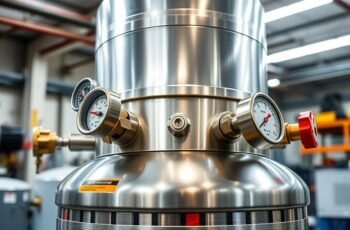
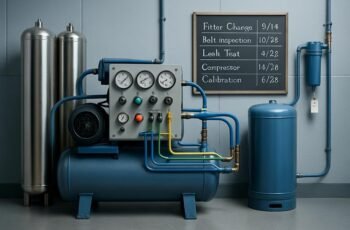
Maintaining oil-lubricated air compressors is critical for ensuring consistent performance and extending equipment lifespan. Proper checks of oil levels, quality, and filter condition must be performed regularly, following manufacturer guidelines. Identifying signs of oil degradation early can prevent costly repairs and downtime. We’ll explore key maintenance practices that can optimize operation and safety, but understanding the nuances of these procedures is essential for long-term reliability.
Key Takeaways
- Regularly check and maintain oil levels, replacing oil and filters as per manufacturer recommendations.
- Inspect for signs of oil degradation, such as discoloration and filter clogging, and perform timely oil changes.
- Monitor compressor performance, including vibration, temperature, and pressure, to detect lubrication issues early.
- Ensure proper filtration and cleanliness to prevent contaminants from causing wear and system damage.
- Conduct routine inspections of bearings, seals, and connections to optimize lubrication and extend compressor lifespan.
How Does Oil Lubrication Protect Air Compressors?
Oil lubrication plays a critical role in protecting air compressors by reducing metal-to-metal contact between moving parts, thereby minimizing wear and extending component lifespan. Proper oil filtration removes contaminants and debris that could accelerate wear or cause corrosion, guaranteeing the lubricant remains clean and effective. Additionally, lubricant additives enhance oil performance by providing anti-wear, anti-oxidation, and corrosion-inhibition properties, which safeguard critical components under high-stress conditions. These additives also help maintain consistent viscosity, preventing breakdown or thinning over time. By combining effective oil filtration with advanced lubricant additives, we assure that the oil consistently lubricates, cools, and seals moving parts, reducing friction and preventing overheating. This all-encompassing approach maximizes compressor efficiency, reliability, and operational longevity.
How to Check and Maintain Oil Levels Properly
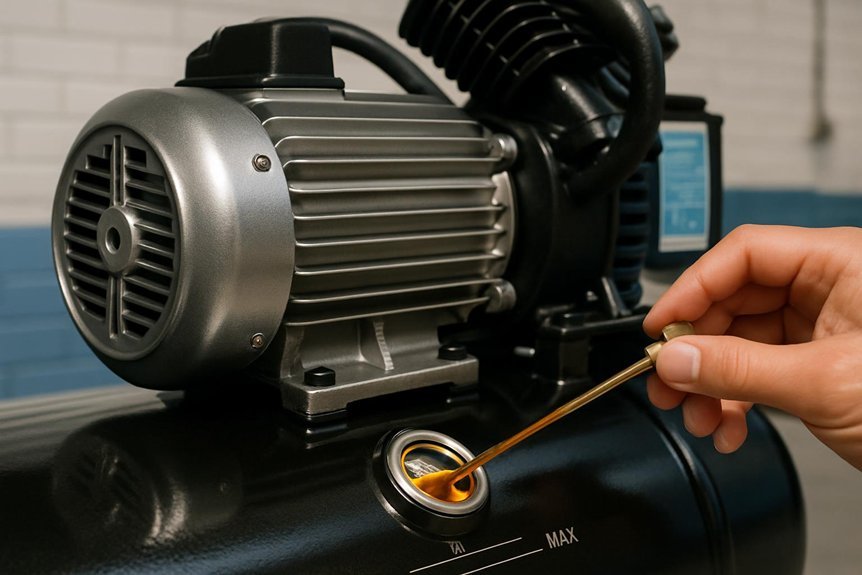
Maintaining proper oil levels is essential for guaranteeing the continuous protection and efficient operation of your air compressor. To accurately check oil levels, start by inspecting the oil sight glass or dipstick, guaranteeing the oil is within the recommended range. Regularly verify oil filtration efficiency, as clogged filters can impair oil flow and cooling. Monitoring oil temperature is equally important; excessive heat can degrade oil quality, reducing lubrication effectiveness. Use a reliable thermometer to ensure oil temperature stays within manufacturer specifications. When topping up, use the correct oil type and avoid overfilling, which can cause foaming and improper lubrication. Consistent checks of oil levels, filtration systems, and temperature help maintain ideal lubrication, prolonging compressor lifespan and preventing costly breakdowns.
When and How to Change Compressor Oil for Best Performance
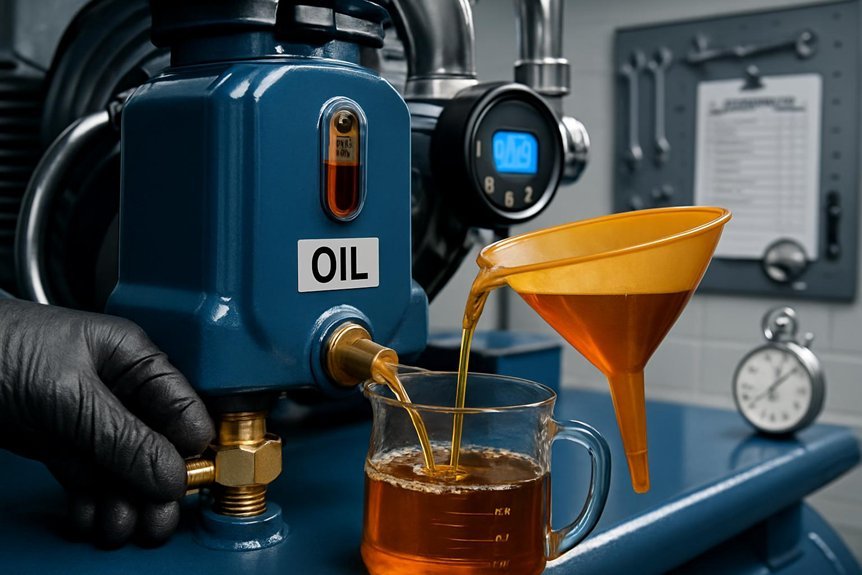
Understanding the essential interval for oil changes is vital to maintaining compressor efficiency and preventing wear, typically based on hours of operation or manufacturer recommendations. We should monitor signs of oil degradation—such as increased viscosity, discoloration, or presence of contaminants—that indicate the need for a change. Proper replenishment involves draining old oil completely and refilling with the specified type and quantity, ensuring consistent lubrication and performance.
Ideal Oil Change Interval
Regularly scheduled oil changes are essential for guaranteeing peak compressor performance and longevity. The ideal oil change interval depends on operational hours, manufacturer recommendations, and environmental conditions, typically ranging from every 500 to 2,000 hours of use. During each change, it’s critical to replace the oil filter to prevent contaminants from circulating, which can lead to increased compressor noise and wear. Monitoring oil condition through regular checks helps determine if more frequent changes are necessary, especially in dusty or high-temperature environments. Using high-quality, manufacturer-approved oil ensures proper lubrication and minimizes degradation. Adhering to a strict maintenance schedule maintains excellent lubrication, reduces noise, and extends the lifespan of the compressor, ultimately guaranteeing reliable and efficient operation.
Signs of Oil Degradation
Oil degradation can considerably impair compressor performance, often signaling the need for an immediate oil change. Indicators include oil discoloration, where the oil shifts from clear or amber to dark brown or black, indicating contamination and oxidation. Additionally, filter clogging becomes evident when filters become obstructed more rapidly than usual, reducing airflow and increasing strain on the system. Visually inspecting the oil regularly helps detect these signs early. Thickened or gritty oil suggests breakdown of additives and the presence of debris, which can lead to increased wear on internal components. Promptly addressing these signs prevents extensive damage and maintains peak compressor efficiency. Regular monitoring of oil condition, combined with timely changes, ensures consistent lubrication and prolongs equipment lifespan.
Proper Oil Replenishment Techniques
To guarantee peak performance and longevity of an oil-lubricated air compressor, timely and proper oil changes are essential. Maintaining optimal oil quality ensures efficient lubrication, reduces wear, and prevents overheating. Our replenishment procedures involve regularly checking oil levels, especially after initial operation periods, and replacing the oil based on manufacturer recommendations or when contamination occurs. Use only compatible, high-quality oils to avoid degradation and viscosity loss.
| Step | Action | Notes |
|---|---|---|
| 1 | Check oil level | Use dipstick, fill to recommended mark |
| 2 | Drain old oil | Fully remove for contamination or degradation |
| 3 | Refill with fresh oil | Use specified oil type to ensure optimal performance |
Troubleshooting Common Oil-Related Compressor Issues
Effective troubleshooting begins with precise oil level monitoring to prevent insufficient lubrication or excess pressure. We also need to identify signs of oil contamination, such as discoloration or unusual odors, which can impair compressor performance. Addressing excessive oil consumption involves analyzing sealing components and oil retention efficiency to isolate underlying issues.
Oil Level Monitoring
Have you verified the oil level recently to guarantee peak compressor performance? Maintaining proper oil levels is crucial for ideal operation, as insufficient oil can lead to increased wear and overheating. Regularly check the oil level gauge, ensuring it falls within the recommended range, especially after startup and during operation. Proper oil filtration is essential to prevent debris from clogging the system, which can cause oil starvation. Also, monitor oil temperature, as excessive heat indicates potential issues with lubrication or cooling. To guarantee accurate readings and system health, consider these factors:
- Confirm oil level aligns with manufacturer specifications
- Inspect oil filtration elements for blockages or wear
- Monitor oil temperature regularly, especially during high load
- Check for consistent oil level fluctuations indicating leaks or evaporation
Identifying Oil Contamination
Monitoring oil quality is a vital step in maintaining compressor reliability, as contamination can lead to serious performance issues. Oil contamination often presents as discoloration, increased viscosity, or the presence of debris when visually inspected. To effectively detect contamination, we rely on contamination detection methods such as oil analysis tests, which identify metal particles, water, or other foreign substances. Regular sampling of the oil allows us to monitor for early signs of oil contamination, preventing damage to internal components like pistons and valves. Additionally, microscopic examination can reveal fine particles indicating wear or contamination. Prompt identification of oil contamination guarantees timely maintenance, preserving compressor efficiency and extending service life. Consistent contamination detection is essential for peak compressor operation.
Addressing Excess Oil Consumption
Excess oil consumption in air compressors often signals underlying issues that require prompt diagnosis and correction. One common cause is inadequate oil filtration, allowing contaminants to bypass filters and increase oil burn-off. Additionally, improper compressor calibration can lead to misaligned components, resulting in increased oil usage. To address this, we recommend inspecting and replacing oil filters regularly to guarantee maximum filtration efficiency. Precise compressor calibration ensures correct operating parameters, reducing unnecessary oil consumption. Other factors to consider include worn piston rings or valve guides, which can allow oil to enter the compression chamber. Regular maintenance and monitoring of oil levels, combined with timely calibration, help mitigate excessive consumption and extend compressor lifespan. Proper troubleshooting ensures efficient operation and minimizes costly repairs.
Tips for Extending the Lifespan of Your Oil-Lubricated Compressor
To maximize the lifespan of your oil-lubricated air compressor, consistent maintenance practices are essential. Regularly inspecting and replacing worn bearings can reduce compressor noise and mitigate vibration issues, which are often signs of imbalance or misalignment. Ensuring proper lubrication levels prevents metal-to-metal contact, decreasing wear on moving parts. Tightening mounting bolts and checking for loose connections minimizes vibration transmission, extending component life. Monitoring oil quality and replacing it according to manufacturer specifications prevents oil contamination that can accelerate wear and increase noise levels. Additionally, installing vibration isolators can dampen external vibrations, protecting internal components. Implementing these measures consistently helps maintain ideal operational conditions, reduces stress on critical parts, and ultimately prolongs the compressor’s service life.
Best Practices for Safe and Efficient Compressor Maintenance
Ensuring safe and efficient compressor maintenance requires adherence to strict procedures that prioritize operator safety while maximizing performance. Regular inspection of the oil filter is essential to prevent contamination and maintain lubrication quality, which directly impacts compressor longevity. Maintaining the ventilation system guarantees proper airflow, reducing heat buildup and minimizing fire hazards. Always verify that safety devices, such as pressure relief valves, are functioning correctly before operation. Conduct routine checks for leaks, wear, and corrosion, particularly around oil lines and filters, to prevent failures. Proper lockout/tagout procedures should be followed during maintenance to prevent accidental startup. Additionally, keep detailed maintenance logs to monitor component condition and schedule timely replacements.
- Regularly replace the oil filter to ensure maximum lubrication
- Maintain and clean the ventilation system to prevent overheating
- Verify safety devices are operational before starting maintenance
- Follow lockout/tagout protocols during service to guarantee safety
Frequently Asked Questions
What Type of Oil Is Best for My Specific Compressor Model?
We recommend using oil with the specified viscosity for your compressor model, ensuring the best lubrication. Regular oil filtration maintains cleanliness, preventing wear and tear. Always consult your manufacturer’s guidelines for precise oil specifications and maintenance procedures.
How Does Ambient Temperature Affect Oil Lubrication Efficiency?
Temperature fluctuations act like a rollercoaster for oil, impacting lubrication viscosity and efficiency. As ambient temperatures rise or fall, oil’s ability to form a protective film diminishes, risking increased wear and decreased compressor performance.
Can Using Synthetic Oil Improve Compressor Performance?
Using synthetic oil can improve compressor performance by offering superior oil viscosity stability across temperature ranges and containing synthetic additives that reduce wear, enhance lubrication, and extend oil life, ultimately optimizing efficiency and reducing maintenance frequency.
How Do I Identify Oil Contamination or Degradation Early?
We catch issues early by inspecting oil filters regularly and conducting oil viscosity tests; these steps reveal contamination or degradation before problems escalate, ensuring our equipment runs smoothly—an ounce of prevention is worth a pound of cure.
What Are Signs of Improper Oil Circulation Within the Compressor?
We observe improper oil circulation through fluctuating oil pressure readings, unusual noises, and visible oil leaks. These signs indicate potential blockages or pump failures, requiring immediate inspection to prevent damage and guarantee ideal compressor performance.
Conclusion
In conclusion, diligent maintenance of our oil-lubricated air compressors is the backbone of ideal performance and longevity. By adhering to best practices—regular oil checks, timely oil changes, and thorough troubleshooting—we guarantee the system runs smoothly, like a well-oiled machine. Remember, neglecting these details can turn a reliable asset into a ticking time bomb. Consistent care acts as the essential heartbeat, keeping your compressor’s efficiency alive and thriving over the years.