Are we looking for serious compressed air power without turning our workspace into a construction zone of noise?

What Is the California Air Tools 10020DSPC and Who Is It For?
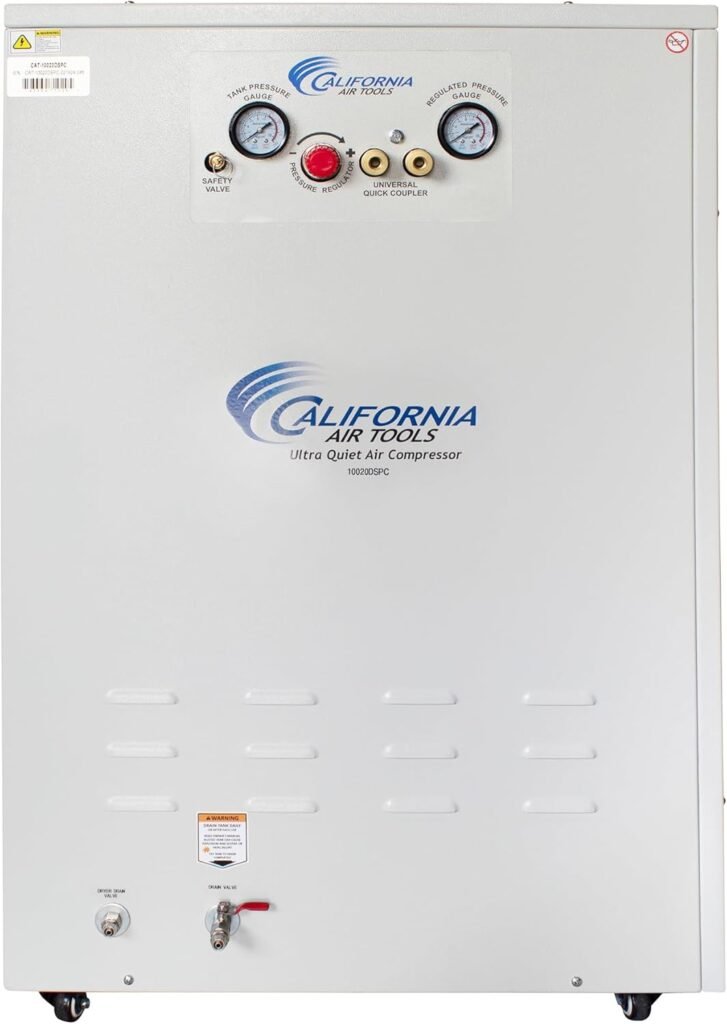
This California Air Tools 10020DSPC 2.0 HP Ultra Quiet and Oil-Free Air Compressor is built for those of us who need professional-grade air power but cannot tolerate loud machines. We are talking about a 2.0 HP, 10-gallon, ultra-quiet compressor housed in a soundproof cabinet, with an 80% air dryer and aftercooler included.
We’re the target audience if we care about low noise, clean dry air, and reliability—whether we work in a home garage, small workshop, studio, lab, dental office, or any noise-sensitive environment. Instead of a simple bare compressor, we’re getting a complete, integrated system.
Key Specifications at a Glance
Before we get into how it feels to use this unit, it helps to see the main specs laid out clearly. That way we can quickly check if the performance lines up with our needs.
| Feature | Specification |
|---|---|
| Model | California Air Tools 10020DSPC |
| Motor Power | 2.0 HP |
| Pump Type | Oil-free, dual piston |
| Noise Level | 58 dB (ultra quiet) |
| Tank Capacity | 10-gallon steel tank |
| Air Delivery @ 40 PSI | 6.40 CFM |
| Air Delivery @ 90 PSI | 5.30 CFM |
| Pump Life Cycle | Over 3,000 hours |
| RPM | 1680 RPM (low-speed for reduced wear and noise) |
| Cabinet | Soundproof cabinet with foam insulation and caster wheels |
| Air Dryer | 80% air dryer (reduces water vapor significantly) |
| Aftercooler | Yes, cools discharge air to reduce moisture |
| Weight | Approximately 221 lbs |
| Dimensions of Cabinet | 26″ (L) x 30″ (W) x 39.5″ (H) |
| Mobility | Caster wheels integrated into cabinet |
| Maintenance | Low-maintenance oil-free design |
With these specs, we can already tell this is positioned as a quiet, clean, ready-to-roll solution instead of just a barebones compressor.
Noise Level: How Quiet Is 58 dB Really?
When we see “58 dB” on an air compressor, we may wonder what that actually feels like in real life. Usually, compressors are infamous for being loud enough to rattle walls, but this one is in a different category.
Noise Compared to Typical Compressors
Most conventional shop compressors easily run 80–90 dB or higher. That range is loud enough that we often need ear protection, and conversations near the compressor become difficult.
At 58 dB, this unit is closer to:
- A normal conversation at home
- A quiet office
- Background noise in a calm room
That means we can comfortably stand next to it and still talk without raising our voice much. In many workshops, we can have it running and still listen to music or a podcast without cranking the volume.
Why the Soundproof Cabinet Matters
The cabinet is not just for looks. The soundproof foam lining inside the cabinet soaks up and blocks sound before it escapes into our workspace. The compressor is housed entirely inside, and the cabinet works together with the low-RPM motor to keep the noise down.
We notice this most in:
- Smaller garages and home shops where echoes are usually a problem
- Shared spaces where others are working or living nearby
- Settings like studios, labs, or dental offices where low noise is not just a convenience but a requirement
If we’ve used older, open-frame compressors before, this unit feels almost strangely calm by comparison.
Performance and Air Delivery
Quiet operation is great, but it doesn’t matter if the compressor cannot keep up with our tools. The 10020DSPC gives us solid airflow for many common air tools and applications.
CFM Output and What It Means for Us
The compressor’s airflow is rated at:
- 6.40 CFM at 40 PSI
- 5.30 CFM at 90 PSI
That 5.30 CFM at 90 PSI is the more practical number to pay attention to because many air tools are rated around that pressure. For us, this means:
-
We are in good shape for tasks like:
- Nail guns and brad nailers
- Staplers
- Airbrush systems
- Blow guns and cleaning
- Light to medium-duty impact wrenches (depending on their demands)
- Inflation tasks (tires, sports equipment, etc.)
-
We should be more cautious with:
- High-consumption tools like large sanders, grinders, or sandblasters
- Continuous-use pneumatic equipment that needs higher CFM
The 10-gallon tank gives us a decent buffer. For intermittent tool use, which is what most of us do in a typical shop or small business, this capacity and CFM combination works quite well.
Motor and Pump Performance
The 2.0 HP motor and dual-piston oil-free pump are tuned for lower RPM—1680 RPM instead of the higher speeds we see in many cheaper units. That slower speed has a few advantages:
- Less wear on internal components
- Lower operating temperature
- Reduced vibration
- Less noise overall
The pump’s rated life of over 3,000 hours is quite impressive for an oil-free design. For context, many budget compressors in this class last around 500–1,000 hours before the pump is noticeably worn. So we are looking at a machine that is genuinely built for regular, long-term use.
Oil-Free Dual Piston Pump: Benefits and Trade-Offs
Oil-free compressors have a very practical appeal for a lot of us, especially if we want cleaner air and minimal maintenance. This unit takes that further with a dual-piston pump.
Advantages of the Oil-Free Design
With an oil-free pump, we get:
- Less maintenance: No need for regular oil changes
- Cleaner output air: No oil mist mixing with our air supply
- Better for painting, finishing, and airbrushing
- Easier setup: We do not have to worry about using the wrong oil or checking oil levels all the time
For those of us using this compressor in a clean environment—like a home shop, small production space, or a studio—this is a big benefit. We don’t want oil contamination on paint jobs or sensitive equipment.
Dual Piston for Efficiency and Longevity
A dual-piston design generally means:
- More air with less work per piston
- Lower operating temperature
- More balanced operation and efficiency
In practice, it helps the pump run smoother and last longer, which fits well with the 3,000+ hour life expectancy. It also supports quicker tank refill times and more consistent pressure.
Any Downsides to Oil-Free?
Oil-free units can sometimes be a bit louder than oil-lubricated models, but in this case, the soundproof cabinet and low RPM counter that. Another thing to keep in mind: when they do eventually wear, the internal coating or parts may not be serviceable in the same way as some traditional compressors. Still, considering the long life rating, this is not a concern for many typical users.
10-Gallon Steel Tank and Cabinet Design
Tank size and overall layout matter a lot in real-world use. A 10-gallon capacity sits in a sweet spot between compact portability and decent air reserves.
Capacity and Use Cases
With a 10-gallon steel tank, we get:
- Enough stored air for intermittent tool use
- Less frequent cycling than a small pancake or 3–5 gallon unit
- A practical size for both home and small professional applications
We can run nail guns all day, perform smaller spray tasks, handle general shop chores, and support light to medium-duty tools with good results. Constant industrial use or heavy sandblasting would require a larger system, but for the intended market, this is a strong capacity choice.
Build Quality and Weight
At about 221 pounds, this is not a lightweight portable compressor we casually load into a car trunk. However, this weight includes:
- The steel tank
- The soundproof cabinet
- The enclosed pump and motor
- The air dryer and aftercooler
The cabinet’s steel construction and foam lining give the unit a very solid, stable feel. We are not going to accidentally tip this over easily, which adds a sense of safety and durability in a busy workspace.
Mobility and Footprint
While the unit is heavy, it is designed to be moved when needed within a shop or studio.
Caster Wheels for Local Mobility
The cabinet features caster wheels, which turn this heavy box into something we can roll around our workspace:
- We can reposition it to a corner or wall to free up room
- We can move it nearer to where we are working to reduce hose lengths
- We can reconfigure our shop layout without needing a whole crew to lift it
This makes a big difference in practical day-to-day use if our layout changes or if we occasionally need to wheel the compressor into a separate room.
Space Considerations
The dimensions are:
- Length: 26″
- Width: 30″
- Height: 39.5″
We need to make sure we allow for:
- Some clearance around the cabinet for airflow and cooling
- Access to controls, gauges, and connections
- Enough room to open any access panels for maintenance if needed
For many garages and shops, this footprint is manageable. It is larger than an open-frame portable compressor, but we are gaining noise control and integrated air drying in return.

The 80% Air Dryer: Why It Matters
Moisture in compressed air is one of those issues that we might underestimate until it causes real problems. The built-in 80% air dryer is one of the standout features of this model.
What the 80% Air Dryer Actually Does
When we compress air, we also compress the water vapor in that air. As it cools, that vapor condenses into liquid water that can:
- Rust our tools and tank
- Contaminate paint and finishes
- Damage sensitive pneumatic equipment
The 80% air dryer is designed to remove a large portion of that water vapor from the air before it reaches our tools. It dramatically reduces the amount of moisture in the output.
While “80%” does not mean absolutely zero moisture, it is a substantial improvement over running raw, wet air straight from a tank.
Benefits in Everyday Use
In real-world terms, the dryer helps us with:
- Cleaner finishes when painting or clear-coating
- Less risk of moisture in airbrush nozzles
- Reduced internal corrosion in downstream tools and lines
- More reliable performance in humid environments
If we live in a region with high humidity, this feature alone can set this compressor apart from more basic units. Instead of adding and managing a separate dryer, we get an integrated solution.
The Aftercooler: Working Together with the Dryer
The aftercooler is another serious upgrade that improves air quality and system longevity.
How the Aftercooler Helps
When air leaves the compressor pump, it is hot. Hot air holds more moisture in vapor form. If we cool that air quickly, much of that moisture condenses and can be removed.
The aftercooler:
- Cools the discharge air as it exits the pump
- Helps moisture separate faster, making the dryer more effective
- Reduces the temperature of the air going into our lines and tools
This combination of aftercooler plus 80% dryer increases the overall dryness and quality of the air.
Why We Should Care About Cooler, Drier Air
Using cooler, drier air means:
- Better results for painting and finishing
- Less water blowing out of our hoses and guns
- Longer life for hoses, regulators, and pneumatic tools
For anyone doing quality-sensitive work—automotive detailing, woodworking with sprayed finishes, small manufacturing, or studio work—this makes our air system much more reliable and professional.
Maintenance and Ease of Use
We all prefer tools that work consistently without demanding constant attention. This compressor system is designed with low maintenance in mind.
Oil-Free for Lower Maintenance
Because it is oil-free:
- No oil levels to monitor
- No oil changes to schedule
- No worrying about oil breakdown or contamination
We still need to:
- Drain the tank periodically to release any collected moisture (even with a dryer, some condensation can occur)
- Check filters and dryer components according to the manufacturer’s guidance
- Keep the cabinet ventilation clear so the pump can cool properly
Overall, our time investment in upkeep is much lower than it would be with many traditional, oil-lubricated units.
User Experience and Controls
Placing the compressor inside a cabinet can raise concerns about usability, but the design is geared toward access and practicality. We typically find:
- Gauges and controls in easy reach
- Connections accessible from the exterior or through a panel
- Straightforward start/stop operation
Once we set it up the first time—connecting power, setting up our air lines, and possibly configuring any additional filters or regulators we want—daily operation tends to be very simple: turn it on and let it build pressure.
Real-World Applications and Use Cases
Let’s talk about where this compressor shines in daily use and what kinds of work it suits best.
Home Garages and Hobby Workshops
For home users who take their tools seriously, this unit is a strong candidate:
- Noise is low enough not to bother family members or neighbors as much
- 10-gallon capacity is suitable for:
- Building furniture with brad or finish nailers
- Automotive repairs using impacts and ratchets (within CFM limits)
- Cleaning and blowing dust from equipment
- Occasional spray painting and clear coating
We get a professional feel without bringing industrial-level noise into our home.
Professional Small Shops and Studios
For small businesses, this compressor fits well where cleanliness and noise control matter:
- Woodworking shops with finish rooms
- Custom fabrication shops
- Small manufacturing or assembly lines using pneumatic tools
- Photography or art studios that use airbrush equipment
The integrated dryer and aftercooler bring us closer to a “plug-and-work” setup, saving us time and complication.
Medical, Dental, and Laboratory Settings
The ultra-quiet operation and cleaner, drier air make it a candidate for:
- Dental offices needing air for tools or lab equipment
- Small labs needing compressed air for instruments
- Clinics or research facilities where noise is disruptive
We do need to verify specific regulatory or technical requirements for medical use, but from a general standpoint, the low noise and clean air system help a great deal.
Pros and Cons Summary
It helps to zoom out and weigh what we are really getting with this model. Here is a practical breakdown.
Advantages
- Extremely quiet (58 dB): We can work near it without feeling overwhelmed by noise.
- Integrated soundproof cabinet: Reduces noise and contains the system neatly.
- Oil-free dual piston pump: Lower maintenance, cleaner air, and a long life rating.
- Strong airflow for its class: 5.30 CFM at 90 PSI covers many common tools.
- 10-gallon steel tank: Enough capacity for intermittent professional tasks.
- 80% air dryer: Greatly reduces moisture, protecting tools and finishes.
- Aftercooler: Helps improve air quality and system longevity.
- Caster wheels: Despite the weight, we can move it around a shop without much trouble.
- Durable build: Steel tank, cabinet construction, and a 3,000+ hour pump life.
Potential Drawbacks
- Heavy (221 lbs): Not something we casually load into vehicles; mainly for stationary or semi-stationary use.
- Larger footprint than basic portables: Needs dedicated floor space in our shop or garage.
- CFM not for heavy industrial loads: Not ideal for constant, high-demand tools like large sanders or continuous blasting.
- Higher upfront cost vs entry-level compressors: We are paying for low noise, integrated dryer, and aftercooler.
If we value quiet operation and clean, dry air, most of these trade-offs will feel reasonable. If all we need is basic tire inflation, this would be overkill.
Comparing It to Simpler Compressors
To understand the value better, it helps to picture what we often get with a more basic compressor.
What We Typically Get with Cheaper Units
Many lower-cost compressors:
- Are much louder (often 80–90+ dB)
- Use open frames with no sound insulation
- Do not include an air dryer or aftercooler
- May be oil-lubricated, requiring regular maintenance
- Have shorter pump life ratings
If we go that route, we may end up adding:
- A separate dryer
- Extra filters
- Noise control measures or remote placement
- More frequent maintenance tasks
Over time, that piecemeal approach can get us closer to what this single unit already provides—only with more hassle and noise.
Where the 10020DSPC Stands Out
The California Air Tools 10020DSPC stands out as more of a complete system:
- Quiet enough for noise-sensitive environments
- Clean and dry air from the start
- Ready for serious, regular use
- Long-life, low-RPM design
We might pay more upfront, and we sacrifice a bit of portability, but we gain convenience, comfort, and reliability.
Installation and Setup Considerations
Setting it up correctly from day one will help us get the most out of it and avoid headaches later.
Power and Location
We want to:
- Confirm the electrical requirements (voltage, amperage, and plug type) and match them with our available circuit
- Place the compressor on a level surface so the cabinet sits stable
- Allow enough clearance around the cabinet for airflow and cooling
- Position it where sound levels are acceptable, even though it is quiet
We may want it:
- Near where our primary air tools are used, to reduce hose runs
- Away from flammable materials, as with any powered equipment
Air Line and Accessories
We will likely want to add:
- A quality regulator (if not already integrated) to control pressure for specific tools
- Quick-connect fittings for fast tool changes
- Possibly an additional final filter near sensitive tools for absolute cleanliness
Even with the built-in dryer and aftercooler, a final stage filter right before something like an airbrush or HVLP spray gun can be a good idea for ultimate quality.
Long-Term Value and Reliability
When we invest in a compressor like this, we are really buying a key piece of infrastructure for our work. Reliability and lifespan matter a lot.
Pump Life and Usage Profile
With a pump life of over 3,000 hours, we are looking at many years of typical use:
- Light hobby use: Could last a decade or more
- Regular small-shop use: Several years of service if maintained properly
- Heavier daily professional use: Still a solid long-term investment compared to cheaper units that fail quicker
When we divide the cost across that many hours of service, plus factor in the lower noise and built-in air treatment, the value becomes clearer.
Comfort and Productivity Gains
We should not underestimate the indirect benefits:
- Being able to work longer without noise fatigue
- Holding conversations or taking calls while the compressor runs nearby
- Having fewer interruptions from water-contaminated air or tool issues
All of this adds up to a more pleasant and productive workday, which is hard to quantify but very real.
Is the California Air Tools 10020DSPC Right for Us?
This comes down to how we work and what we value most.
It Is a Strong Fit If We:
- Need a quiet compressor for a home shop, garage, studio, or small business
- Care about clean, dry air for painting, finishing, or sensitive tools
- Prefer low-maintenance, oil-free operation
- Want a system that feels closer to commercial-grade without industrial noise levels
- Are okay with dedicating some floor space and keeping the unit mostly in one location
In that scenario, the combination of 58 dB noise, 10-gallon tank, oil-free dual piston pump, 80% air dryer, aftercooler, and soundproof cabinet becomes very compelling.
It Might Not Be Ideal If We:
- Primarily want a lightweight, grab-and-go portable unit for job sites
- Use extremely high CFM tools continuously and need industrial-scale air supply
- Have plenty of space far from people and are not concerned about noise at all
- Are only doing occasional tire inflation and very basic tasks
In those cases, a simpler or larger system might be more cost-effective or better suited to our style of work.
Final Thoughts
The California Air Tools 10020DSPC 2.0 HP Ultra Quiet and Oil-Free Air Compressor, with its 10-gallon steel tank, 58 dB sound level, soundproof cabinet, 80% air dryer, and aftercooler, is clearly designed for those of us who care about both performance and comfort.
We get:
- Serious power for many workshop and professional tasks
- Exceptionally quiet operation compared to typical compressors
- Cleaner, drier air thanks to the integrated dryer and aftercooler
- An oil-free system that requires less maintenance and delivers long service life
If we see our compressor as a central, everyday tool rather than just an occasional accessory, this model offers a thoughtful balance of power, quietness, and air quality that can transform how comfortable and efficient our workspace feels.

Disclosure: As an Amazon Associate, I earn from qualifying purchases.