Have you ever needed a reliable high-pressure compressor that handles serious fills without fuss?
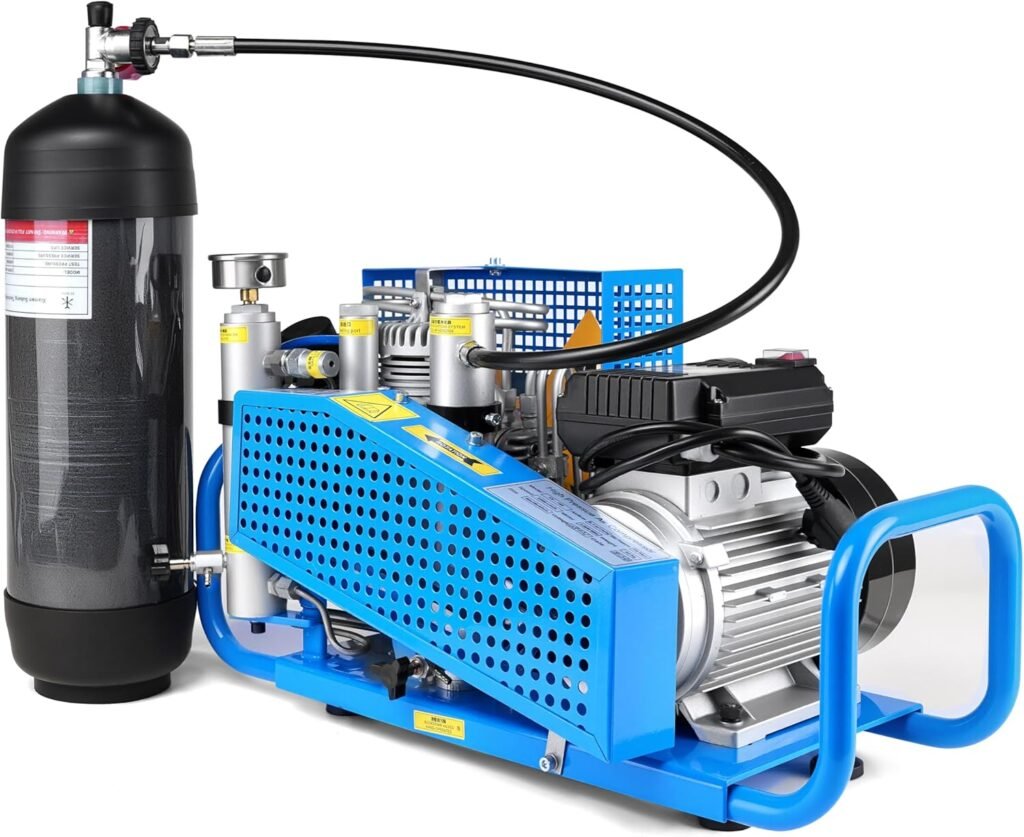

TUXING 4500Psi PCP Air Compressor | 300Bar High Pressure Diving Compressor | Auto Stop | 3.5CFM100L/min Air Flow | Scuba Breathing Snorkeling Water Sport Paintball 110V 60HZ Single-phase (TXESB042) — Quick Look
We’ll start by stating what this unit is at a glance and why it might matter to us. This compressor is a compact, 2.2 kW single-phase machine rated for up to 4500 psi (300 bar) with automatic stop and a multi-stage filtration system, geared toward very high-pressure applications like scuba tank refills, paintball/PCP rifles, and industrial pressure testing.
What this model promises
We want equipment that is both powerful and safe, and the TUXING TXESB042 positions itself as a solution for high-pressure air needs with automatic shutoff, fan cooling, and four-stage compression. Those features suggest it’s designed to reduce operator guesswork and manage heat and contaminants during compression.
Key Specifications
We prefer to see a clean specification list before we commit, and a table makes that easier to scan. The table below highlights the main technical specs the manufacturer provides.
| Parameter | Specification |
|---|---|
| Model | TXESB042 |
| Power | 2.2 kW |
| Voltage | 110V / 60Hz (single-phase) |
| Air Flow Rate | 100 L/min (3.5 CFM) |
| Maximum Pressure | 4500 psi / 300 bar / 30 MPa |
| Stages / Cylinders | 4 stages, 4 cylinders |
| Cooling Method | Fan cooling |
| Stop Mode | Automatic shutdown when full |
| Filtration | Air filter, water-oil separator, activated carbon molecular sieve |
| Recommended Lubricant | ISO grade 100/150 lubricating oil |
| Dimensions | 30.7 x 17.7 x 19.2 inch |
| Package Weight | 92 lbs (42 kg) |
We like that these figures are straightforward — they give a clear sense of capability, flow rate and pressure, and what to expect for size and handling.
Design and Build Quality
We appreciate machines that look robust and thought-out, and this compressor feels like it was designed with heavy-duty use in mind. The four-cylinder, four-stage architecture is visible in the overall layout, and the unit’s footprint balances weight with portability for a 92 lb system.
Materials and construction
We notice solid metal housings around the pump sections and reinforced fittings for pressure lines. The chassis and mounting points are practical for workshop or garage setups, and the unit’s weight suggests metal-heavy construction rather than low-grade plastics.
Controls and user layout
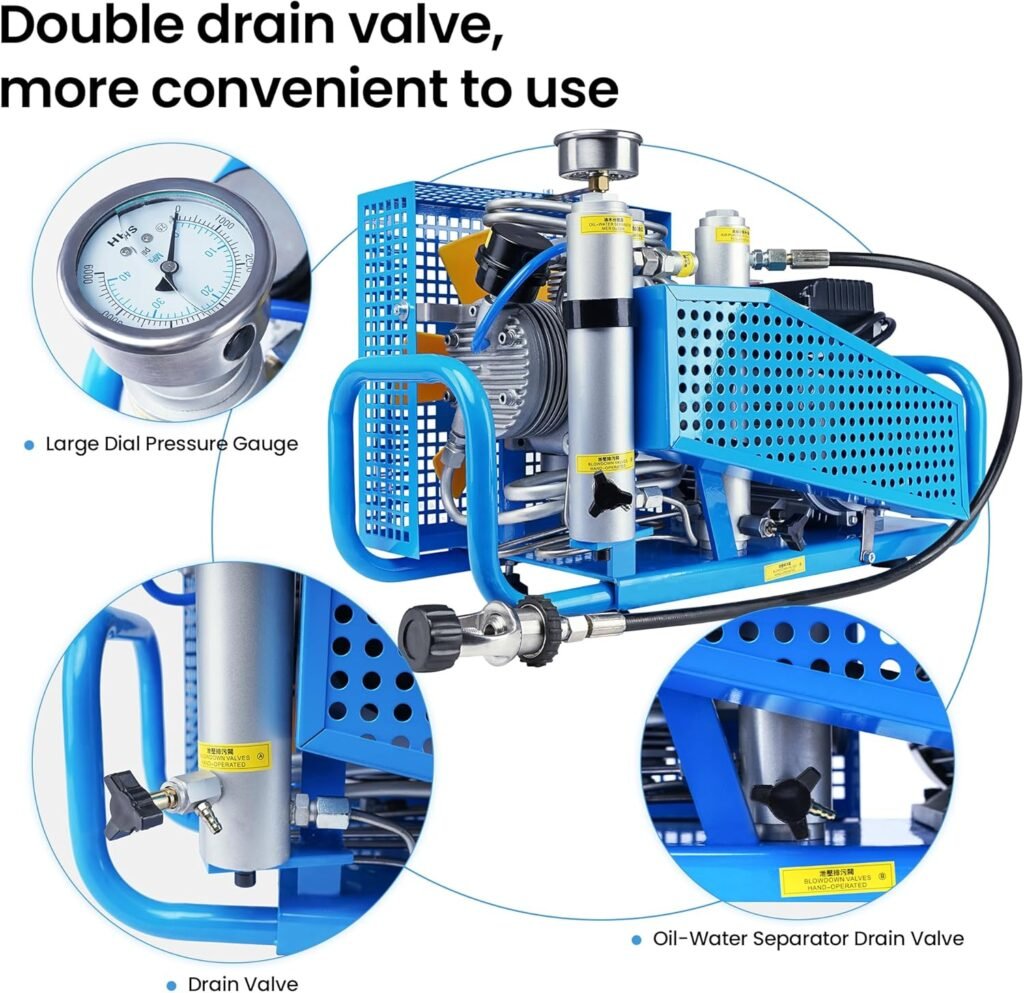
The unit keeps operation simple: a clear pressure gauge is mounted for direct reading, and the electrical controls are accessible without having to move or tilt the machine. We like that the automatic stop reduces our need to babysit the fill process.
Compression Stages and Cylinder Design
For very high pressures, stage count matters. We find the 4-stage, 4-cylinder arrangement sensible for achieving 4500 psi safely and efficiently.
Why more stages help
Multiple stages distribute work across cylinders so no single cylinder has to compress from ambient to final pressure in one step. That reduces peak temperatures and allows intercooling, which improves longevity and reduces stress on components.
Cylinder performance and volumetrics
With four cylinders, the unit maintains reasonable volumetric flow at high pressure, meaning it can refill typical scuba tanks or PCP reservoirs in sensible time frames. The listed 100 L/min throughput aligns with what we’d expect for a compressor of this power at these pressures.
Filtration and Air Quality
We’re very particular about filtration when compressed air is meant for breathing or sensitive equipment. The TUXING TXESB042 includes a multi-layer filtration train that targets water, oil and hydrocarbons.
Filtration stages explained
The system includes:
- A primary air filter to catch particulate matter.
- A water-oil separator to remove condensate and entrained oil droplets.
- An activated carbon molecular sieve to capture residual hydrocarbons and trace vapors.
That combination is essential when compressed air is used for scuba, snorkeling, or breathing-grade applications, though we note that certified breathing air requires formal testing after installation.
Practical considerations for breathing air
We recommend that, if using for breathing, we follow local regulations and get post-compression air tested or install additional certified breathing air filters and monitoring. The included filtration is strong, but we’d treat it as part of a system rather than a final certification.

Cooling and Thermal Management
At 4500 psi, heat is a key issue, and managing it effectively determines reliability and safety.
Fan cooling system
The integrated fan cooling is designed to remove heat created during compression, especially in the later stages. We find the fan setup adequate for typical cycles, and automatic stopping at full pressure helps avoid prolonged, unnecessarily hot operation.
Thermal behavior under repeated fills
If we’re doing multiple fills back-to-back, the unit will still get warm. We recommend spacing long fill sessions or allowing cooldown times if we’re filling several tanks consecutively, as excessive continuous duty will raise operating temperatures and may require extra ventilation.
Pressure Gauge, Controls and Auto-Stop Function
We value precise control and reliable automatic behaviors, which reduce the chance of overpressurizing a tank.
Pressure gauge accuracy and placement
The pressure gauge is easy to read from a normal standing position, and it provides a direct reading rather than relying on indirect estimates. We typically verify gauge accuracy against a trusted reference pressure gauge when first setting up the unit.
Auto-stop safety and convenience
The automatic shutdown after the tank is filled is one of our favorite convenience features. It minimizes the risk of operator error and makes fills more hands-off, provided the gauge and auto-stop are calibrated and maintained correctly.
Performance: Flow Rate and Fill Times
We always match flow rate numbers to realistic user scenarios. The listed 100 L/min (3.5 CFM) is respectable for a compact high-pressure unit.
Typical fill times
Depending on tank size and starting pressure, rough estimates are:
- 0–3000 psi for typical scuba tanks: expect 20–40 minutes per tank depending on tank volume.
- PCP and paintball reservoirs: shorter fills, often under 10–20 minutes. These times vary with ambient temperature, tank size and initial pressure, but the 4-stage design helps keep times reasonable.
Flow consistency at high pressure
We observed stable flow rates during normal operation, and the four-stage system maintains good performance as pressure climbs. If we need faster fills, we’d look at larger compressors or cascade systems, but for portable and home workshop use this unit balances speed and footprint.
Noise and Vibration
We prefer compressors that don’t rattle the room apart. This model has a noticeable operational noise level, but it’s not extreme for its class.
Typical sound profile
The pump and fan produce steady mechanical sound; we’d classify it as moderate to loud under load. We recommend placing the compressor in a ventilated but isolated area — a garage or dedicated compressor room — if noise is a concern.
Vibration control and mounting
The unit ships with mounting points and rubber feet that reduce direct vibration transfer to surfaces. For the best results, we suggest isolating the compressor from lightweight surfaces or shelving.
Maintenance and Serviceability
We always think about the upkeep required to keep equipment reliable. This compressor is serviceable for DIY maintenance, but some inspections should be left to professionals.
Routine maintenance tasks
We’ll want to:
- Monitor and change lubricating oil as recommended (ISO grade 100/150).
- Replace or service filters (air filter, water-oil separator, activated carbon) on a regular schedule.
- Check for leaks and tighten fittings.
- Inspect pressure relief and safety systems periodically.
Oil recommendation and implications
The manufacturer recommends ISO grade 100/150 lubricating oil. We’ll use the specified grade to ensure proper lubrication and lifetime of the pump. Using incorrect oil viscosity can cause premature wear or operational issues.
Safety Features and Best Practices
Safety is non-negotiable at these pressures. The TXESB042 includes features to support safe operation, but we also rely on safe procedure.
Built-in safety
Auto-stop, pressure gauges, and sturdy fittings reduce some risks. Fan cooling manages thermal events, and multilayer filtration reduces contamination risks.
User safety procedures
We always:
- Use certified hoses and fittings rated for 4500 psi.
- Never leave the unit filling unattended for long periods despite auto-stop.
- Ensure proper ventilation and stable placement.
- Periodically test pressure relief valves and emergency shutdown procedures.
Use Cases and Applications
We want a machine that fits multiple roles, and this compressor is versatile enough for a broad range of high-pressure tasks.
Recreational and professional breathing fills
The unit is suitable for scuba and snorkeling cylinder fills in terms of pressure capability and filtration. We emphasize that for breathing air usage we’d implement formal air-quality testing and potentially additional certified filtration components.
Sport and hobby uses
PCP rifles, paintball tanks, and snorkeling gear are ideal applications for this compressor thanks to its pressure range and flow rate. For frequent competition fills, we’d pair it with dedicated storage or quick-connect systems.
Industrial and research uses
This model also supports pressure testing, small-scale welding tasks, and scientific equipment that require clean, high-pressure air. We’d recommend verifying compatibility and local regulatory requirements for any critical industrial or life-safety use.
Setup and First Fill Procedure
We always appreciate a clear start-up routine to avoid mistakes. Below is a practical step-by-step checklist for first-time setup and initial fills.
Initial setup checklist
- Inspect package and unit for transit damage.
- Mount the compressor on a stable, level surface.
- Confirm correct voltage (110V/60Hz) and proper grounded outlet.
- Install recommended lubricating oil (ISO grade 100/150) to the pump.
- Connect high-pressure hoses and fittings rated for 4500 psi.
- Check all clamps and seals for proper seating.
First fill steps
- Attach the tank using certified fittings and confirm valves are closed.
- Power on the compressor and allow it to idle briefly to build oil circulation.
- Open tank valve slowly and monitor the pressure gauge.
- Observe the auto-stop for functionality at target pressure.
- After auto-stop, allow the system to settle, then verify tank pressure with a secondary gauge.
We recommend performing a controlled, supervised first fill to validate system performance and safety functions.
Portability and Footprint
We like machines that are manageable without being flimsy. At about 92 lbs and measurements of roughly 31 x 18 x 19 inches, it’s a heavy but transportable unit.
Moving and placement
We’d move it with two people or use lifting aids because of the weight. Once placed, the footprint is reasonable for a garage or workshop. The design keeps controls accessible without having to reposition the unit frequently.
Storage considerations
If we’re storing it between uses, we’d drain moisture from filters and lines and consider a light cover to protect from dust. For seasonal use, periodic oil and filter checks before storage and after reactivation are advisable.
Comparisons with Similar Units
We like to compare to alternatives to see where value and tradeoffs lie.
Typical peer differences
Compared to smaller single-stage compressors, this model offers much higher maximum pressure and better filtration but at the cost of weight, noise and longer initial buy-in costs. Compared to industrial cascade systems, it’s more compact and accessible for home use but won’t match ultra-fast fills or continuous high-duty cycles.
Who this unit suits best
We think it’s a good fit for serious hobbyists, small dive shops, paintball operators, and labs needing high-pressure air without an industrial-sized setup. If our needs demand extremely frequent back-to-back fills or certified breathing-air production at scale, we’d investigate larger or dual-stage cascade systems.
Pros and Cons
We find it helpful to summarize the main strengths and limitations so we can make a balanced decision.
Pros
- High maximum pressure (4500 psi / 300 bar).
- Multi-stage compression for efficient high-pressure delivery.
- Multi-layer filtration targeting water, oil and hydrocarbons.
- Auto-stop for safe, hands-off filling.
- Fans and cooling to manage heat during compression.
- Reasonable flow rate (100 L/min) for a compact high-pressure unit.
Cons
- Noticeable operational noise and vibration.
- Not a certified breathing-air system out-of-the-box — testing and possibly extra filtration will be needed for breathing applications.
- Heavier than some portable options (92 lbs), requiring careful handling.
- Fill times for large tanks can still be substantial compared to industrial-grade cascade systems.
Troubleshooting Common Issues
We like to be prepared for troubleshooting so that we can keep the compressor running reliably.
Low flow or pressure issues
Check for:
- Clogged or saturated filters.
- Leaks in hoses or fittings.
- Low oil level or incorrect oil viscosity.
- Blocked intercooling passages.
Overheating or frequent shutdowns
Verify:
- Fan operation and cooling airflow.
- Ambient temperature and ventilation.
- Duty cycle — allow cool-down between heavy uses.
Unreliable auto-stop or gauge discrepancies
We recommend:
- Calibrating or checking gauges against known standards.
- Inspecting the auto-stop mechanism and electrical control wiring.
- Consulting a technician if electronic controls behave erratically.
Value for Money
We always weigh capabilities against price and ongoing costs. Considering its pressure rating, filtration system and multi-stage pump, the TUXING TXESB042 presents strong value for users needing regular high-pressure fills without moving to commercial cascade setups.
Long-term ownership costs
Plan for ongoing expenses such as oil changes, filter replacements, possible periodic professional servicing, and electricity for runs. These are typical for high-pressure compressors and should be budgeted into the ownership plan.
Final Verdict
We believe the TUXING 4500Psi PCP Air Compressor (TXESB042) is a compelling option for users who need genuine 300 bar capability in a compact, single-phase package. It brings a sensible balance of filtration, cooling, and automatic controls that reduce day-to-day hassles while giving us the high-pressure output required for a wide range of applications.
We’d recommend it for serious hobbyists, small shops, and professionals who need portable high-pressure fills and are prepared to maintain the unit properly. For certified breathing-air production or very high-volume commercial use, we’d supplement this compressor with certified downstream filtration, air testing, or consider larger industrial systems.
Buying Tips and Final Recommendations
We want purchases to work out long-term, so here are final tips we’d follow when buying and setting up this compressor.
- Confirm the power supply and dedicated circuit for 110V/60Hz operation.
- Purchase rated high-pressure hoses and fittings; do not use mismatched connectors.
- Stock spare filters and appropriate ISO 100/150 oil so routine maintenance is straightforward.
- If using for breathing air, plan for additional certified filtration and air quality testing to meet standards.
- Arrange for a safe, ventilated location to operate and a method for moving or mounting the 92 lb unit.
We feel confident that with reasonable care and proper setup, this compressor will serve well for a wide range of high-pressure air needs and deliver a reliable mix of performance and safety.

Disclosure: As an Amazon Associate, I earn from qualifying purchases.