Installing an air compressor regulator is a critical step in ensuring your system operates safely and efficiently. Proper installation requires understanding the regulator’s purpose, selecting compatible fittings, and following precise procedures to prevent leaks and pressure issues. As we guide you through each phase, you’ll see how attention to detail can extend equipment lifespan and improve performance, making it essential to master the process thoroughly before proceeding.
Key Takeaways
- Prepare a clean workspace and verify compatibility of fittings before installation.
- Connect the regulator inlet securely to the compressor outlet using appropriate fittings.
- Use thread sealant tape to ensure airtight connections and prevent leaks.
- Tighten fittings with adjustable or pipe wrenches, avoiding over-tightening.
- Check for leaks with soapy water after installation and adjust pressure settings as needed.
Understanding the Purpose of an Air Compressor Regulator
An air compressor regulator serves a critical role in controlling and maintaining the desired pressure output from the compressor to the attached tools or equipment. Its primary function is to guarantee consistent, stable pressure, preventing over-pressurization that could damage tools or cause safety hazards. The regulator achieves this by adjusting the airflow, using a diaphragm and a pressure-setting mechanism, to match the specific requirements of each application. It also acts as a safeguard against pressure fluctuations resulting from changes in compressor load or supply pressure. By maintaining a steady output, the regulator enhances tool performance, prolongs equipment lifespan, and improves safety. Proper understanding of its purpose ensures correct installation and effective operation, ultimately optimizing overall system efficiency.
Choosing the Right Regulator for Your Compressor
Selecting the appropriate regulator for your compressor involves evaluating specific operational requirements and compatibility factors. Key parameters include maximum pressure, flow rate, and inlet/outlet connections. Confirming the regulator’s maximum working pressure exceeds your system’s operating pressure is critical for safety and performance. Compatibility with your compressor’s connection type prevents leaks and installation issues.
| Parameter | Specification | Importance |
|---|---|---|
| Max Pressure | Must surpass system pressure | Prevents regulator failure |
| Flow Rate | Matches or exceeds demand | Ensures consistent air delivery |
| Connection Type | Same as compressor fittings | Facilitates secure attachment |
| Material Compatibility | Compatible with compressed air | Prevents corrosion and degradation |
Proper selection guarantees ideal regulation, safety, and efficiency.
Essential Tools and Materials for Installation
To guarantee a smooth and accurate installation of your air compressor regulator, gathering the correct tools and materials is essential. You’ll need a set of adjustable wrenches for tightening fittings securely, and a pipe wrench if working with larger diameter connections. A pipe cutter or tubing saw is necessary for precise cuttings of airline hoses, while thread sealant tape (PTFE tape) ensures airtight connections. Additionally, a manifold or regulator mounting bracket provides stability during installation. For safety and measurement, have a pressure gauge and a regulator-specific wrench on hand. Use high-quality, compatible fittings and connectors that match your compressor’s output specifications. Accurate tools and materials prevent leaks and make certain reliable operation, forming the foundation for a safe, efficient regulator installation.
Step-by-Step Guide to Installing Your Air Compressor Regulator
We begin by preparing a clean, well-lit workspace to guarantee safety and ease of access. Next, we carefully connect the regulator to the compressor, verifying thread compatibility and sealing with appropriate fittings. Precise attachment and inspection at this stage are critical to prevent leaks and ensure peak performance.
Preparing The Workspace
Before beginning the installation, it’s essential to prepare a clean, well-lit workspace that allows easy access to all components. Clear the area of any clutter or obstructions to guarantee safety and efficiency. Make certain sufficient lighting to accurately identify and handle small parts and fittings. Arrange necessary tools—wrenches, screwdrivers, and thread sealant—within reach. Confirm the availability of all installation components, including the regulator, fittings, and mounting hardware. Verify that the work surface is stable and level to facilitate precise positioning. Adequate ventilation should be maintained to prevent dust accumulation and promote safety. Mark the workspace clearly, isolating the compressor and regulator installation zones to avoid accidental interference. Proper preparation minimizes errors and expedites the installation process, ensuring a secure and functional setup.
Connecting The Regulator
Establishing a secure connection between the regulator and the compressor requires careful attention to detail. First, verify the compressor is turned off and depressurize the system. Next, identify the correct port on the compressor for the regulator. Then, follow these steps:
- Attach the regulator inlet to the compressor’s outlet using a compatible, high-pressure-rated fitting.
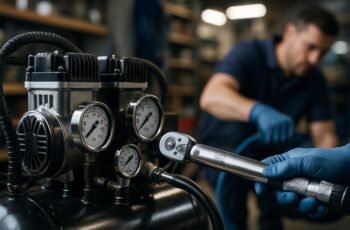
- Tighten the connection with a wrench, ensuring it’s snug but not over-tightened to avoid damage.
- Confirm the installer’s thread direction (usually right-hand) and verify compatibility.
- Attach any necessary quick-connect fittings or hoses, ensuring they are securely connected and leak-free.
Proper assembly guarantees accurate pressure regulation and safe operation.
Troubleshooting Common Installation Issues
When installing an air compressor regulator, issues often arise from improper connections or incorrect adjustments, which can compromise system performance and safety. Common problems include air leaks at connection points, misaligned fittings, or insufficient tightening that causes pressure drops. Incorrect regulator adjustments may lead to unstable pressure output, risking damage to tools or components. To troubleshoot, verify all fittings are securely tightened and properly aligned according to manufacturer specifications. Use soapy water to detect leaks at connection points, and replace any damaged or worn components. Ascertain the regulator is adjusted to the correct pressure setting based on your tool requirements, and confirm the pressure gauge reflects the desired output. Addressing these issues promptly maintains system integrity and ideal operation.
Tips for Maintaining Your Air Compressor Regulator Over Time
Regular maintenance of your air compressor regulator guarantees consistent performance and prevents costly failures. To guarantee longevity and suitable function, follow these essential tips:
- Regularly inspect and clean filters to prevent dust and debris buildup that can impair regulation accuracy.
- Lubricate moving parts as specified by the manufacturer, reducing wear and maintaining smooth operation.
- Check for leaks around fittings and connections using soapy water; address any leaks immediately to sustain correct pressure.
- Monitor pressure gauges frequently, calibrating or replacing them if readings become inconsistent or inaccurate.
Adhering to these practices ensures your regulator remains precise and reliable, ultimately extending its service life and maintaining system efficiency.
Frequently Asked Questions
Can I Install an Air Compressor Regulator Myself Without Professional Help?
Yes, we can install an air compressor regulator ourselves if we follow the manufacturer’s instructions carefully, guarantee the compressor is off and depressurized, and use proper tools, but professional help is advisable for complex setups or uncertainties.
What Safety Precautions Should I Take During Regulator Installation?
We guarantee safety by disconnecting the power supply, relieving pressure from the system, wearing protective gear, verifying compatibility of parts, and carefully following manufacturer instructions, to prevent accidents and ensure proper regulator installation.
How Often Should I Inspect or Replace My Air Compressor Regulator?
We suggest inspecting your air compressor regulator monthly, checking for wear, leaks, or inconsistencies. Replace it if you notice damage, decreased performance, or after the manufacturer’s specified lifespan, typically every 2-5 years, to guarantee maximum safety and efficiency.
Are There Specific Brands or Models Recommended for Compatibility?
We recommend brands like Ingersoll Rand, Campbell Hausfeld, and DEWALT for compatibility, as they offer reliable, precise regulators. Always verify model specifications and confirm compatibility with your compressor’s pressure range for peak performance.
How Do Temperature and Humidity Affect Regulator Performance?
Extreme heat or high humidity can cause regulators to malfunction by affecting internal components or causing condensation. For example, in a factory setting, temperature fluctuations led to inconsistent pressure regulation, emphasizing the need for climate-controlled environments for ideal performance.
Conclusion
By following these installation steps meticulously, we can guarantee our air compressor regulator functions reliably, much like a finely tuned engine maintaining peak performance. Proper installation acts as the backbone for consistent pressure control, preventing leaks and equipment damage. Think of it as installing a precision valve—when done correctly, it becomes the silent guardian of safety and efficiency, safeguarding our tools and extending their lifespan. Attention to detail here is essential for long-term operation and reliability.