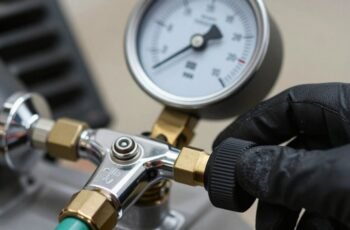
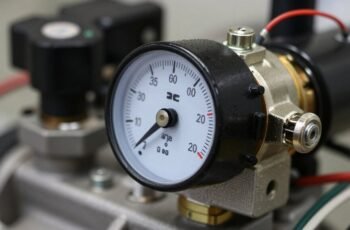
Imagine a sudden spark igniting a minor fault into a hazardous situation; this highlights why electrical safety is paramount when working with air compressors. We must follow strict protocols to prevent shocks, equipment damage, or fires. Ensuring proper inspection, grounding, and adherence to manufacturer guidelines minimizes these risks. Understanding these safety measures is essential to maintain a safe work environment—so, let’s explore the critical steps to protect both personnel and equipment.
Key Takeaways
- Always disconnect power and verify zero voltage before inspecting or servicing the air compressor’s electrical components.
- Ensure proper grounding of the compressor according to local electrical codes to prevent static buildup and electrical shocks.
- Use appropriately rated circuit breakers and fuses to protect against overloads and electrical faults.
- Regularly inspect wiring, insulation, and connections for damage, corrosion, or looseness, and replace damaged parts immediately.
- Wear insulated tools and PPE, such as gloves and goggles, when handling high-voltage components or performing maintenance.
Why Electrical Safety Is Critical When Using Air Compressors
Electrical safety is essential when operating air compressors because electrical faults can lead to severe injuries, equipment damage, or fires. Proper electrical practices minimize the risk of short circuits, overloads, and electrical shocks. Faulty wiring, improper grounding, or damaged insulation can compromise system integrity, creating hazards that endanger operators and surrounding equipment. Ensuring compliance with electrical codes and standards reduces the likelihood of dangerous malfunctions. We must also prevent electrical overloads that can cause overheating, leading to component failure or fires. Regularly verifying connections, using appropriate circuit protection devices, and maintaining correct grounding are vital steps. Prioritizing electrical safety helps us avoid costly downtime, legal liabilities, and safety incidents, ensuring a safe, reliable operating environment for all personnel.
How to Properly Inspect and Maintain Your Compressor’s Wiring
Regularly inspecting and maintaining your compressor’s wiring is essential to guarantee safe and reliable operation. Begin by visually examining all wiring connections for signs of wear, corrosion, or looseness. Check for insulation damage, such as cracks or burns, which can lead to short circuits or electrical faults. Use a multimeter to verify continuity and proper grounding, ensuring wiring matches manufacturer specifications. Tighten any loose terminals and replace damaged wires immediately. Record inspection results and schedule preventive maintenance based on the compressor’s usage and environment. Always disconnect power before performing inspections to prevent electrical shock. Proper documentation helps track the wire’s condition over time and identify recurring issues. Consistent, precise inspections mitigate risks and maintain *ideal* compressor performance.
Best Practices for Grounding and Circuit Protection
Proper grounding and circuit protection are fundamental to ensuring safe and reliable compressor operation. We recommend installing a grounding system that complies with local electrical codes, using a dedicated grounding conductor connected to a reliable earth ground. This prevents electrical faults from causing shock hazards or equipment damage. Circuit protection devices, such as appropriately rated circuit breakers and fuses, must be installed to isolate faults quickly and prevent overloads. Regularly verify that protective devices are functioning correctly and are suitable for the compressor’s electrical load. Use properly rated wiring with adequate insulation to prevent accidental shorts. Proper grounding reduces the risk of static buildup, while effective circuit protection minimizes the impact of electrical faults, ensuring the compressor’s safety and operational integrity.
Safe Operation Tips for High-Voltage Components
When working with high-voltage components in air compressors, we must prioritize safety to prevent serious injury or equipment damage. Always disconnect power before performing maintenance or inspections on high-voltage parts, ensuring the system is fully de-energized. Use insulated tools rated for high-voltage work and wear appropriate personal protective equipment, including rubber gloves and safety goggles. Verify voltage absence with a calibrated tester before contact. Maintain strict adherence to manufacturer specifications for voltage ratings and wiring configurations. Implement clear labeling and warning signs to alert personnel of high-voltage areas. Regularly inspect insulation and connections for signs of wear, corrosion, or damage. Proper training on high-voltage safety protocols is essential to minimize risk and ensure safe operation at all times.
Troubleshooting Common Electrical Issues Safely
Troubleshooting electrical issues in air compressors requires careful adherence to safety protocols to prevent accidents and equipment damage. Before beginning, disconnect the compressor from power and verify zero voltage with a multimeter. Inspect wiring connections for corrosion, looseness, or damage, and replace or tighten as necessary. Use insulated tools to avoid accidental shorts. When testing components such as relays, switches, or circuit breakers, follow manufacturer specifications and avoid live testing on energized circuits. Be aware of potential electrical hazards like exposed wires or faulty insulation. Document findings systematically, and only re-energize the system after confirming repairs. Never bypass safety devices or ignore warning signs. Prioritize safety at every step to guarantee reliable operation and prevent injury.
Frequently Asked Questions
What Safety Gear Should I Wear When Working Near Air Compressor Electrical Components?
We recommend wearing insulated gloves, safety goggles, and flame-resistant clothing when working near air compressor electrical components to prevent shocks, burns, and injuries, ensuring full protection against potential electrical hazards during maintenance or troubleshooting tasks.
How Often Should Electrical Components of an Air Compressor Be Inspected?
We inspect air compressor electrical components quarterly, recognizing that neglect invites catastrophic failures. Regular, meticulous inspections guarantee safety, maintain efficiency, and prevent costly downtime—after all, static and sparks don’t take holidays.
Are There Specific Certifications Required for Electrical Maintenance on Compressors?
Yes, we require electricians to hold certifications such as NICET or OSHA compliance for electrical maintenance on compressors. These credentials guarantee adherence to safety standards and proper technical expertise, minimizing risks and ensuring reliable, safe compressor operation.
What Are the Signs of Electrical Faults in an Air Compressor Before Failure Occurs?
We detect electrical faults early through signs like unusual noises, inconsistent pressure, overheating, frequent tripping, and flickering indicators. Recognizing these warning signs promptly helps us prevent failures, ensuring safe, efficient compressor operation and minimizing costly repairs.
How Can I Prevent Electrical Fires in Air Compressor Setups?
We prevent electrical fires by regularly inspecting wiring for damage, ensuring proper grounding, using appropriate circuit breakers, avoiding overloads, and maintaining clean, dry connections. Proper training and adherence to safety standards are essential for risk mitigation.
Conclusion
Just as a skilled sailor trusts their compass to navigate safely through turbulent waters, we rely on vigilant electrical safety practices to steer clear of hazards. By consistently inspecting, grounding, and maintaining our air compressors, we guarantee smooth operation and prevent dangerous faults. Staying proactive and attentive is our lighthouse—guiding us safely through every task. With these precautions, we keep our work environment secure, protecting both personnel and equipment from the storms of electrical failure.