PACK7 Rotary Screw Air Compressor: Quick Product Overview
A $3999.99 industrial compressor can be either a sensible investment or an expensive mismatch, depending on the shop’s electrical service and daily air demand. The PACK7 rotary screw air compressor is aimed at businesses that need recurring compressed air rather than a portable machine for occasional garage work. With a 10HP motor, CFM output, and 460V three-phase input, it belongs in a properly planned workshop, automotive facility, fabrication space, or small manufacturing operation.
Our early takeaway is straightforward: this unit is worth considering when a business already has suitable three-phase power and needs steady air during repeated tool use. It is not a simple plug-in homeowner compressor. Our assessment focuses on its stated capacity, installation demands, protection ratings, intended applications, available customer-feedback evidence, and ownership value.
PACK7 positions the compressor for machining, fabrication, automotive repair, car washes, small sandblasting operations, and light manufacturing. Those uses can benefit from a rotary screw design, but the application list alone does not prove that every tool or production line will receive enough air. The decision should begin with the shop’s actual CFM demand and electrical infrastructure.
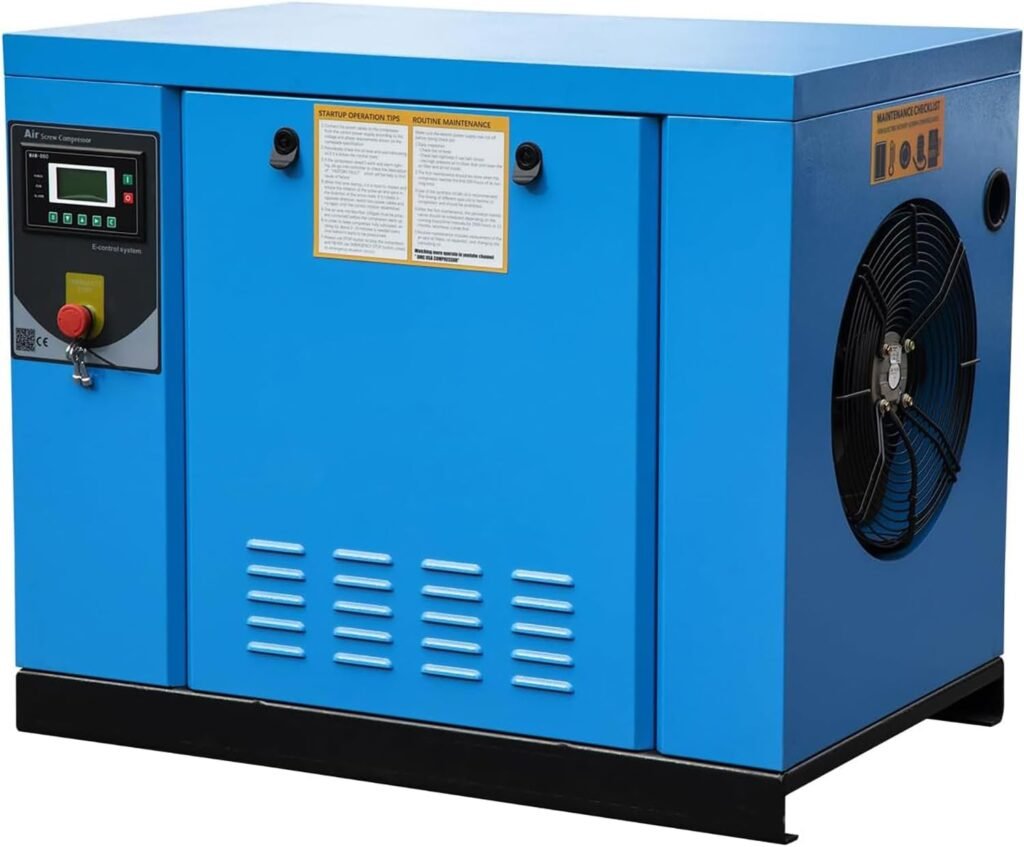

PACK7 Rotary Screw Air Compressor Specifications at a Glance
| Specification | Listed detail |
|---|---|
| Motor power | 10HP / 7.5kW |
| Airflow | 35 CFM |
| Maximum working pressure | 125 PSI |
| Electrical input | 460V, three-phase |
| Outlet | NPT/4-inch pipe |
The headline capacity is 35 CFM. That figure describes the compressor’s stated airflow, not the exact amount every connected tool will receive at every pressure. A small impact wrench may use far less air than a continuous grinder, spray application, or abrasive blaster, so we should compare each tool’s published requirement with this rating rather than treating horsepower as a substitute for airflow.
The 125 PSI maximum working pressure provides useful pressure reserve for a general shop system, but it does not automatically make the machine suitable for every sandblasting setup. Nozzle size, blasting pressure, duty cycle, hose length, and concurrent users can materially change the required capacity.
The NPT/4-inch outlet also needs a properly designed connection. We should match fittings, hoses, filters, regulators, and downstream piping to the outlet and expected flow. An undersized fitting or long restrictive hose can reduce usable performance even when the compressor’s published figures appear adequate.
How the PACK7 Rotary Screw Air Compressor Works for Shop Air
Unlike a conventional reciprocating compressor, a rotary screw machine compresses air through rotating screw elements and is generally intended for repeated or continuous demand. That operating style can produce a smoother supply for a busy shop, with fewer disruptive start-stop cycles than a small tank-based compressor. For automotive repair, fabrication, machining, spray work, or light manufacturing, consistent delivery may matter more than a high peak figure that lasts only until a receiver tank loses pressure.
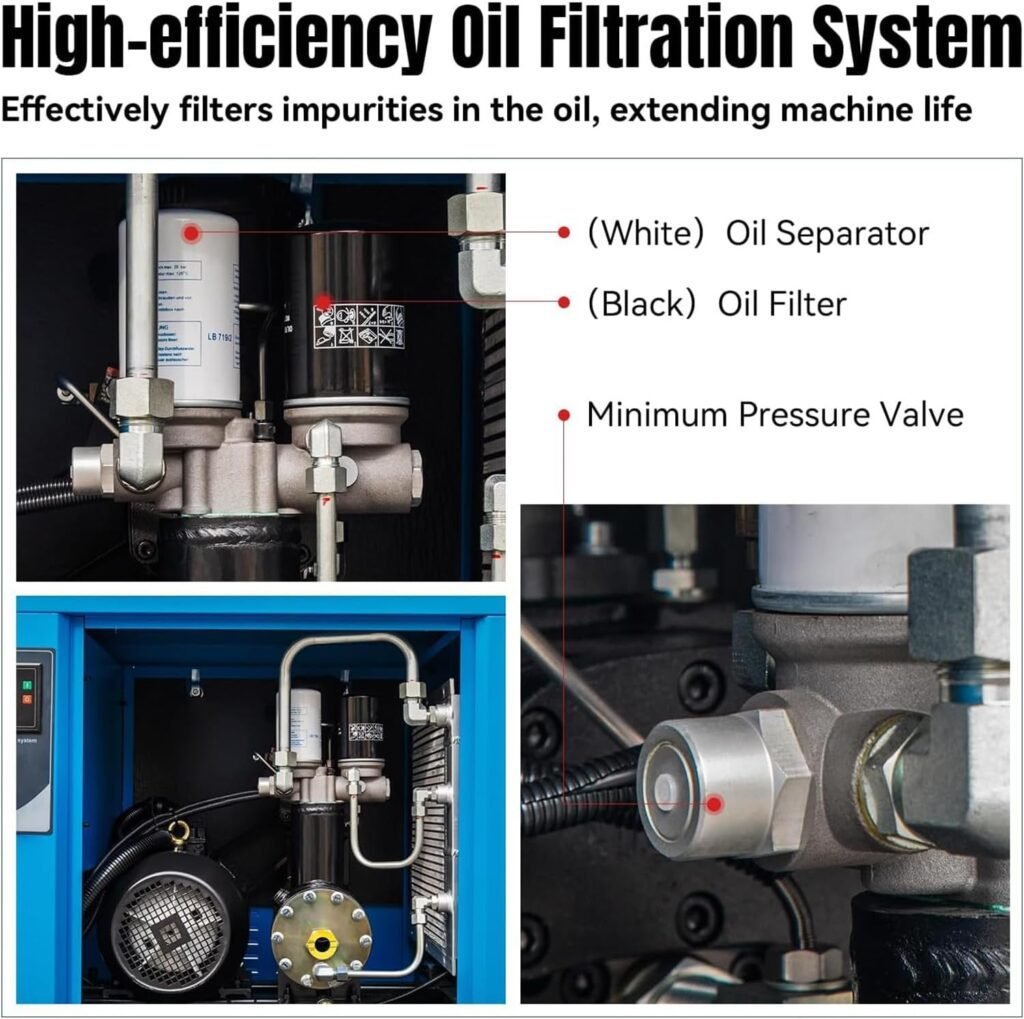
That does not mean the PACK7 will solve every compressed-air problem by itself. A complete installation may need a receiver tank, moisture separation, filtration, regulation, condensate handling, and correctly sized piping. Ventilation is equally important because compressor operation produces heat, while pressure drops can arise from poor routing, restrictive couplers, clogged filters, or excessive hose length.
We would match the machine to a shop in four steps:
- List the CFM requirement of every pneumatic tool at its stated operating pressure.
- Identify which tools run at the same time during the busiest work period.
- Add practical headroom for leaks, pressure loss, and demand variation.
- Compare the resulting total with the listed CFM output.
This method is more reliable than choosing by 10HP alone. A shop using one intermittent air tool may need much less capacity, while several simultaneous users can consume the available airflow quickly.
Motor, Electrical Requirements, and Installation Planning
The most decisive installation issue is the required 460V three-phase supply. This is not the electrical arrangement found in a typical home garage, and a standard receptacle or improvised plug-in connection is not an acceptable substitute. Before ordering, we should verify the facility’s voltage, phase configuration, panel capacity, disconnect arrangement, conductor sizing, overcurrent protection, and local electrical-code requirements.
The 10HP motor places the PACK7 firmly in industrial service. A qualified electrician should assess the installation instead of relying on assumptions based on the motor’s nameplate. The compressor may need dedicated wiring and a suitable disconnect, and the final requirements depend on the installation instructions and applicable code.
The stated 1.15 service factor means the motor can tolerate a short-term overload of up to 15% above its rated capacity without failure under the relevant operating conditions. We should not interpret that rating as permission to run the motor continuously overloaded. Persistent excess load, poor ventilation, incorrect voltage, or unsuitable wiring can still create heat and reliability problems.
Our pre-purchase sequence would be:
- Inspect the electrical panel and identify the available voltage and phase.
- Ask a qualified electrician to verify capacity, protection, disconnect, and wiring needs.
- Choose a stable compressor location with room for service access.
- Plan ventilation and air-line routing before the equipment arrives.


Durability Features: IP54 Motor Protection and Temperature Rating
The motor’s IP54 rating offers useful but limited environmental protection. The first digit indicates that limited dust ingress is permitted; the motor is protected sufficiently for normal operation but is not dust-tight. The second digit indicates protection against splashing water from any direction. IP54 therefore should not be read as approval for direct washdown, immersion, or exposure to uncontrolled spray.
The Class B temperature-rise specification lists a maximum allowable rise of 130°C (266°F). This is a rating limit, not a recommended shop temperature. Heat management still depends on clear airflow, a sensible installation location, correct loading, and maintenance. Dust-coated ventilation paths or a cramped enclosure can make it harder for the motor and compressor system to shed heat.
For a fabrication shop, we would keep the compressor away from concentrated metal dust and abrasive debris where possible. In a car-washing environment, it should be positioned outside direct spray and protected from overspray while retaining adequate ventilation. Routine actions include keeping ventilation paths clear, inspecting for dust accumulation, preventing liquids from reaching the motor, and following the manufacturer’s service schedule.
These ratings suggest a machine suitable for a controlled industrial setting, not an unrestricted outdoor or washdown installation. Environmental protection is one part of durability; proper electrical work, air quality, service intervals, and thermal management matter just as much.
Using the PACK7 for Automotive, Fabrication, and Manufacturing Work
The listed applications cover several very different operating patterns. Automotive repair and car-wash facilities may appreciate steady shop air for repeated tire equipment, blow-off work, lifts, and pneumatic tools. Fabrication and machining can also benefit when multiple tasks occur throughout the day. Small manufacturing operations may find the format useful if their production demand is regular and the air system is sized around the actual process.
Sandblasting requires more caution. Abrasive blasting equipment can consume substantially more air than an impact wrench or blow gun, and demand changes with nozzle size and pressure. Grinders, spray tools, tire equipment, and lifts also have different consumption profiles. The presence of a 10HP motor does not establish that continuous blasting will work without pressure loss.
We would evaluate a proposed application using this workflow:
- Record each tool’s recommended CFM at its operating pressure.
- Mark the tools that operate during the busiest period rather than averaging the whole day.
- Account for leaks, filters, couplers, hose restrictions, and pressure loss.
- Leave enough reserve that normal demand does not force the compressor to operate at its limit.
For occasional garage work once or twice a week, the industrial format and 460V supply may be excessive. A lower-cost reciprocating machine with a compatible electrical system could be more practical, even if its airflow is less consistent.
What Customers Are Saying About the PACK7 Rotary Screw Air Compressor
The supplied product record does not include a current star rating, review count, or documented buyer comments for this listing. We therefore cannot responsibly claim that verified owners praise its noise level, shipping condition, vibration control, setup experience, long-term reliability, or sustained sandblasting performance. That lack of published review detail is itself relevant for a $3999.99 industrial purchase: shoppers should inspect the live listing and request clarification before treating expectations as proven experience.
Customer reviews indicate real value only when they explain the operating context. For this compressor, the most useful reports would identify the buyer’s voltage and phase, connected tools, duty cycle, installation method, ownership period, and whether the unit maintained pressure under simultaneous demand. A brief comment saying “works great” tells us much less than a detailed account from a shop running comparable equipment.
We recommend reading the review record methodically:
- Sort for the newest comments to identify current shipping, support, and product patterns.
- Read one-star and three-star reviews for recurring complaints rather than isolated frustration.
- Look for comments that specify electrical compatibility, application, and length of ownership.
- Compare reported performance with the stated CFM, PSI, and 460V three-phase requirements.
Until documented buyer feedback is available, claims about quiet operation, easy installation, build quality, and continuous-duty results should remain unverified. The specifications support a particular use case, but they cannot replace application-specific customer evidence.
PACK7 Rotary Screw Air Compressor Compared With Alternatives
The closest named comparison is the Ingersoll Rand UP6-10-125, a 10HP-class rotary screw compressor. The supplied comparison information identifies a 200V three-phase version with a listed CFM figure, while the PACK7 uses 460V three-phase power and lists CFM. Both require industrial electrical planning, but the voltage difference alone may determine which one fits a facility. We should compare the exact model, pressure configuration, warranty, service access, and current price rather than assuming that the brand name or small airflow difference settles the decision.
The Ingersoll Rand 2475N7.5 takes a different approach: it is a 7.5HP two-stage reciprocating compressor with a cast-iron pump and an 80-gallon vertical tank, listed at up to 24.3 CFM at PSI in the supplied comparison data. Its piston-pump design is not directly equivalent to a rotary screw system. Reciprocating equipment can suit intermittent demand and may be less demanding for a smaller operation, while a rotary screw format is aimed at steadier recurring use.
The PACK7 may make more sense for a facility that already has 460V three-phase service and wants continuous shop-air capability without choosing a portable or consumer-oriented machine. An alternative may be preferable when the building has a different voltage, when a larger service network is a priority, or when intermittent demand does not justify rotary screw ownership.
We would limit the final comparison to confirmed model specifications, current pricing, warranty terms, and documented customer experiences. Without equivalent service and support information, it would be overstated to declare one machine universally superior.
Installation and Maintenance Checklist Before Buying
Purchase readiness should be established before the compressor is delivered. We would confirm the following items with the installer and seller:
- Available 460V three-phase service and compliant professional wiring.
- Stable floor placement with sufficient clearance for service work.
- Ventilation that can remove operating heat.
- Air-line routing designed to reduce restriction and pressure loss.
- Suitable filtration, regulation, and condensate management.
- Access to replacement parts, technical support, and scheduled service.
Leaks can consume capacity continuously, while undersized piping can restrict flow between the compressor and tools. Contaminated intake air may increase service demands, and poor ventilation can raise operating temperatures. In other words, a published compressor rating describes the machine, not every installation surrounding it.
Before placing the order, we would confirm warranty duration and exclusions, replacement oil and separator requirements, service intervals, technical-support availability, and the seller’s procedure for reporting freight damage. Those details can affect ownership cost as much as the initial specification sheet.
Commissioning should follow a controlled sequence:
- Inspect the shipment, casing, fittings, and visible connections for transit damage.
- Check connections and installation details against the supplied instructions.
- Have the electrician complete final electrical verification before energizing the unit.
- Run the compressor according to the manufacturer’s procedure.
- Inspect for air or oil leaks and record baseline pressure behavior.
Is the PACK7 Rotary Screw Air Compressor a Good Value?
At $3999.99, the PACK7 rotary screw air compressor sits in a serious small-business equipment category rather than an occasional-use tool purchase. Its value comes from the combination of a 10HP industrial motor, stated CFM output, PSI maximum working pressure, and rotary screw format. For a busy shop that repeatedly needs compressed air, avoiding frequent start-stop interruptions may justify spending more than a basic reciprocating compressor.
Utilization is the deciding factor. A workshop running pneumatic equipment throughout the day can make better use of rotary screw capacity than a homeowner who operates an impact wrench briefly once or twice a week. The purchase price is only the starting point: buyers may also need professional electrical installation, filtration, regulation, piping, condensate handling, maintenance supplies, service, noise control, and possibly a receiver tank suited to the system.
Our buying framework is simple. Choose the PACK7 when the building already supports its electrical requirement, the application needs recurring shop air, and the calculated demand leaves sensible reserve below the listed output. Compare alternatives first when voltage compatibility, portability, intermittent use, or access to an established service network matters more than rotary screw operation.
Based on the documented specifications and the absence of a supplied rating or review count, we see the PACK7 as a potentially practical industrial option, not a universal recommendation. It deserves consideration from a properly equipped small shop, but buyers should verify electrical, airflow, warranty, and service details before committing the $3999.99 purchase.
Pros and Cons
Pros
- 10HP rotary screw design aimed at recurring industrial shop-air demand
- Listed CFM airflow and PSI maximum working pressure
- Suitable application range includes automotive repair, fabrication, machining, car washes, and small manufacturing
- IP54 motor protection and a stated 1.15 service factor
- Listed as in stock
Cons
- Requires specialized 460V three-phase electrical service rather than a standard outlet
- The CFM rating may not cover continuous sandblasting or multiple high-consumption tools
- Professional electrical installation and supporting air-system components add to the ownership cost
- IP54 protection does not make the motor dust-tight or suitable for direct washdown
- The supplied product record includes no current star rating, review count, or documented buyer feedback
Final Verdict
Key Takeaways
- The PACK7 is a 10HP industrial rotary screw compressor intended for recurring shop-air demand, not a portable homeowner setup.
- Its 460V three-phase requirement should be verified by a qualified electrician before ordering.
- The listed airflow must be compared with each tool’s CFM demand, simultaneous use, pressure, leaks, and system losses.
- Available product data does not include a current star rating, review count, or documented buyer experiences, so installation and reliability claims remain unverified.
- At $3999.99, it makes the most sense for a properly equipped small business that will use steady compressed air regularly.
Frequently Asked Questions
Is the PACK7 rotary screw air compressor suitable for a home garage?
Usually not unless the garage already has suitable 460V three-phase electrical service and a properly planned industrial installation. Its 10HP rotary screw design is better matched to recurring shop demand than occasional homeowner use.
Can the PACK7 run sandblasting equipment?
It may support some smaller sandblasting applications, but the answer depends on nozzle size, operating pressure, duty cycle, hose restrictions, and simultaneous users. Compare the blasting equipment’s actual CFM requirement with the compressor’s listed output before purchase.
What electrical service does this compressor require?
The listed requirement is 460V three-phase power. A qualified electrician should verify panel capacity, wiring, disconnects, overcurrent protection, and local-code requirements before installation.
Does IP54 mean the motor is waterproof?
No. IP54 permits limited dust ingress and protects against splashing water from any direction, but it is not dust-tight and is not intended for direct washdown or immersion.