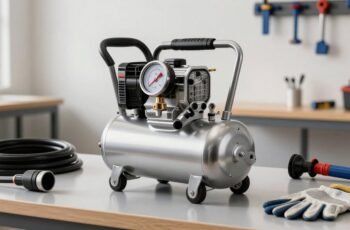
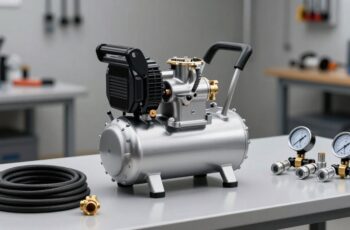
When evaluating top-rated air compressor accessories, we focus on compatibility, material durability, and performance metrics to guarantee seamless integration and long-term reliability. Each component’s resistance to wear, corrosion, and operational stresses influences overall efficiency and safety. Understanding these technical aspects helps us determine which accessories optimize system performance and lifespan. Exploring the specifics of hoses, filters, and fittings reveals critical differences that could substantially impact your compressor’s operation—making it vital to compare these elements thoroughly.
Key Takeaways
- Compatibility with existing compressor models ensures seamless integration and reduces installation issues.
- Material quality and durability affect accessory lifespan and system reliability under operational stresses.
- Performance metrics like pressure ratings, flexibility, and filtration efficiency optimize compressor functionality.
- Environmental resistance and safety features enhance long-term operation in various conditions.
- Overall system performance depends on selecting accessories that align with workload demands and safety standards.
What Are the Key Features to Look for in Air Compressor Accessories?
When selecting air compressor accessories, it’s essential to prioritize key features that guarantee compatibility, durability, and peak performance. Compatibility ensures the accessory integrates seamlessly with existing compressor models, avoiding operational issues. Durability depends on high-quality materials resistant to wear, corrosion, and mechanical stress, which extends service life. Precise construction, such as tight fittings and robust seals, minimizes leaks and maintains ideal airflow. Additionally, accessories should meet industry standards for safety and performance, including pressure ratings and temperature tolerances. Considerations like ease of installation and maintenance also influence long-term reliability. Ultimately, understanding these technical parameters helps us choose accessories that enhance efficiency, reduce downtime, and guarantee operational safety. This meticulous approach ensures our compressor system remains efficient and resilient in demanding applications.
Top-Rated Air Compressor Hoses Compared
Among the numerous options available, selecting the top-rated air compressor hoses requires a careful evaluation of their construction, material quality, and performance metrics. We analyze these factors to guarantee maximum functionality and durability.
- Material Composition: Reinforced rubber hoses offer flexibility and resistance to kinks, while hybrid polymer hoses balance lightweight design with high pressure tolerance.
- Pressure Ratings: Top-rated hoses sustain higher PSI ratings (generally 200-300 PSI), critical for heavy-duty applications and consistent airflow.
- Flexibility and Length: Ideal hoses maintain flexibility at low temperatures and come in lengths that minimize pressure drops without excess slack, ensuring efficient operation.
This detailed assessment helps identify hoses that deliver reliability, safety, and longevity in demanding environments.
Best Air Filters for Enhanced Performance
Optimizing filtration efficiency is vital for maintaining compressor performance, as high-quality filters effectively reduce dust and oil carryover. Compatibility with various compressor models and ease of maintenance are key factors that influence long-term operation and cost-effectiveness. By focusing on these technical aspects, we can identify filters that enhance overall system reliability and air quality.
Filtration Efficiency Improvements
Have you ever considered how the quality of your air filters directly impacts compressor efficiency and longevity? Improvements in filtration efficiency are vital for peak performance. High-efficiency filters reduce particulate ingress, minimizing wear on internal components. They achieve this through advanced media with finer pore structures, often rated at MERV 13 or higher, which trap smaller particles more effectively.
Key factors include:
- Filtration media density—denser media captures finer contaminants without compromising airflow.
- Particle size rating—smaller micron ratings ensure removal of microscopic debris that can cause internal damage.
- Filter surface area—larger surface areas distribute airflow, reducing pressure drops and prolonging filter life.
Prioritizing these aspects enhances compressor reliability, reduces maintenance intervals, and guarantees cleaner, more consistent output.
Dust and Oil Removal
Are we effectively removing dust and oil contaminants to maximize compressor performance? High-quality air filters are critical in this process, as they prevent particulate and oil carryover that can impair efficiency and cause component wear. Efficient filters employ multi-stage filtration, combining coarse pre-filters with finer elements such as activated carbon or HEPA layers, to capture a broad spectrum of contaminants. They must maintain low pressure drop to avoid reducing airflow, while ensuring high filtration efficiency. Regularly monitored filter media, like pleated paper or synthetic fibers, enhance debris removal and extend lifespan. Proper selection and maintenance of these filters directly impact the compressor’s longevity and operational stability by minimizing internal contamination, thereby reducing downtime and repair costs.
Compatibility and Maintenance
Selecting the right air filters for your compressor hinges on guaranteeing compatibility with specific equipment models and operating conditions. Proper maintenance of these filters is essential for peak performance and longevity. To achieve this, consider the following:
- Filter Material and Size: Verify that the filter material matches the compressor’s specifications, ensuring effective particle removal without restricting airflow.
- Operating Environment: Choose filters suited for your environment, such as moisture-resistant types for humid conditions or high-temperature filters for demanding applications.
- Maintenance Schedule: Establish a routine inspection and replacement schedule based on usage intensity and manufacturer guidelines, preventing clogging and maintaining clean airflow.
Adhering to these factors ensures compatibility, reduces downtime, and sustains compressor efficiency over time.
Comparing Different Types of Air Dryer Accessories
When evaluating air dryer accessories, it’s essential to compare their operational efficiencies, compatibility, and maintenance requirements to determine the best fit for specific applications. Desiccant, refrigerant, and membrane dryers differ markedly in performance and suitability. Desiccant dryers excel in low dew points but require regular desiccant replacement. Refrigerant dryers offer energy efficiency but are limited at very low dew points. Membrane dryers provide continuous operation with minimal maintenance but have limited moisture removal capacity.
| Dryer Type | Efficiency in Low Dew Points | Maintenance Needs | Suitability for Continuous Use |
|---|---|---|---|
| Desiccant | High | Frequent | Yes |
| Refrigerant | Moderate | Occasional | Yes |
| Membrane | Moderate | Minimal | Yes |
Must-Have Connectors and Fittings for Efficiency
To maximize the efficiency of an air compressor system, choosing the right connectors and fittings is essential, as they directly influence pressure stability, leak prevention, and overall system performance. Properly selected components reduce pressure drops and prevent system downtime.
Choosing the right fittings ensures pressure stability, leak prevention, and optimal compressor system performance.
Key fittings include:
- High-Flow Quick Connects – Minimize pressure loss during connections, ensuring rapid tool changeovers without compromising airflow.
- Brass Compression Fittings – Offer superior durability and leak resistance, maintaining system integrity under high pressure.
- Push-to-Connect Fittings – Facilitate quick assembly with consistent seal integrity, reducing installation time and potential leak points.
Selecting these fittings based on compatibility with your system’s pressure and flow requirements ensures optimal performance and longevity.
How to Choose the Right Accessories for Your Air Compressor Needs?
Choosing the right accessories for your air compressor involves a thorough assessment of your system’s specific pressure, flow requirements, and operational environment. First, determine the maximum operating pressure to select suitable regulators and fittings that can withstand those levels without leakage or failure. Next, evaluate your airflow needs—larger tools or continuous use demand higher CFM ratings, influencing hose diameter and filter capacities. Additionally, consider environmental factors such as dust, moisture, and temperature, which impact the choice of filters, dryers, or corrosion-resistant components. Compatibility with existing equipment is critical; verify thread standards and connection types. Finally, prioritize accessories that guarantee safety, efficiency, and durability, aligning with your workload’s specific demands. This analytical approach assures top performance and longevity of your air compressor system.
Frequently Asked Questions
How Often Should I Replace My Air Compressor Accessories?
We recommend replacing air compressor accessories every 6 to 12 months, depending on usage intensity and wear. Regular inspections for signs of damage, corrosion, or reduced performance help guarantee safety, efficiency, and longevity of your equipment.
Are Compatible Accessories Available for All Air Compressor Brands?
Absolutely, compatible accessories are available for nearly all brands, ensuring versatility; we meticulously analyze specifications, threading, and pressure ratings to match components precisely, preventing mismatches that could result in catastrophic equipment failure or inefficiency.
What Safety Precautions Should I Take When Installing Accessories?
When installing accessories, we guarantee power is off, wear appropriate safety gear, verify compatibility, follow manufacturer instructions precisely, check for leaks or damage, and secure connections tightly, minimizing risk of failure or injury during operation.
Can Accessories Improve My Air Compressor’s Energy Efficiency?
Yes, accessories like high-efficiency filters and moisture separators reduce system strain, enhance airflow, and minimize energy loss, ultimately improving your air compressor’s energy efficiency through better maintenance and optimized airflow management.
Are There Accessories Designed Specifically for Heavy-Duty Use?
Yes, heavy-duty accessories like reinforced hoses withstand high pressures and temperatures. For example, a construction project used industrial-grade couplers, reducing leaks and downtime, demonstrating their critical role in maintaining efficiency and safety under demanding conditions.
Conclusion
As we’ve explored, selecting the right accessories involves balancing compatibility, durability, and performance metrics. But the true test lies in how these components interact under real-world conditions, revealing subtle nuances that can impact efficiency and longevity. The decision isn’t just about specifications—it’s about anticipating future demands and optimizing for unpredictable workloads. Stay vigilant; the right combination can transform your system’s reliability, but overlooking critical details might lead to unforeseen challenges ahead.