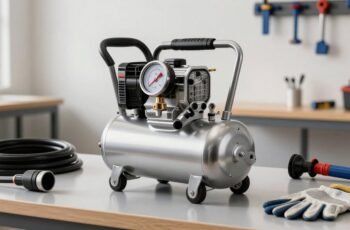
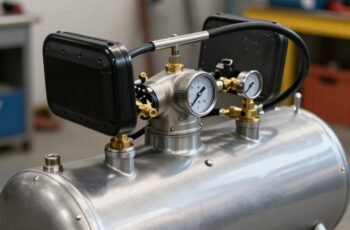
When selecting a silent air compressor, understanding the technical distinctions between models is essential for optimizing performance while minimizing noise. We recognize that factors like decibel ratings, vibration control, and compressor type directly influence operational quietness and efficiency. As we analyze these elements, it becomes clear that balancing power, size, and budget is vital to meet specific project needs. Exploring these aspects thoroughly can guide us toward an informed choice that aligns with both practical requirements and noise sensitivity.
Key Takeaways
- Compare decibel (dB) ratings to ensure the compressor operates quietly enough for your environment.
- Check for soundproof enclosures, vibration reduction features, and acoustic barriers for effective noise mitigation.
- Match compressor specifications—flow rate, pressure, and power—to your operational needs for optimal performance.
- Evaluate build quality, material durability, and warranty support for long-term reliability and value.
- Consider size, portability, and space requirements to ensure the unit fits your workspace and usage convenience.
Understanding What Makes a Silent Air Compressor Different From Traditional Models
A silent air compressor differs from traditional models primarily because of its noise reduction design, which minimizes sound emissions during operation. This is achieved through engineering modifications such as sound-dampening enclosures, vibration isolation, and optimized component placement. Unlike conventional compressors that rely on high-speed motors and open cooling systems, silent models use quieter motor types, often with sound-insulating materials surrounding the motor and pump assembly. Additionally, these compressors incorporate mufflers and acoustic barriers to further decrease noise levels. The focus on reducing noise does not compromise performance but instead involves precise balancing of airflow, pressure stability, and energy efficiency. These technical adaptations collectively enable silent air compressors to operate with considerably lower decibel levels, making them suitable for noise-sensitive environments.
Key Features to Look for When Choosing a Quiet Air Compressor
When choosing a quiet air compressor, we prioritize noise level specifications to guarantee it operates within acceptable decibel ranges. Additionally, features like soundproof enclosure design and vibration reduction are critical for minimizing operational noise and enhancing stability. Evaluating these key features allows us to identify models that deliver maximum silence without compromising performance.
Noise Level Specifications
How loud an air compressor operates is a critical factor that directly impacts user comfort and environment suitability. Noise level specifications, typically measured in decibels (dB), provide a quantifiable metric for comparison. Lower dB ratings correlate with quieter operation, essential in noise-sensitive settings. When evaluating compressors, consider the following:
| Noise Level (dB) | Usage Environment | Impact on Users |
|---|---|---|
| 60–65 | Residential or indoor use | Minimal disturbance |
| 70–75 | Workshops, garages | Moderate, acceptable noise |
| 80+ | Industrial, noisy environments | Significant disturbance |
Understanding these specifications enables informed choices aligned with operational context, ensuring ideal performance without compromising comfort or compliance.
Soundproof Enclosure Design
Have you considered how the design of a soundproof enclosure can markedly reduce noise emissions from an air compressor? Effective enclosures incorporate sound-absorbing materials, such as acoustic foam or mineral wool, to dampen noise transmission. Ventilation systems must be carefully engineered to balance airflow and noise reduction, often utilizing insulated ducting or muffled exhaust ports. Structural integrity is vital; rigid, vibration-isolating panels prevent sound leakage through gaps and resonances. Sealing joints and access points further minimize sound escape, while internal baffling directs airflow to reduce turbulence and associated noise. The enclosure’s overall construction should prioritize airtightness and material damping properties, ensuring noise reduction without compromising operational cooling or maintenance accessibility. A well-designed soundproof enclosure is essential for effectively minimizing noise pollution from air compressors.
Vibration Reduction Features
Vibration reduction features are crucial components to take into account when selecting a quiet air compressor, as excessive vibrations can substantially contribute to operational noise and equipment wear. Effective vibration mitigation minimizes mechanical oscillations transmitted through the frame, reducing noise levels and prolonging component lifespan. Look for designs employing rubber or elastomeric mounts, which absorb vibrations at mounting points. Balanced rotating assemblies also play a significant role, ensuring smooth operation and minimizing vibratory forces. Additionally, compressors with precision-aligned components and reinforced frames help distribute stress evenly, further reducing vibrations. Incorporating vibration-reducing features enhances overall quietness and durability, making these components essential considerations for anyone seeking a reliable, low-noise air compressor.
How Noise Levels Are Measured and Why Decibels Matter
Understanding how noise levels are measured using standardized decibel scales allows us to compare compressor sound outputs accurately. Decibels quantify sound intensity logarithmically, making small differences significant in practical noise management. Recognizing these measurements is vital for evaluating hearing safety and selecting equipment that minimizes auditory risk.
Decibel Measurement Standards
Decibel measurement standards provide a precise framework for quantifying noise levels produced by air compressors, guaranteeing consistency across different models and manufacturers. These standards specify the measurement conditions, such as distance, environment, and sound calibration, to produce comparable results. Typically, measurements are taken at a standardized distance—often one meter from the source—under controlled conditions to minimize external noise interference. This uniform approach enables us to accurately compare compressor noise levels regardless of brand or design. Adherence to these standards ensures that decibel ratings are reliable and meaningful, allowing consumers to make informed decisions about noise emissions. Without standardized measurement protocols, noise level comparisons would lack validity, complicating efforts to identify truly quiet and suitable models for specific applications.
Noise Level Significance
Have you ever wondered why noise levels matter when choosing an air compressor? Noise levels, measured in decibels (dB), indicate the intensity of sound emitted during operation. These measurements are essential because they quantify how loud a compressor will be, directly affecting environment and user comfort. A small increase in decibels represents a significant escalation in perceived loudness, due to the logarithmic nature of decibel measurement. Understanding these levels helps us assess the potential disturbance and decide if a compressor fits specific workspaces or residential areas. Consequently, accurately interpreting decibel ratings isn’t just about compliance; it’s about ensuring the compressor’s noise profile aligns with safety, productivity, and quality of life considerations. This analytical approach guides us toward more informed, practical purchasing decisions.
Hearing Safety Considerations
Since noise levels directly impact hearing safety, it’s essential to understand how these levels are measured and why decibels (dB) serve as the standard unit of assessment. Decibels quantify sound intensity logarithmically, reflecting how humans perceive loudness. This scale allows us to compare a wide range of noise levels efficiently, from quiet environments to loud machinery. When evaluating air compressors, it’s vital to note their dB ratings; exposure to noise levels above 85 dB can cause irreversible hearing damage over time. Understanding these measurements enables us to assess risk accurately and select compressors that operate within safe decibel ranges. Precise measurement and awareness of decibel levels are fundamental to implementing effective hearing protection strategies and ensuring safety in noisy work environments.
Assessing Power and Performance: Finding the Right Balance for Your Projects
To effectively evaluate a silent air compressor’s power and performance, we must consider how its specifications align with the demands of our specific projects. Key factors include CFM (cubic feet per minute) and PSI (pounds per square inch), which determine airflow capacity and pressure output. Matching these to operational requirements guarantees peak efficiency without overburdening the unit.
- Adequate airflow capacity prevents underperformance and reduces cycle times.
- Correct pressure ratings avoid system stress and potential damage.
- Power consumption should balance operational needs with energy efficiency.
Examining Compressor Types: Reciprocating, Rotary, and Oil-Free Models
Understanding the fundamental differences among compressor types is essential for selecting the most suitable model for your applications. Reciprocating compressors operate via pistons within cylinders, delivering high pressure but with potential noise and vibration. Rotary compressors use rotating screws or vanes, offering continuous airflow and greater efficiency. Oil-free models, applicable to both types, omit lubrication, providing cleaner air but often at a higher cost and lower lifespan. The table below summarizes key features:
| Feature | Reciprocating | Rotary | Oil-Free |
|---|---|---|---|
| Noise Level | Moderate to high | Low to moderate | Very low |
| Maintenance | Regular, intensive | Low | Periodic, specialized |
| Efficiency | Variable | Consistent | Less efficient |
| Cost | Generally lower | Higher | Highest |
| Suitable Applications | Heavy-duty, industrial | Continuous, quiet use | Food, medical, clean environments |
Evaluating Build Quality and Durability for Long-Term Use
When evaluating build quality, we focus on material strength and composition to guarantee the compressor can withstand prolonged use. We also examine welds and joint integrity, which are critical for structural stability under pressure, and evaluate wear resistance and protective coatings that prevent corrosion and fatigue. These factors collectively determine the compressor’s durability and long-term reliability.
Material Strength and Composition
Evaluating the material strength and composition of an air compressor is vital for appraising its long-term durability and performance. The core materials determine the unit’s resistance to wear, corrosion, and structural failure. High-quality cast iron or steel components typically offer superior strength and stability under continuous operation. Material composition affects heat dissipation, which impacts compressor efficiency and lifespan. It’s important to assess the alloy treatments and protective coatings that enhance corrosion resistance and reduce degradation over time.
- Material selection impacts thermal management and mechanical resilience.
- Alloy treatments and coatings extend component lifespan.
- Consistent material quality guarantees predictable, reliable performance.
Welds and Joints Integrity
The integrity of welds and joints plays a essential role in ensuring the overall durability and reliability of an air compressor. High-quality welds are critical because they prevent leaks, minimize stress concentrations, and resist fatigue over time. When evaluating welds, look for uniform, smooth weld beads without cracks, porosity, or undercuts. Proper joint design, such as continuous seams and reinforced connections, enhances structural stability. Seamless, well-executed welds reduce the risk of failure under operational stresses, especially in load-bearing components. Additionally, the use of advanced welding techniques like TIG or MIG welding indicates precision and quality. Ultimately, strong welds and properly designed joints contribute markedly to long-term performance and safety in silent air compressors.
Wear Resistance and Coatings
Evaluating wear resistance and coatings provides essential insights into a silent air compressor’s build quality and longevity. Durability depends on the materials and surface treatments used to minimize abrasion and corrosion over time. High-quality coatings, such as epoxy or ceramic layers, serve as protective barriers that reduce metal fatigue and extend component lifespan. Wear-resistant surfaces are vital for moving parts like pistons and cylinders, which face constant friction.
- Assess the type and thickness of coatings applied for corrosion and wear protection
- Verify the use of hardened materials in critical components to withstand operational stress
- Examine the coating’s adhesion and uniformity to prevent early degradation and failure
Considering Size, Portability, and Space Requirements
When selecting a silent air compressor, understanding its size, portability, and space requirements is crucial to guarantee it fits seamlessly into your workspace or environment. Compact dimensions are essential for tight or cluttered areas, while larger units often provide increased capacity but demand more space. Portability factors, such as handle design, weight, and mounting options, influence ease of movement and setup. Analyzing these elements ensures you choose a unit that aligns with your operational needs without sacrificing efficiency. Additionally, considering the available space allows for proper ventilation and maintenance access, preventing overheating and extending lifespan. Ultimately, balancing size and portability with your workspace constraints promotes maximum performance and functionality, avoiding potential workflow disruptions caused by unsuitable equipment dimensions.
Setting a Budget: Finding the Best Silent Air Compressor Within Your Price Range
Setting a budget is a critical step in selecting a silent air compressor that balances cost efficiency with performance. Establishing a clear financial range helps narrow options, ensuring you avoid overspending on features you don’t need. It also directs your focus toward models that deliver ideal noise reduction within your price point. When setting your budget, consider the following:
- Performance-to-cost ratio: Evaluate how much value each dollar provides regarding noise levels and durability.
- Long-term operational costs: Account for energy efficiency and maintenance expenses, which impact overall affordability.
- Feature prioritization: Identify essential features that justify higher prices, such as advanced soundproofing or higher CFM output, to maximize your investment.
A well-defined budget aligns your expectations with realistic product offerings, ensuring a strategic purchase.
Tips for Maintaining Your Quiet Air Compressor and Ensuring It Runs Smoothly
Regular maintenance is essential to keep your quiet air compressor operating at peak efficiency and to prolong its lifespan. Consistent inspections of filters, oil levels, and hoses prevent component failure and guarantee optimal performance. Proper lubrication reduces wear on moving parts, while draining moisture from the tank prevents corrosion. Monitoring operating pressure and temperature helps identify inefficiencies early. Here’s a quick reference:
| Maintenance Task | Purpose |
|---|---|
| Filter Cleaning | Ensures clean airflow, reduces strain |
| Oil Level Check | Prevents overheating and excessive wear |
| Drain Moisture | Stops tank corrosion, maintains pressure |
| Belt Inspection | Avoids slippage, ensures power transfer |
| Temperature Monitoring | Prevents overheating, prolongs component life |
Adhering to these practices guarantees smooth operation and extends your compressor’s service life.
Comparing Top Brands and Models for Silent Air Compressors
Choosing the right silent air compressor requires a careful comparison of leading brands and models, as each offers distinct features, performance levels, and price points. Evaluating these options involves analyzing their noise reduction technology, durability, and energy efficiency. Top brands often differentiate themselves through advanced soundproofing methods, which directly impact operational quietness. Models vary in tank capacity, motor power, and control systems, affecting suitability for different applications.
- Sound insulation techniques influence noise levels and user comfort.
- Build quality and warranty support ensure long-term reliability and service.
- Energy consumption and efficiency impact operational costs over time.
A thorough comparison emphasizes technical specifications and real-world performance, guiding informed purchasing decisions for maximum quiet operation.
Frequently Asked Questions
How Long Do Silent Air Compressors Typically Last?
Silent air compressors typically last between 8 to 15 years, depending on usage, maintenance, and build quality. We recommend regular service and proper care to extend their lifespan, ensuring efficient operation and durability over time.
Are There Specific Noise Regulations for Compressors in Residential Areas?
Like a lighthouse guiding ships, noise regulations in residential areas set clear boundaries for compressor sound levels, ensuring safety and comfort. We analyze these standards to help you select compliant, quieter models that respect community peace and legal limits.
Can a Silent Air Compressor Be Used for Industrial Applications?
Yes, silent air compressors can be used for industrial applications, especially where noise reduction is critical. They provide efficient, quieter operation, but guarantee their power capacity and airflow meet the specific demands of your industrial tasks.
What Maintenance Is Required to Keep Noise Levels Low?
To keep noise levels low, we regularly inspect and lubricate moving parts, tighten fittings, replace worn components promptly, and guarantee the cooling system functions efficiently, as these measures minimize vibrations and operational noise effectively.
Do Silent Air Compressors Consume More Energy Than Traditional Models?
Silent air compressors typically consume slightly more energy than traditional models due to enhanced noise reduction features and advanced components, which may demand additional power. However, their energy efficiency often offsets these extra costs during prolonged operation.
Conclusion
Choosing the right silent air compressor is like tuning a precision instrument—every decibel reduction enhances the environment’s harmony. We’ve seen how selecting models with ideal soundproofing and performance balance can transform noisy workshops into tranquil spaces. By thoroughly analyzing features, noise levels, and your specific needs, you guarantee efficient operation and long-term reliability. Ultimately, making an informed decision fosters a quieter, more productive workspace, much like fine-tuning a complex machine for peak performance.