When selecting a stationary air compressor, understanding the technical distinctions among compressor types, capacities, and features is vital for making an informed decision. We recognize the importance of matching equipment specifications with operational demands while considering efficiency, durability, and long-term costs. As you evaluate options, it’s essential to explore how each factor influences performance and support. To guarantee your investment aligns with your specific needs, it’s worth examining the key elements that determine the best fit.
Key Takeaways
- Determine your airflow (CFM) and pressure (PSI) requirements to select the appropriate compressor size and type.
- Evaluate energy efficiency, operational costs, and motor ratings to ensure cost-effective long-term performance.
- Choose durable materials and high-quality build standards for longevity and resistance to operational stresses.
- Consider manufacturer reputation, reliability metrics, and compliance with industry standards for dependable operation.
- Assess available features and accessories, like moisture filters and safety valves, to optimize performance and system stability.
What Are the Key Types of Stationary Air Compressors?
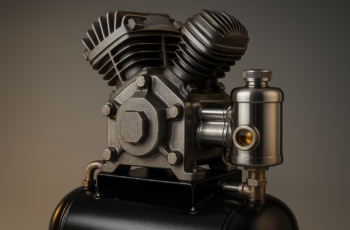
When selecting a stationary air compressor, understanding the key types available is essential for making an informed decision. The primary types include reciprocating, rotary screw, and centrifugal compressors, each with distinct operational characteristics. Reciprocating compressors utilize pistons driven by a crankshaft, offering high pressure output suitable for specialized tasks but typically limited in flow rate. Rotary screw compressors employ two interlocking helical screws, providing continuous, reliable airflow with moderate to high capacity, ideal for industrial applications. Centrifugal compressors use a rotating impeller to generate high airflow rates, making them suitable for large-scale, high-volume demands. Recognizing these fundamental differences helps us match compressor types to specific operational requirements, ensuring ideal performance, efficiency, and longevity in stationary setups.
How to Determine the Right Power and Capacity for Your Needs
To select the appropriate power and capacity, we first need to accurately assess the workload demands of your operations. Matching the compressor’s output to the required tasks guarantees efficiency and prevents over- or under-specification. Precise analysis of your application’s airflow and pressure needs guides ideal equipment selection.
Assess Your Workload Demands
Evaluating your workload demands is a critical step in selecting the appropriate air compressor, as it directly influences the required power and capacity. To accurately assess your needs, consider factors such as the volume of air required, the duration of operation, and the frequency of use. These parameters help determine the necessary CFM (cubic feet per minute) and PSI (pounds per square inch) ratings.
Key considerations include:
- Peak air consumption during high-demand tasks
- Average operational load to avoid oversized units
- Continuous versus intermittent use patterns
Match Power With Tasks
Matching the power and capacity of your air compressor to your specific tasks requires a precise understanding of your operational demands. To achieve this, analyze the maximum airflow (CFM) and pressure (PSI) required by your tools and processes. For continuous, high-demand applications, select a compressor with a higher CFM rating to prevent pressure drops and ensure consistent performance. Conversely, for intermittent tasks, a lower capacity unit may suffice, improving energy efficiency. Consider duty cycle—the percentage of time the compressor runs under load—to align with workload patterns. Additionally, evaluate the compressor’s horsepower to ensure it provides enough power without excess, which could lead to unnecessary energy consumption. Properly matching power and capacity minimizes downtime, reduces operational costs, and enhances overall system reliability.
What Materials and Build Quality Ensure Long-Term Durability?
Choosing the right materials and guaranteeing high build quality are critical factors in ensuring a stationary air compressor’s long-term durability. High-quality components reduce wear, resist corrosion, and withstand operational stresses. Materials such as cast iron for cylinders and cylinders heads provide superior thermal stability and durability, while stainless steel valves resist corrosion. The frame’s construction, often steel, ensures structural integrity under continuous use. Additionally, tight manufacturing tolerances and quality welds minimize leaks and mechanical failures.
- Use of cast iron or steel components for cylinders and frames
- Corrosion-resistant metals in critical parts like valves and fittings
- Precision manufacturing to ensure tight tolerances and robust assembly
How to Evaluate Energy Efficiency and Operating Costs?
Evaluating the energy efficiency and ongoing operating costs of a stationary air compressor requires a detailed analysis of its power consumption and performance metrics. We examine the compressor’s power input relative to its output, focusing on parameters like specific power (kW per CFM) to gauge efficiency. Monitoring the compressor’s duty cycle, load/unload ratios, and control systems helps identify potential energy savings. Additionally, we analyze rated efficiencies, such as IE3 or IE4 motors, which reduce electrical consumption. Operating costs are influenced by energy consumption, maintenance, and downtime. Precision in measuring these factors allows us to compare models accurately, ensuring we select equipment that balances initial investment with long-term energy savings. This approach guarantees a thorough understanding of the compressor’s true cost of operation.
What Features and Accessories Enhance Compressor Performance?
Optimizing compressor performance involves selecting the right pressure settings to match specific application requirements, ensuring efficiency and longevity. Additionally, incorporating essential attachments like moisture filters, pressure regulators, and quick-connect couplers can considerably improve operational effectiveness. Understanding how these features interact enables us to maximize the compressor’s capabilities and reduce downtime.
Optimal Pressure Settings
Have you considered how specific features and accessories can substantially improve your compressor’s pressure stability and overall performance? Properly configured pressure settings guarantee peak operation, efficiency, and equipment longevity. To achieve this, adjustable pressure regulators are essential, allowing precise control over the output pressure. Additionally, safety relief valves prevent over-pressurization, safeguarding both the system and users. Monitoring devices like digital pressure gauges provide real-time feedback, enabling quick adjustments and maintaining consistent performance. These features work together to enhance performance by maintaining stable pressure levels, reducing wear on components, and preventing system failure. Incorporating these accessories guarantees that your compressor operates within ideal pressure ranges, maximizing efficiency and minimizing downtime.
Essential Additional Attachments
Enhancing compressor performance relies heavily on the right selection of attachments and features that support stable operation and efficiency. Essential accessories such as moisture filters, pressure regulators, and lubricators ensure consistent air quality and pressure stability, reducing wear and preventing system failures. Quick-connect couplers facilitate rapid tool changes, minimizing downtime and improving workflow. Sound enclosures and vibration isolators mitigate noise and mechanical stress, prolonging equipment lifespan. Additionally, digital gauges and control systems enable precise pressure monitoring and automated adjustments, maximizing efficiency and safety. These attachments are not merely optional but integral to maintaining peak performance, extending compressor longevity, and ensuring reliable operation under varying demands. Careful selection of these components allows us to tailor the system for specific industrial or workshop needs.
How to Choose a Reliable Brand and Support Network?
Selecting a reliable brand is essential because it directly impacts the compressor’s performance, durability, and overall longevity. A reputable manufacturer often offers improved quality control, consistent parts, and better engineering standards. To evaluate a brand’s reliability, consider the following:
- Customer Support & Service: Quick, accessible, and knowledgeable support reduces downtime during maintenance or repairs.
- Warranty & Spare Parts Availability: Longer warranties and readily available parts indicate confidence in the product’s durability.
- Industry Reputation & Reviews: Positive feedback from users and industry experts reflects product reliability and manufacturer integrity.
Frequently Asked Questions
What Safety Features Should I Look for in a Stationary Air Compressor?
We recommend looking for safety features like thermal overload protection, pressure relief valves, automatic shutoff systems, and safety guards. These measures guarantee reliable operation, prevent accidents, and protect both operators and equipment during continuous use.
How Often Should I Schedule Maintenance for Optimal Performance?
We recommend scheduling maintenance every 1,000 to 2,000 hours of operation or annually, whichever comes first, to guarantee peak performance. Regular inspections, oil changes, and part replacements prevent downtime and extend your compressor’s lifespan effectively.
Can Stationary Compressors Be Used in Hazardous or Explosive Environments?
Think of stationary compressors as the heart of industrial environments; they can be used in hazardous zones if designed with explosion-proof features, proper safety measures, and adherence to strict standards to prevent ignition and guarantee safety.
What Are the Best Practices for Noise Reduction in Installation?
We recommend installing sound enclosures, using vibration isolators, and positioning compressors away from work areas. Regular maintenance and acoustic insulation can substantially reduce noise levels, ensuring compliance with safety standards and minimizing worker fatigue and disturbance.
How Does Altitude Affect Compressor Performance?
Altitude reduces air density, causing compressors to lose efficiency and generate less output. We adjust by increasing intake pressure, selecting models designed for high-altitude operation, and monitoring performance to maintain ideal compression ratios under varying atmospheric conditions.
Conclusion
Choosing the right stationary air compressor isn’t just about specs—it’s about anticipating your future needs and ensuring long-term reliability. Every decision impacts performance, efficiency, and operational costs. As we’ve seen, factors like build quality, energy consumption, and brand reputation are critical. But the true challenge lies ahead: selecting the best combination that balances all these elements. Are you prepared to make a choice that will shape your operations for years to come? The answer lies within your next decisive step.