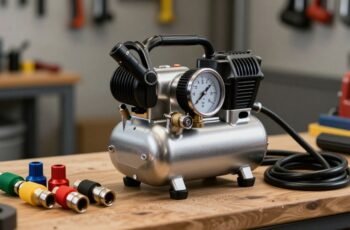
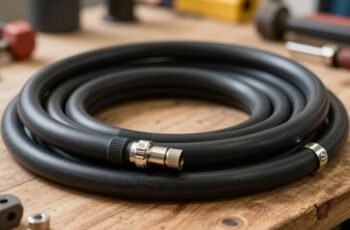
Choosing the right gas-powered air compressor is like finding your way through a complex maze of specifications and features, where each decision impacts your project’s efficiency and safety. With so many models and brands claiming excellence, understanding the technical nuances becomes essential. We’ll explore key factors such as size, power output, and fuel efficiency to help you make an informed choice—because selecting the wrong tool can turn a simple task into a costly mistake. Let’s examine what truly matters when buying a compressor.
Key Takeaways
- Assess air demand (CFM and PSI) to match compressor capacity with your tools and project needs.
- Consider size, weight, and mobility features for portability and suitability for remote or job site use.
- Choose reputable brands like Ingersoll Rand, Honda, or DeWalt for durability and reliable performance.
- Regularly inspect and maintain the compressor to ensure safety, efficiency, and longevity.
- Follow safety protocols, including proper ventilation, leak checks, and protective gear during operation.
What Is a Gas-Powered Air Compressor and How Does It Work?
A gas-powered air compressor is a portable device that uses an internal combustion engine to generate compressed air for various applications. It operates by combusting a fuel-air mixture within its engine, producing mechanical energy. This energy drives a piston or rotary screw, which compresses ambient air within a cylinder or chamber. The compression process increases the air’s pressure, storing it in a tank for later use. The design allows for high mobility, especially in remote locations where electricity isn’t available. The efficiency depends on engine size and compression ratio, which influence airflow rate and pressure output. Understanding these core mechanisms helps us evaluate how well a compressor can meet specific power, portability, and durability requirements for diverse tasks.
Key Features to Look for in a Gas-Powered Air Compressor
When selecting a gas-powered air compressor, evaluating its power output and capacity guarantees it can meet specific operational demands. We also consider portability and design features to optimize usability across various work environments. These key attributes directly influence performance efficiency and user convenience.
Power Output and Capacity
Power output and capacity are critical metrics that determine a gas-powered air compressor’s performance and suitability for specific tasks. Power output, measured in horsepower (HP), directly influences the compressor’s ability to generate airflow and handle demanding applications. Higher horsepower typically correlates with increased CFM (cubic feet per minute) and PSI (pounds per square inch), essential for continuous or heavy-duty use. Capacity, reflected in tank size, impacts the compressor’s ability to deliver stable airflow over time; larger tanks reduce cycling frequency, ensuring consistent pressure. When evaluating these metrics, consider the specific requirements of your tasks—whether you need rapid airflow for tools or sustained pressure for prolonged operations. Precise matching of power output and capacity guarantees maximum efficiency and performance.
Portability and Design
Since portability and design directly influence a compressor’s ease of use and operational flexibility, it’s essential to evaluate these features carefully. A well-designed compressor should balance weight, size, and durability to optimize transport and workspace compatibility. Lightweight models with ergonomic handles facilitate movement across job sites, reducing operator fatigue. Compact designs allow easier storage and maneuverability in tight spaces. Look for durable frames and corrosion-resistant components that withstand harsh environments. The placement of controls and accessibility also impacts usability, guaranteeing quick adjustments without unnecessary hassle. Additionally, integrated features like wheels or collapsible components enhance portability without compromising structural integrity. Prioritizing these aspects ensures the compressor remains functional and user-friendly, ultimately improving productivity and safety during operation.
How to Choose the Right Size and Power for Your Projects
To select the appropriate size and power, we need to precisely evaluate your project’s air demand, including required PSI and CFM. Matching the compressor’s capacity to these needs guarantees ideal performance without over- or under-sizing. Additionally, considering portability and space constraints helps determine whether a compact or more robust unit best fits your operational environment.
Assess Project Air Needs
Understanding the specific air requirements of your projects is essential for selecting the appropriate compressor size and power. Accurate assessment guarantees efficient operation and prevents equipment overload or inefficiency.
Consider these key factors:
- Flow rate (CFM): Determine the cubic feet per minute needed for your tools, ensuring the compressor can sustain continuous operation.
- Pressure requirements (PSI): Match the compressor’s maximum PSI to the demands of your application to avoid under- or over-pressurization.
- Operational duration: Evaluate whether your usage is intermittent or continuous, influencing compressor capacity and durability needs.
- Tool compatibility: Confirm that your tools’ specifications align with the compressor’s output to maintain performance.
- Future expansion: Anticipate potential project growth, choosing a compressor that accommodates increased air demand without frequent upgrades.
Match Compressor Capacity
Choosing the right compressor capacity involves aligning the unit’s size and power with your project’s specific air demands. To do this effectively, we analyze the required flow rate in CFM (cubic feet per minute) and pressure in PSI (pounds per square inch). Selecting a compressor with inadequate capacity results in longer operation times and potential equipment strain, while oversizing leads to unnecessary energy consumption. We must consider the maximum CFM needed for continuous operation of tools and the duty cycle—how often and how long the compressor runs. Additionally, matching the compressor’s horsepower and tank size to the workload guarantees consistent performance without overtaxing the system. Precise matching minimizes operational costs and enhances reliability, making it a critical step in selecting the appropriate compressor for your specific applications.
Consider Portability and Space
Selecting the appropriate size and power of an air compressor requires careful consideration of both portability needs and available workspace. For projects requiring frequent movement or on-site use, a lightweight, compact model is essential to minimize fatigue and transportation challenges. Conversely, larger, stationary units provide higher CFM and PSI but demand more space and stable placement.
Key factors include:
- Mobility requirements: Will you need to move the compressor often?
- Workspace constraints: Is space limited or ample?
- Power source access: Is there a need for a portable power supply?
- Storage considerations: Can the compressor be stored when not in use?
- Usage frequency: Will the compressor be used daily or occasionally?
Balancing these factors ensures suitable performance aligned with your project scope and environment.
Understanding Fuel Efficiency and Runtime Considerations
Fuel efficiency directly impacts the operational costs and practicality of a gas-powered air compressor, making it essential to evaluate how long a unit can run on a given fuel supply. Higher efficiency means less fuel consumption for the same runtime, reducing costs and downtime. Runtime considerations depend on tank capacity, engine size, and load conditions. To analyze this, consider the following factors:
| Fuel Consumption (GPH) | Runtime (hours) | Tank Capacity (gallons) |
|---|---|---|
| 0.5 | 8 | 4 |
| 1.0 | 4 | 4 |
| 2.0 | 2 | 4 |
| 0.75 | 5.33 | 4 |
Understanding these parameters helps optimize productivity and budget management for continuous operations.
Top Brands and Models for Gas-Powered Air Compressors
When evaluating gas-powered air compressors, the reputation and reliability of the manufacturer play a significant role in ensuring consistent performance and durability. Several top brands stand out due to their engineering quality, customer support, and innovation. These brands have established a track record of producing models capable of handling demanding applications with minimal downtime.
- Ingersoll Rand: Known for robust construction and advanced technology, offering models suitable for heavy-duty use.
- Honda: Renowned for reliable engines and fuel efficiency, ideal for portable and lightweight needs.
- DeWalt: Offers durable, user-friendly compressors with a focus on versatility across job sites.
- California Air Tools: Specializes in quiet operation and energy efficiency, suitable for prolonged use.
- Porter-Cable: Provides cost-effective, dependable options for both professional and DIY applications.
Maintenance Tips to Keep Your Compressor Running Smoothly
Regular maintenance is essential to guarantee your gas-powered air compressor operates at peak performance and minimizes downtime. Consistent inspection of the air intake filters ensures unobstructed airflow, preventing strain on the engine and compressor components. Regular oil changes, using manufacturer-recommended lubricants, reduce friction and thermal stress, prolonging component life. Monitoring and maintaining proper belt tension prevents slippage and uneven wear, optimizing power transfer. Draining moisture from the tank and compressor parts prevents corrosion and contamination, which can impair operation. Additionally, inspecting hoses and fittings for leaks or cracks preserves system integrity and pressure consistency. Implementing a scheduled maintenance plan based on runtime hours and environmental conditions helps detect issues early, guaranteeing reliable performance and extending the compressor’s service life.
Safety Tips for Operating Gas-Powered Air Compressors
Proper operation of gas-powered air compressors requires strict adherence to safety protocols to prevent accidents and equipment damage. Ensuring safe use involves understanding potential hazards and implementing preventive measures. Always inspect the compressor for leaks, damaged hoses, or loose fittings before use. Operate the compressor in well-ventilated areas to prevent carbon monoxide buildup. Use appropriate personal protective equipment, including ear and eye protection. Maintain proper pressure levels to avoid overloading the system, and never bypass safety valves. Regularly shut down and cool the unit before performing maintenance.
Always inspect and operate gas-powered air compressors safely to prevent hazards and ensure proper functioning.
- Check for leaks and damage before starting
- Use in ventilated environments to avoid toxic fumes
- Wear protective gear at all times
- Never modify safety features or controls
- Follow manufacturer instructions precisely
Frequently Asked Questions
How Loud Are Gas-Powered Air Compressors During Operation?
Gas-powered air compressors typically produce noise levels between 80 to 100 decibels, which can be quite loud. We recommend wearing hearing protection, especially during prolonged use, to mitigate potential hearing damage and comply with safety standards.
Can Gas-Powered Compressors Be Used Indoors Safely?
Like a roaring lion in a confined space, gas-powered compressors aren’t safe indoors due to carbon monoxide risks. We advise operating them outdoors or in well-ventilated areas, ensuring safety and peak performance.
What Are Common Issues That Cause Compressor Failure?
We find that common compressor failures stem from overheating, insufficient lubrication, pressure fluctuations, and dirt ingress, which cause wear or damage to critical components. Regular maintenance and proper operation considerably reduce these failure risks and prolong compressor lifespan.
How Long Does a Typical Gas-Powered Air Compressor Last?
Ever wondered how long a typical gas-powered air compressor lasts? Usually, with proper maintenance, they endure around 3 to 5 years, but factors like usage intensity, quality, and care greatly influence their longevity and performance.
Are There Eco-Friendly Fuel Options for Gas Compressors?
Yes, eco-friendly fuel options like propane and natural gas exist for gas compressors. They produce fewer emissions, reduce environmental impact, and often improve efficiency, making them suitable for environmentally conscious operations and compliance with emission regulations.
Conclusion
Choosing the right gas-powered air compressor hinges on understanding your project’s specific demands—whether it’s powering nail guns on a remote jobsite or running industrial tools. For example, a construction crew selecting a high-capacity, fuel-efficient model can guarantee continuous operation without downtime. By carefully evaluating features like CFM, PSI, and brand reliability, you’ll optimize performance and safety. Proper selection and maintenance ultimately enhance productivity, reduce costs, and extend your compressor’s lifespan in demanding environments.