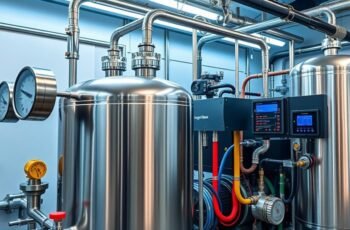
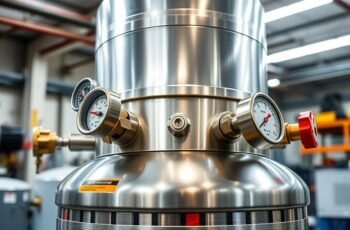
Ensuring pressure safety in air compressors is crucial for both equipment longevity and operator protection. We recognize the importance of accurate gauges, proper pressure limits, and regular maintenance to prevent failures. But managing these parameters effectively requires precise procedures and awareness of warning signs. As we explore best practices, you’ll see how proper control measures can make a significant difference in maintaining safe, reliable operation—something every user should prioritize.
Key Takeaways
- Regularly calibrate pressure gauges and safety valves to ensure accurate readings and proper venting.
- Monitor pressure levels continuously with reliable sensors to prevent over-pressurization.
- Set maximum pressure limits below manufacturer specifications and use relief valves for automatic pressure relief.
- Gradually adjust pressure settings while observing for abnormal noises and gauge fluctuations.
- Recognize signs of over-pressurization, such as frequent relief valve activation, and reduce pressure immediately.
Understanding the Importance of Pressure Safety in Air Compressors
Understanding pressure safety in air compressors is essential because excessive pressure can lead to equipment failure or catastrophic accidents. Proper pressure gauge calibration ensures accurate readings, which are critical for maintaining safe operation. An uncalibrated gauge can mislead operators, causing pressure to surpass safe limits unknowingly. Valve safety also plays a crucial role; safety valves must be correctly installed and maintained to automatically vent excess pressure. Regular testing and calibration of pressure gauges provide reliable data, preventing over-pressurization. Ensuring valve safety involves inspecting relief devices for proper function and adherence to specifications. Together, accurate pressure measurement and reliable safety valves form the backbone of pressure safety, reducing the risk of failures that could jeopardize personnel and equipment.
How to Properly Monitor Air Pressure Levels During Operation?
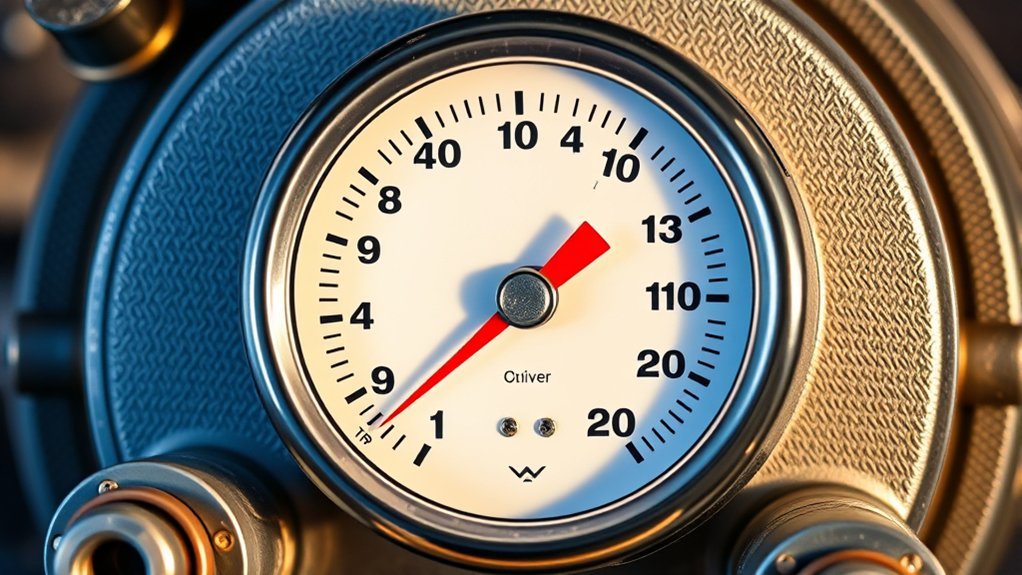
To guarantee safe and efficient operation, we must actively monitor air pressure levels throughout the compressor’s runtime. Accurate pressure gauges should be installed at key points to provide real-time data, assure pressure remains within specified parameters. Regularly checking air quality is essential, as contaminants or moisture can affect pressure stability and compressor performance. Noise levels also serve as indirect indicators; unusual increases may signal pressure fluctuations or mechanical issues requiring immediate attention. Using calibrated sensors and digital monitoring systems enhances precision, allowing for prompt adjustments. Consistent observation of these metrics helps prevent over-pressurization and maintains system integrity. Proper monitoring ensures the compressor operates within safe limits, safeguarding both personnel and equipment from potential failure or damage.
Setting Correct Pressure Limits to Prevent Equipment Damage
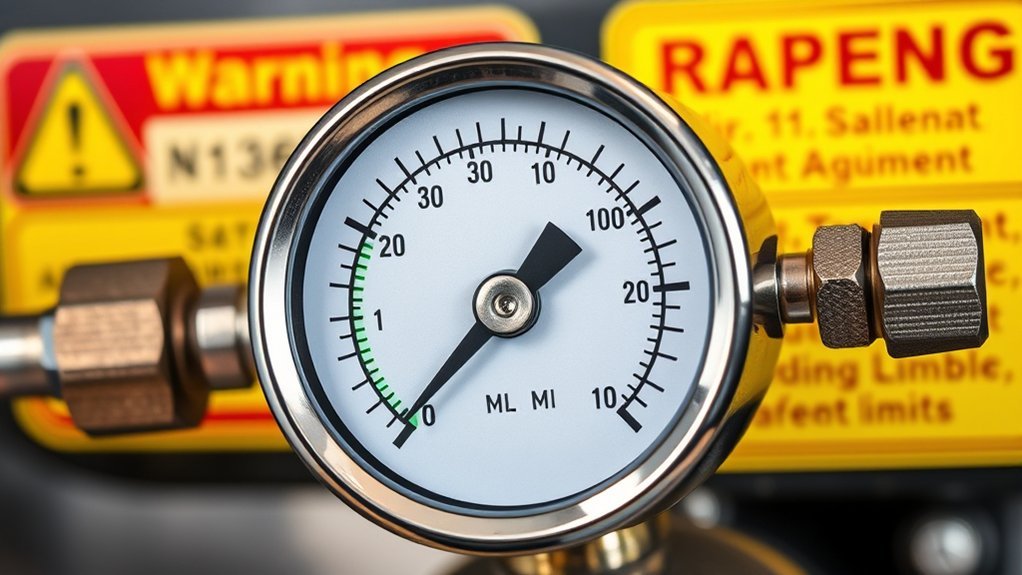
Establishing accurate pressure limits is essential for preventing damage to air compressor equipment. Properly calibrated pressure gauges ensure reliable readings, allowing us to set safe operating thresholds. It’s critical to regularly verify pressure gauge calibration to avoid misinterpretation of pressure levels. Setting the maximum allowable pressure slightly below the manufacturer’s specified limit reduces risk. Incorporate an emergency pressure relief system designed to activate if pressure exceeds safe limits, protecting components from overpressure. Key considerations include:
- Regular pressure gauge calibration
- Defining maximum pressure thresholds
- Installing reliable emergency pressure relief valves
- Monitoring for pressure fluctuations
- Conducting routine safety inspections
Implementing these measures ensures equipment longevity and operational safety by maintaining precise pressure control and preventing overpressure conditions.
Best Practices for Regulating and Adjusting Air Pressure Safely
Proper regulation and adjustment of air pressure are critical to maintaining safe and efficient compressor operation. To achieve this, we regularly verify pressure gauge calibration, confirming that readings are accurate before making any adjustments. Accurate gauges prevent over-pressurization and help set precise pressure limits aligned with equipment specifications. When adjusting pressure settings, it’s essential to do so gradually, monitoring compressor noise levels for abnormal sounds that may indicate incorrect pressure. Consistent calibration of gauges reduces measurement errors, while observing noise levels helps identify potential issues early. Employing these best practices ensures safe operation, minimizes wear, and optimizes performance, ultimately protecting both personnel and equipment from pressure-related hazards.
Common Signs of Over-Pressurization and How to Address Them
Over-pressurization in an air compressor often manifests through specific, observable signs that can alert operators to potential issues before equipment damage occurs. Key indicators include abnormal noise levels, frequent pressure relief activations, and fluctuating pressure gauges. Additionally, safety valves may repeatedly vent air, signaling excessive internal pressure. You might also notice reduced compressor efficiency or erratic operation. To address these signs, first verify pressure relief devices and safety valves are functioning correctly and set within manufacturer specifications. Regularly inspect pressure gauges and safety components for faults. If over-pressurization persists, promptly reduce system pressure and consult a professional for calibration or repairs. Properly functioning safety valves are vital to prevent dangerous pressure buildup and guarantee safe compressor operation.
Maintenance Tips to Ensure Pressure Safety Over Time
Regular maintenance is essential to guarantee the long-term pressure safety of an air compressor. Consistently verifying pressure gauge calibration ensures accurate readings, preventing over-pressurization risks. Regularly inspect and test safety valves and pressure controllers, replacing or recalibrating as needed. Implement a routine for checking the integrity of hoses and fittings to avoid leaks that could cause pressure fluctuations. An emergency shutdown system should be tested periodically to confirm it activates correctly during over-pressurization events. Maintaining detailed records of all maintenance activities helps identify trends and preempt potential failures. Proper calibration and timely system checks are vital for maintaining pressure safety, reducing the risk of equipment failure, and ensuring safe operation over time.
Training and Safety Protocols for Safe Air Compressor Use
- Conducting thorough training sessions on compressor operation
- Verifying understanding of pressure safety limits
- Regularly inspecting safety devices and pressure relief valves
- Enforcing PPE usage during maintenance and operation
- Promoting awareness of air compressor myths to prevent unsafe practices
Implementing these protocols minimizes risks, enhances operational safety, and maintains system integrity. Clear, precise training is essential for correcting misconceptions and ensuring safe, efficient compressor use.
Frequently Asked Questions
What Are the Most Common Causes of Pressure-Related Accidents?
We see pressure-related accidents often caused by faulty pressure gauge calibration and neglecting compressor overload protection, which can lead to over-pressurization. Regular checks and proper safety device use are essential to prevent these hazards.
How Often Should Pressure Safety Valves Be Inspected?
We recommend inspecting pressure safety valves annually, ensuring proper pressure relief function and calibration. Regular checks prevent surprises, as even a small miscalibration can cause big issues, keeping safety at the forefront of our operations.
Can Incorrect Pressure Settings Void the Compressor Warranty?
Yes, incorrect pressure settings can void the warranty; improper compressor pressure regulation may lead to damage. Regular pressure gauge calibration guarantees accurate readings, maintaining safe operation and adherence to manufacturer specifications, preventing warranty issues.
What PPE Is Recommended When Adjusting Compressor Pressure?
When adjusting compressor pressure, we recommend using personal protective equipment like gloves, eye protection, and hearing guards. These safeguard against potential hazards during pressure regulation, ensuring safety while fine-tuning the system with precision and care.
How Does Ambient Temperature Affect Air Compressor Pressure Safety?
Ambient temperature impacts pressure regulation by affecting air density; higher temperatures can increase compressor pressure, risking safety issues. We monitor ambient conditions closely to maintain ideal pressure levels and guarantee safe compressor operation in varying environmental conditions.
Conclusion
Just like a finely tuned engine, maintaining pressure safety in our air compressors requires constant vigilance and precision. By monitoring levels, setting correct limits, and following best practices, we guarantee smooth, reliable operation while preventing damage and accidents. Regular maintenance and training are our safeguards, keeping the system operating at peak performance. When we treat pressure safety as a critical component, we keep our equipment running like a well-oiled machine—efficient, safe, and ready for any challenge.