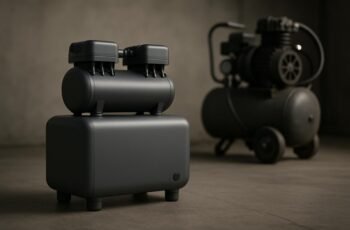
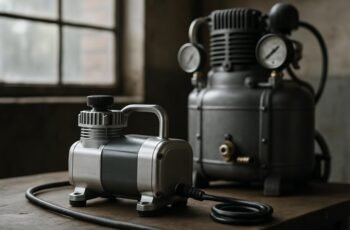
Imagine reaching into a toolbox and pulling out a sleek, compact device that easily fits in one hand, versus lugging a bulky, powerful unit across a job site. The choice between mini air compressors and portable models hinges on more than just size; it involves analyzing their performance, durability, and suitability for specific tasks. To determine which best aligns with your needs, it’s essential to understand their distinct capabilities and limitations.
Key Takeaways
- Mini air compressors are compact, lightweight, and ideal for light-duty tasks and tight spaces, while portable compressors are larger and suited for demanding, extended projects.
- Mini units operate quietly and are best for indoor or noise-sensitive environments; portable models may be louder but offer higher power and airflow.
- Portable compressors support more accessories, deliver higher PSI and CFM, and are suitable for professional or heavy-duty applications.
- Mini compressors are generally lower cost and less durable, whereas portable units are more expensive but more robust and long-lasting.
- Choice depends on task complexity, portability needs, noise considerations, and whether lightweight or high-performance equipment is prioritized.
How Do Mini Air Compressors Differ From Portable Compressors in Size and Portability
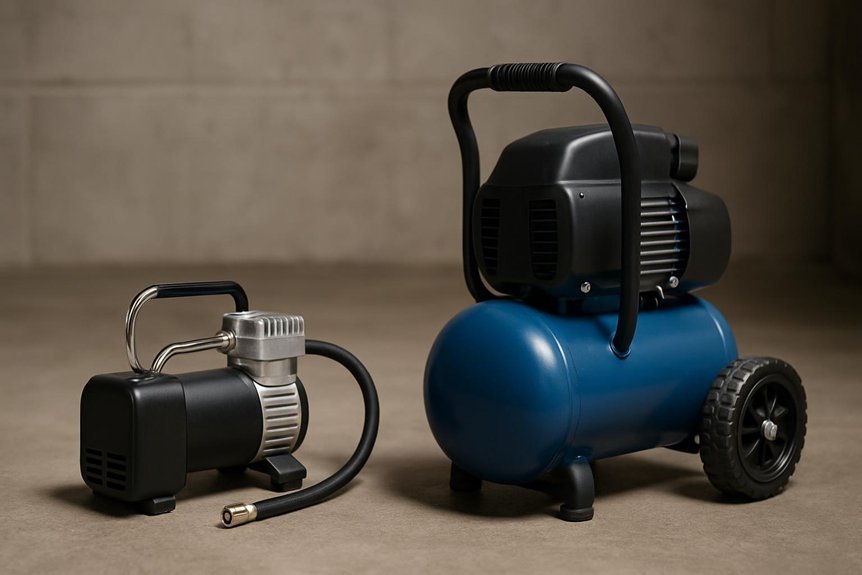
While both mini air compressors and portable compressors are designed for mobility, they differ markedly in their size and overall portability. Mini air compressors are compact, typically lightweight, and easily stored, making them ideal for quick, localized tasks. Portable compressors, though still mobile, tend to be larger and heavier, offering greater airflow capacity. These differences substantially influence air quality; mini units often generate less noise pollution due to their smaller motors, reducing disturbance in sensitive environments. Conversely, portable compressors may produce higher noise levels, impacting air quality indirectly through increased noise pollution. The size disparity also affects ease of transport and setup, with mini compressors excelling in tight spaces and portability, while portable units provide more power at the expense of increased bulk.
Which Tasks Are Best Suited for Mini Air Compressors Versus Portable Compressors?
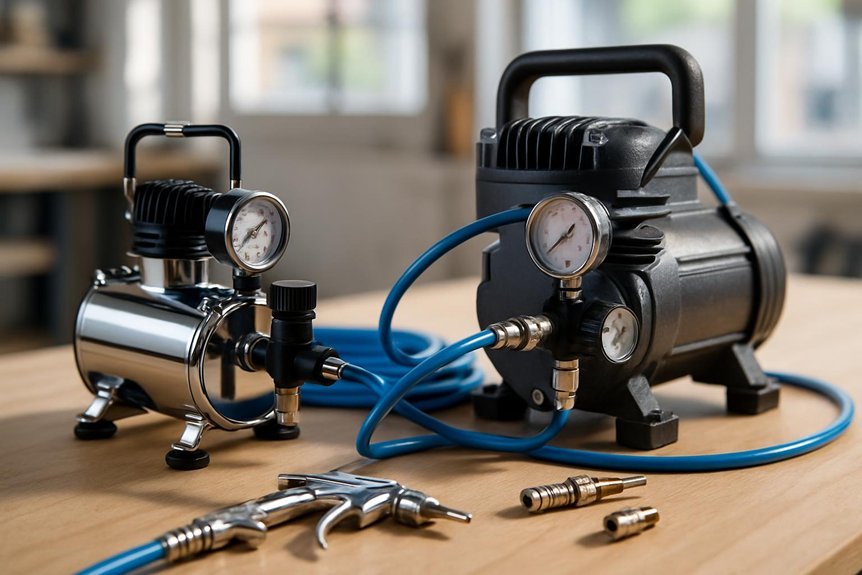
Mini air compressors and portable compressors are optimized for different applications based on their size, power, and mobility. Mini compressors excel in tasks requiring portability and quick setup, especially where air tool compatibility is limited but sufficient for small-scale jobs. Conversely, portable compressors are better suited for sustained, higher-demand tasks due to their increased power and capacity.
Consider these points:
- Mini compressors are ideal for light-duty tasks like inflating tires or small pneumatic tools.
- Portable compressors support longer projects requiring consistent air flow.
- Storage considerations influence choice; mini units require less space and are easier to transport.
- For tasks demanding higher pressure or volume, portable compressors provide the necessary power and durability.
Choosing the right compressor hinges on task complexity, air tool compatibility, and storage constraints.
Understanding Power and Performance: Mini vs. Portable Air Compressors
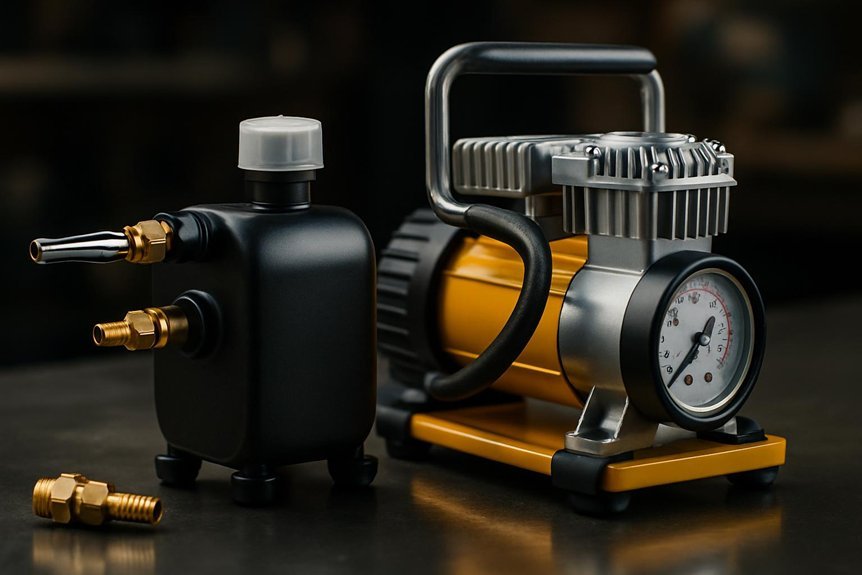
We compare power output and how it influences performance, noting that mini compressors generally have lower psi and CFM ratings than portable units. Portability affects usability across different tasks, but performance limitations may restrict their effectiveness for high-demand applications. Understanding these factors helps determine the appropriate compressor for specific needs and operational constraints.
Power Output Differences
How do the power outputs of mini and portable air compressors truly compare concerning performance? Mini compressors typically feature lower motor wattage, limiting their maximum PSI and airflow, which affects their suitability for demanding tasks. Portable compressors often leverage advanced battery technology, enabling higher power density and longer runtime, enhancing performance. Additionally, noise reduction is a critical factor: mini units tend to be quieter due to smaller motors, but this can compromise power output. Conversely, portable models may generate more noise but deliver greater PSI and airflow. Key considerations include:
- Power density driven by battery technology
- Maximum PSI and airflow capacity
- Noise levels affecting operational efficiency
- Trade-offs between noise reduction and power output
This analysis underscores that power output is a balance between technological constraints and performance needs.
Portability and Use
While both mini and portable air compressors prioritize ease of transport, their design and performance characteristics *particularly* influence their practical applications. Mini compressors typically rely on rechargeable batteries, making battery life a critical factor for extended use; shorter battery life limits their suitability for prolonged tasks. Conversely, portable compressors often feature corded power sources or larger batteries, affording longer operation but reducing overall mobility. Noise reduction is also a key consideration—mini units are generally quieter due to smaller motors, enhancing usability in noise-sensitive environments. Portable compressors may generate more noise, requiring additional sound dampening measures. Overall, the balance between battery life, noise levels, and power source type determines their effectiveness in various use cases, directly impacting ease of use and application scope.
Performance Limitations
Understanding the power and performance limitations of mini and portable air compressors is vital for selecting the right tool for specific tasks. These limitations stem from their design constraints, primarily affecting airflow, pressure output, and duty cycle. Mini compressors often have lower CFM (cubic feet per minute) ratings, restricting their use to light-duty applications. Portable units, though more powerful, can still struggle with continuous, high-demand tasks. Performance issues may also arise from inadequate air compressor maintenance, impacting efficiency. Storage considerations are essential, as improper storage can lead to component degradation, further reducing performance. To optimize performance, users should:
- Guarantee regular air compressor maintenance
- Avoid overworking the unit beyond its capacity
- Store in a dry, temperature-controlled environment
- Recognize the limits of airflow and pressure for each model
Noise Levels and Operating Comfort: What to Expect From Each Type
Although mini air compressors and portable compressors serve similar functions, they differ markedly in noise levels and operational comfort. Noise comparison reveals that mini compressors typically operate at lower decibel levels, enhancing user comfort during prolonged use. Portable compressors, however, often generate louder sounds, which can cause fatigue or discomfort over time. The following table highlights key differences:
| Aspect | Mini Air Compressor | Portable Compressor |
|---|---|---|
| Noise Level | Lower ( quieter ) | Higher ( louder ) |
| User Comfort | Greater | Reduced |
| Noise Reduction Features | Often equipped | Less focus |
| Suitability for Indoor Use | Ideal | Less suitable |
| Operational Environment | Quiet, confined spaces | Open, noisy settings |
Understanding these differences helps users select the appropriate compressor based on noise sensitivity and comfort expectations.
Ease of Use and Maintenance for Mini and Portable Air Compressors
Ease of use and maintenance are critical factors when choosing between mini and portable air compressors, as these aspects directly impact their long-term performance and user convenience. The ease of operation varies, with portable compressors often featuring simplified controls, while mini units may require more careful handling. Maintenance frequency is typically lower for models with fewer moving parts and durable construction.
Ease of use and maintenance influence long-term performance and user convenience of mini and portable air compressors.
Key points include:
- Simplified control panels improve ease of operation
- Regular cleaning of filters reduces maintenance frequency
- Compact design facilitates quick inspections
- User-friendly access to components minimizes downtime
Both types demand attention to routine upkeep, but portable compressors generally offer more straightforward maintenance routines, enhancing long-term reliability and ease of use for the operator.
How to Choose Based on Your Budget and Long-Term Value
When selecting between a mini air compressor and a portable model, evaluating your budget and the long-term value they provide is essential. Effective budget planning involves appraising initial costs versus ongoing expenses, such as maintenance and energy consumption. Mini compressors often have lower upfront prices but may lack durability, potentially reducing longevity benefits over time. Conversely, portable compressors typically require a higher initial investment but can deliver greater durability and consistent performance, enhancing long-term value. To make an informed decision, consider your anticipated frequency of use and the compressor’s expected lifespan. Prioritizing models with robust construction and reliable components can maximize longevity benefits, ensuring your investment remains functional and cost-effective over time.
The Best Applications for Mini Air Compressors in DIY and Home Projects
Mini air compressors are highly versatile tools ideal for a range of DIY and home projects that require portability and quick, focused air delivery. Their compact size makes them perfect for tasks demanding precision, such as airbrush artistry, where consistent airflow and fine control are essential. They excel in model customization, enabling hobbyists to paint, detail, and assemble models with accuracy.
Mini air compressors are essential for precise, portable DIY projects like airbrushing and model detailing.
Key applications include:
- Fine detail work in airbrush artistry
- Small-scale cleaning and inflating tasks
- Portable tire or bicycle pump use
- Precision nail or cosmetic applications
Their lightweight design ensures ease of transport and operation in tight spaces, making them indispensable for projects where mobility and rapid setup are critical. These qualities optimize their use in detailed, delicate DIY endeavors.
When to Opt for a Portable Compressor for Professional or Heavy-Duty Use
When selecting a portable compressor for professional or heavy-duty tasks, we consider factors like power output and performance requirements to guarantee sustained operation. The duration of use and workload intensity also influence whether a portable unit can meet demanding operational demands. Additionally, portability and mobility are critical for on-site applications, where quick setup and transport are essential.
Power and Performance Needs
Determining the appropriate compressor for professional or heavy-duty applications hinges on understanding the specific power and performance demands of the tasks at hand. Portable compressors excel in delivering higher power outputs necessary for demanding tasks, such as large-scale inflation, sandblasting, or pneumatic tools. They provide:
- Consistent airflow with minimal fluctuations for reliable tool operation
- Superior air quality with integrated filtration systems to prevent contamination
- Enhanced noise reduction features for quieter operation in sensitive environments
- Higher CFM ratings to meet continuous or intensive workloads
Choosing a portable compressor ensures sufficient power, consistent performance, and ideal air quality, making it suitable for demanding tasks. These features are essential when precision, reliability, and safety are priorities in professional settings.
Duration of Use
Because heavy-duty or prolonged tasks demand sustained airflow and reliable performance, opting for a portable compressor becomes essential when work durations extend beyond short, intermittent use. In these scenarios, battery life is a critical factor; high-capacity batteries ensure continuous operation without frequent recharging, minimizing downtime. Additionally, noise reduction features become crucial in maintaining a safer, more comfortable work environment, especially during extended use. Portable compressors designed for professional or heavy-duty applications typically incorporate advanced cooling systems and sound insulation to suppress operational noise. This combination of robust battery life and noise mitigation makes portable compressors suitable for demanding tasks where consistent performance and worker safety are priorities, distinguishing them from mini air compressors intended for lighter, sporadic use.
Portability and Mobility
Portable compressors are essential tools in professional and heavy-duty applications where mobility and quick setup are critical. Their design aesthetics often prioritize compactness and ergonomic handles, facilitating ease of transport across job sites. When choosing a portable compressor, consider factors such as:
- Ease of maneuverability for rapid deployment
- Durability to withstand rigorous environments
- Brand reputation for reliability and after-sales support
- Size and weight for ideal portability without sacrificing power
Opting for a portable compressor is ideal when frequent relocation is required or when working in confined spaces. These units typically feature robust build quality and trusted brand names, ensuring consistent performance under demanding conditions. Ultimately, their mobility makes them the preferred choice for professionals needing dependable, versatile air supply solutions.
Comparing Accessories and Compatibility for Mini and Portable Air Compressors
While both mini and portable air compressors are designed for ease of use and mobility, their accessories and compatibility options differ markedly. Mini compressors often feature limited accessory versatility, primarily supporting small, specialized tools with fixed air hose compatibility. In contrast, portable compressors typically offer broader compatibility, accommodating various air hoses and attachments through adjustable fittings and multiple port options. This flexibility enhances their utility across diverse tasks. The choice of accessories directly impacts functionality; mini units may require adapters for different tools, whereas portable compressors generally support a wider range of accessories without additional modifications. Understanding these differences helps users select a compressor that aligns with their specific needs, ensuring seamless integration of accessories and peak performance in varied applications.
Key Factors to Consider Before Making Your Final Choice
When selecting between a mini air compressor and a portable model, we must evaluate their portability and size relative to the intended application. Power and performance are critical factors, as they directly influence operational efficiency and suitability for specific tasks. Analyzing these elements guarantees an informed decision aligned with practical needs and technical requirements.
Portability and Size
Since portability and size directly influence ease of transport and storage, evaluating these factors is crucial before selecting a mini air compressor or a portable compressor. Compactness affects usability in confined spaces, while weight impacts mobility. When considering size, it’s important to assess:
- Battery life, as smaller units often rely on batteries, influencing operational duration.
- Noise reduction, since compact models tend to be quieter, enhancing user comfort.
- Ease of handling, with lighter units offering better portability.
- Storage requirements, where smaller units occupy less space, facilitating on-the-go use.
Balancing size with battery life and noise reduction ensures the compressor meets specific needs without sacrificing convenience. Careful assessment of these aspects leads to an ideal choice aligned with practical application demands.
Power and Performance
Power and performance are critical considerations that directly impact a compressor’s effectiveness in various applications. A higher power output guarantees faster inflation, efficient operation, and handling of demanding tasks. Energy efficiency plays a crucial role, as it determines operational costs and environmental impact, especially for prolonged use. Noise reduction is also essential, especially in noise-sensitive environments, affecting user comfort and safety. To illustrate, consider this comparison:
| Feature | Mini Air Compressor | Portable Compressor |
|---|---|---|
| Power Output | Moderate | High |
| Energy Efficiency | Good | Varies |
| Noise Level | Low | Moderate |
| Suitability | Light-duty tasks | Heavy-duty tasks |
| Performance Consistency | Variable | Reliable |
Choosing the right model hinges on balancing these factors for maximum performance.
Frequently Asked Questions
What Safety Precautions Should I Take With Mini and Portable Air Compressors?
We recommend always wearing proper safety gear and ensuring pressure regulation to prevent accidents with mini and portable air compressors. Regularly inspect equipment, avoid over-pressurization, and follow manufacturer guidelines to maintain safe operation and avoid risks.
How Long Do Mini and Portable Compressors Typically Last?
We find that mini and portable compressors typically last 3 to 5 years, depending on durability testing results and adherence to maintenance schedules, which are essential for prolonging equipment lifespan and ensuring consistent performance in demanding applications.
Are There Any Environmental Considerations When Using These Compressors?
We consider environmental factors like noise pollution and energy efficiency when using compressors, recognizing that mini and portable models typically generate less noise and consume less energy, making them more eco-friendly options for reducing overall environmental impact.
Can Mini and Portable Compressors Be Used Underwater or in Wet Conditions?
Imagine a world where tools adapt to every challenge; unfortunately, mini and portable compressors aren’t designed for underwater functionality or wet condition safety. They risk damage, short-circuiting, and safety hazards in moist environments.
What Are the Common Troubleshooting Issues for Mini and Portable Air Compressors?
We troubleshoot mini and portable compressors by checking for overheating, leaks, and motor issues. Regular maintenance tips include cleaning filters and inspecting seals, while proper storage solutions prevent moisture buildup and corrosion, ensuring ideal performance and longevity.
Conclusion
In conclusion, choosing between a mini and a portable compressor involves balancing size, power, and application needs. While mini units excel for quick, light tasks, portable compressors offer robust performance for demanding projects. Carefully evaluating your specific requirements guarantees a well-informed decision, optimizing efficiency and longevity. By understanding these nuances, you’ll navigate the compressor landscape confidently, selecting a tool that best complements your operational demands and enhances your overall productivity.