Maintaining industrial air compressors requires a systematic, detail-oriented approach to guarantee peak operation and longevity. We recognize that meticulous inspections, timely replacements, and precise adjustments are essential to prevent costly failures and maintain efficiency. Each component, from filters to sensors, plays a crucial role in system performance. Confirming all aspects are thoroughly managed can be complex, and missing key steps may compromise reliability. To truly master this process, it’s essential to follow an all-encompassing checklist tailored to your equipment’s specific needs.
Key Takeaways
- Regularly inspect and replace air filters, belts, hoses, and lubricants to ensure optimal compressor performance.
- Drain moisture from tanks and check for corrosion or structural damage periodically.
- Calibrate sensors and valves regularly, and monitor vibration and noise levels for early fault detection.
- Maintain detailed maintenance records and schedule professional servicing for complex issues.
- Monitor operating parameters like temperature and pressure to prevent system failures and improve efficiency.
Why Regular Maintenance Matters for Your Industrial Air Compressor
Regular maintenance is essential to guarantee the reliable and efficient operation of your industrial air compressor. Consistent upkeep directly impacts air quality by preventing contaminants from compromising compressor components, which can lead to degraded air output and system inefficiencies. Proper maintenance also optimizes energy efficiency by making certain all parts function within specified parameters, reducing power consumption and minimizing operational costs. Neglecting routine checks can cause internal wear and tear, resulting in increased energy demands and potential system failure. By meticulously inspecting and maintaining critical components—such as belts, bearings, and lubrication systems—you maintain peak performance. Ultimately, disciplined maintenance safeguards your investment, extends compressor lifespan, and ensures a stable supply of clean, high-quality compressed air essential for your operations.
Checking and Replacing Air Filters for Optimal Performance
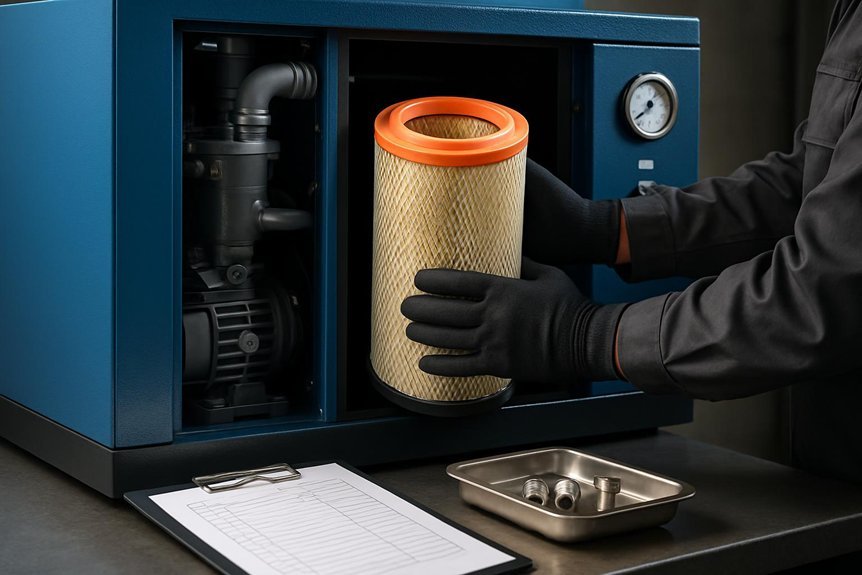
To guarantee your air compressor operates at peak efficiency, it’s essential to regularly inspect and replace the air filters, as clogged or dirty filters substantially hinder airflow and compressor performance. Understanding air filter types—such as dry panel, pre-filter, and coalescing filters—helps determine suitable replacement intervals. The filter replacement frequency varies based on operating conditions, typically ranging from every 1,000 to 2,000 hours of use or quarterly inspections. During checks, we meticulously examine filter media for visible dirt, oil, or debris, and replace filters when airflow resistance increases or performance drops. Proper maintenance of air filters ensures maximum airflow, reduces strain on compressor components, and prevents contaminants from entering the system, maintaining efficiency and prolonging equipment lifespan.
Inspecting and Draining Moisture From the Compressor Tank
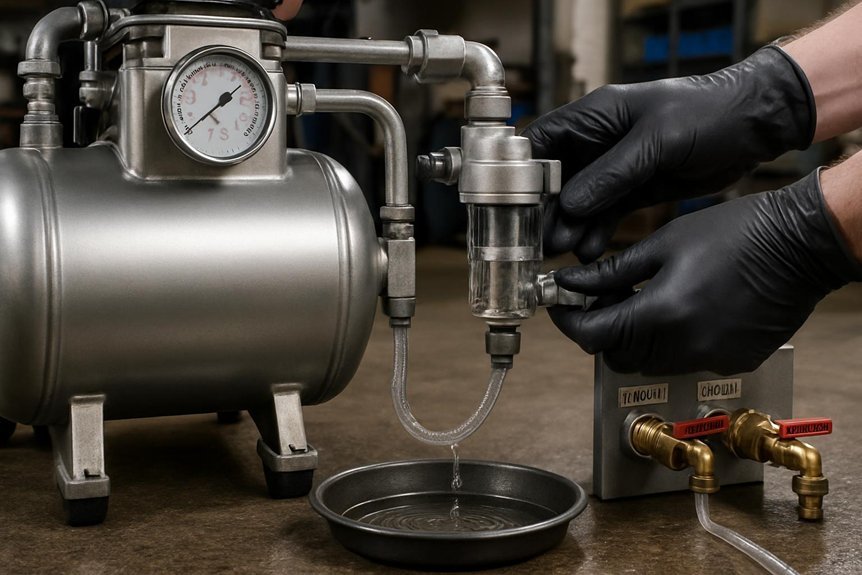
Regularly draining moisture from the compressor tank prevents water buildup that can cause corrosion and damage. We must verify the drain valve operates correctly to guarantee effective removal of accumulated moisture. Additionally, inspecting the tank for signs of rust or corrosion is essential to maintain structural integrity and prevent failures.
Drain Moisture Regularly
Moisture buildup within the compressor tank is an unavoidable consequence of the compression process and must be systematically addressed to prevent equipment damage and guarantee ideal operation. Effective moisture control relies on establishing an appropriate drain frequency based on operating hours and environmental conditions. Regularly draining accumulated water prevents corrosion, reduces the risk of freezing, and maintains best compressor performance. We recommend inspecting the drain valve daily, especially during high humidity periods, and draining moisture immediately when visible or after extended use. Precise documentation of drain intervals ensures consistent maintenance and helps identify potential issues with the drain system. Consistent, scheduled drainage is essential for maintaining compressor longevity, minimizing downtime, and ensuring the efficiency of the entire compressed air system.
Check Drain Valve Function
How can we guarantee the drain valve functions correctly and reliably during routine maintenance? Conducting a thorough functionality check involves manually opening and closing the drain valve to ensure smooth operation without sticking or leaks. We should verify that the valve opens fully to drain accumulated moisture and closes securely, preventing air or moisture leaks. Inspect the valve for any signs of corrosion, debris, or damage that could impair performance. Confirm that the drain line is clear and unobstructed, allowing moisture to escape freely. Regular testing, ideally weekly, ensures early detection of potential failure points. Properly functioning drain valves are critical for moisture removal efficiency, preventing tank corrosion, and maintaining compressor longevity. Meticulous attention to the drain valve’s operation safeguards the compressor’s overall system integrity.
Inspect Tank for Corrosion
To guarantee the compressor tank remains free of corrosion, we must meticulously inspect its interior and exterior surfaces for signs of rust, pitting, or scaling. Our tank inspection should include a thorough visual assessment for surface deterioration, especially around welds and seams, where corrosion often initiates. We also check for any moisture accumulation, as trapped water promotes rust formation. Regularly draining moisture from the tank is essential for corrosion prevention, preventing water from settling and causing internal corrosion. Using a flashlight during inspection helps identify early corrosion spots, and employing non-destructive testing methods can reveal hidden corrosion beneath the surface. Consistent tank inspection and moisture management are crucial to prolonging tank life and maintaining ideal compressor performance.
Lubrication: Ensuring Proper Oil Levels and Oil Changes
Maintaining proper oil levels and scheduling timely oil changes are critical components of industrial air compressor lubrication. Ensuring correct oil viscosity is essential, as it affects lubrication efficiency and thermal stability. We recommend regularly checking oil levels with precision, avoiding overfilling or underfilling, which can impair compressor performance. During oil changes, inspecting and replacing filters extends their lifespan and prevents contamination from circulating debris. Using high-quality lubricants suited to the compressor’s operating temperature and load conditions maintains ideal viscosity. Consistent monitoring of oil condition—via color, viscosity, and contamination—is crucial for early detection of wear or degradation. Proper lubrication minimizes component wear, reduces downtime, and prolongs equipment lifespan, making meticulous attention to oil levels and timely oil changes indispensable for reliable compressor operation.
Examining Belts, Hoses, and Connections for Wear and Damage
Regularly inspecting belts, hoses, and connections is essential to prevent unexpected failures and maintain ideal compressor performance. We check belt tension to ensure proper power transfer and avoid slippage or excessive wear. Hoses must retain flexibility; stiff or cracked hoses indicate deterioration, risking leaks or bursts. Connections should be secure, with no signs of corrosion or looseness, which could cause pressure drops or leaks.
| Component | Inspection Focus |
|---|---|
| Belts | Tension, cracks, fraying, proper alignment |
| Hoses | Flexibility, cracks, swelling, leaks |
| Connections | Tightness, corrosion, leaks |
| Overall Check | Wear patterns, abnormal noises, vibration signs |
Meticulous attention to these details ensures early detection of wear or damage, prolonging component life and avoiding costly downtime.
Monitoring Operating Temperatures and Pressure Settings
Monitoring operating temperatures and pressure settings is critical for ensuring the compressor functions within safe and ideal parameters. Temperature fluctuations can indicate issues such as overheating or inadequate cooling, potentially leading to component failure. We regularly check temperature gauges to detect deviations from manufacturer specifications, ensuring precise temperature regulation. Similarly, pressure settings must be maintained within best ranges; overpressure risks system damage, while underpressure reduces efficiency. Consistent monitoring involves recording real-time data and comparing it to standard operating conditions. We pay close attention to pressure relief valve performance and sensor calibration to prevent inaccuracies. Accurate control of temperature and pressure not only safeguards equipment longevity but also maximizes performance and energy consumption, making diligent monitoring an essential aspect of maintenance.
Conducting Vibration and Noise Checks to Detect Issues Early
Regular vibration and noise assessments enable us to detect mechanical anomalies before they escalate. We focus on identifying unusual vibrations and monitoring noise level deviations that may indicate component wear or imbalance. Early detection through these precise checks minimizes downtime and facilitates targeted maintenance interventions.
Identifying Unusual Vibrations
Unusual vibrations in an air compressor often signal underlying mechanical issues that require prompt identification to prevent costly damage or failure. Conducting thorough vibration analysis involves monitoring amplitude, frequency, and patterns of vibrations during operation. We focus on detecting deviations from normal harmonics, which can indicate misalignment, imbalance, or bearing wear. Unusual noise often accompanies these vibrations, providing additional clues. Precise measurement tools, such as accelerometers or vibration sensors, help us quantify the severity and location of the problem. Recognizing patterns—such as increasing vibration levels or irregular frequencies—allows early intervention. By systematically analyzing vibration data and correlating it with noise levels, we can identify developing issues before they escalate, ensuring the compressor’s reliability and longevity through meticulous, proactive maintenance.
Monitoring Noise Levels
Conducting noise level checks is a critical component of early fault detection in air compressor maintenance. Precise measurement of noise emissions allows us to identify deviations from baseline sound profiles, indicating potential mechanical issues. We utilize specialized sound insulation materials to isolate the compressor’s noise source, ensuring accurate readings free from external interference. Proper noise reduction techniques are also implemented to minimize ambient noise impact, enhancing the sensitivity of detection. Regularly monitoring sound levels with calibrated sound level meters helps us detect abnormal increases that could signal component wear or imbalance. This meticulous approach enables us to pinpoint problems early, reduce downtime, and prevent further damage. Maintaining detailed records of noise data supports trend analysis and long-term performance evaluation.
Early Issue Detection
Building on noise level monitoring, implementing vibration and noise checks is essential for early issue detection in air compressor systems. Regular vibration analysis identifies imbalance, misalignment, or bearing wear, preventing costly failures. Noise fluctuations can signal deteriorating components or airflow restrictions affecting air quality and filter lifespan. To optimize maintenance, compare baseline readings with current data, noting abnormal vibrations or sounds. Pay close attention to changes that could indicate internal wear or contamination. The table below highlights key indicators and corrective actions:
| Indicator | Action |
|---|---|
| Elevated vibration | Inspect bearings, alignment, and mounting |
| Unusual noise levels | Check for loose parts or damaged components |
| Air quality decline | Examine filters and airflow pathways |
| Reduced filter lifespan | Schedule filter replacement or cleaning |
| System inefficiency | Conduct comprehensive system diagnostics |
Reviewing and Updating Maintenance Records for Better Asset Management
Maintaining accurate and up-to-date maintenance records is essential for effective asset management of industrial air compressors. Precise record accuracy directly impacts our understanding of an asset’s lifecycle, enabling us to predict performance trends and schedule timely interventions. Regularly reviewing logs ensures maintenance data reflects actual conditions, helping us identify recurring issues and optimize operational efficiency. Updating records with detailed service histories, component replacements, and inspection results creates a thorough database that supports data-driven decision-making. This meticulous approach minimizes unplanned downtime and extends compressor lifespan. By maintaining detailed, accurate records, we foster an environment where asset management becomes proactive rather than reactive, ensuring ideal compressor performance and maximizing return on investment.
When to Call Professionals for Advanced Servicing and Repairs
While thorough record-keeping helps us identify patterns and plan routine maintenance, there are specific situations where expert intervention becomes indispensable. When advanced diagnostics reveal persistent or complex issues, professional technicians are essential for accurate problem identification and resolution. If your compressor exhibits unusual vibrations, fluctuating pressures, or inconsistent airflow, it’s time to seek specialized services. Emergency repairs demand immediate professional attention to prevent catastrophic failure or safety hazards. Technicians equipped with advanced diagnostic tools can pinpoint hidden faults—such as compressor misalignments or electronic control failures—that surpass basic troubleshooting. Recognizing these signs ensures that critical repairs are performed swiftly and correctly, minimizing downtime and safeguarding equipment integrity. Ultimately, calling professionals at these junctures *guarantees* operational efficiency and extends your compressor’s lifespan.
Frequently Asked Questions
How Often Should I Schedule Preventive Maintenance for My Air Compressor?
We recommend scheduling preventive maintenance every 1 to 3 months, depending on usage and environment, to optimize maintenance scheduling and extend your compressor lifespan effectively, ensuring reliable operation, reduced downtime, and cost savings over the long term.
What Are Common Signs That Indicate a Compressor Needs Urgent Repairs?
Ever wondered when urgent repairs are needed? We notice leak detection issues, abnormal noise levels, and decreased efficiency, signaling critical problems. These signs demand immediate attention to prevent costly damage and guarantee ideal compressor performance.
How Do Environmental Factors Affect Compressor Maintenance Schedules?
Environmental factors like poor air quality and high humidity demand more frequent maintenance, as contaminants accelerate wear. We monitor humidity levels and filter air rigorously, ensuring the best compressor performance and longevity in challenging conditions.
Can Routine Maintenance Improve Energy Efficiency of the Compressor?
Routine maintenance acts as the heartbeat of our compressor, ensuring energy savings and extending equipment longevity. By meticulously inspecting and servicing components, we prevent inefficiencies, much like tuning a finely crafted instrument for peak performance.
What Safety Precautions Should Be Taken During Compressor Maintenance?
During compressor maintenance, we guarantee safety by wearing proper personal protective equipment and strictly following lockout/tagout procedures, systematically isolating energy sources, inspecting tools, and verifying system de-energization before work begins to prevent accidents.
Conclusion
By adhering to this detailed maintenance checklist, we can greatly extend our compressor’s lifespan and guarantee peak efficiency. We recognize some might hesitate due to perceived complexity, but consistent, meticulous upkeep minimizes costly breakdowns and downtime. Investing time in regular inspections and professional diagnostics isn’t just routine—it’s vital for optimal performance. Embracing this disciplined approach guarantees reliable operation, saves costs, and maintains the highest air quality standards essential for our industrial operations.