Have we ever wished our air compressor was quieter, more portable, and actually pleasant to use in a home garage or workshop?

What Kind of Compressor Is This?
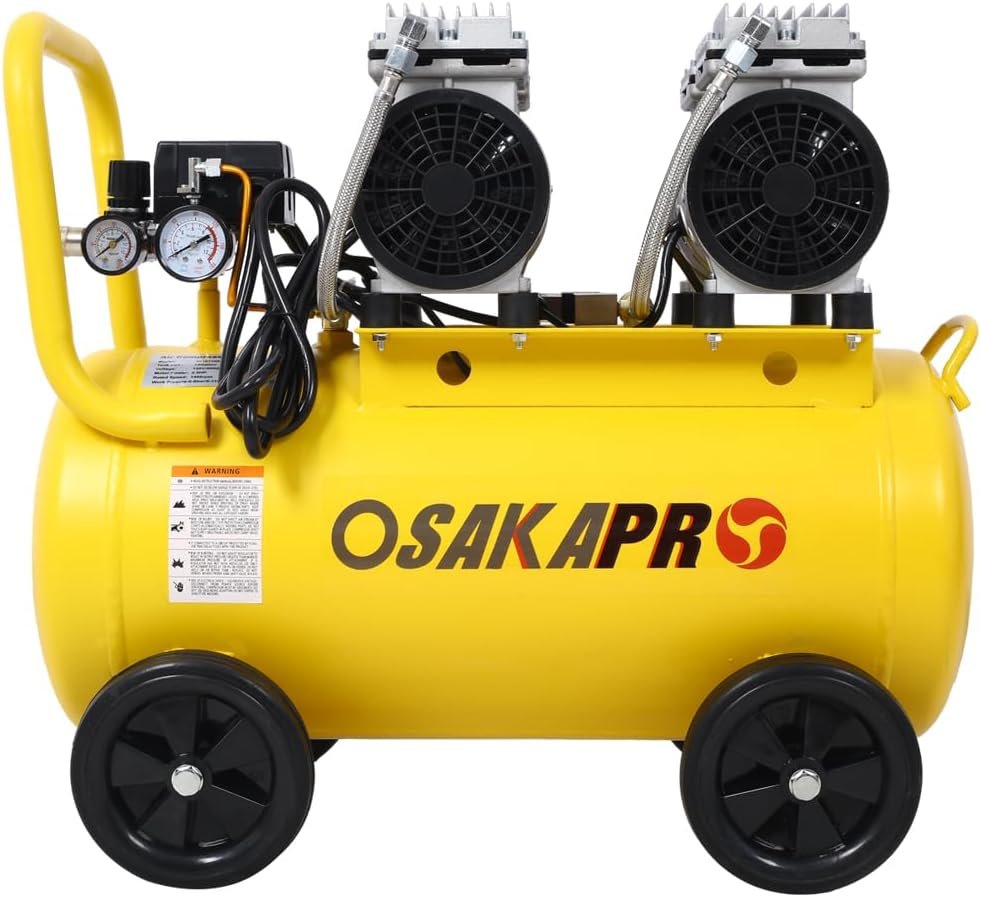
This 13 Gallon Portable Air Compressor, 2.5HP Max 115 PSI Oil-Free Compressor Tank with Wheels, Ultra Quiet with Automatic Drain Valve for Car Repair, Spray Painting, Woodwork Nailing is designed as a versatile, all-around machine for home and light commercial use. We are getting a mid-sized tank, strong motor, and impressively low noise level in one package.
We can think of it as a “workshop workhorse” that fits nicely between tiny, underpowered units and huge, stationary shop compressors. It is compact enough to move around, but powerful enough to handle serious jobs.
Key Specifications at a Glance
We often want the numbers up front so we can quickly see if a tool fits our needs. Here is a breakdown of the main specs and what they mean for us.
| Feature | Specification / Benefit |
|---|---|
| Tank Capacity | 13 gallons |
| Motor Power | Listed as 2.5 HP (with design performance up to 3.5 HP peak) |
| Maximum Pressure | 115 PSI |
| Noise Level | About 70 dBA (ultra quiet compared to typical compressors) |
| Pump Type | Oil-free, maintenance-free |
| Recovery Time | Around 70 seconds to refill tank |
| Drain Valve | Automatic drain valve for easy moisture removal |
| Mobility | Built-in wheels and handle for portability |
| Primary Uses | Car repair, tire inflation, spray painting, woodworking nailing, and general pneumatics |
| Environment | Suitable for residential garages and light commercial settings |
This table helps us quickly check whether the compressor matches our jobs: yes for tires, nail guns, and spray guns; yes for quieter indoor or attached-garage use; yes for those of us who do not want to maintain an oil-lubricated system.
Noise Level: How Quiet Is 70 dBA?
We often associate air compressors with loud, harsh noise that interrupts conversations and annoys neighbors. This model is designed specifically to avoid that.
Working Comfortably at 70 dBA
At around 70 decibels, this compressor sits closer to the sound of a normal conversation or a dishwasher rather than a screaming shop compressor. We can stand near it, talk to someone, or listen to the radio without shouting.
Because of this lower noise level:
- We can work longer without fatigue from constant loud noise.
- We can operate it in residential garages without upsetting our neighbors.
- We can use it early in the morning or later in the evening with a bit more peace of mind.
It is not completely silent, but compared to traditional units that can hit 90+ dBA, this is a huge improvement in comfort.
Performance and Power: Is 115 PSI Enough?
When we look at any compressor, we usually want to know if it has the muscle to handle our tools. This unit’s 115 PSI maximum pressure, 13‑gallon tank, and strong motor aim to hit that sweet spot.
Tank Capacity and Recovery Time
The 13‑gallon tank gives us a decent air reserve without making the unit too bulky or heavy. For many garage or workshop tasks, this size strikes a practical balance between portability and performance.
The claimed recovery time of about 70 seconds means it can refill the tank relatively quickly once the pressure drops. This helps keep our tools running without long pauses, especially:
- When we are using nailers or staplers in quick bursts
- When we are inflating multiple tires
- When we are doing light to moderate spray work on smaller projects
For truly constant, heavy-duty pneumatic tools (like high-demand sanders used non-stop), we would likely want a larger tank and higher CFM, but for typical home and small-shop work, this performance is very workable.
Pressure Output and Stability
The maximum 115 PSI rating provides enough pressure for most common air tools and tasks:
- Typical tire inflation (car, SUV, light truck, trailer)
- Most nail guns (finish, brad, framing depending on the specific gun’s requirements)
- Staplers, caulking guns, blow guns, and airbrushes
- Light spray painting with compatible guns and tips
- Impact wrenches that do not demand unusually high pressure or massive airflow
This compressor is designed to keep a stable and efficient pressure output so our tools behave consistently. That stability helps avoid underpowered shots from nailers or inconsistent spray patterns in painting.

Safety Features: How It Protects Us and Our Tools
We all want performance, but we also need to feel safe when we are working with pressurized air. This compressor includes several safety-oriented design choices.
Automatic Shutoff for Inflation
One standout feature is automatic shutoff when objects reach full inflation. For us, this means:
- When we inflate tires, balls, or inflatable equipment, the compressor can stop pumping at the proper pressure.
- We reduce the risk of over-inflation that can damage tires or cause safety hazards.
- We can feel more relaxed during inflation tasks, especially if we are multitasking around the garage.
This is especially reassuring if we share the compressor with family members who might be less experienced.
Durable Construction for Long-Term Reliability
The unit uses a large automotive-style industrial air filter and a cast iron cylinder, which help in a couple of ways:
- The robust cylinder design improves durability under repeated compression cycles.
- The industrial-grade air filter helps improve air intake efficiency while protecting the pump from dust and debris.
In addition, standard safety components like pressure switches, pressure relief valves, and proper tank construction are built to industry norms. Together, these elements support safe operation over the long term when we follow recommended usage and inspection practices.
Oil-Free, Maintenance-Free Design
One of the most user-friendly aspects of this compressor is its oil-free design. Many of us have used older compressors that demanded regular oil checks and changes. This unit is specifically designed to avoid that hassle.
What Oil-Free Really Means for Us
With an oil-free pump:
- We do not need to buy compressor oil.
- We do not need to schedule oil changes.
- We avoid the mess of spills and used oil disposal.
- We are less likely to have oil carry-over into the air lines.
For casual users, this is a big plus because it lowers the barrier to proper care. We can store it and use it as needed without worrying about forgetting maintenance steps that involve oil.
Maintenance Intervals and Cost Savings
Since the design is maintenance-free for the pump itself, our routine care mostly comes down to:
- Periodically checking hoses, fittings, and tools
- Ensuring the drain system is doing its job
- Keeping dust and debris away from moving parts and vents
Over the long run, we save money on oil and filters, and we save time that we might otherwise spend maintaining a more complex compressor.
An added bonus: oil-free designs tend to start better in cold weather because there is no thick oil slowing things down. So if our garage is chilly in winter, this unit is more likely to fire up without complaint.
Ultra Quiet Operation: Real-World Benefits
We looked at the 70 dBA number earlier, but it is worth thinking about how that truly changes our work experience.
Working in a Residential Garage or Basement
When a compressor is quieter, we gain more freedom in where and when we use it:
- We can set it up in a corner of the garage and still comfortably walk around it.
- We can use it without needing heavy hearing protection for brief tasks.
- We can do DIY work in a basement or attached garage without pumping noise through the entire house.
This quiet nature is particularly valuable for those of us living in townhouses, condos, or neighborhoods where noise can quickly become an issue with neighbors or family members.
Reduced Stress and Fatigue
Loud, sharp sounds over time can be exhausting. A quieter compressor means:
- Less stress from constant high-pitched mechanical noise.
- More enjoyable work sessions where we can focus on the task rather than the sound.
- A better environment for teaching kids or friends how to use tools, since we do not have to shout over the compressor.
In a small workshop, the difference between 70 dBA and 90 dBA can genuinely change how willing we are to take on bigger projects.
Portability: Wheels and Mobility
A 13‑gallon tank is not tiny, but this compressor is still made to move around easily thanks to integrated wheels and a handle.
Moving Around the Workshop
The wheeled design means we can:
- Roll it from the garage to the driveway for vehicle work.
- Move it between different work zones inside a shop.
- Store it against a wall when we are finished and bring it out when needed.
This mobility makes a big difference compared to larger stationary units that have to live in one corner and rely entirely on long hoses.
Using It on Different Job Sites
While it is not a super-compact jobsite “pancake” compressor, the wheels and moderate tank size let us:
- Load it into a vehicle with a bit of help if needed.
- Take it to a friend’s house for a project.
- Use it for on-site tasks such as fence repair, light carpentry, or home renovation jobs that need nailers or staplers.
The balance between tank size and portability makes this compressor flexible enough for both home and light professional scenarios.
Automatic Drain Valve: Why It Matters
Moisture is the enemy of any air tank. As we compress air, water vapor condenses inside the tank, and if it sits, it can promote rust and shorten tank life. Draining the tank is a task we should not ignore.
What the Automatic Drain Does for Us
The automatic drain valve is a smart convenience feature:
- It helps release accumulated water from the tank more consistently.
- It reduces the chance we forget to manually drain the tank after use.
- It promotes longer tank life by minimizing internal corrosion.
Instead of crawling under the compressor or fumbling with a manual valve every time, we can rely on the automatic system to handle one of the most important maintenance steps.
Longer Tank Life and Better Air Quality
Regular draining does more than protect the tank; it also helps produce cleaner, drier air for our tools:
- Less water in the lines means less risk of moisture in nail guns, which can damage internal parts.
- For painting, reduced moisture lowers the chance of paint defects like fisheyes or blushing.
- Moisture reduction also helps pneumatic tools last longer and operate more consistently.
Combined with the oil-free design, this automatic draining setup supports cleaner, more reliable compressed air delivery for our projects.
Versatility: What Can We Actually Do With It?
This is where we look at real-world tasks. The product description mentions a long list of compatible tools and uses, and it is helpful to match those to our typical projects.
Automotive and Tire Work
For vehicle owners, this compressor covers several key jobs:
- Inflating passenger car, SUV, and light truck tires to correct pressure.
- Inflating trailer, ATV, motorcycle, and bicycle tires.
- Powering small to mid-range impact wrenches for lug nuts and simple mechanical work, depending on tool air requirements.
- Using blow guns to clean engine bays, filters, and work areas.
- Running air ratchets or light drills for routine repairs (within the CFM and duty cycle limits of the compressor).
We can set up a small pneumatic station in our garage to handle seasonal tire changes, brake jobs, and general automotive maintenance.
Woodworking and Nailing
For woodworking, framing, and trim, this compressor supports:
- Brad nailers for trim, molding, and cabinetry.
- Finish nailers for interior woodwork.
- Framing nailers for building walls, decks, and structural projects, as long as we respect the tool’s demands and the duty cycle.
- Staplers for upholstery, paneling, and light construction tasks.
- Pneumatic caulking guns for controlled sealant application.
With the 13‑gallon tank, we get enough stored air to handle bursts of activity, such as firing several nails in rapid sequence, while the pump refills fairly quickly in between.
Spray Painting and Finishing
For spray painting, this compressor can:
- Support smaller spray guns or HVLP guns that stay within its air delivery range.
- Handle furniture refinishing, small auto touch-ups, and hobby painting.
- Assist in applying primers, clear coats, or stains on smaller surfaces.
We still need to pay close attention to the CFM requirements of our specific spray gun, as large, high-output guns can outpace a mid-sized compressor. However, for smaller-scale jobs and intermittent spraying, this unit is a practical choice.
General Household and DIY Use
On top of the specialized tasks, this compressor becomes a handy tool for everyday life:
- Inflating sports balls, pool inflatables, and air mattresses.
- Blowing dust and debris off workpieces or out of tight spaces.
- Powering small pneumatic tools for crafting or hobby work.
- Supporting occasional repairs requiring chisel tools or light drilling.
Once we have a compressor like this in the garage, we usually find more and more uses for it.
Comparing This Compressor to Other Types
We often wonder how this compressor stacks up against other styles on the market. Looking at a few common categories helps put it in perspective.
Versus Small Pancake Compressors
Compared to tiny 1–6 gallon “pancake” units:
- We gain a much larger air reserve (13 gallons vs 1–6).
- We get quieter operation at around 70 dBA vs many loud small units.
- We enjoy faster recovery time and more stable performance with multiple tools.
We do give up a bit of extreme portability and lightness, but we gain a lot more capability and comfort for workshop tasks.
Versus Large Stationary Compressors
Compared to big 60+ gallon stationary shop units:
- We gain mobility with wheels and a more compact footprint.
- We typically accept lower continuous airflow and shorter duty cycles.
- We enjoy much easier installation—no complex wiring or plumbing needed.
For a serious automotive or industrial shop that runs air tools all day, a large stationary compressor still wins. For a home workshop or a mixed-use garage, this 13‑gallon unit is often much more practical and realistic.
Versus Oil-Lubricated Compressors
Versus traditional oil-lubed pumps:
- We avoid oil changes and oil costs.
- We face less risk of oil contamination in air lines.
- We often get quieter and cleaner operation, though oil-lubed pumps can also run quietly when properly built.
Oil-lubed models sometimes last longer under heavy industrial use, but for residential and light commercial use, an oil-free design is usually the more convenient and budget-friendly choice.
Everyday User Experience
Beyond specs and comparisons, it helps to picture what everyday use feels like. How does this compressor fit into our routine?
Setup and First Use
When we unbox the compressor, we typically:
- Attach any handles or wheels if they are not pre-installed.
- Place it on a stable, level surface in the garage or workshop.
- Connect an air hose rated for the appropriate pressure and length.
- Plug it into a suitable electrical outlet according to the manufacturer’s instructions.
- Turn it on and let it build pressure to its cutoff point, checking for any unusual sounds or leaks.
Since the pump is oil-free, we do not need to pre-fill crankcase oil or worry about topping off levels before use.
Day-to-Day Operation
Once it is set up, our daily interactions usually look like this:
- Turn it on, let it reach pressure.
- Use our tools as needed; the compressor will automatically cycle on and off to maintain pressure.
- Trust the automatic shutoff for inflation tasks while we monitor pressures with gauges.
- Rely on the automatic drain valve to manage moisture for us.
- At the end of a session, switch it off and, if recommended, relieve residual pressure to store it safely.
We spend most of our time focusing on the task—nailing, painting, inflating—rather than babysitting the compressor.
Strengths and Limitations
No tool is perfect for everyone, so it helps to be honest about both the benefits and the constraints of this unit.
What This Compressor Does Especially Well
We gain several strong advantages:
- Quiet operation at about 70 dBA makes it comfortable for home use.
- Oil-free pump removes the need for oil changes and reduces maintenance.
- Automatic drain valve helps prevent moisture buildup with less effort.
- 13‑gallon tank and quick recovery offer a good balance of capacity and portability.
- Versatility across car repair, nailers, spray painting, and general DIY makes it a central workshop tool.
- Safety features like automatic shutoff during inflation provide extra peace of mind.
For many home mechanics, woodworkers, and DIY enthusiasts, these strengths align perfectly with everyday needs.
Where It May Not Be Ideal
We should also recognize some natural limits:
- It is not intended for constant, industrial-level use with multiple high-CFM tools running at the same time.
- For very large painting projects (like full car resprays in one go), a bigger, higher-capacity system might be preferable.
- It still has weight and size due to the 13‑gallon tank, so it is not as grab-and-go as a tiny pancake compressor.
As long as we understand it as a powerful, mid-range unit optimized for quiet, practical home and small-shop use, these limitations are reasonable.
Who Is This Compressor Best For?
With all of this in mind, we can picture the kinds of users who will get the most value from this product.
Ideal Users and Use Cases
This compressor is especially well-suited for:
- Home mechanics who regularly work on their own vehicles.
- Woodworkers who run nailers, staplers, and small spray guns.
- DIY renovators building decks, finishing basements, or remodeling rooms.
- Hobbyists who paint furniture, metalwork, or small automotive parts.
- Anyone living in a neighborhood or shared building where loud compressors are a problem.
If our goal is to have one reliable, fairly quiet compressor that can handle most of what we throw at it in a home garage, this model lines up strongly with that goal.
Who Might Need Something Different
On the other hand, we may want to consider another option if:
- We run a full-time auto shop or cabinet shop with multiple workers and continuous heavy air usage.
- We need very high airflow (CFM) for sandblasting, continuous grinding, or industrial spray equipment.
- We want a tiny, ultra-light compressor solely for occasional bike tire top-offs and nothing more.
For those extremes, specialized units—either much larger or much smaller—would probably make more sense.
Practical Tips for Getting the Most Out of It
Once we have a compressor like this, a few simple habits can help it serve us well for years.
Tips for Longevity and Reliability
- Give it breathing room: keep it away from walls or clutter that might block ventilation.
- Use proper extension cords or, ideally, plug directly into a suitable outlet to avoid voltage drop.
- Check hoses and fittings for leaks now and then; small leaks waste air and force extra cycling.
- Store it in a reasonably dry, sheltered space to protect it from weather and corrosion.
Even though it is oil-free and has an automatic drain, a bit of general care goes a long way.
Tips for Better Results With Tools
- Match tools carefully: check the CFM and PSI needs of tools before assuming they will run well.
- Use a regulator and filter when doing tasks like spray painting to control pressure and improve air quality.
- For painting and finishing, consider an additional moisture trap or desiccant system to further reduce water in the line.
- When using nailers or staplers, keep air hoses as short as practical to maintain good pressure.
These simple steps help ensure our tools perform smoothly, efficiently, and safely.
Final Thoughts: Is This Compressor Worth It?
When we step back and look at the whole picture, this 13 Gallon Portable Air Compressor, 2.5HP Max 115 PSI Oil-Free Compressor Tank with Wheels, Ultra Quiet with Automatic Drain Valve for Car Repair, Spray Painting, Woodwork Nailing offers a compelling blend of quiet operation, usability, and versatility.
We get:
- A notably quiet 70 dBA noise profile that makes home and light commercial use more comfortable.
- A practical 13‑gallon tank and quick recovery time that support a wide range of tools and tasks.
- An oil-free, maintenance-free pump that keeps ownership simple and cost-effective.
- An automatic drain valve that protects the tank and improves air quality with minimal effort.
- Enough power and pressure for everyday automotive work, woodworking, and light spray painting.
For those of us who want one central compressor to support car repairs, home projects, and creative work, without the constant roar and maintenance hassle of older models, this unit stands out as a very attractive choice.

Disclosure: As an Amazon Associate, I earn from qualifying purchases.