Have we been searching for a reliable onboard air solution for our air bag suspension?
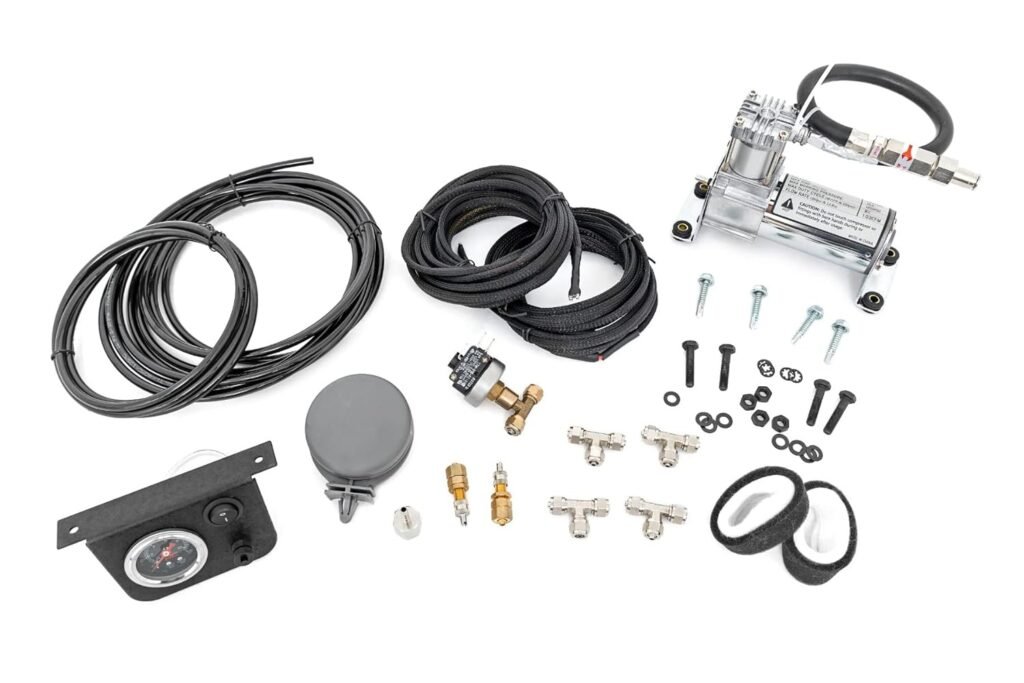

Understanding What the Rough Country Onboard Air Bag Compressor Actually Is
When we first look at the name “Rough Country Onboard Air Bag Compressor w/Gauge | Air Spring Compressor – 10100 Silver”, it can sound a bit technical. In simple terms, this system is a compact onboard air compressor kit designed specifically to inflate and maintain our air springs or air bags on trucks, SUVs, and similar vehicles.
This is not a huge shop compressor for running air tools. Instead, it is a dedicated, vehicle-mounted solution that keeps our suspension air bags at the correct pressure, improving ride quality, stability, and load leveling.
Who This Compressor Kit Is Really For
We might be wondering if this kit is meant for us or more for heavy-duty, commercial setups. In reality, it is designed for everyday drivers who tow, haul, or run air suspension and want a convenient way to adjust air bag pressure on the go.
It targets those of us who:
- Tow campers, boats, or trailers
- Haul heavy loads in the bed often
- Use air springs to level out sagging suspension
- Want a more controlled, comfortable ride with variable loads
If we fall into any of those categories, this onboard air compressor system becomes a very practical upgrade.
Core Features of the Rough Country Onboard Air Bag Compressor
Understanding key features helps us decide if this kit fits our needs. Let’s break down what the product actually offers, then we can talk about how that feels in real-world use.
Moisture and Dust Resistant Construction
The compressor unit is built to handle moisture and dust, which is crucial for something mounted under or inside our vehicle in real-world conditions.
This matters because we are likely driving in rain, across dusty gravel roads, or through seasonal weather changes. A moisture and dust resistant design improves longevity and reliability, so we are not constantly worrying about premature failure.
Includes DOT-Approved Air Lines
The mention of DOT-approved air lines means the air hoses meet Department of Transportation standards for durability and safety.
This gives us added peace of mind. We are not dealing with cheap, flimsy lines that might crack, burst, or leak easily. Instead, we are using components rated for automotive and highway use.
Built-In Gauge for At-A-Glance Monitoring
The “w/Gauge” part of the product name signals that we have an integrated pressure gauge to see our air bag pressure.
Having a gauge as part of the kit makes operation easier and more precise. We can quickly check if our air bags are at the recommended pressure without needing a separate handheld gauge every time.
Includes a Low-Pressure Sensor
One of the standout features is the low-pressure sensor that helps maintain proper air bag inflation.
This sensor can help keep the air bags from dropping below a safe minimum pressure. That means less risk of damaging our air bags by running them too low, and less manual checking and adjusting every single time we load up the vehicle.
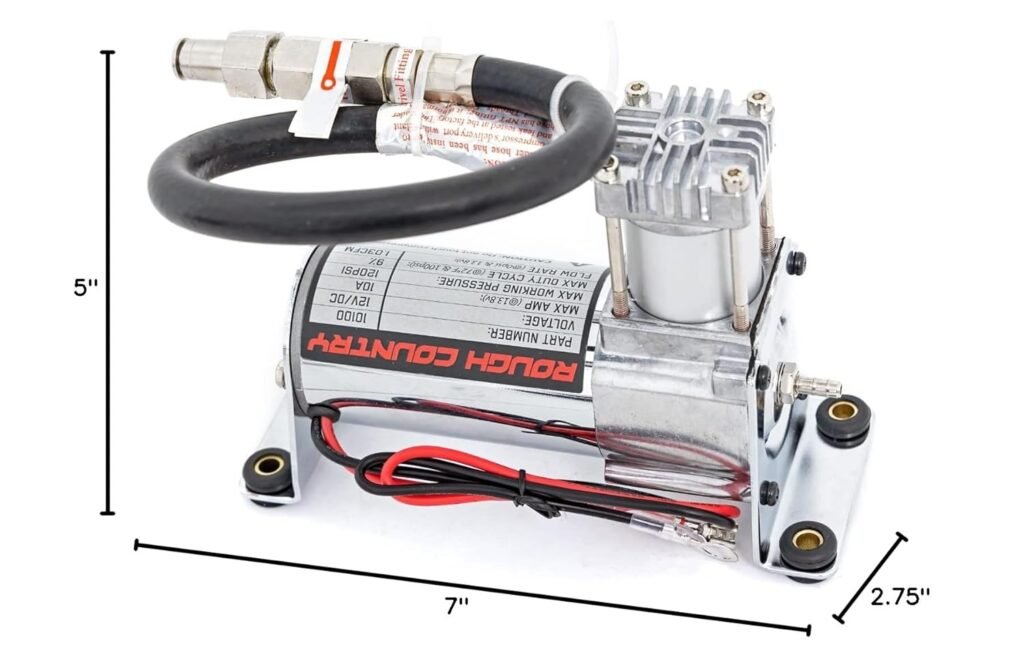
12-Volt Compressor with 1.03 CFM Output
The compressor itself is a 12-volt unit, which means it runs off our vehicle’s electrical system. It offers 1.03 CFM (Cubic Feet per Minute), which indicates how quickly it can move air.
For air bag inflation, 1.03 CFM is sufficient for regular adjustments and load changes. We are not trying to fill huge air tanks or power air tools; we are focused on predictable, controlled changes in air bag pressure.
Duty Cycle: 9% @ 120 PSI
The kit specifies a 9% duty cycle at 120 PSI, with a recommended maximum working pressure of 100 PSI.
A 9% duty cycle means the compressor is intended for intermittent use, not continuous operation. That is normal for onboard suspension compressors. We use it in short bursts to inflate or adjust pressure, then let it rest.
Quick Specification Breakdown
To make the main details easier to review, here is a simple table organizing the core specifications.
| Feature / Spec | Detail |
|---|---|
| Product Name | Rough Country Onboard Air Bag Compressor w/Gauge – 10100 Silver |
| Intended Use | Air spring / air bag inflation and maintenance |
| Compressor Voltage | 12 V DC |
| Compressor Output | 1.03 CFM |
| Duty Cycle | 9% @ 120 PSI |
| Recommended Max Working Pressure | 100 PSI |
| Moisture & Dust Resistance | Yes |
| Air Lines | DOT-approved |
| Gauge Included | Yes |
| Low-Pressure Sensor | Included |
| Finish | Silver |
| Typical Applications | Towing, hauling, air bag suspension adjustment |
We find this layout helpful to glance through the important details when comparing to other kits or when planning our installation.
Real-World Use: How This Compressor Helps in Everyday Driving
Specifications are nice, but what we really care about is how this kit changes the way our vehicle handles and feels during actual use.
Supporting Towing and Hauling
When we hook up a trailer or load up the bed, the rear of our vehicle can sag. That leads to poor handling, headlight misalignment, and even increased wear on components.
With air bags and this onboard compressor kit:
- We can add air to level the rear
- We improve stability and reduce sway
- We maintain more even ride height and steering feel
This makes long trips with a trailer less tiring and more controlled.
Adjusting Ride Comfort on the Fly
Loads change. One day we are running empty, the next day we are carrying gear or equipment. Air bags allow us to tailor the suspension to these changes, and this kit allows us to adjust pressure from inside or near the vehicle rather than hunting down a gas station or using a portable compressor.
We get to fine-tune the firmness or softness of the rear suspension quickly. That means a better blend of comfort and control, depending on what we are doing that day.
Installation Experience and Considerations
Even if we plan to have a shop install it, understanding the complexity of installation helps us set expectations. For many of us who are comfortable with basic tools and 12-volt wiring, this is a very manageable project.
Mounting the Compressor
We will need to choose a suitable mounting location for the compressor unit. Many people mount it:
- On the frame rail
- Inside the engine bay (if space allows and heat is managed)
- In a protected spot near the rear of the vehicle
The moisture and dust resistance helps give us more flexibility. However, we still want to avoid direct exposure to road spray and extreme heat, if possible.
Routing the DOT-Approved Air Lines
Next, we route the air lines from the compressor to the air bags. Because they are DOT approved, we gain some durability, but proper routing is still essential.
We should:
- Avoid sharp edges that could cut into the lines
- Keep lines away from exhaust components
- Secure them with clamps or ties so they do not rub or dangle
Proper routing goes a long way in preventing leaks or long-term wear.
Wiring the 12-Volt Compressor and Gauge
The compressor runs off 12-volt power, so we will need to connect it to our vehicle’s electrical system with an appropriate fuse and relay (often included in kits like this, or specified in the instructions).
We also need to mount and wire the gauge and low-pressure sensor. This is a relatively straightforward process if we are comfortable with automotive wiring, but we should always follow the instructions and use correct gauge wire and connectors.
If we are not confident, this is one area where a professional installer can help us avoid headaches.
Using the Built-In Gauge and Low-Pressure Sensor
The inclusion of both a gauge and a low-pressure sensor is a significant part of what makes this kit user-friendly. Together, they simplify day-to-day operation.
Reading and Adjusting Pressure with the Gauge
The gauge allows us to see exactly what pressure our air bags are at. This is important because each vehicle and load scenario might have a recommended pressure range.
We can:
- Check current pressure at a glance
- Add air until we reach the desired PSI
- Bleed off air (if the system includes a release valve) when running lighter loads
This prevents guesswork and helps us maintain consistent performance.
Safety and Protection from the Low-Pressure Sensor
Air bags generally have a minimum pressure requirement to prevent damage. Running them completely deflated can cause them to fold or pinch in ways that lead to leaks or ruptures.
The low-pressure sensor included in this kit helps maintain a baseline pressure. That means the compressor can help ensure our air bags do not inadvertently run too low for extended periods.
This helps extend air bag life and saves us from expensive failures.

Performance: What the 1.03 CFM and Duty Cycle Mean for Us
Numbers like 1.03 CFM and a 9% duty cycle at 120 PSI might sound abstract, but they give us a sense of what to expect from the compressor in use.
Inflation Speed and Practical Use
With 1.03 CFM, we can expect the compressor to inflate typical air bags from a low pressure to a working level in a reasonable amount of time. We are not waiting forever, but we also should not expect instant inflation.
In practice:
- Small bump-ups in pressure (for minor load changes) are quick
- Larger adjustments (going from near-minimum to near-maximum) may take a bit longer, but still very manageable
For a system whose primary job is periodic air bag adjustment, this output is adequate and balanced with size and power draw.
Understanding the 9% Duty Cycle
A 9% duty cycle at 120 PSI means that out of a 10-minute period, the compressor is designed to run safely for about 54 seconds, then rest for the remainder. That metric is at 120 PSI, which is above the recommended working pressure of 100 PSI, so our typical usage will be slightly less demanding.
The practical takeaway:
- We should use the compressor in short bursts
- We should avoid continuous, prolonged running
- For typical air suspension adjustments, we rarely approach a situation where we need to exceed that duty cycle
That design keeps the compressor compact, efficient, and cooled adequately during normal use.
Build Quality and Durability
When we install an onboard system, we want it to last. The build quality of the Rough Country Onboard Air Bag Compressor kit plays a big role in that.
Moisture and Dust Resistance in Daily Conditions
Because the unit is moisture and dust resistant, it handles typical exposure from rain, puddles, dusty roads, and general road grime better than a basic indoor-only compressor would.
We still want to be smart with mounting location, but this resistance adds durability and reduces the chance of corrosion or contamination affecting performance.
DOT-Approved Air Lines for Peace of Mind
The use of DOT-approved lines means the hoses are:
- Tested for pressure and durability
- Better suited for automotive environments
- Less prone to failure from vibration or temperature swings
That becomes especially important on long road trips or in climates with hot summers and cold winters, where materials are stressed continuously.
Everyday Benefits We Notice After Installation
Once this system is installed and integrated with our air suspension, we usually notice several day-to-day advantages that go beyond the raw specifications.
More Confident Towing and Hauling
We tend to feel more in control when we are towing or carrying heavy loads. With properly inflated air bags, the rear sag is reduced, and the vehicle feels more stable.
We notice:
- Less bouncing and bottoming out over bumps
- More consistent steering feedback
- Reduced trailer sway when properly set up
This all adds up to a more relaxed and confident driving experience.
Reduced Wear and Tear on Our Vehicle
By maintaining more level ride height and better weight distribution, we help reduce stress on our suspension components, tires, and even brakes and driveline parts.
While it is not a magic solution for every wear issue, having properly pressurized air bags supported by an onboard compressor kit contributes to a longer service life for many parts of our vehicle.
Convenience We Appreciate Over Time
The convenience of having an onboard compressor with gauge and low-pressure sensor should not be underestimated. Instead of hunting for a service station air pump or dragging out a portable compressor, we simply adjust pressure whenever and wherever we need to.
Over time, that convenience becomes one of the main reasons we are glad we invested in the system.
Pros and Cons of the Rough Country Onboard Air Bag Compressor
To be fair and balanced, it helps to step back and list what stands out in both positive and potentially negative ways.
What We Like About This Kit
Several aspects make this compressor kit appealing to many of us:
- Designed for air bags rather than being a generic compressor
- Moisture and dust resistant for better durability
- DOT-approved air lines for reliability and safety
- Built-in gauge for easy monitoring
- Low-pressure sensor to help protect our air bags
- Compact 12V compressor suitable for vehicle mounting
These features align well with what most air suspension users want: reliability, convenience, and protection.
Potential Limitations to Keep in Mind
No product is perfect. Here are a few points we should consider:
- 9% duty cycle means it is not suited for continuous, heavy-duty use or running air tools
- CFM output (1.03) is optimized for air bag inflation, not for filling large auxiliary tanks very quickly
- Installation requires some comfort with wiring and routing lines, or a willingness to pay a shop for professional installation
For most of us who simply want a solid air bag inflation system, these are acceptable trade-offs, but we should be aware of them.
Comparing This Kit to a Portable Compressor Setup
Some of us might be asking why we would choose an onboard system like this instead of a simple portable compressor that plugs into the cigarette lighter or clamps to the battery.
Advantages of the Onboard System
Compared to a portable compressor, an onboard kit like this offers:
- Permanent installation always available when we need it
- Integrated gauge and controls designed for air bag use
- Cleaner routing of air lines directly to the bags
- Low-pressure sensor for ongoing protection
It is purpose-built for our suspension setup, giving us a more seamless, user-friendly experience.
When a Portable Compressor Might Still Make Sense
A portable compressor:
- Can be used on multiple vehicles
- Might be cheaper as a starting point
- Can sometimes be used for other tasks, like inflating tires, sports equipment, or small air tools (depending on the model)
If our budget is very tight or we rarely adjust air bag pressure, a portable unit might suffice. However, if we tow or haul frequently, the Rough Country onboard system tends to pay off in convenience and reliability.
Maintenance and Longevity
Once installed, we want to keep the system running smoothly for as long as possible. While this kit is built to be relatively low-maintenance, there are a few simple habits that help extend its life.
Periodic Inspection of Lines and Fittings
Every so often, especially after off-road trips or driving on rough roads, it is wise to:
- Inspect air lines for abrasion or damage
- Check fittings for any signs of leaks (a light soapy water solution can help reveal leaks)
- Make sure mounting brackets and hardware are snug
These quick checks can prevent small issues from turning into bigger problems.
Monitoring Compressor Operation
We should pay attention to unusual noises or changes in operation, like:
- The compressor running longer than normal to reach the same pressure
- Strange sounds such as grinding or rattling
- Frequent cycling that may indicate leaks
Catching those signs early helps us address minor problems before they lead to component failure.
How This Kit Fits into a Complete Suspension Setup
The Rough Country Onboard Air Bag Compressor is only one part of a larger system. When combined with quality air springs and a well-maintained suspension, it becomes a key ingredient in how our vehicle drives and feels.
Paired with Quality Air Springs
We get the best results by pairing this compressor kit with durable, brand-name air springs that match our vehicle and load needs.
Together, they give us:
- Controlled ride height
- Better handling under load
- Flexibility to adapt to different towing and hauling situations
This synergy is where onboard air systems truly shine.
Working Alongside Shocks, Springs, and Suspension Components
Air bags and an onboard compressor do not replace our entire suspension; they complement it.
When combined with:
- Good shocks (especially load-rated or towing-oriented)
- Properly rated springs
- Correct tire pressures
We get a balanced setup that offers comfort, capacity, and control.
When We Might Notice the Biggest Difference
The impact of this onboard compressor kit is most obvious in certain common driving situations.
Long Trips with Trailers or Heavy Loads
On extended trips with a trailer or a fully loaded bed, having quick control over air bag pressure is invaluable. We can adjust for a new trailer, shifting loads, or varied road conditions.
We notice:
- Less driver fatigue
- A more consistent ride
- Better confidence over long distances
That can make the difference between a stressful trip and a smooth one.
Mixed Daily Driving and Weekend Hauling
If we use our truck or SUV as both a daily driver and a weekend workhorse, this system helps us adapt quickly.
We can:
- Run lower pressures when the vehicle is empty (within safe limits)
- Add pressure for weekend projects, camping trips, or towing runs
The convenience of onboard control makes using our vehicle in multiple roles much easier and more comfortable.
Our Overall Impression of the Rough Country Onboard Air Bag Compressor
After looking at what the Rough Country Onboard Air Bag Compressor w/Gauge | Air Spring Compressor – 10100 Silver brings to the table, we can form a clear picture of its role and strengths.
Strengths That Stand Out
We especially appreciate:
- A design clearly focused on air bag support and protection
- Moisture and dust resistance for realistic, real-world mounting locations
- DOT-approved air lines that inspire confidence
- Built-in gauge and low-pressure sensor that simplify daily use and help protect our investment in air bags
- A compact 12V, 1.03 CFM compressor that is well-matched to typical air suspension needs
Everything about this kit targets practical performance and convenience for owners who frequently tow or haul.
Who Will Benefit the Most
We see this kit as especially well-suited for:
- Truck and SUV owners who tow trailers regularly
- Drivers who carry heavy loads and want a level, more controlled ride
- Anyone already using or considering air springs and wanting a reliable way to manage air pressure
If we are in those groups, this onboard compressor kit offers a solid balance of features, reliability, and real-world usability.
Final Thoughts Before We Decide
If our main goal is to have an easy, dependable way to control and maintain air bag pressure, this Rough Country system is a very strong candidate. It is not designed for high-volume shop work or continuous heavy-duty air tool use, and it does not try to be. Instead, it focuses on doing one important job well: giving us convenient, consistent control over our air suspension.
By pairing it with quality air bags and a well-maintained suspension, we set ourselves up for safer towing, more comfortable hauling, and a more adaptable vehicle overall.

Disclosure: As an Amazon Associate, I earn from qualifying purchases.