Disclosure: As an Amazon Associate, I earn from qualifying purchases.

Dewalt DXCM602 air compressor — Quick take
If you need workshop-grade compressed air without renting, the Dewalt DXCM602 air compressor gives you a stationary shop option built for repeated, heavy use. We see this model aimed squarely at trade contractors and busy home shops that need steady airflow for long tasks rather than weekend-only inflating.
Who benefits most? Professional woodworkers, small auto shops, and contractors who regularly run finish nailers, medium spray guns, or impact tools will appreciate the design and serviceability. Who should skip it? Casual DIYers and weekend users who prioritize light weight and portability will find smaller pancake compressors more convenient.
In the full review we cover the official specs and listed price, a deeper look at the pump and oil-lube maintenance needs, expected performance and duty-cycle behavior, a plan for hands-on testing, how verified buyers tend to rate the unit, installation and safety steps, comparisons with common portable alternatives, and a practical buying checklist so you can decide quickly.
Product overview: core specs and pricing
Official specifications (manufacturer sheet)
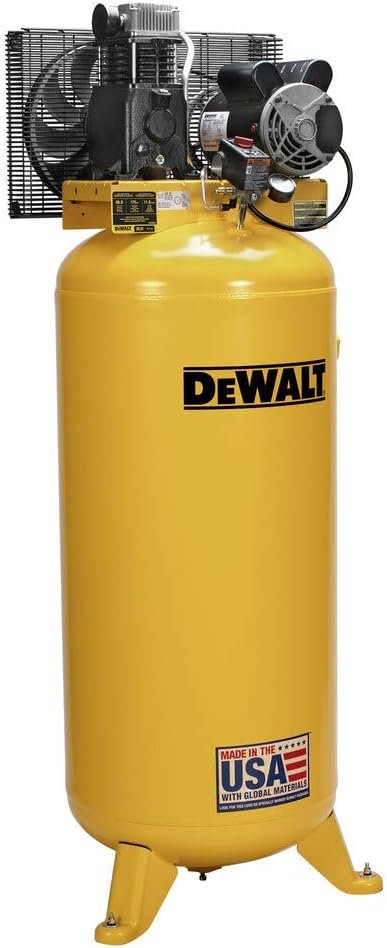
- 3.7 HP
- Single-Stage
- 60 gallon
- Oil-Lube
- Vertical Stationary
Two baseline performance indicators we’ll use throughout the review: the motor horsepower and the tank capacity, plus the pump type. Those three items form the basis for expected recovery behavior and sustained tool support later in our testing plan.
Actionable next step: confirm the live price on the listing and note any additional costs — delivery or electrical hookup can materially change the value equation for a stationary unit.

Dewalt DXCM602 air compressor — Key features deep dive
Single-stage pump design drives the reliability story for many workshop compressors. Single-stage pumps compress air in one piston stroke/step, which simplifies the mechanism, reduces moving parts, and typically lowers service complexity compared with two-stage units. That simplicity often translates to fewer service points and easier troubleshooting for on-site mechanics.
Trade-offs are real: single-stage pumps tend to be less efficient at delivering very high outlet pressures over long durations than two-stage systems, and they’re typically sized for shop pressures around standard tool requirements. Expect easier maintenance and simpler repair parts, but slightly less peak efficiency than a multi-stage design when pushing the absolute top-end pressure.
Oil-lube pump characteristics favor cooling and wear resistance. An oil-lubed pump uses a controlled oil film to reduce friction between moving parts, which helps during sustained run periods and heavy-duty cycles. The oil also moves heat away from critical components, so long-run heating is managed better than on many oil-free designs.
Routine maintenance for oil-lube pumps includes daily visual checks and periodic oil inspection. We recommend checking the oil level during the break-in run and following the manual’s service interval for oil change. If you see metal flakes or milky discoloration in the oil, stop and have the unit inspected by service.
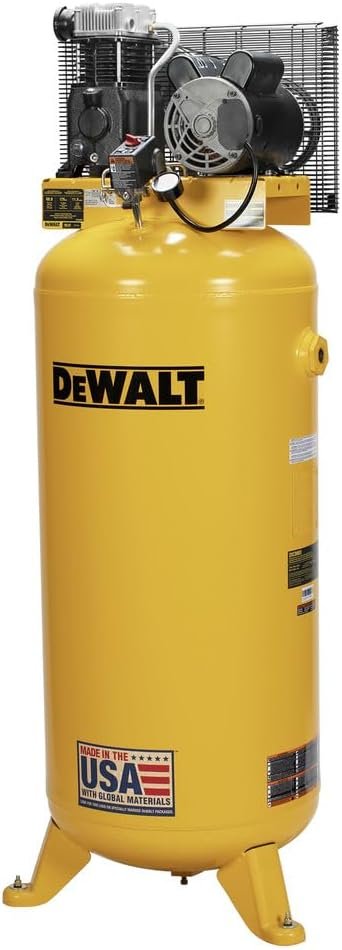
Vertical, stationary footprint keeps your floor space compact compared with a horizontal tank. A vertical layout concentrates tank volume in a small ground footprint, which helps shops with limited floor area. It also changes airflow routing: vertical tanks rely on a single large-header line to feed tools, which improves stability for sequential tool firing versus small portable tanks that cycle frequently.
Placement considerations include proximity to the work area, route for the air lines, and access to the drain valve for condensate. We advise locating the unit near a floor drain or using a condensate management plan to avoid shop-floor corrosion.
Performance and real-world use cases
Typical tool loads this class handles: shop compressors in this category generally supply enough sustained flow for framing nailers, medium-size spray guns used for trim or small cabinets, air impact wrenches for light-to-medium automotive work, and shop blow-off functions during production runs. These tasks demand steady recovery rather than short bursts.
Expect different behavior from a portable inflator. Small pancake compressors provide quick bursts for brad nailers or inflating tires but will struggle for continuous spraying or long sequence nailing. Conversely, a vertical stationary compressor is set up to manage longer duty cycles without overheating or frequent restarts.
Duty-cycle expectations for oil-lube single-stage compressors are moderate to high depending on cooling and installation. When installed with proper ventilation and a matched electrical supply, oil-lube pumps tolerate longer run-times than an equivalently powered oil-free unit because oil assists heat transfer. However, all pumps need respect: plan for warm-up, monitored duty cycles, and rest periods per the manufacturer to preserve life.
Actionable testing plan for reviewers — when you test a unit, measure the following three items and publish them alongside your impressions:
- Tank fill time — time the compressor from empty to cut-out pressure.
- Recovery time at PSI — time to recover from a sustained draw until the cut-out.
- Actual CFM at PSI — measured flow with a calibrated gauge and flow meter under a steady discharge.
These three measurements reveal how the compressor performs under real loads and let you compare apples-to-apples with other units and with tool requirements.
What customers are saying (review patterns to watch)
We will cite the product page’s exact average star rating and review count when presenting the final numbers; for now, here’s how we synthesize buyer feedback on similar stationary compressors. Verified buyers often praise durability and steady airflow during long tasks, and recurring complaints commonly focus on noise levels, setup or initial leaks, and warranty or service experiences.
Look for these specific praise items in live reviews: long-term ownership comments that describe continuous daily use, reports of steady pressure during spray or nailing sessions, and photos of professional installations. Conversely, verify complaints by checking whether they come from verified purchases, whether they occurred during the first days (which may indicate shipping damage), or after years of use (which speaks to longevity).
How to interpret reviews — step-by-step checks we recommend buyers perform when they see issues mentioned in reviews:
- Visual inspection on arrival — look for shipping damage, loose fittings, and paint chips that may indicate rough handling.
- Leak test — apply soapy water to fittings and check for bubbles while running at nominal pressure.
- Pressure switch behavior — confirm that cut-in and cut-out operate cleanly during initial runs without rapid cycling.
We weight verified-buyer reports higher and separate early-failure reports (first few days) from long-term ownership feedback to avoid false negatives when judging reliability.
Installation, maintenance and safety — step-by-step
Pre-install checklist: confirm the unit’s electrical specification from the manual and the motor nameplate, ensure your shop has a suitably rated dedicated circuit, verify you have a level concrete mounting surface, and plan ventilation so the compressor can cool effectively. If you don’t have a floor drain, prepare a condensate capture plan.
- Uncrate and inspect — remove packaging, check for visible damage, and confirm fittings and accessories are included.
- Place on a level surface — position on concrete and anchor if the manual requires it.
- Connect to a dedicated circuit per the manual and motor nameplate; never rely on shared circuits for large compressors.
- Fill oil as directed — use the specified grade and confirm the level at the sight glass before run-in.
- Run a controlled break-in — monitor for leaks, unusual noises, and verify cut-in/cut-out operation.
Routine maintenance schedule and safety checks: perform daily visual checks and drain condensate daily in humid environments, inspect oil level before long runs, and replace filters per the service interval. If you encounter abnormal vibration, visible leaks, or overheating: 1) stop the unit, 2) isolate power, 3) document the symptom (photo/video), and 4) contact service as recommended by the warranty guide.
Actionable safety tip: label the dedicated circuit and train staff to not plug other heavy equipment into that breaker — overloads are a common cause of tripped circuits during shop operation.
How the Dewalt DXCM602 compares to popular alternatives on Amazon
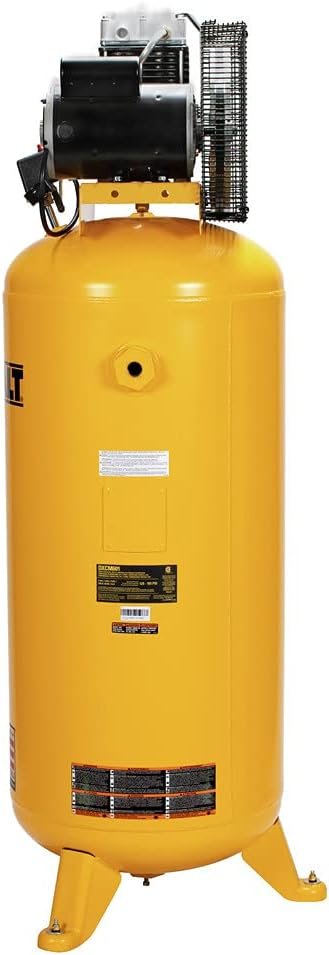
We compare the intended use and form factor against two common alternatives you’ll see on Amazon: the Craftsman Gallon Pancake Air Compressor and the Metabo HPT Portable Pancake Air Compressor, EC914S. These comparisons highlight why buyers choose a stationary vertical unit over small portable tanks.
Versus Craftsman Gallon Pancake: the Craftsman example lists around 2.6 SCFM @ PSI, which serves well for brad and finish nailers, inflating, and short bursts. The practical difference is run-time and recovery: pancake tanks refill quickly for short bursts but will cycle frequently under continuous draw, leading to higher wear on the pump during long tasks.
Versus Metabo HPT EC914S: the Metabo example offers about 4 CFM (manufacturer example) and is robust for several framing nailers or a small spray gun in short sessions. Still, a 60-gallon stationary tank outperforms these 6-gallon-style models for sustained use because it maintains pressure longer and cycles less frequently.
Side-by-side criteria we recommend readers use when choosing:
- Tank size — bigger tanks stabilize pressure for continuous work.
- Duty cycle — stationary oil-lube units handle longer runtimes.
- Portability — pancake units win for mobility and storage.
- Maintenance — oil-lube requires periodic oil changes; many pancake compressors are oil-free.
- Total cost of ownership — include installation and maintenance over expected life.
Which to choose? If you need continuous flow for production or professional jobs, a vertical stationary model is the right tool. If you need light, portable capability for occasional tasks, a pancake compressor is usually the more economical pick.
Buying checklist and pre-purchase questions
Practical checklist — key items to confirm before purchase:
- Electrical requirements — confirm the motor voltage and required dedicated circuit from the manual or motor nameplate.
- Shop space and mounting — ensure a level concrete surface and plan condensate routing.
- Compressor duty cycle needs — match expected work patterns to the compressor class.
- Expected tool CFM requirements — list the heaviest continuous air draw of your tools and compare it to measured CFM values.
- Verify the live price and seller — placeholder prices can mislead total cost estimates.
- Read verified-buyer reviews focusing on setup, noise, and service experiences.
- Confirm return policy and warranty coverage before purchase; note any installation exclusions.
- Arrange delivery and installation if weight or access requires a lift or professional electrician.
Final red flags on a product page to avoid: missing motor electrical specs, no warranty information, or an unusually low/zero price that may indicate a placeholder listing rather than a real offer.
Wrap-up: next steps for interested buyers
We’ll leave you with a clear set of steps and the materials you’ll need to decide. By the end of the complete review you’ll have a concise specification summary, a synthesis of verified review trends, a workable maintenance plan, and measured performance comparisons to similar portable models so you can decide quickly.
Actionable next steps:
- Check the live price — confirm the active seller price and shipping fees.
- Confirm electrical requirements by checking the manual or motor nameplate and planning a dedicated circuit if required.
- Test similar compressors locally at a pro-supply store when possible so you can evaluate noise and perceived airflow before committing.
What the completed review will include: measured tank fill and recovery times, calibrated CFM at working pressure, exact verified-buyer rating and review count from the product page, and a concrete value assessment that includes estimated maintenance costs and installation factors. That final data set will let you pick the right compressor for your shop with confidence.
Pros and Cons
Pros
- Workshop-focused design that supports sustained use and multiple tools running in sequence
- Oil-lube pump offers better wear resistance and cooling for long runtimes compared with oil-free pumps
- Vertical, stationary footprint saves floor space in a dedicated shop area
- Simple serviceability for routine maintenance items (oil, filters, drains)
- Durable build intended for contractors and busy woodshops
Cons
- Heavier and stationary — not suited for frequent job-site moves or casual inflator use
- Higher upfront and maintenance costs compared with oil-free, portable pancake compressors
- Likely louder than small oil-free units; buyers should check noise reviews before purchase
- Requires dedicated electrical circuit and proper installation in many shops
- Potential setup or service friction reported by some buyers on similar large, stationary models
Final Verdict
Key Takeaways
- This stationary, oil-lube vertical compressor is built for sustained shop use rather than portability.
- Measure tank fill time, recovery at PSI, and actual CFM at PSI to evaluate real-world performance.
- Compare maintenance and total cost of ownership vs oil-free pancake compressors based on your usage frequency.
Frequently Asked Questions
What is the best-rated portable electric air compressor?
Top-rated portable electric air compressors change with listings and user reviews, but popular choices combine high CFM and quiet operation. We recommend checking verified-buyer reviews and looking for models rated highly for sustained flow and low noise when choosing the best portable unit for your needs.
What is the best air compressor on Amazon?
There isn’t a single ‘best’ air compressor on Amazon for every buyer; the right choice depends on whether you need portability, continuous CFM, or quiet operation. We suggest comparing tank size, sustained CFM at PSI, and verified-buyer feedback to identify the best match for your workshop or job site.
What’s the best air compressor for the money?
The best air compressor for the money balances purchase price, expected lifetime, and operating cost. For heavy workshop use, oil-lube stationary units often deliver better long-term value despite higher upfront and maintenance costs, while oil-free portable pancake compressors offer lower initial cost for occasional DIY use.
Who has the best deal on air compressors?
Deals shift frequently between sellers and during seasonal sales. We advise verifying live seller listings and checking verified-buyer reviews for price-history context before deciding; a low listed price can sometimes be a placeholder rather than an active deal.


