Have we ever wished we could power our tools without dealing with constant noise, messy oil changes, or a bulky, hard-to-move compressor?
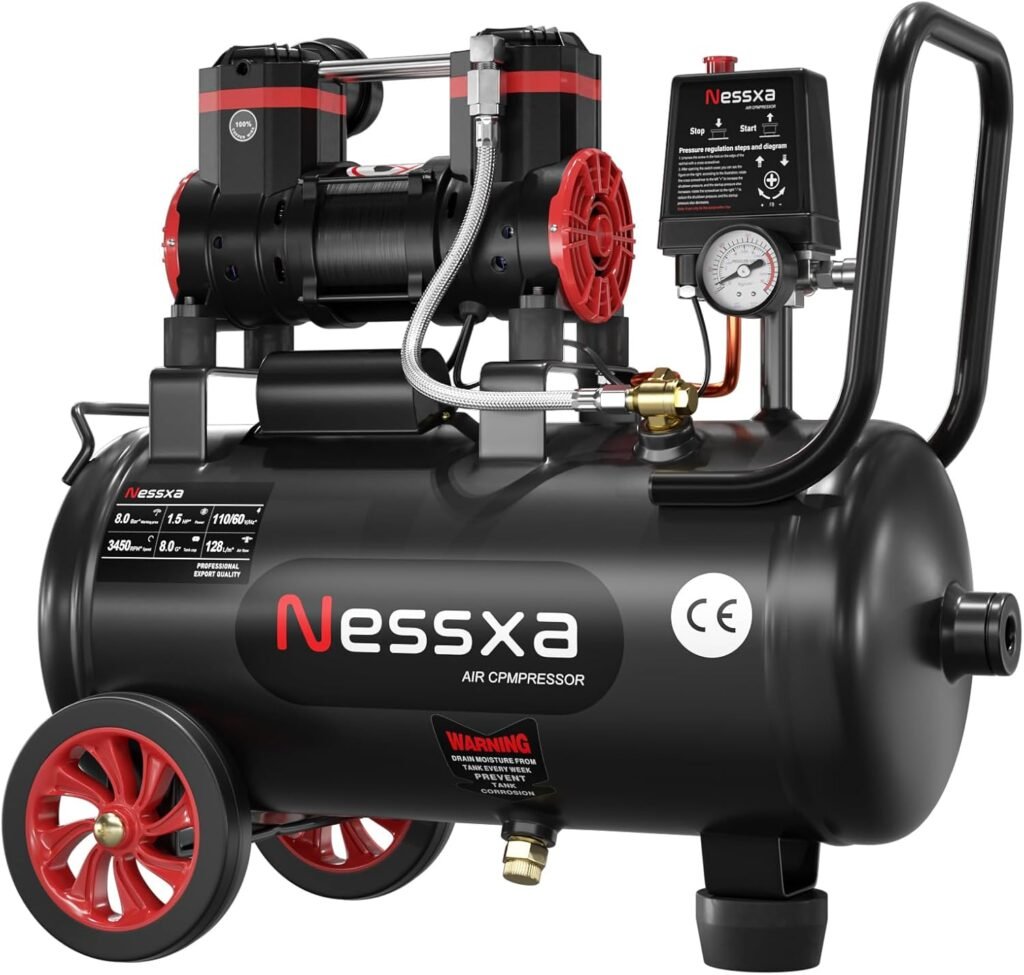

What Kind of Air Compressor Is This?
This 8 Gallon Ultra Quiet Air Compressor, 1.5HP 4.52 CFM, Max 115 PSI Oil-Free Air Compressor Tank for Car Repair, Spray Painting, Woodwork Nailing, 110V/60hz, 70dB is designed as a portable, low-maintenance option for home garages, small workshops, and DIY projects. We get a machine that aims to balance power, quiet operation, and convenience in one compact package.
This model focuses on practicality: an 8-gallon tank, an oil-free motor, and sound reduction features so we can work without overwhelming noise. It’s built for real-world tasks like car repair, paint jobs, and woodworking.
Key Specifications at a Glance
Sometimes it’s easiest to judge a tool by its numbers. This compressor brings together capacity, airflow, and quiet operation in a way that fits both beginners and experienced users.
Here’s a quick overview of the most important specs:
| Feature | Specification |
|---|---|
| Tank Capacity | 8 gallons |
| Motor Power | 1.5 HP (oil-free) |
| Air Delivery (CFM) | 4.52 CFM |
| Maximum Pressure | 115 PSI |
| Voltage / Frequency | 110V / 60Hz |
| Pump Speed | 3450 RPM |
| Noise Level | Up to 70 dB (ultra quiet) |
| Tank Fill Time | ~90 seconds from empty to max pressure |
| Tank Material | Q235B structural steel with anti-rust coating |
| Intake System | Single tube, double cylinder, silicone + braided steel pipe |
| Cooling System | Two large cooling fans |
| Protection Features | Overheat protection, auto shutoff, pressure relief |
| Restart Threshold | Restarts at ~70 PSI for ~33 seconds to rebuild pressure |
| Mobility Features | Handle + wheels, portable design |
We appreciate that the specs show a balance of performance, durability, and user-friendly operation. It’s not an industrial monster, but it’s definitely more capable than a basic entry-level unit.
Portability and Design
We often ask whether an air compressor is truly “portable” or just technically movable. This model makes a real effort to be easy to move and set up around a garage, driveway, or job site.
The 8-gallon tank offers enough air volume for many common tasks without making the unit too heavy to roll. Thanks to the handle and wheels, we can reposition it without straining our back or asking for help.
Tank Size and Mobility
An 8-gallon tank strikes a middle ground between tiny pancake compressors and large stationary shop units. We get more usable runtime between cycles compared to small models, but the footprint remains manageable.
The wheels and handle help us move the compressor from the garage to the driveway, or from one room to another, even if we’re dealing with tight spaces. For many of us doing DIY work, that portability is a big win.
Build Materials and Construction
This compressor uses Q235B structural steel and a multi-layer protective finish, including:
- An anti-rust and wear-resistant coating
- A plastic powder adhesion layer
- Seamless welding
We like that it isn’t just painted steel with a shiny look; the multiple layers and seamless welds contribute to both durability and safety. The tank is designed to withstand pressures up to 3.5 MPa (much higher than the working pressure), which adds peace of mind regarding leaks or structural failure.
Performance and Power
When we choose a compressor, we usually want to know: is it strong enough for our tools, and how fast does it work? This model gives us a 1.5 HP oil-free motor and a 4.52 CFM rating at up to 115 PSI, which is solid for a unit in this size and noise category.
We’re not looking at industrial-grade performance, but for home and light professional use, this power level handles many common jobs.
Airflow (CFM) and Pressure (PSI)
The combination of 4.52 CFM and a max pressure of 115 PSI makes this compressor suitable for:
- Impact wrenches (smaller to mid-size)
- Ratchets and other air tools
- Spray guns suited to this airflow range
- Brad nailers, finish nailers, and staplers
- Tire inflation and general cleaning with blow guns
We just need to keep in mind that for tools with very high continuous airflow requirements (like some large sanders or grinders), we may outrun the tank and motor over time. For short bursts and moderate loads, it performs well.
Fast Tank Fill Time
One of the standout features is the claimed ability to fill the 8-gallon tank from empty to max pressure in about 90 seconds. That’s a quick turnaround, which means we’re not standing around long waiting for pressure to build once we start our work.
In practice, this fast refill helps keep workflow smooth, especially if we’re frequently starting and stopping tools or doing projects that require repeated bursts of air.

Ultra Quiet Operation (70 dB)
Noise is a huge factor when using an air compressor around the house, in a small shop, or near neighbors. With a maximum noise level of around 70 dB, this compressor is significantly quieter than many traditional models.
We can liken 70 dB to the sound of a normal conversation or a household vacuum. It’s not silent, but it’s much more tolerable than the sharp, loud clatter we might associate with older compressors.
Dual Silencer System
This compressor uses two high-quality silencers, including:
- A thickened muffler
- Filter cotton elements
These components work together to reduce the harshness and volume of the noise. It’s designed so we can run the compressor indoors or in a garage without feeling overwhelmed or needing heavy-duty hearing protection in normal use.
We also appreciate that the filter cotton helps prevent fine dust from getting into the compressor, which is especially useful in woodworking shops or dusty garages.
Working Comfort and Environment
The quieter operation makes it easier to:
- Keep conversations going while we work
- Use the compressor during early mornings or evenings
- Operate in shared spaces without disturbing others too much
If we’ve avoided air compressors in the past purely because of the noise, this model’s sound profile is a meaningful upgrade.
Oil-Free Motor: Low Maintenance and Clean Air
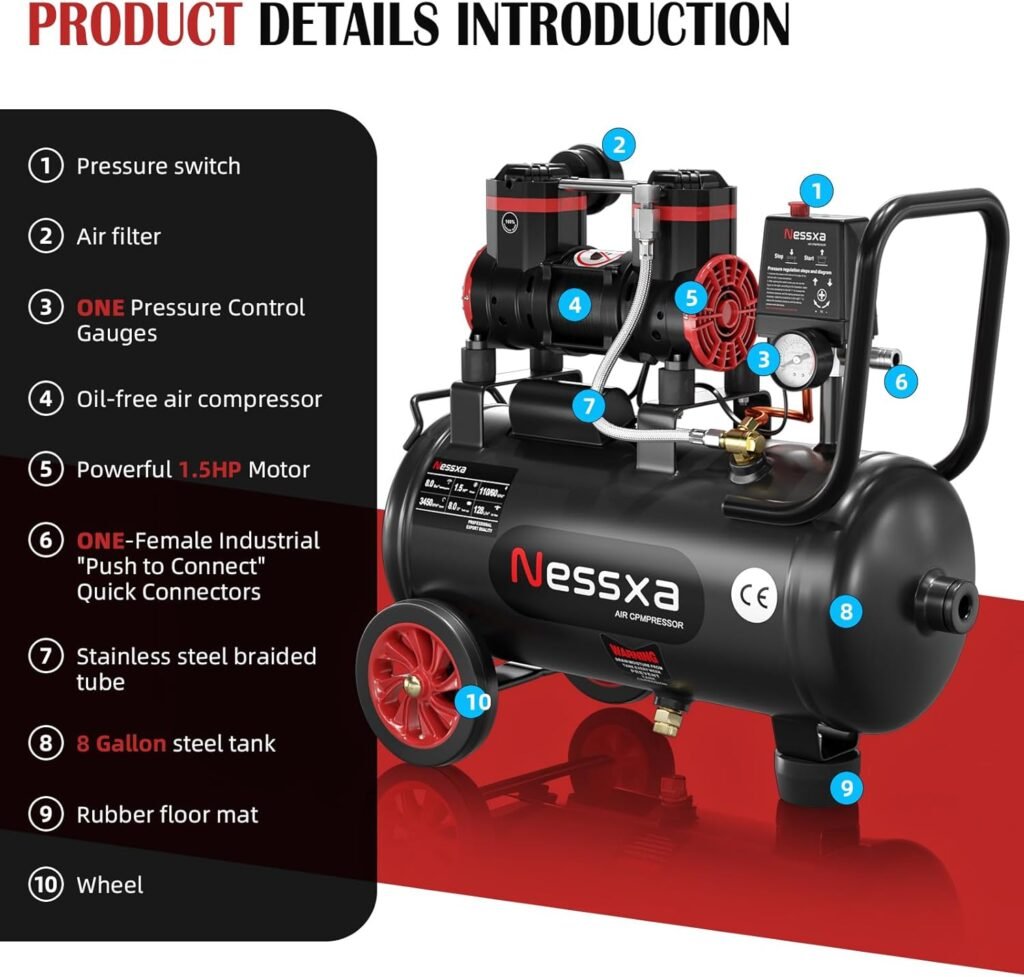
One big advantage of this unit is its oil-free design. Instead of dealing with oil changes, checking levels, and worrying about oil carryover in our air line, we get a cleaner, simpler ownership experience.
Oil-free compressors are also great when we care about clean air output, especially for painting or finishing work.
No Oil Changes Required
Because the motor and pump are oil-free, we:
- Don’t need to schedule or remember oil changes
- Avoid the mess of drained oil and disposal
- Reduce the risk of performance issues from neglected maintenance
For many of us who just want a reliable machine without a lot of upkeep, this is a big plus.
Clean Air for Painting and Finishing
For spray painting and some woodworking applications, oil-free air is very helpful. It reduces the risk of oil contamination that could cause:
- Fish-eye defects in paint
- Finish imperfections
- Streaks or blemishes on sensitive surfaces
While we may still want to use inline filters or dryers for professional-level finishing, starting with an oil-free compressor gives us a cleaner base to work from.
Efficient Intake System and Cooling
Under the hood, this compressor uses a single tube, double-cylinder intake structure and a specially designed intake pipe made from high-temperature silicone and stainless steel braided mesh.
These choices aren’t just for show; they help with performance and long-term reliability.
Single Tube, Double Cylinder Design
The double-cylinder intake system is meant to improve efficiency, allowing the compressor to deliver a good amount of air while keeping the fill time short.
By optimizing airflow and reducing resistance, the design helps:
- Build pressure faster
- Maintain more consistent performance
- Reduce stress on the motor during operation
This works in tandem with the 1.5 HP motor to create a balanced system for home and shop tasks.
High-Temperature Resistant Intake Pipe
The intake pipe uses a combination of:
- High-temperature-resistant silicone
- Stainless steel braided mesh
This provides:
- Protection from heat damage while the compressor runs
- Extra structural integrity to resist wear, bending, or cracking
- Resistance to corrosion, which matters in humid or demanding environments
We like that the unit doesn’t cut corners on such a critical part. A robust intake system means less chance of failure under regular use.
Safety Features and Automatic Protection
Any pressurized tank and electric motor combination needs solid safety features, and this compressor includes multiple layers of protection so we can feel comfortable using it regularly.
It’s not just about performance—it’s about preventing overheating, overpressure, and electrical issues.
Overheating Protection and Cooling Fans
The compressor uses two large cooling fans to help dissipate heat while the motor is running. Combined with the overall design of the unit, this reduces the chance of overheating during prolonged use.
If temperatures do get too high, the automatic overheating protection kicks in to shut the unit down to prevent damage. That helps extend the life of the motor and internal components and gives us an extra layer of reassurance.
Automatic Shutoff and Pressure Relief
This model is equipped to protect itself and us from unsafe pressure or current levels. Key behaviors include:
- Automatic shutoff when storage pressure or current is too high
- Pressure relief protection to avoid dangerous overpressure
- Automatic restart when internal pressure drops to around 70 PSI
When pressure falls below about 70 PSI, the motor restarts for roughly 33 seconds to build pressure back up. This allows more continuous tool use while still respecting safe operating thresholds.
Knowing that the compressor manages these conditions automatically means we can focus more on our work and less on constantly watching the gauges.
Durability and Longevity
We usually think of an air compressor as an investment, not a disposable gadget. This model’s combination of structural steel, rust-resistant layers, and strong welds is aimed at long-term use.
We want something that will stay reliable for years of weekend projects and daily tasks, and the construction details support that expectation.
Structural Strength and Pressure Ratings
The tank is made from Q235B structural steel and is rated to handle pressures up to 3.5 MPa, which is significantly higher than the compressor’s working pressure. This wide safety margin reduces the risk of tank failure or deformation over time.
Seamless welding further improves the structural integrity by minimizing weak points, which is critical for a pressurized vessel.
Protective Coatings and Corrosion Resistance
The additional anti-rust and wear-resistant layers help the compressor tank resist:
- Surface rust from moisture and humidity
- Chips and abrasions from regular handling
- General wear from a workshop or garage environment
We still want to avoid leaving it outside exposed to the elements, but the protective coatings give us more resilience in typical usage.
Real-World Uses: What Can We Actually Do With It?
Numbers and features are nice, but we also want to know what kind of real work this compressor can handle. The airflow, tank size, and quiet operation make it well-suited for a range of home and light professional applications.
We’ll look at some common scenarios where this compressor fits nicely.
Car Repair and Maintenance
For car work, this compressor is ready for a variety of tasks, such as:
- Inflating car, truck, bicycle, and motorcycle tires
- Powering small to medium impact wrenches for lug nuts and bolts
- Running air ratchets and other light pneumatic tools
- Cleaning engine bays with an air blow gun
We just need to make sure our tools’ air requirements match the 4.52 CFM output and 115 PSI capacity. For many typical automotive DIY tasks, it’s more than adequate.
Spray Painting and Finishing Work
With its oil-free design and relatively quiet operation, this compressor is a good candidate for:
- Small to medium paint projects (panels, doors, furniture)
- Touch-up spray jobs
- Applying clear coats or protective finishes (within its CFM limits)
We should pair it with spray guns and nozzles that are compatible with its air delivery specs. For large, continuous painting jobs (like entire houses), we may find this size of compressor cycling more often, but for targeted projects, it works well.
Woodworking and Nailing
In a woodworking context, we can use this compressor for:
- Brad nailers and finish nailers for trim, cabinets, and furniture
- Staplers for upholstery or paneling
- Occasionally running small air sanders (with breaks for the compressor to catch up)
The quiet operation is especially nice in a woodworking shop where we might be running multiple tools and want to keep the environment more comfortable.
Ease of Use and Day-to-Day Experience
An air compressor might have great specs, but if it’s tedious or confusing to use, we won’t enjoy working with it. This model is designed with convenience in mind, especially for those of us who like a plug-and-go experience.
We don’t have to constantly tinker with maintenance or deal with overwhelming noise, which makes it more likely we’ll use it regularly.
Setup and Operation
The basic workflow with this compressor is straightforward:
- Move it into position using the handle and wheels.
- Plug it into a suitable 110V outlet with proper capacity.
- Turn it on and let it build pressure to the set level (up to 115 PSI).
- Adjust the regulator for the desired tool pressure.
- Connect our air hose and tools, and begin working.
The quick 90-second fill time from empty also makes the initial startup feel snappy, so we’re ready to work without a long wait.
Adjusting Pressure for Different Tasks
The adjustable pressure range from 0 to 115 PSI gives us the flexibility to match air output to:
- Low-pressure tasks like some delicate nail gun operations
- Higher-pressure tasks like tire inflation or impact wrenches
By using the regulator and gauges, we can avoid overdriving tools or under-powering them, optimizing performance and safety for each job.
Noise, Comfort, and Working Environment
Noise is one of the most noticeable daily factors. The 70 dB rating and use of silencers mean this compressor fits better into shared or quieter environments.
We get an experience that’s less stressful and more compatible with home use, especially if we’re working in an attached garage or basement.
How Quiet Is 70 dB in Practice?
In practical terms, about 70 dB means:
- We can typically talk without shouting over the compressor
- The noise is present but not painfully loud or jarring
- It’s more of a background hum compared to the harsh clatter of older designs
For many of us, that’s the difference between using the compressor occasionally and feeling comfortable using it frequently.
Dust and Air Quality Considerations
The filter cotton used with the silencers not only helps with noise reduction but also helps keep fine dust from being drawn inside. This is a nice feature when:
- Our workshop is dusty from sanding and cutting
- We’re using the compressor in a multi-purpose garage
- We care about internal cleanliness and long-term performance
It doesn’t replace external filters or dryers in sensitive applications, but it does contribute to overall air and machine health.
Pros and Cons Overview
Even with a strong feature set, it’s helpful to balance what we gain with what we should be mindful of. This model has a lot going for it, with a few natural limitations given its class and size.
What We Like
We particularly appreciate:
- Quiet operation: Around 70 dB, much easier on the ears than many compressors.
- Oil-free motor: Less maintenance, cleaner air, no oil changes.
- Fast fill time: About 90 seconds to max pressure from empty.
- Solid build: Q235B steel, anti-rust coatings, and seamless welding.
- Safety features: Overheat protection, auto shutoff, pressure relief, dual cooling fans.
- Good versatility: Suitable for car repair, spray painting, nailing, and general shop tasks.
- Portable design: Handle and wheels make moving it around fairly easy.
What to Keep in Mind
On the other hand, we should keep these points in perspective:
- Not for heavy industrial tools: Very high CFM tools may outrun the tank and motor.
- Limited continuous duty for large projects: For very large, non-stop applications, we may need breaks while the compressor refills.
- 110V limitation: Great for home use, but not intended for high-voltage industrial installations.
For home, hobby, and light professional use, these trade-offs are usually acceptable, especially considering the quiet, oil-free design.
Who Is This Compressor Best For?
We find this compressor best suited for:
- Home mechanics who want a quieter, reliable unit for vehicle maintenance.
- DIY enthusiasts who work on woodworking, cabinet building, or home repairs.
- Hobbyists doing spray painting or finishing on furniture, crafts, or auto parts.
- Small workshops needing a compact, quieter compressor for intermittent tool use.
It’s ideal for those of us who want a balance between performance and convenience without stepping up to a large, loud, and less portable shop compressor.
How It Compares to Smaller and Larger Compressors
While we’re not directly comparing it to specific alternative models, we can think about how it fits into the broader compressor landscape.
Compared to very small units (like 1–3 gallon models):
- We get more air on tap, so tools can run longer without constant cycling.
- It’s more capable for automotive and spray tasks.
- It’s slightly larger and heavier but still very manageable due to the wheels and handle.
Compared to very large stationary compressors:
- It’s quieter and more suitable for home or small-shop setups.
- Much more portable and easy to relocate.
- Lower maximum output and capacity, so it’s not meant for heavy-duty industrial use.
This 8-gallon unit sits in a practical middle range, giving us enough power for serious DIY without overwhelming our space or ears.
Practical Tips for Getting the Most Out of It
Once we own this compressor, a few habits help keep it running at its best and longest, even though it’s designed to be low-maintenance.
We can think of these as good operating practices rather than heavy obligations.
Use Appropriate Tools and Hoses
Matching our tools to the compressor’s abilities helps avoid frustration. We should:
- Check tool CFM and PSI requirements
- Use quality air hoses with appropriate diameter
- Avoid pairing it with tools far above its airflow rating for continuous use
For most nailers, impact wrenches, and medium spray guns, it’ll work well as long as we stay within its intended performance envelope.
Maintain a Clean and Ventilated Area
Even with cooling fans and filter cotton, it’s wise to:
- Keep the compressor in a reasonably ventilated space
- Avoid blocking the fans or covering the unit
- Try to keep dust excessive buildup to a minimum
This helps the cooling system and internal components stay in better condition over time.
Drain Condensation Regularly
Like any compressor, moisture can build up inside the tank. Even with anti-rust coatings, it’s a good practice to:
- Periodically open the drain valve to let water escape
- Do this more often in humid climates or with heavy use
Regular draining helps prolong the tank’s life and keeps our air lines cleaner and drier.
Our Overall Impression
After looking through the features, performance numbers, design choices, and safety elements, we see this 8 Gallon Ultra Quiet Air Compressor as a thoughtfully built tool for serious DIY users and small workshops.
We gain:
- A quiet, 70 dB working noise level
- A low-maintenance oil-free motor
- Satisfying performance with 4.52 CFM and 115 PSI
- Strong safety and durability with Q235B steel and comprehensive protection features
- Convenient portability with wheels, handle, and an 8-gallon tank that hits a useful sweet spot
It’s not a high-end industrial powerhouse, but that’s not what it’s trying to be. Instead, it aims to give us reliable, quiet, and flexible performance for everyday tasks like car repairs, spray painting, and woodworking projects.
For many of us who want serious capability without industrial noise or maintenance headaches, this 8 Gallon Ultra Quiet Air Compressor, 1.5HP 4.52 CFM, Max 115 PSI Oil-Free Air Compressor Tank for Car Repair, Spray Painting, Woodwork Nailing, 110V/60hz, 70dB offers a compelling balance of strength, convenience, and comfort.

Disclosure: As an Amazon Associate, I earn from qualifying purchases.