?Are we ready to upgrade our shop with a heavy-duty air solution that can handle demanding tasks day after day?

Overview of the DeWalt DXCMV7518075 Two-Stage Cast Iron Industrial Air Compressor, 80-Gallon
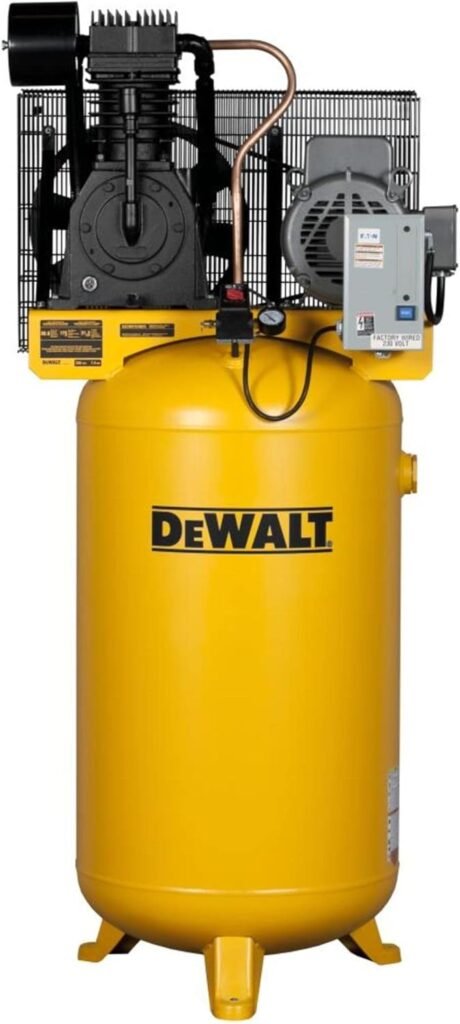
We find the DeWalt DXCMV7518075 Two-Stage Cast Iron Industrial Air Compressor, 80-Gallon to be a robust option aimed at professionals who need consistent, high-pressure air delivery. This model combines a sizable 80-gallon ASME-certified tank with a two-stage cast iron pump and a 7.5 running horsepower motor to suit automotive, industrial, and high-demand pneumatic tool applications.
Key Specifications
We like to lay out the headline numbers so we can quickly see whether this compressor meets our basic requirements. The details below capture the essential specs that affect performance, installation, and daily operation.
| Specification | Detail |
|---|---|
| Model | DeWalt DXCMV7518075 Two-Stage Cast Iron Industrial Air Compressor, 80-Gallon |
| Tank Size | 80-Gallon (ASME) |
| Maximum Pressure | 175 PSI |
| Air Delivery | 22.1 CFM @ 100 PSI; 21.2 CFM @ 175 PSI |
| Voltage | 230 Volts |
| Phase | Single Phase |
| Running Horsepower | 7.5 HP |
| Pump Type | Two-stage cast iron pump |
| Crankshaft | Automotive-type, one-piece, counter-balanced |
| Oil System | Built-in extra-capacity oil reservoir |
| Intended Use | Industrial/commercial, automotive, shop environments |
Performance and Power Output
We assess performance through airflow (CFM), pressure (PSI), and motor capability, because these determine which tools and processes we can run concurrently. The DeWalt DXCMV7518075 gives us a solid balance of sustained high pressure and respectable CFM that suits most demanding shop environments.
Air Delivery (CFM and PSI)
We regularly look at CFM at both working (100 PSI) and maximum pressures, and this unit supplies 22.1 CFM at 100 PSI and 21.2 CFM at 175 PSI. Those numbers mean we can run multiple air tools simultaneously—like impact wrenches, grinders, and spray guns—without dramatic pressure loss, provided our usage stays within those airflow ranges.
Motor and Power Requirements
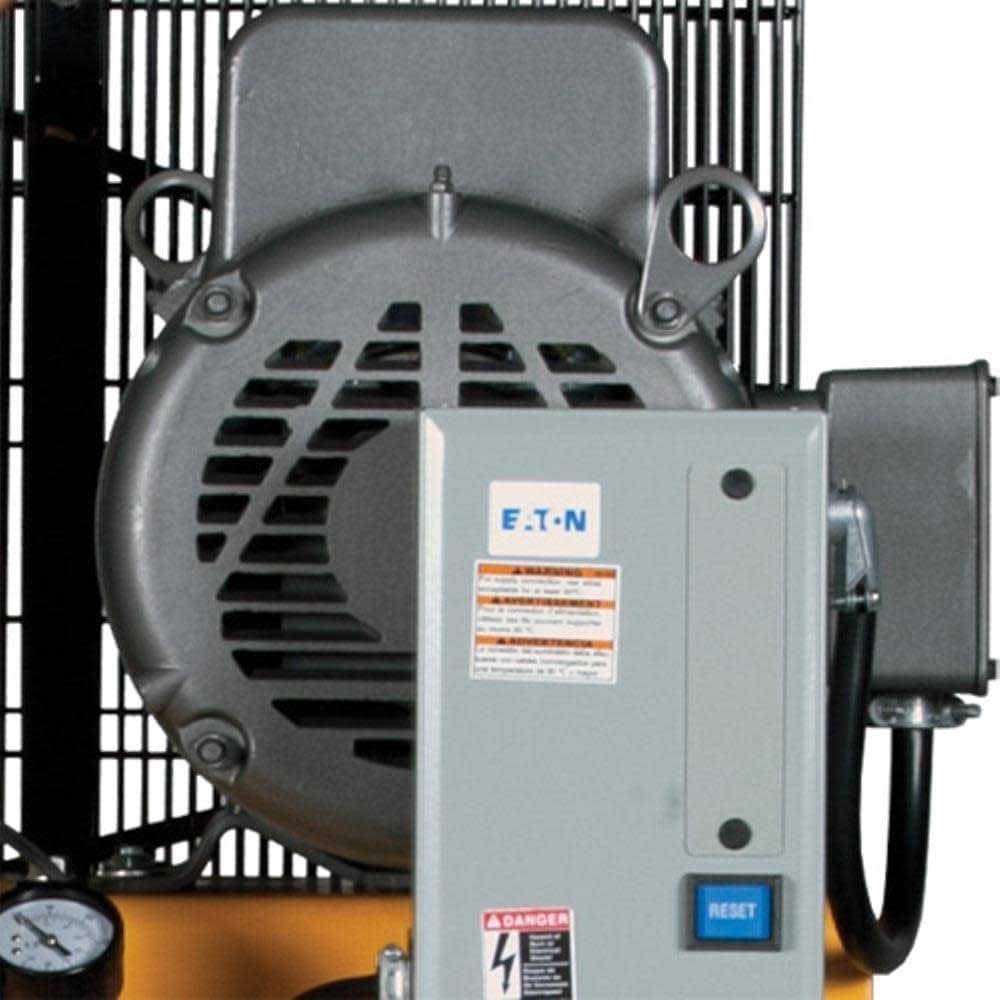
We appreciate the single-phase 230-volt design paired with a 7.5 running horsepower motor, which gives us industrial-grade performance on standard single-phase power in many shop settings. That said, we need to confirm our electrical service can accommodate the motor’s starting and running amps, and we often recommend a dedicated circuit and proper motor starter to ensure reliable operation.
Tank Capacity and Pressure
The 80-gallon ASME tank gives us the air storage to smooth out tool demand spikes and reduce pump cycling. With a maximum pressure rating of 175 PSI, we can use higher-pressure tools and systems that require greater reserve pressure. The large tank also helps reduce motor runtime in intermittent-use scenarios, improving longevity and reducing heat build-up.

Build Quality and Design
We prioritize durability when selecting a compressor for professional settings, and this DeWalt model leverages heavy cast-iron construction and an automotive-style crankshaft to deliver long-term reliability.
Cast Iron Two-Stage Pump
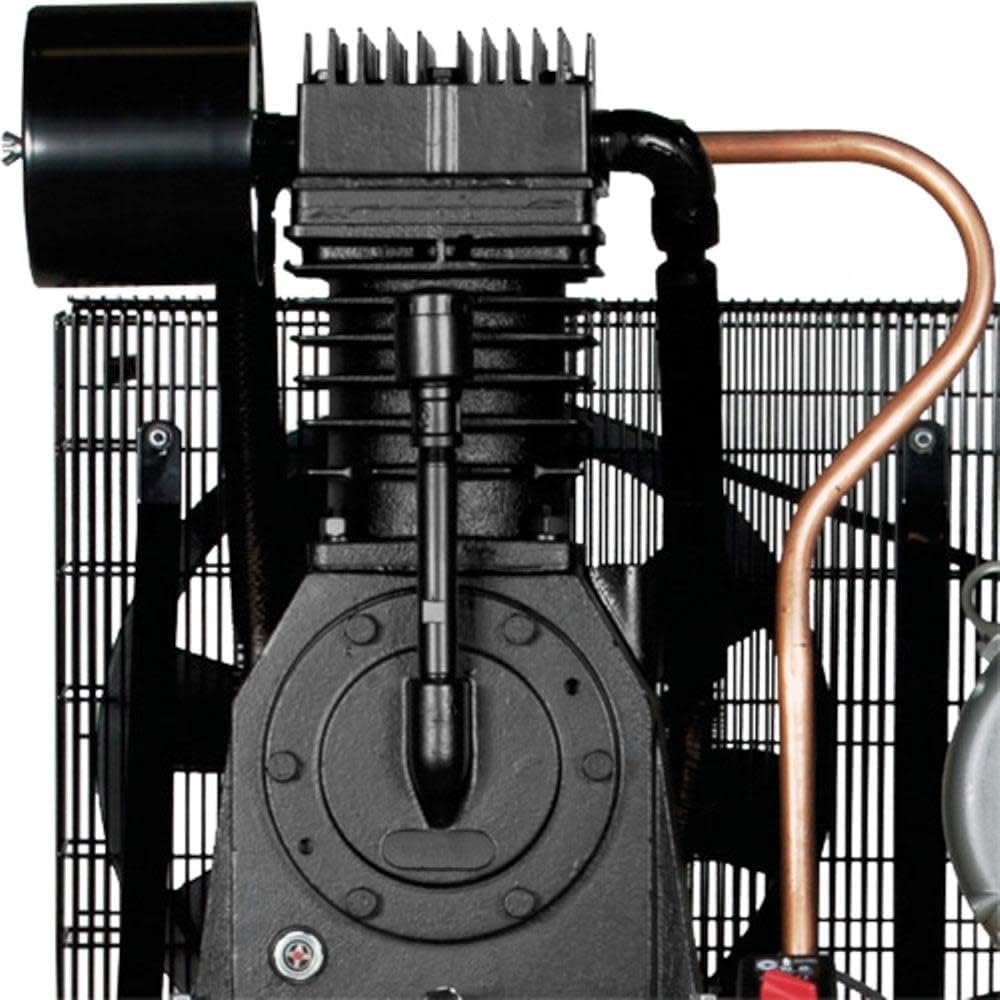
We value cast-iron pumps for their ruggedness and heat rejection. The two-stage design compresses air in two steps, which produces higher pressures and generally better efficiency compared to single-stage pumps. In real terms, that means less strain on the motor when we need elevated pressures and a pump that holds up under frequent use.
Crankshaft and Vibration Control
We like that the compressor uses an automotive-type, one-piece, counter-balanced crankshaft for smoother operation. The counter-balance reduces vibration and mechanical stress, which helps components wear more slowly and reduces noise transmission to the frame. For workshops where vibration can rattle fixtures or sensitive equipment, this matters.
Oil Reservoir and Cooling
We find the built-in extra-capacity oil reservoir to be a smart feature because it keeps oil temperatures lower during extended runs. Cooler oil preserves pump and bearing life, reduces thermal stress, and generally extends service intervals. The combination of cast iron mass and a larger oil supply supports longevity in continuous or heavy intermittent usage.
Installation and Setup
We approach installation with an eye for safety, performance, and convenience, and this unit has requirements that we need to plan for before delivery.
Electrical and Space Requirements
We recommend verifying that our facility has a 230V single-phase supply with appropriate breaker sizing and wiring for a 7.5 HP motor. We usually allocate clear floor space plus a few feet around the compressor for airflow, service access, and safety. The unit’s weight and size mean we should consider pallet jack access, forklift availability, or professional delivery placement.
Initial Run-In and Break-In Procedures
We advise that we follow DeWalt’s break-in guidelines—typically involving initial operation under light load, monitoring oil levels, and checking for leaks or unusual vibration. Running the compressor for a recommended break-in period stabilizes bearings and seals, and we make a note to re-torque fittings and recheck oil after the first few hours of operation.
Noise Levels and Vibration
We care about how loud a compressor is because shop comfort and communication matter, and vibration can affect nearby tools and fixtures. While the one-piece counter-balanced crankshaft reduces vibration, the cast-iron two-stage pump and 7.5 HP motor will still create noticeable noise during operation. We suggest placing the compressor in a separate equipment room, using rubber isolation pads, or adding acoustic panels to mitigate sound if noise is a concern.
Operational Experience: Real-World Use Cases
We like to map compressor specs to concrete tasks so we can assess whether a machine fits our typical workload. The airflow and maximum pressure make this DeWalt an excellent candidate for many professional scenarios.
Automotive and Tire Shops
We find the unit’s combination of high PSI and steady CFM ideal for auto shops where large-impact tools, sanders, and air-powered lifts run frequently. The 175 PSI max gives us extra reserve for high-pressure pneumatic tools, while the 80-gallon tank helps when multiple bays demand air.
Woodworking and Spray Painting
We notice that painters and woodworkers benefit from stable pressure for consistent finishes. With 22.1 CFM at 100 PSI, this compressor is capable of supporting paint booths and HVLP spray systems with proper regulation and filtration, resulting in smooth, professional finishes when we pair it with the right air treatment equipment.
Industrial Applications
For light to medium industrial use—such as small manufacturing cells, assembly stations, and general shop operations—we observe the DeWalt’s durability and oil cooling make it capable of extended shift use. Its two-stage pump provides better thermal characteristics for industrial demands compared to many single-stage alternatives.
Intermittent vs Continuous Use
We prefer compressors that can handle our intended duty cycle. This model is suited for heavy intermittent use and can tolerate extended run periods thanks to its oil capacity and cast-iron construction. For true continuous 24/7 production, we would still evaluate duty cycle specifications and consider redundant or industrial-line compressors for maximum uptime.
Maintenance and Serviceability
We expect to perform routine checks to keep any compressor running well, and this unit’s straightforward design makes typical maintenance tasks manageable for shop technicians.
Routine Maintenance Tasks
We perform regular oil checks and changes, belt inspections (if belt-driven), drain the tank to remove condensate, and inspect safety valves and filters. The larger oil reservoir reduces temperature-related servicing frequency, but we still follow a schedule to preserve pump life and performance.
Common Wear Items and Longevity
We watch for wear items such as belts, gaskets, valves, and seals. Bearings and connecting rod components can wear over thousands of hours, so we monitor for increased noise or vibration. With proper care—clean air intake, periodic oil changes, and timely filter replacement—we expect many years of service from the cast-iron pump.
Troubleshooting Tips
We recommend simple steps like checking power supply and fuses for electrical issues, verifying oil level and pressure switch settings for pump issues, and draining moisture from the tank to prevent rust. If compression falls off, we look at intake filters, unloader valves, and potential head gasket or valve problems—areas where a trained technician may need to intervene.
Safety Features and Best Practices
We keep safety at the top of our checklist, and using a pressurized system demands respect for tank integrity and pressure controls. The ASME-certified tank is a critical safety element, and we also implement routine inspections for corrosion, leaks, and pressure relief valve operation. We always secure the compressor, avoid bypassing safety devices, and follow lockout/tagout procedures during service to protect our team.
Pros and Cons
We weigh strengths and weaknesses to help decide whether this model fits our needs. The DeWalt DXCMV7518075 offers industrial-grade characteristics, but it isn’t perfect for every scenario.
Pros:
- Durable two-stage cast iron pump built for longevity in professional environments.
- High maximum pressure (175 PSI) and good CFM (22.1 at 100 PSI), enabling multiple tool use and higher-pressure applications.
- Large 80-gallon ASME tank reduces cycling and provides steady reserve air.
- One-piece counter-balanced crankshaft for smoother operation and reduced vibration.
- Extra-capacity oil reservoir for improved cooling and extended pump life.
- Single-phase 230V compatibility suits many shop power setups.
Cons:
- Size and weight require planning for delivery, placement, and possibly floor reinforcement.
- Noise level can be high relative to quieter, enclosed or belt-driven designs, so sound mitigation may be needed.
- Starting current and electrical requirements may necessitate dedicated circuits and proper motor starter equipment.
- Not as readily portable as smaller compressors; best suited for stationary shop installation.
Comparing to Competitors
We often compare similar compressors to see whether brand and features align with our budget and requirements. There are other 80-gallon two-stage units from established brands, but differences in pump build, cooling, accessories, warranty, and local service availability can influence our choice.
Similar 80-Gallon Industrial Compressors
We find that many competitors offer similar CFM and pressure numbers, but some use cast-iron pumps with different crank configurations or larger motors for slightly more airflow. Others may be belt-driven versus direct-drive, affecting maintenance and efficiency. We consider factors like service network, warranty, and availability of replacement parts when comparing.
When to Choose DeWalt Over Others
We lean toward the DeWalt DXCMV7518075 if we prioritize a rugged cast-iron pump, a reputable brand with broad aftermarket availability, and a balance of CFM and PSI that suits mixed shop tasks. When we need reliable performance in automotive or industrial settings and prefer single-phase operation on 230V, this model makes strong sense.
Cost of Ownership and Value Considerations
We think about initial purchase price plus long-term operating costs. The robust build of this DeWalt model tends to justify higher upfront cost by lowering downtime and service frequency over time. Fueling this equation are parts costs, oil consumption, expected lifetime, and energy usage based on our duty cycle. We advise factoring in installation, filtration/treatment accessories, and possible noise mitigation in the total project budget.
Accessories and Add-Ons We Recommend
We like to pair compressors with a few accessories to get the best performance and protect tools. Recommended items include:
- Industrial air dryer or refrigerated dryer to reduce moisture in the air line.
- High-quality filtration and particulate removal to protect tools and finishes.
- Pressure regulators near point-of-use for consistent tool performance.
- Isolation pads or a dedicated compressor room to reduce noise and vibration.
- Automatic condensate drains for the tank to prevent rust and reduce maintenance.
Environmental and Energy Considerations
We care about energy use and emissions where relevant. The 7.5 HP motor will draw significant power during runs, and motor efficiency and duty cycle govern energy cost. We recommend scheduling compressor usage to smooth peaks and using the tank’s storage capability to reduce frequent starts, thereby lowering overall energy use and mechanical stress.
Warranty and Support
We value reliable manufacturer support and warranty terms because they affect our maintenance planning and total cost of ownership. DeWalt typically provides solid support and parts availability through authorized outlets, but we advise verifying current warranty specifics and service access at the time of purchase to ensure we have timely replacement parts and authorized service centers.
Practical Tips for Shop Integration
We find these practical steps helpful for integrating the compressor into our workflow:
- Plan plumbing layout to minimize pressure drop; use adequately sized pipe and minimize long runs.
- Install main-line filters and moisture traps near sensitive equipment.
- Use separate pressure regulators for different workstations to tailor output pressures.
- Mount pressure gauges and drain valves in accessible locations.
- Train staff on basic checks: oil level, belt tension (if applicable), tank drainage, and emergency shutdown.
Frequently Asked Questions
We compile common questions we encounter so we can answer practical concerns about the unit.
Q: Is the 230V single-phase motor compatible with our shop power? A: We generally find that many shops have 230V single-phase available. We recommend verifying breaker size, wiring gauge, and consulting an electrician for starting current considerations.
Q: Can we run multiple air tools at once? A: Yes—within the compressor’s CFM limits. With 22.1 CFM at 100 PSI, we can run several tools concurrently, but peak demand tools should be monitored to avoid pressure drops.
Q: How often should we change the oil? A: We typically change oil according to the manual, often after the initial break-in period and at scheduled intervals thereafter depending on hours and duty cycle. For heavy use, more frequent checks are prudent.
Q: Is the tank ASME-certified? A: Yes, the 80-gallon tank is ASME-certified, which is important for safety and compliance in many professional settings.
Q: How loud is the compressor? A: While the crankshaft and counter-balancing reduce vibration, the compressor will produce noticeable noise due to the two-stage pump and motor. We recommend isolating or soundproofing areas if noise is an issue.
Q: Do we need a refrigerated dryer? A: If we are using the compressor for painting or sensitive pneumatic equipment, a refrigerated dryer or proper filtration is highly recommended to remove moisture and contaminants.
Q: What kind of maintenance schedule should we follow? A: We follow a schedule of daily checks (draining condensate, checking for leaks), weekly or monthly checks (oil level, filters), and periodic service (oil changes, valve inspection) based on hours of operation.
Q: Is professional installation required? A: While some shops with in-house electricians and rigging can handle installation, we often recommend professional installation to ensure proper electrical supply and safe placement.
Troubleshooting Common Issues
We share simple diagnostic steps that help us and our team handle problems quickly and reduce downtime.
- Low Pressure or Poor Air Delivery: Check for leaks in the supply line, clogged intake filters, bad check valves, or worn pump valves.
- Excessive Noise or Vibration: Verify mounting, inspect crankshaft alignment, and check for loose components; consider isolation pads.
- Motor Not Starting: Check electrical supply, fuses, thermal overloads, and starter contacts.
- Oil Contamination or High Temperatures: Inspect oil level and quality, clean intake filter, and verify that the oil reservoir is not overfilled or low.
- Tank Corrosion: Ensure regular draining of condensate and inspect internal tank condition during service intervals.
When This Compressor Might Not Be Right for Us
We recognize situations where an alternative might be better. If we need ultra-quiet operation for client-facing spaces, a quieter rotary-screw system or a sound-attenuated compressor may be preferable. If our operation is continuous 24/7 with extremely high CFM needs, a larger industrial rotary-screw compressor with redundancy might provide a lower cost per CFM and better uptime.
Final Recommendation
We conclude that the DeWalt DXCMV7518075 Two-Stage Cast Iron Industrial Air Compressor, 80-Gallon is a compelling choice for professional shops that need reliable high pressure, solid airflow, and long-term durability. Its cast-iron construction, two-stage pump, and generous oil capacity align well with heavy intermittent and many industrial use cases. We recommend this model when we require a robust stationary compressor that will support automotive work, painting, and medium-duty industrial applications—provided we plan for appropriate space, electrical service, and noise mitigation.

Disclosure: As an Amazon Associate, I earn from qualifying purchases.