?Have we found a stationary electric compressor that balances power, durability, and workshop practicality for heavier-duty tasks?
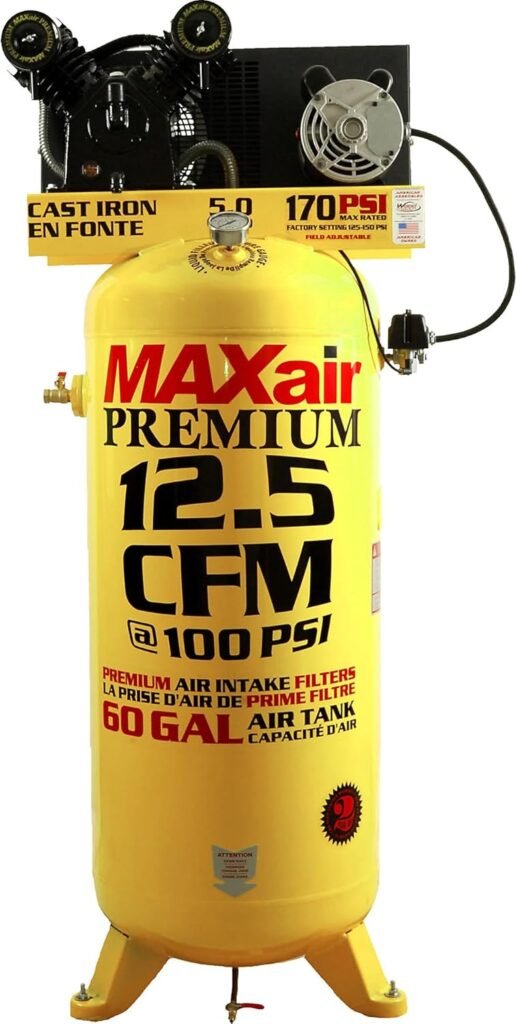

Our Overall Impression of the Maxair C4160V1-MAP 60-Gallon 170 PSI Max Electric Stationary Compressor
We think the Maxair C4160V1-MAP 60-Gallon 170 PSI Max Electric Stationary Compressor is positioned as a rugged option for small shops, garages, and commercial environments. From first impressions, the machine combines substantial motor options with an industrial tank and several practical design choices meant to keep operation smoother and temperatures lower.
We find the mix of features aimed at reliability — removable cylinders, thermally protected motors, and efficient pulley-fan heat removal — to be meaningful for users who run long cycles or use air tools continually. Below, we break the unit down so we can assess whether it fits our needs.
Key Specifications at a Glance
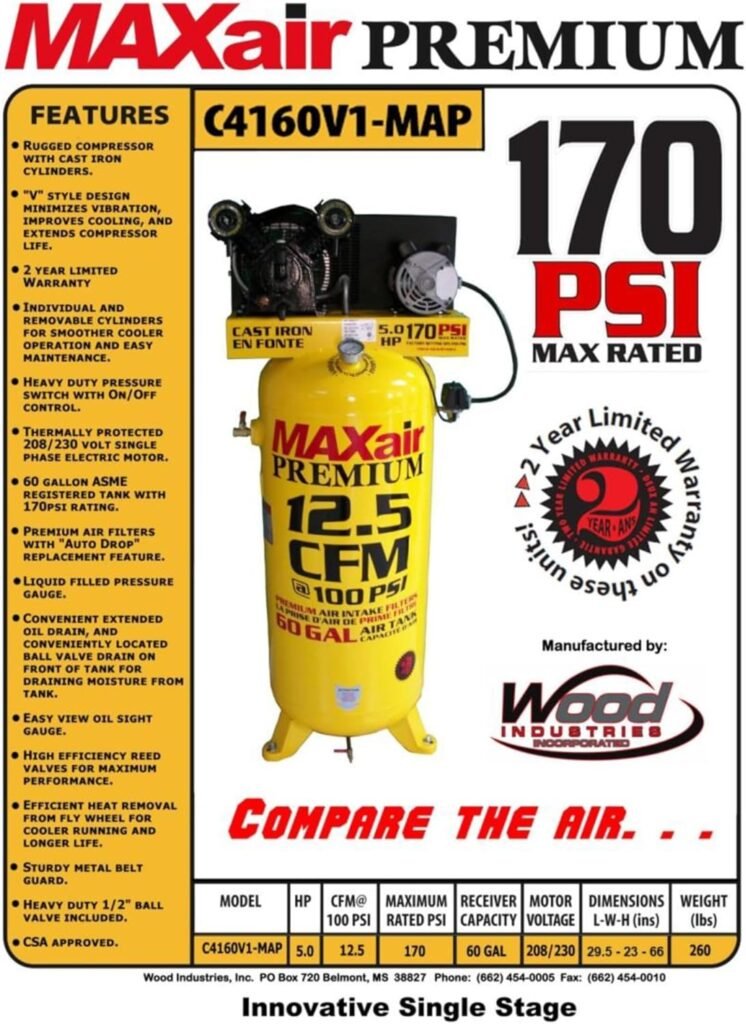
We like having a concise specs summary when evaluating gear, so we put together the most relevant items so we can compare quickly and avoid digging through long product listings.
| Specification | Details |
|---|---|
| Product Name | Maxair C4160V1-MAP 60-Gallon 170 PSI Max Electric Stationary Compressor |
| Motor Options | Thermally protected 5 HP and 7.5 HP; 208/230 V electric motors |
| Cylinders | Individual and removable cylinders for smoother, cooler operation |
| Pressure Switch | Heavy duty on/off control |
| Tank Capacity | 60-gallon ASME registered (also available in 80-gallon variant) |
| Tank Rating | 150 PSIG (per product details) |
| Max Pressure (marketing) | 170 PSI Max (per model name) |
| Cooling | Efficient heat removal via pulley-fan |
| Typical Use | Small commercial shops, professional garages, and heavy DIY |
| Certifications | ASME registered tanks (60 and 80-gallon options) |
We feel this table gives us a quick baseline when comparing to other compressors or matching the unit to specific tools.
Design and Build Quality
We appreciate a compressor that looks like it’s built to last, and the Maxair C4160V1-MAP has a straightforward industrial aesthetic. The frame, belt guard, and tank components feel robust enough for shop environments.
We note the removable cylinders as a thoughtful design choice that allows for easier servicing and potentially longer life, because we can replace only what needs attention rather than the entire head assembly.
Cylinders and Pump Design
We found that the individual and removable cylinder design aims to provide smoother operation and cooler running temperatures. This modular approach can simplify maintenance and part replacement.
We also like that removable cylinders reduce downtime for repairs, which matters when our shop schedule is tight. Cooler operation generally translates to longer component life, and this configuration supports that.
Pulley-Fan Cooling
The pulley-fan arrangement for heat removal is intended to move air across hot spots and carry heat away from the pump and belts. We see this as beneficial for extended runs and continuous use.
In practice, efficient heat removal can lower the risk of thermal overload and improve reliability, especially with heavy-duty motor options that produce significant heat under load.

Motor Options and Electrical Requirements
We’re keen on the motor specs because they determine whether the compressor can meet CFM demands for our tools. The Maxair offers thermally protected 5 HP and 7.5 HP motors designed for 208/230-volt service.
We recommend confirming our facility’s electrical capacity before purchase, as these motors require a proper supply and dedicated circuits. Miswiring or an undersized circuit can lead to nuisance tripping or damage.
Thermal Protection
Both motor options are thermally protected, which helps prevent overheating and motor damage by shutting the motor down if temperatures get too high. We value this safety layer because it prevents long-term damage from abusive or sustained operation.
We also recognize that thermal protection doesn’t replace proper duty cycling and ventilation; it’s a safeguard rather than a cure for poor installation or usage.
Voltage and Circuit Needs
Because the motors are 208/230V, we must verify that our workspace has compatible service and that we install the correct breaker and wiring. A professional electrician can size wiring and breakers based on local code and the motor’s full-load current.
We recommend planning for the higher startup current typical of large motors — the inrush can be several times running current — and considering soft-start options if our facility has limited service.
Tank Capacities, Pressure Ratings, and Safety
We notice that the model name emphasizes a 60-gallon tank and a 170 PSI maximum, while product details mention 60- and 80-gallon ASME registered tanks rated at 150 PSIG. We suggest checking the manufacturer’s manual and tank nameplate for exact ratings and safe operating pressures.
We always prefer to follow tank nameplate ratings and ASME information closely, since tanks are safety-critical components and are regulated.
Tank Size Impact
A 60-gallon ASME tank stores appreciable volume, smoothing pressure drops during intermittent high-demand tool use and allowing longer runtimes between motor cycles. The 80-gallon option increases reserve air for heavier or longer-lasting tasks.
We use larger tanks when our tools demand sustained CFM or when multiple users may draw air simultaneously.
Pressure Ratings and Clarification
There’s sometimes marketing language that references higher max pressures, while the tank’s ASME rating may specify a lower safe limit (for example, 150 PSIG). We advise verifying the maximum allowable working pressure on the tank’s plate and following that rating strictly.
If the compressor is set to operate near a higher pressure than the tank’s rated pressure, we must confirm whether the pump, regulator, and tank are matched and certified for that operating point.
Pressure Switch and Controls
We find the heavy-duty pressure switch to be a practical feature for reliable on/off control. A robust switch reduces the chance of failure under repeated cycling.
We also like when controls are accessible and clearly labeled so we can set desired cut-in and cut-out pressures and troubleshoot easily if needed.
Control Accessibility
The placement and durability of the pressure switch can influence maintainability. We appreciate controls we can reach without disassembling protectors or reaching into cramped spaces.
When we install the unit, we prefer to locate the pressure switch and drain valves where we can access them without moving the compressor, because routine tasks like draining condensate are frequent.
Accessories and Gauges
We recommend pairing the unit with a quality regulator and gauges to precisely match tool pressure demands. We also prefer having an inline safety valve and secondary regulators for specialized applications.
A gauge set that shows both tank pressure and regulated outlet pressure helps when we’re tuning tools for optimal performance.
Performance: CFM, Pressure, and Duty Cycle
Performance for us means more than peak pressure — it’s how much air the compressor can deliver (CFM) at the pressures our tools need and for how long. Motor size, pump design, and tank capacity all contribute.
We should determine the CFM requirements of our tools and ensure the compressor can meet peak and continuous needs. While the motor sizes suggest strong capacity, exact CFM ratings at given PSI should be verified in the spec sheet or manual.
Typical Use Scenarios
We see this compressor fitting well for automotive shops running impact wrenches, spray booths that need sustained airflow, and industrial tools like sanders and grinders. For occasional home DIY, the unit is overprovisioned, but for commercially-minded users, it’s appropriate.
We recommend listing our commonly used tools with their CFM and PSI requirements, then matching those numbers to the compressor’s rated output under load.
Duty Cycle Considerations
Larger motors and ASME tanks favor higher duty cycles, but no air compressor is truly continuous duty without consideration of cooling and wear. We recommend intermittent usage with monitored rest periods when running heavy loads for extended periods.
We also suggest keeping ambient temperatures and ventilation in mind to avoid overheating.
Noise, Vibration, and Workplace Comfort
Compressors this size are rarely whisper-quiet, but the design and installation choices can attenuate noise and vibration. We expect moderate to high noise during run cycles and recommend installing the unit in a dedicated room or behind a barrier if noise control is essential.
We also like anti-vibration mounts or placing the compressor on a concrete slab to reduce movement and noise transmission.
Vibration Management
We prefer using vibration isolators or rubber mounts under the compressor feet to reduce resonance and wear. Proper belt tension and periodic alignment checks also reduce vibration.
When we move a compressor, we check for loose fasteners and worn belts because vibrating components can accelerate failure.
Hearing Safety
We always advise using hearing protection around compressors of this size during operation. If the compressor is in a shared workspace, providing ear protection or sound-dampening measures benefits everyone.
Maintenance and Serviceability
We value equipment that’s easy to maintain, and the Maxair’s removable cylinders simplify access to pump internals and valves. Routine maintenance like oil changes, belt inspection, and valve adjustments should be straightforward.
We also recommend creating a maintenance schedule for oil changes, intake filter swaps, belt tension checks, and tank inspections to keep the compressor reliable.
Routine Tasks We Perform
- Check and change compressor oil at recommended intervals.
- Inspect and replace intake filters when dirty.
- Drain condensate from the tank daily or per usage frequency.
- Check and adjust belt tension and alignment.
- Test the safety valve periodically for proper operation.
We find performing these tasks regularly prevents premature failures and keeps output consistent.
Parts Availability and Support
We tend to favor brands with easily available replacement parts. Removable cylinder heads and standard belt sizes make sourcing parts simpler. We recommend confirming local distributor support or online availability for gaskets, valves, and belts before committing.
When buying, we often ask about warranty coverage and how warranty repairs are handled locally.
Installation and Setup Tips
A correct installation reduces noise, improves safety, and extends lifespan. We recommend placing the compressor on level, solid ground (preferably concrete) and allowing adequate clearance for ventilation and service.
We also recommend following local electrical codes and using a qualified electrician for hookups, especially given the 208/230V motor requirement.
Positioning and Ventilation
Place the compressor where airflow is not blocked and where expelled heat can dissipate. We keep it away from flammable materials and out of direct sunlight where practical.
We also plan for clearances for the belts, motor, and cylinders so we can perform maintenance without moving the entire machine.
Plumbing and Air Distribution
We prefer using suitably sized piping and fittings to minimize pressure drop between the compressor and our tools. Consider an air receiver or secondary separator for sensitive tools like paint guns.
Installing a filter-regulator-lubricator (FRL) near the point of use helps control moisture and contaminants for pneumatic tools.
Safety Features and Best Practices
We always view the tank’s ASME registration and the thermal protection on motors as critical safety features. We recommend following tank inspection rules and never exceeding the pressure limits stamped on the tank.
We also advise installing a pressure relief valve and ensuring our pressure switch and safety systems are tested regularly.
Tank Inspections and Legal Compliance
ASME tanks have inspection requirements and protocols. We recommend checking local regulations for periodic inspections and ensuring the tank’s certification remains valid.
When in doubt, contact the manufacturer or a certified inspector for clarifications about recertifications or required inspections.
Operational Safety Steps
- Never tamper with or modify safety valves.
- Drain condensate regularly to reduce corrosion inside the tank.
- Ensure electrical wiring and grounding meet local code.
- Allow the compressor to cool before servicing.
We treat safety as an ongoing process, not a one-time checklist.
Applications and Use Cases
We find the Maxair C4160V1-MAP suited for a broad range of heavier-duty applications. It’s particularly relevant where higher CFM and steady pressure are required.
We outline common use cases below to help match the unit to our needs.
Automotive and Body Shops
This compressor supports impact tools, air ratchets, paint sprayers (when paired with appropriate filtration), and pneumatic lifts. The sizable tank helps smooth pressure during intermittent high-flow demands.
We recommend pairing with an air dryer or additional filtration for paint or finishing work to protect finishes.
Woodworking and Industrial Shops
Running sanders, nail guns, and pneumatic presses benefits from the steady delivery provided by the tank and motor combos. We prefer the 80-gallon variant for multi-station setups.
For shops with multiple users, the larger tank option reduces pressure drops and keeps workflows efficient.
Agriculture and General Maintenance
For operating shop tools, inflating tires, powering small pneumatic devices, or running spray equipment, this compressor offers sufficient capacity. We find that it’s overbuilt for casual home use but ideal for farm or garage setups with frequent demands.
We encourage adding moisture control if the compressor will be used for spraying or sensitive pneumatic tools.
Pros and Cons
We like to balance our recommendations with honest trade-offs so we can make informed choices.
Pros
- Robust motor options (5 HP and 7.5 HP) for heavy-duty use.
- Individual and removable cylinders for easier servicing and cooler operation.
- ASME registered tanks add a level of safety and compliance.
- Pulley-fan cooling improves heat rejection and operational longevity.
- Heavy-duty pressure switch for reliable control during frequent cycles.
We think these pros make the compressor a strong candidate for professional and serious hobbyist environments.
Cons
- Size and noise levels may necessitate a dedicated room or sound attenuation.
- Electrical requirements (208/230V) mean we may need electrical upgrades.
- Clarification needed regarding the tank’s working pressure vs. the model’s “170 PSI Max” label.
- Larger footprint and weight make relocation more complex.
We balance these cons against our intended use and shop setup before deciding.
How It Compares to Similar Models
When we compare to similar stationary electric compressors, the Maxair competes on motor power and tank options. Some competing models emphasize quieter operation or integrated dryers, so we choose based on priorities like noise, footprint, and included accessories.
We recommend comparing CFM at specific PSI ratings, warranty terms, and included features rather than relying solely on motor horsepower or tank size.
Competing Considerations
- Noise attenuation vs. raw power: quieter compressors often cost more or use different pump designs.
- Integrated filtration or dryers: some units include these, which saves on add-on purchases.
- Warranty and local service: stronger local support can offset small performance differences.
We weigh these trade-offs based on our shop’s workflow and budget.
Accessories, Filters, and Upgrades We Recommend
We like to accessorize our compressor thoughtfully to maximize tool life and performance. The right upgrades can make the difference between a good compressor and a great system.
We typically add the following:
- Aftercooler or air dryer for condensation control.
- High-quality filters and separators for paint or precision applications.
- A secondary receiver or buffer tank for long runs or multiple workstations.
- Soft-start kit if startup current is an issue for our electrical system.
These additions help us tailor the compressor to our specific tasks.
Buying Considerations and Final Checklist
Before we commit to purchasing, we run through a checklist to avoid surprises. Here’s what we consider crucial.
- Confirm CFM ratings at the PSI our tools need.
- Verify tank nameplate pressure rating and any discrepancy with the model name.
- Ensure our shop has proper electrical service for 208/230V motors.
- Check local ASME inspection and recertification requirements.
- Confirm parts availability, warranty details, and support channels.
We find running through this list removes guesswork and sets expectations correctly.
Frequently Asked Questions (FAQs)
We collect common questions we hear and provide concise answers to help others decide.
Q: Is the 170 PSI in the name the same as the tank rating? A: Not always. The product name can reference maximum pump pressure while the ASME tank plate specifies the working pressure (often 150 PSIG). We recommend verifying the tank plate and manufacturer documentation for the true limits.
Q: Can we run multiple tools at once? A: Yes, depending on total CFM demand and the motor/pump rating. Larger tanks and 7.5 HP motors better support multiple simultaneous users.
Q: How often do we need to drain the tank? A: Daily draining is best practice in humid environments or after heavy use to prevent internal corrosion and moisture-related issues.
Q: Do we need special wiring? A: Yes. The motors are 208/230V and require appropriately sized wiring and dedicated breakers. Consult a licensed electrician for proper installation.
Q: Is oil lubrication required? A: Most pumps of this class are oil-lubricated; we should follow the manufacturer’s maintenance schedule for oil checks and changes.
Final Thoughts and Recommendation
We believe the Maxair C4160V1-MAP 60-Gallon 170 PSI Max Electric Stationary Compressor presents a solid option for workshops and professional settings that need reliable, high-capacity air delivery. The combination of thermally protected 5 HP and 7.5 HP motor options, removable cylinders, and ASME-registered tanks indicates a unit designed for heavy or consistent use.
We advise verifying the tank’s rated pressure and ensuring our electrical infrastructure supports the chosen motor. If our application requires steady high CFM output and we can accommodate the footprint and sound level, this compressor is a strong contender.
We recommend getting the full specification sheet from the manufacturer or dealer prior to purchase and confirming local service and parts availability so we can keep the compressor operating at peak reliability for years.

Disclosure: As an Amazon Associate, I earn from qualifying purchases.