Are we ready to see whether the California Air Tools 60040DCADC 4.0 HP Ultra Quiet and Oil-Free Air Compressor is the right choice for our shop or garage?

California Air Tools 60040DCADC — Quick Overview
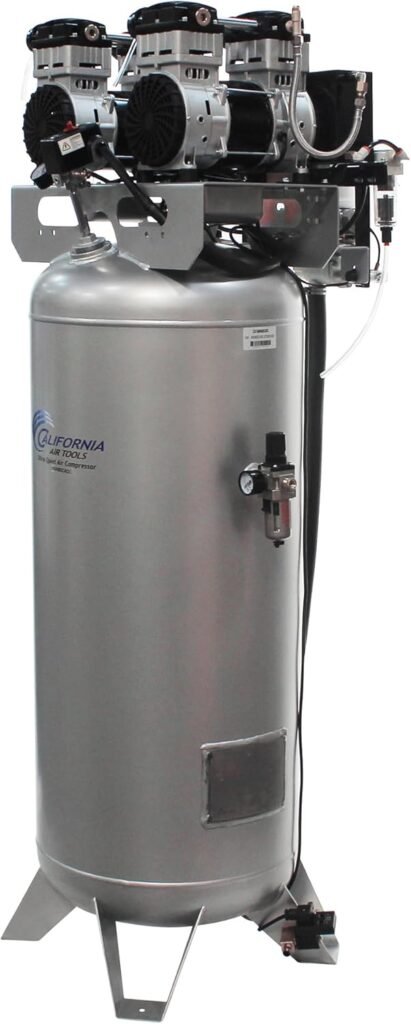
We want a clear snapshot before committing to details, so here is a succinct overview of what this unit offers. The California Air Tools 60040DCADC combines a 60-gallon ASME-rated steel tank with twin 2.0 HP motors, oil-free dual piston pumping, and a built-in 98% air dryer and aftercooler — all while operating at about 75 dBA. This setup targets users who need steady, cleaner compressed air with minimal noise and reduced maintenance.
Key Specifications at a Glance
We find it helpful to have the main specs in one place for quick reference. Below is a table that breaks down the primary technical details for easier understanding.
| Specification | Detail |
|---|---|
| Product Name | California Air Tools 60040DCADC 4.0 HP Ultra Quiet and Oil-Free Air Compressor, 60 Gallon Steel Tank, 75 dBA Noise Level, with Air Drying System and Auto Drain |
| Horsepower | 4.0 HP (twin 2.0 HP motors) |
| Motor RPM | 1680 RPM |
| Noise Level | 75 dBA |
| Airflow | 12.80 CFM @ 40 PSI; 10.60 CFM @ 90 PSI |
| Pump Type | Oil-free dual piston |
| Pump Life Cycle | Over 3000 hours |
| Tank Capacity | 60 gallons (ASME steel) |
| Air Dryer | Integrated 98% air dryer + aftercooler |
| Auto Drain | EZ-1 Automatic Drain Valve (factory installed, adjustable timer) |
| Dimensions (L x W/D x H) | 25.5″ x 29″ x 66.5″ |
| Ideal Use | Shop/garage, noise-sensitive environments, continuous run tasks |
Performance and Air Delivery
We care most about how much usable air the compressor provides and how consistent that air delivery is. The California Air Tools 60040DCADC delivers 12.80 CFM at 40 PSI and 10.60 CFM at 90 PSI, which positions it well for a variety of moderately demanding pneumatic tools. In practice, those numbers mean we can run finish guns, impact wrenches, sanders, and many air tools with fewer interruptions than we would with a smaller compressor.
Continuous Duty and Reliability
We appreciate that the twin motors operate at a relatively low 1680 RPM and are built as SP Series motors for increased duty cycle. Lower RPM typically reduces wear and heat, permitting longer continuous run times and greater durability. For tasks that demand sustained air output — like larger spray booths or multiple simultaneous tool users — this compressor’s configuration helps keep pressures stable and cooling consistent.
Pump Performance and Maintenance
We like the oil-free dual piston pump because it minimizes maintenance and avoids oil contamination in our compressed air. The manufacturer rates the pump for over 3000 hours of life, which is competitive in oil-free designs. That life cycle combined with the oil-free design reduces routine upkeep and the need for oil changes, making it a suitable choice where cleaner air is important, such as painting or food-adjacent environments.
Noise Level and Workplace Comfort
Noise matters a lot to us when we work in shared or noise-sensitive spaces. At 75 dBA, this compressor is marketed as “ultra quiet.” In context, 75 dBA is similar to the sound of a vacuum cleaner or busy office and is considerably quieter than many industrial compressors that often operate above 85–90 dBA. That lower sound footprint helps reduce hearing fatigue and allows us to work in closer proximity to the unit without wearing hearing protection at all times.
Practical Implications of 75 dBA
We’ve found that a 75 dBA unit is suitable for small shops, indoor garages, and environments where constant loud noise would be disruptive. While it’s not silent, the difference compared to louder belt-driven or industrial compressors is immediately noticeable. If noise is a priority alongside reliable CFM and larger tank capacity, this model hits a good balance.
Motors and Drive System
We value robust motors that can handle extended operation without overheating. The California Air Tools 60040DCADC uses two 2.0 HP SP Series motors that run at 1680 RPM. This lower RPM reduces stress on components and tends to extend motor life while also contributing to the quieter operation.
Twin Motor Benefits
We like twin motors because they distribute the workload, reduce single-motor strain, and provide redundancy that benefits continuous-duty scenarios. Running two motors at lower RPM also reduces vibration and mechanical stress, which can lead to fewer failures and less frequent servicing over time.
Oil-Free Dual Piston Pump
We frequently recommend oil-free pumps when oil contamination is a concern or when maintenance simplicity is a priority. The dual piston configuration increases efficiency and air delivery while avoiding the need for oil management. The advertised 3000+ hour lifecycle gives us confidence for many years of intermittent to frequent use before major pump concerns.
When Oil-Free Matters Most
We particularly appreciate oil-free systems for painting, finishing, assembly lines, and food or lab environments where compressed air quality is important. The reduced maintenance burden means less downtime for oil changes and less risk of oil aerosol entering downstream tools or finishes.

Integrated Air Dryer and Aftercooler
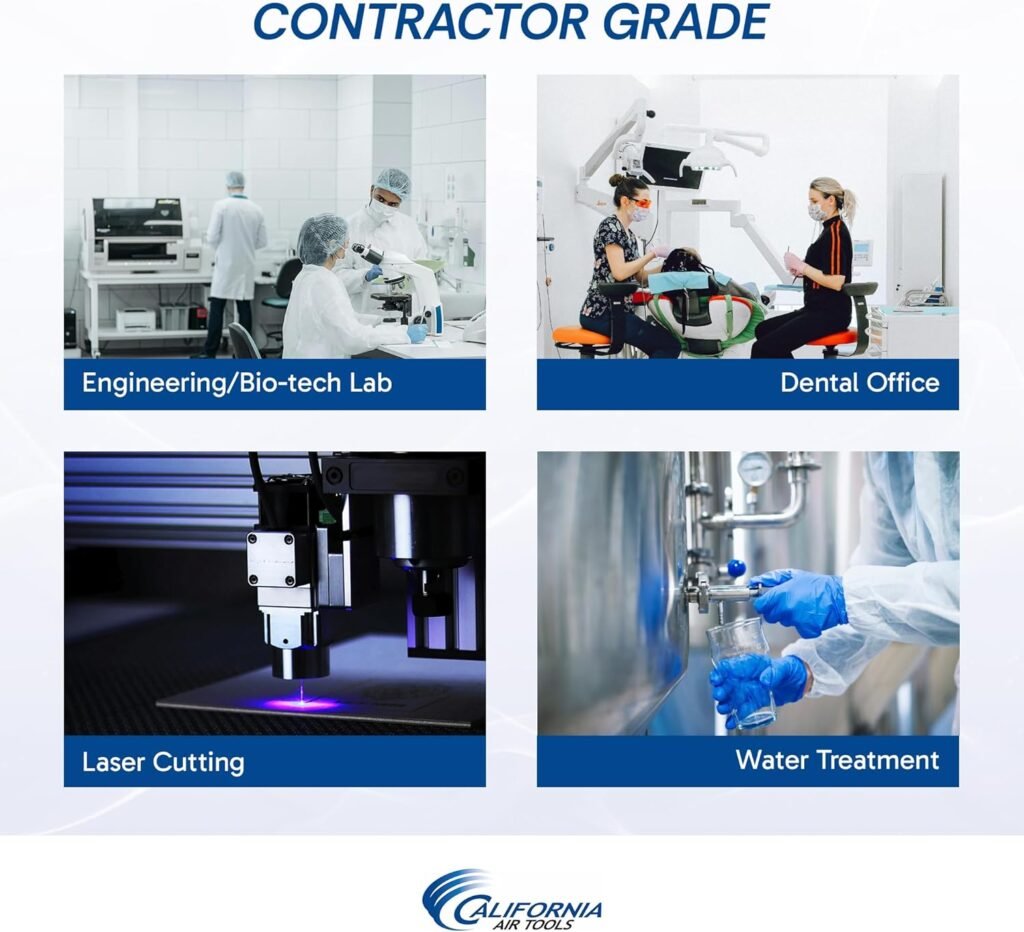
We’re impressed by the inclusion of an integrated 98% air dryer and aftercooler. These components work together to remove most water vapor from the compressed air. The aftercooler lowers the temperature of the discharge air and condenses water vapor into liquid; the dryer then removes roughly 98% of the remaining moisture. That combination is invaluable in humid environments or applications where moisture can cause issues, like painting or blow-off operations.
Benefits for Tool Life and Output Quality
We’ve seen that drier air prevents rust, reduces tool corrosion, and improves finishing quality. Because water is a common cause of downstream problems (clogged sprayers, rust in air tanks or tools, inconsistent finishes), the integrated dryer and aftercooler significantly reduce the need for separate inline dryers or more frequent filter changes.
Tank Capacity and Material
The 60-gallon ASME-certified steel tank provides ample storage capacity for larger tools and longer tool use between motor cycles. We find that a 60-gallon tank helps stabilize pressure swings during peak usage and allows for longer use between recharge cycles compared to smaller tanks. The ASME certification adds safety assurance for pressure containment.
Practical Tank Considerations
A larger tank is especially beneficial for intermittent high-flow needs like spray guns or when multiple users share a compressor. The steel construction adds durability, and the size reduces cycles per hour, which can extend motor and pump life by lowering frequent starts and stops.
Auto Drain Valve (EZ-1) and Maintenance Ease
We appreciate the factory-installed EZ-1 Automatic Drain Valve, which is pre-set with a timer that can be configured for frequency and duration. Automatic draining removes condensate build-up from the tank without manual intervention, preventing rust and reducing routine maintenance tasks. This feature alone can save us considerable time and prevent the common mistake of forgetting to drain the tank.
Why Auto Drain Is a Game Changer
Automatic draining reduces the risk of water accumulation and downstream corrosion, and it’s especially helpful if we use the compressor in humid environments or want to run it unattended. The ability to set frequency and duration means we can tailor the drainage to our operating schedule and humidity conditions.
Controls, Gauges, and User Interface
We want intuitive controls so we can set up and monitor performance easily. This model typically includes standard pressure gauges, regulator(s), and accessible drain and power controls. We have straightforward access to the controls, making it easier to set desired working pressure and monitor tank pressure during operation.
Monitoring and Adjustments
We like being able to read tank and output pressures quickly and adjust as needed for tool-specific PSI requirements. The stable supply, combined with accurate gauges, ensures we can optimize tool performance while avoiding over-pressurization.
Portability, Footprint, and Installation
At dimensions of approximately 25.5″ L x 29″ W/D x 66.5″ H, the California Air Tools 60040DCADC is fairly tall but has a compact footprint given the 60-gallon tank capacity. We find the vertical orientation saves floor space in cramped workshops. However, the unit’s weight and size mean it’s best positioned semi-permanently on a level surface rather than moved frequently.
Setup and Placement Tips
We recommend setting the compressor on a concrete floor or sturdy, level pad to minimize vibration. Allow for adequate clearance for ventilation around the motors and pump and ensure the discharge and drain lines are accessible for service. If we anticipate moving it occasionally, a mechanical lift or assistance will be necessary due to the tank size and overall weight.
Use Cases and Applications
We like to match compressors to tasks to ensure we choose the right tool for our needs. The California Air Tools 60040DCADC suits:
- Auto body and paint shops (benefitting from dryer air and larger tank)
- Medium-duty industrial applications requiring continuous or multi-tool use
- Workshops that need quieter operation due to shared spaces or neighbors
- Home garages where quieter operation is preferred but higher CFM is required
Scenarios Where It Excels
We find it particularly strong for projects that combine moderate-to-high air consumption with noise sensitivity — for instance, continuous finish spraying where both consistent CFM and dry air are needed. The built-in dryer reduces the need for accessory filtration in many cases.
Pros and Cons
We aim to provide pros and cons so we can weigh the purchase decision clearly.
Pros
- Quiet operation at 75 dBA reduces hearing strain and noise complaints.
- Twin 2.0 HP motors and 1680 RPM design improve durability and duty cycle.
- Oil-free dual piston pump for cleaner air and lower maintenance.
- Integrated 98% air dryer and aftercooler reduce moisture-related issues.
- 60-gallon ASME steel tank provides excellent storage and pressure stability.
- Factory-installed EZ-1 automatic drain valve simplifies maintenance.
Cons
- Size and weight make it less portable for frequent relocation.
- While 75 dBA is quiet for a compressor, it still produces noticeable noise in very quiet environments.
- Initial cost may be higher than smaller or less-featured compressors (we should evaluate ROI based on use).
- For extremely heavy industrial use or very high simultaneous CFM demands, larger multi-stage compressors may be required.
Comparison with Similar Models
We often compare similar options to make informed decisions. Compared to smaller single-motor air compressors, this model offers better continuous CFM, larger tank capacity, and significantly quieter operation. Against heavier industrial pumps, it offers quieter operation but may have lower maximum CFM or pressure capacities than big two-stage industrial units. The integrated dryer is a differentiator versus many competitors that require add-on dryers.
When to Choose This Over a Cheaper Unit
If quiet operation, dryer air, and reduced maintenance are priorities, we would choose this model. The additional features justify the cost for many shops and serious hobbyists. For occasional or low-volume tasks, a smaller, less expensive compressor might suffice.
Installation and First-Time Setup
We recommend checking the site, performing a visual inspection, and planning the placement before unboxing. We want to ensure adequate ventilation and a level surface. Once the compressor is in place, we confirm drain valve settings, check all fittings, and run the unit unloaded briefly to verify proper operation and pressure cut-in/out.
Initial Run Checklist
- Inspect for transit damage and tighten any loose fittings.
- Place on level concrete or a solid pad.
- Verify power supply matches the unit’s electrical requirements (check voltage and breaker capacity).
- Set auto-drain timer based on expected humidity and usage.
- Run unit and monitor gauges for proper pressure and smooth motor operation.
Safety and Compliance
We are always mindful of safety when working with pressurized systems. The ASME-rated tank provides a safety baseline for pressure containment, but we still follow recommended practices: avoid tampering with safety valves, drain condensate regularly (even with auto-drain), and ensure electrical wiring and grounding are in accordance with local codes.
Routine Safety Practices
We suggest wearing hearing protection during extended proximity operations, even at 75 dBA, and keeping the area free from flammable vapors. Regular inspections for leaks, corrosion, and proper relief valve function are part of responsible ownership.
Maintenance and Troubleshooting
We value low-maintenance designs, and this model reduces many routine tasks. The oil-free pump eliminates oil changes, and the automatic drain reduces manual draining chores. Still, routine checks remain important: inspect belts (if applicable), verify drain valve operation, clean intake filters, and monitor motor temperatures and unusual noises.
Common Issues and Fixes
- Reduced CFM or pressure drops: Check for leaks in hoses and fittings, inspect compressor intake filter, and confirm electrical supply is adequate.
- Excessive noise or vibration: Verify mounting surface, check motor mounts, and ensure twin motors are balanced and secured.
- Moisture issues despite dryer: Check dryer and aftercooler operation and ensure correct drainage lines and fittings are free and functioning.
Accessories and Add-Ons We Recommend
We often add a few accessories to maximize value. Consider adding:
- A refrigerated or desiccant inline dryer for extremely moisture-sensitive applications.
- A secondary filtration bank (coalescing and particulate) when running paint booths or critical finishing operations.
- Adequate hoses and quick-disconnect fittings rated for the needed PSI and flow.
- A pressure switch alarm or remote monitoring for unattended setups.
Long-Term Investment Considerations
We believe investing in quality filters and hose assemblies protects tools and projects downstream and pays dividends in tool life and finish quality. The integrated dryer reduces this need for many users, but in harsh conditions additional filtration may still be warranted.
Who Should Buy the California Air Tools 60040DCADC
We see this compressor as an excellent fit for:
- Small to medium auto body shops and painters who need dryer air and quieter operation.
- Home shops that want a professional-grade machine without the typical noise of industrial compressors.
- Facilities where multi-tool operation or longer continuous run times are common.
- Anyone who wants reduced maintenance hassle from oil-free pumps and automatic drains.
Who Should Consider Alternatives
Large-scale industrial plants that require very high continuous CFM for multiple heavy-duty lines might prefer a larger two-stage industrial unit. Similarly, if portability is the highest priority and only light duty work is required, a smaller portable compressor might be more economical.
Frequently Asked Questions (FAQs)
We put together answers to common questions we hear from potential buyers.
How loud is 75 dBA in real terms?
Seventy-five dBA is roughly equivalent to a household vacuum cleaner or busy office. It is noticeably quieter than most industrial compressors but still audible. For most shop environments this is comfortable; for completely silent spaces it is not silent.
How important is the integrated air dryer?
The integrated 98% air dryer is very valuable in humid climates and when moisture can harm finishes or tools. It reduces the need for separate dryers and inline filtration and improves overall air quality.
Can we run multiple tools at once?
Yes, within reason. With 12.80 CFM at 40 PSI and 10.60 CFM at 90 PSI, we can run multiple moderate-demand tools concurrently. For several high-demand tools running simultaneously, we should calculate combined CFM needs to ensure the compressor keeps up.
What about electrical requirements?
We recommend checking the manufacturer’s specifications for exact voltage and amperage needs and ensuring our workspace wiring and breakers meet those requirements. Heavy-duty compressors often require dedicated circuits.
Final Verdict
We find that the California Air Tools 60040DCADC 4.0 HP Ultra Quiet and Oil-Free Air Compressor offers a compelling blend of quiet operation, dependable CFM, large tank capacity, and features that reduce maintenance. The integrated dryer and automatic drain add significant practical value, particularly in environments where moisture control and cleaner air are important. For most small to medium shops and serious home users, this unit represents an excellent balance of performance and convenience. We recommend it for those who value a quieter workplace, consistent air quality, and reduced maintenance overhead.
Our Purchase and Use Recommendations
If we decide to purchase this compressor, we recommend the following steps to maximize satisfaction:
- Confirm electrical compatibility and breaker sizing before delivery.
- Plan a semi-permanent placement with adequate ventilation and access for maintenance.
- Set the EZ-1 auto-drain frequency according to local humidity and usage.
- Consider adding a secondary filter bank for critical finishing tasks if required.
- Keep a maintenance log to monitor operating hours and any recurring issues.
We hope this detailed review helps us decide whether the California Air Tools 60040DCADC fits our specific needs. If we have particular use cases or questions about installation, we can review those details next to ensure the compressor is the right fit for our workshop.

Disclosure: As an Amazon Associate, I earn from qualifying purchases.