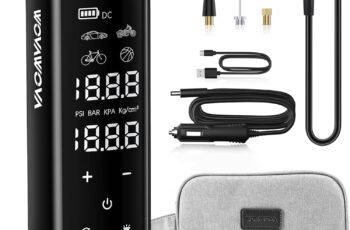
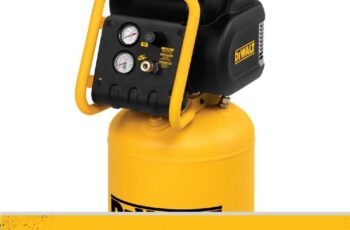
Whether we’re topping off tires, powering brad nailers, or handling trim work, the right portable air tank compressor saves time and hassle. In 2025, compact units balance PSI, CFM, and portability better than ever, from quiet 1-gallon models to punchy 6-gallon pancakes and a beefier 20-gallon option. We’ll compare oil-free pumps, noise levels, duty cycles, and transport features—and show which ones stay efficient on-site when it matters most.
PORTER-CABLE Air Compressor, 6-Gallon, Pancake, Oil-Free (C2002-ECOM)
Product offers are temporarily unavailable.
If you want a no-fuss, ready-anywhere compressor that punches above its size, PORTER-CABLE’s 6-gallon pancake (C2002-ECOM) is a standout. We like its durable, oil-free pump—no maintenance, longer life, and clean operation. The 6-gallon pancake tank boosts stability, while the water drain valve and rubber feet add practical touches.
With 150 psi max and 2.6 SCFM at 90 psi, it recovers quickly for longer tool runtimes. The low-amp 120V motor starts easily in cold weather or on an extension cord. It’s made in the USA with global materials and ships in sturdy, ecommerce-friendly packaging that protects the unit.
Best For: DIYers, homeowners, and jobsite users who need a portable, low-maintenance compressor with quick recovery for nailers, inflators, and light pneumatic tasks.
Pros:
- Oil-free, maintenance-free pump with long service life
- 150 psi max and 2.6 SCFM @ 90 psi for quick recovery and longer tool runtimes
- Easy cold-start low-amp 120V motor; stable 6-gallon pancake tank with rubber feet and drain valve
Cons:
- Noisier than some larger or premium quiet compressors
- 6-gallon capacity limits suitability for high-demand, continuous-use air tools
- No included accessories or hose in typical package (may require separate purchase)
Air Compressor 6-Gallon 150 PSI Pancake Portable Oil-Free with Accessories Kit
Product offers are temporarily unavailable.
Looking for a compact, jobsite-ready workhorse with minimal upkeep? This 6-gallon, 150 PSI pancake compressor delivers oil-free convenience and quick recovery for steady productivity. At 34.17 pounds with a flip-up handle, it’s easy to carry and stow. We like the dual gauges for precise monitoring and dual quick couplers for two tools at once.
The 10-piece kit adds a 25 ft 1/4 in PVC hose, thread seal tape, three 1/4 npt auto plugs, 1/4 npt coupler, ball foot air chuck, tire gauge, nozzle, high-performance blow gun, and sleeve. Low-voltage and cold-start capability broaden use across garages, jobsites, and home projects.
Best For: DIYers, contractors, and garage users who need a portable, low-maintenance compressor with quick recovery and enough power to run common pneumatic tools and handle inflation tasks.
Pros:
- Oil-free, 6-gallon tank with 150 PSI and quick recovery for steady tool performance and low maintenance.
- Lightweight (34.17 lb) pancake design with flip-up handle; dual gauges and dual quick couplers for two-tool use.
- Includes 10-piece accessory kit (25 ft hose, plugs, coupler, chuck, tire gauge, blow gun, and more) for ready-to-go setup.
Cons:
- Pancake compressors can be louder than larger, belt-driven units.
- 6-gallon capacity and listed output may limit continuous use of high-demand tools (e.g., large spray guns).
- PVC hose can be stiff in cold weather compared to rubber or hybrid hoses.
Klutch 20-Gallon Air Compressor, 2 HP, 120 Volts, 175 PSI
Product offers are temporarily unavailable.
For DIYers and jobsite users who need higher pressure in a truly portable package, the Klutch 20-Gallon Air Compressor stands out with a 175 PSI max and a quick 4.2 SCFM at 90 PSI. We like its 2 HP motor on standard 120V, oil-free pump, and 20-gallon tank that balances capacity and mobility. At 90 pounds with large rubber wheels and an ergonomic handle, it’s easy to roll. An 80 dB rating keeps noise manageable, while thermal overload protection and rubber foot stabilizers boost durability. Users report quick fills and solid power, with occasional leaks solved by tightening fittings. Rated 4.2/5.
Best For: DIYers, home garages, and light jobsite users who want high pressure (175 PSI) and solid airflow in a truly portable, low‑maintenance 120V compressor.
Pros:
- High max pressure (175 PSI) with quick recovery: 4.2 SCFM @ 90 PSI for powering many air tools
- Oil-free pump and thermal overload protection reduce maintenance and enhance reliability
- Portable 20-gallon design with large wheels, ergonomic handle, and manageable 80 dB noise level
Cons:
- Heavier at 90 lb; still portable but not ideal for frequent lifting without a ramp
- Some reports of minor air leaks or shipping damage; may require tightening fittings or exchanges
- 120V, 2 HP motor limits sustained output compared to larger 240V shop compressors
Metabo HPT THE TANK 6-Gallon 200 PSI Portable Pancake Air Compressor (EC914S)
Product offers are temporarily unavailable.
Serious nail-gun crews will love THE TANK’s 200 PSI punch and 4 CFM at 90 PSI, which lets us run multiple nailers without bogging down. This 6-gallon Metabo HPT EC914S delivers 25% more pressure and 30% more airflow than basic pancakes, driving nails flush with no delay on framing, siding, roofing, finish, and brad work. We can run 2 framing, 2 roofing, 2 siding, 3 finish, or 5 brad nailers at once, keeping crews productive.
At 41 lbs, it’s 22% lighter than twin-stacks and easy to haul. Backed by a 1-year warranty and the pro-preferred Metabo HPT reputation.
Best For: Pro crews and serious DIYers who need a portable compressor that can run multiple nailers simultaneously for framing, roofing, siding, finish, and brad work without slowdown.
Pros:
- 200 PSI and 4.0 CFM at 90 PSI deliver 25% more pressure and 30% more airflow than basic pancakes, driving nails flush with no delay
- Supports multiple tools at once (up to 2 framing, 2 roofing, 2 siding, 3 finish, or 5 brad nailers), boosting productivity
- Portable 41 lb design is 22% lighter than twin-stacks; backed by a 1-year warranty and strong pro reputation
Cons:
- Heavier than ultra-compact compressors at 41 lbs, which may be cumbersome for some users
- Pancake design can be noisier than some larger or oil-lubed alternatives
- 1-year warranty is shorter than some competitors offering longer coverage
Metabo HPT Quiet Portable 1-Gallon Oil-Free Air Compressor (EC28M)
Product offers are temporarily unavailable.
Craving whisper-quiet power in tight spaces? The Metabo HPT EC28M delivers at just 59 dB, so we can chat while it cycles. This 1-gallon, oil-free compressor weighs 25.2 pounds and measures 14 x 14 x 13.5 inches, making transport easy with its rubber carry handle and steel roll cage. We like the integrated control panel for precise PSI dialing and the universal quick coupler for fast swaps on finish, siding, or roofing nailers. It runs on 120V, offers up to 125 PSI, and includes a brass coupler and manual. Backed by a 1-year pro warranty, support varies by region.
Best For: Pros who need an ultra-quiet, compact, and portable compressor for finish work or light-duty nailers in noise-sensitive or tight spaces.
Pros:
- Ultra-quiet 59 dB operation allows normal conversation during cycles
- Lightweight, compact 1-gallon design with rubber handle and steel roll cage for easy, durable transport
- Oil-free pump and integrated control panel with universal quick coupler for low maintenance and fast tool changes
Cons:
- 1-gallon tank and modest output limit use to light-duty tasks
- Single universal coupler restricts simultaneous tool use
- Warranty/support experiences may vary by region despite 1-year pro warranty
Factors to Consider When Choosing Portable Air Tank Compressors
Let’s weigh the essentials so we pick the right portable air tank compressor for real-world use. We’ll compare tank capacity, maximum pressure, and airflow (CFM/SCFM) against the tools and tasks we plan to run. We’ll also check noise level and portability features—size, weight, handles, and wheels—to guarantee it’s easy to carry and comfortable to use.
Tank Capacity
Few specs matter more than tank capacity, because it dictates how long a compressor runs between refills and how steady the pressure stays under load. Capacity is measured in gallons. Portable pancake units typically sit around 6 gallons, while larger twin-stacks stretch to 20 gallons or more.
We weigh capacity against portability. A 6-gallon tank usually hits the sweet spot for mobility and runtime, keeping weight manageable while delivering substantial air volume. It suits light-to-moderate tasks like trim work, tire inflation, and brad nailing.
If we’re driving higher CFM tools or running continuously, stepping up helps. Bigger tanks extend uninterrupted operation, cut refill interruptions, and handle spikes in demand with steadier output. For heavy framing or roofing, 20-gallon or larger tanks provide the buffer and recovery needed.
Maximum Pressure
After sizing the tank, we need to match maximum pressure to the tools we plan to run. Maximum pressure is the highest PSI the tank safely reaches and holds—often 150, 175, or 200 PSI on portable pancake and drum units. If we exceed it, the relief valve opens or, worse, we risk tank failure. So we should check our tool specs and align them with the compressor’s max PSI.
Higher maximum pressure can speed recharging during demanding cycles, but it often adds weight and cost. Many models list cut-in and cut-out points (e.g., 90 PSI start, 120–150 PSI stop), which dictate when the motor runs. For inflation duties, 125–150 PSI usually suffices. Framing and roofing nailers often benefit from higher ceilings near 200 PSI.
Airflow (CFM/SCFM)
Why does airflow matter more than specs on the box? Because CFM tells us how much air a compressor actually delivers per minute at a stated pressure, which dictates whether our tools run smoothly or sputter. SCFM goes further by standardizing for ambient conditions and efficiency, making apples-to-apples comparisons possible.
At 90 psi, many 6-gallon pancake units deliver roughly 2.6–4.0 CFM. That spread determines if we can run finishing nailers and light staplers continuously or wait for recovery. Higher SCFM at our target psi means longer tool operation between refills and fewer cycles.
Tank size still plays a role: a larger tank can handle short bursts even when running CFM is modest. When comparing models, prioritize higher CFM/SCFM at your intended pressure for consistent performance.
Noise Level
We’ve looked at airflow numbers, but living with a compressor also means hearing it. Noise is measured in decibels (dB), and among portable pancake units it varies widely—some whisper at about 59 dB. At that level, we can hold a normal conversation while it runs, which cuts jobsite disruption and reduces fatigue over long days.
Don’t assume quiet means weak. Higher-performance compressors that deliver more CFM at 90 psi can remain subdued when they use advanced motor and pump designs. We should also consider how the machine feels, not just what it measures. Vibration and the casing’s acoustics shape perceived sound, sometimes as much as the dB rating. Our bottom line: favor lower published dB, then verify smooth operation and restrained vibration.
Portability Features
How easily can we grab it, carry it, and stash it between tasks? Portability starts with the tank shape. We favor pancake-style compressors with built-in handles and compact footprints—they thread through doorways, fit in trunks, and maneuver on-site without fuss. Weight matters, too: typical 6-gallon models run about 34–41 pounds, which most of us can lift and set up solo.
A low-profile body with stable rubber feet resists tipping and creeping as hoses tug. Flip-up or overmolded handles improve grip, while integrated cord storage keeps cables tidy and snag-free when we’re moving from bay to bay. Finally, the best portable units balance lightness with capability, pairing manageable carry weight with enough tank pressure—often 150–200 psi—for quick recovery and fewer trips back to the compressor.
Power Requirements
Portability only gets us so far if the compressor trips breakers or can’t feed our tools. We need to match voltage, amperage, and airflow to the jobs we do. Most portable pancake units run on 120 V mains and use low-amp motors that start reliably in the cold and tolerate extension cords. For tool performance, look at CFM at working pressure—numbers like 2.6–4 CFM at 90 psi tell us whether nailers cycle fast or grinders sputter.
Tank pressure matters, too. Models rated 125–200 psi deliver higher-pressure bursts, but continuous use still hinges on CFM. Oil-free pumps draw modest power and simplify ownership, though their duty cycles and heat tolerance vary. Stepping up to 20-gallon portables typically means higher current draw and thermal overload protection.
Maintenance Needs
Even with compact compressors, maintenance makes the difference between a workhorse and a headache. When we evaluate upkeep, oil-free pumps stand out because we skip messy oil checks and changes. Still, we need to watch heat and pressure to prevent premature wear. A unit with a regular drain valve lets us purge moisture after each use, protecting the tank from rust and corrosion. Dual gauges help us dial in cut-in and cut-out pressures, keep cycling efficient, and avoid over-pressurization that strains seals. Portable pancake tanks with sturdy feet and solid handles stay planted, reducing vibration, tip-overs, and the repairs that follow. Finally, we weigh long-term costs: pump lifespan, availability of replacement parts, and specific wear components on oil-free designs.
Conclusion
We’ve covered compact, capable compressors for every on-the-go job—from quiet 1-gallon units to powerful 6- and 20-gallon tanks. Whether we’re inflating tires, firing trim guns, or tackling punch-list tasks, oil-free pumps, dual gauges, and easy-carry designs keep us moving. Prioritize PSI, CFM, tank size, and noise to match your workflow. If you need maximum pressure, choose 175–200 PSI; if silence matters, go ultra-quiet. Pick the right balance, and we’ll work faster, lighter, and smarter anywhere.