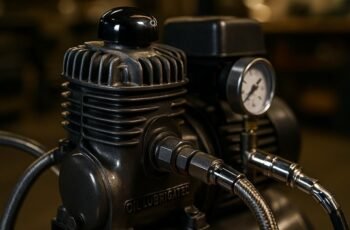
When an air compressor starts making unusual noises, it can signal underlying issues that compromise performance and safety. Identifying these sounds accurately is critical for effective troubleshooting. We’ll explore common noise types, their causes, and practical inspection steps to help you diagnose problems early. If unresolved, these issues can lead to costly damage or downtime, so understanding how to address them properly is essential before seeking professional assistance.
Key Takeaways
- Identify the source of noise by listening closely to determine if it’s from belts, bearings, or fittings.
- Check and tighten loose fittings, mounting bolts, and pulleys to reduce vibrations and rattling sounds.
- Inspect belts for wear, proper tension, and alignment; replace if they are slipping or worn out.
- Lubricate moving parts and bearings according to manufacturer guidelines to minimize friction sounds.
- Seek professional help if abnormal noises persist or are accompanied by vibration, leaks, or performance decline.
How Do Noisy Air Compressors Usually Sound and What Do They Indicate?
Noisy air compressors typically produce a range of sounds that can indicate specific issues. Hissing often suggests leaks in fittings or hoses, while knocking or banging can point to internal component misalignment or bearing failure. A high-pitched squeal usually indicates a worn or slipping belt, and rattling noises may signal loose panels or mounting hardware. Continuous loud operation might reflect excessive load or insufficient lubrication, leading to bearing or piston wear. Sharp, intermittent noises could be symptomatic of valve or piston ring problems. Recognizing these sounds helps us diagnose potential faults early, preventing further damage. Precise identification of noise patterns allows targeted troubleshooting, ensuring we address the root cause efficiently and maintain *ideal* compressor performance.
What Are the Common Causes of Excessive Noise in Air Compressors?
Excessive noise in air compressors often results from mechanical issues or improper maintenance practices that lead to increased vibration and component wear. Common causes include:
Excessive compressor noise signals mechanical issues or poor maintenance causing vibration and wear.
- Worn or misaligned bearings, which generate knocking or grinding sounds due to increased friction.
- Loose or unbalanced pulleys and belts, causing vibrations and rattling noises during operation.
- Cavitation or airflow restrictions, leading to hissing or whining sounds as air moves unevenly through the system.
- Damaged or deteriorated valves, resulting in loud popping or banging noises during compression cycles.
Identifying these issues requires understanding the mechanical origins of the noise, as they often indicate underlying component failures or misalignments that compromise compressor performance and longevity.
How Can You Perform a Basic Inspection to Identify Noise Issues?
Performing a basic inspection to identify noise issues involves systematically examining the compressor’s components for signs of wear, misalignment, or damage. Start by inspecting the motor, belts, and pulleys for looseness, cracks, or misalignment. Check for unusual vibrations or loose fittings that could cause rattling sounds. Listen for abnormal noises during operation and identify their source. Use the following table to guide your inspection:
| Component | Common Noise Clues | Inspection Focus |
|---|---|---|
| Motor | Humming, buzzing | Tighten mounts, inspect wiring |
| Belts | Squealing, slipping | Check tension, wear, and alignment |
| Pulleys | Rattling, wobbling | Examine for misalignment or damage |
| Air Intake/Filters | Whistling or hissing | Inspect for blockages or leaks |
| Valves & Fittings | Leaking sounds, hissing | Tighten or replace faulty parts |
This methodical approach helps isolate noise sources efficiently.
What Practical Steps Can You Take to Fix Noisy Air Compressors?
When addressing noise issues in an air compressor, the first step is to identify and rectify the underlying mechanical causes. Once identified, several practical steps can reduce noise levels effectively:
- Tighten loose fittings and mounting bolts to eliminate vibrations transmitted through the frame.
- Replace worn or damaged bearings to reduce mechanical friction and noise.
- Lubricate moving parts according to manufacturer specifications to minimize metal-on-metal contact.
- Install sound-dampening materials or enclosures around the compressor to absorb vibrations and airborne noise.
These actions target common sources of noise, improving operational quietness. Precision in executing each step ensures mechanical integrity and minimizes noise without risking damage to critical components.
When Should You Consider Professional Help for Compressor Noise Problems?
Although routine troubleshooting can resolve many noise issues, there are instances when seeking professional assistance becomes essential. If the compressor produces persistent, abnormal sounds such as knocking, grinding, or high-pitched squeals despite basic adjustments, it indicates underlying mechanical or electrical faults requiring expert diagnosis. When noise levels suddenly escalate or fluctuate unpredictably, it suggests component failure or misalignment beyond simple repairs. Additionally, if you notice accompanying symptoms like excessive vibration, oil leaks, or reduced performance, professional intervention is necessary to prevent further damage. Attempting complex repairs without proper knowledge can compromise safety and lead to costly repairs. In these cases, certified service technicians with specialized diagnostic tools are best equipped to identify root causes and guarantee safe, effective resolution.
Frequently Asked Questions
Can Noise Levels Indicate Impending Compressor Failure?
Yes, increased noise levels often signal impending compressor failure, indicating issues like bearing wear or misalignment. We monitor noise changes closely, as they serve as early warning signs, prompting timely inspections and maintenance to prevent costly breakdowns.
Are Certain Compressor Models More Prone to Noise Issues?
Certain compressor models are more prone to noise issues, acting like sensitive instruments in a symphony—designed with specific features that can amplify vibrations or sound. We recommend selecting models with proven noise-reduction technology for quieter operation.
How Does Ambient Temperature Affect Compressor Noise?
Ambient temperature directly impacts compressor noise; higher temperatures cause components to expand, increasing vibration and sound levels. Conversely, cooler environments reduce thermal expansion, leading to quieter operation. Maintaining ideal temperature conditions minimizes noise fluctuations effectively.
What Safety Precautions Should Be Taken During Troubleshooting?
We always wear protective gear, including gloves and eye protection, to stay safe during troubleshooting. We guarantee the compressor is unplugged and depressurized, avoiding hazards; safety first, because a chain is only as strong as its weakest link.
Can Regular Maintenance Reduce Compressor Noise Over Time?
Yes, regular maintenance reduces compressor noise by ensuring components like belts, valves, and bearings are properly lubricated and aligned, preventing excessive vibrations and wear, which ultimately sustains quieter operation and prolongs equipment lifespan over time.
Conclusion
In summary, addressing noisy air compressors requires a systematic approach, from recognizing abnormal sounds to performing basic inspections and maintenance. We must act promptly, akin to a seasoned engineer troubleshooting a vintage machine, to prevent further damage and ensure efficiency. If issues persist despite our efforts, seeking professional help guarantees safety and proper resolution. Staying vigilant and proactive keeps our equipment running smoothly, much like a well-maintained automaton—reliable and precise.