When it comes to ensuring compressed air remains dry and free of moisture, few solutions match the reliability of refrigerated air dryer systems. These devices operate on a precise thermodynamic cycle, removing humidity efficiently and consistently. But selecting the right system and maintaining it properly can be complex. Understanding these processes is essential for peak performance and avoiding costly issues. Join us as we explore the key aspects of selecting, operating, and maintaining refrigerated air compressor dryers to meet your needs.
Key Takeaways
- Understand how refrigerated dryers cool air to condense and remove moisture effectively.
- Select a dryer with appropriate capacity and dew point specifications for your system needs.
- Maintain filters, heat exchangers, and separators regularly to ensure optimal performance.
- Troubleshoot common issues like refrigerant leaks or ice formation to prevent operational disruptions.
- Consider energy efficiency, size, and maintenance requirements when choosing the right dryer.
How Do Refrigerated Air Compressor Dryers Work?
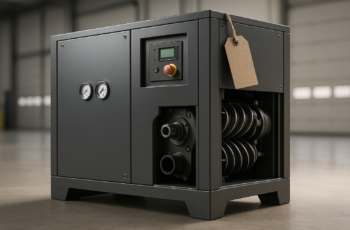
Refrigerated air compressor dryers operate by cooling compressed air to remove moisture effectively. The process begins as compressed air enters the dryer and passes through an internal heat exchanger, where it is cooled to near the dew point temperature. This cooling causes water vapor within the air to condense into liquid droplets. The condensed moisture then flows into a separator, which removes it from the airstream through gravity or centrifugal separation. The dry air is subsequently reheated to prevent low temperature issues downstream, ensuring stable operation. The cycle repeats continuously, maintaining a consistent, moisture-free output. This refrigeration process relies on standard refrigeration components, such as compressors, condensers, and evaporators, to sustain the cooling cycle. The precise control of temperature and pressure is critical for ideal moisture removal efficiency.
Key Features and Benefits of Refrigerated Air Dryer Systems
Because of their efficiency and reliability, refrigerated air dryer systems are widely valued in compressed air applications. Their primary feature is consistent dew point control, typically around 37-45°F, which effectively removes moisture from compressed air. They operate through a refrigeration cycle, utilizing thermodynamic principles to condense water vapor. These systems offer high energy efficiency due to their low operational costs and minimal maintenance requirements. Their compact design facilitates integration into various plant layouts without extensive space demands. Additionally, they provide stable, high-quality dry air essential for sensitive equipment and processes. The ability to maintain low dew points and reduce corrosion risk enhances system longevity and reduces downtime. Overall, refrigerated dryers deliver a cost-effective, reliable solution for ensuring compressed air quality in industrial settings.
How to Choose the Right Refrigerated Air Dryer for Your Needs?
Selecting the appropriate refrigerated air dryer requires careful evaluation of your specific compressed air requirements, including flow rate, dew point, and environmental conditions. To determine the best fit, consider the following factors:
- Flow Rate Capacity: Match the dryer’s rated flow to your system’s maximum demand to ensure consistent performance.
- Dew Point Specification: Choose a dryer that achieves the dew point necessary for your application, typically between 35°F and -40°F.
- Environmental Conditions: Assess ambient temperature and humidity, as these influence the dryer’s efficiency and cooling method.
- Energy Efficiency and Cost: Balance initial investment with operational costs, prioritizing units with superior energy consumption for long-term savings.
A precise assessment guarantees reliable moisture removal and system efficiency.
Maintenance Tips to Maximize Dryer Performance and Longevity
Regular maintenance is essential to guarantee your refrigerated air dryer operates at peak efficiency and has a prolonged service life. Consistent monitoring of filter elements, including desiccant and coalescing filters, prevents clogging and ensures ideal moisture removal. Regularly inspecting and cleaning heat exchangers enhances thermal transfer efficiency, reducing energy consumption. Drain traps require prompt and complete drainage to prevent water carryover and corrosion. Lubrication of mechanical components, such as fans and motors, minimizes wear and potential failure. Maintaining precise control of operating parameters—like temperature and pressure—ensures consistent dryer performance. Routine inspections of electrical connections and safety devices identify potential issues before they escalate. Adhering to a scheduled maintenance plan minimizes unplanned downtime, reduces operational costs, and extends the overall lifespan of the dryer.
Troubleshooting Common Issues With Refrigerated Air Dryers
Understanding common malfunctions and their causes is essential for effective troubleshooting of refrigerated air dryers. We need to identify issues like refrigerant leaks or sensor failures quickly to minimize downtime. Implementing preventative maintenance practices can substantially reduce the risk of these problems recurring.
Common Malfunctions and Causes
When troubleshooting refrigerated air dryers, identifying common malfunctions and their causes is essential for maintaining peak performance. Understanding these issues allows for swift diagnosis and effective resolution.
- Ineffective Dew Point Reduction: Often caused by refrigerant leaks or compressor malfunction, leading to inadequate cooling.
- Ice Formation on Components: Typically results from low ambient temperature or overcooling, impairing airflow and heat exchange.
- High Pressure Drop: Usually due to clogged filters or blocked condensate drains, increasing energy consumption.
- Frequent Compressor Cycling: Caused by thermostat misadjustment or refrigerant pressure imbalances, affecting system stability.
Recognizing these malfunctions promptly helps prevent system failure and prolongs equipment lifespan.
Preventative Maintenance Tips
Proactively maintaining refrigerated air dryers helps prevent common malfunctions and guarantees consistent performance. Regular inspection of the refrigerant levels ensures maximum heat exchange efficiency, preventing compressor strain or failure. Clean or replace the air filters routinely to avoid pressure drop and moisture carryover. Monitoring and draining the moisture separator prevents water buildup that can compromise downstream equipment. Periodic checks of the condensation drain valves ensure proper operation, avoiding blockages or leaks. Inspecting the refrigeration coils for dirt or ice buildup maintains cooling efficiency. Additionally, verifying pressure and temperature setpoints helps sustain ideal drying conditions. Implementing these preventative measures minimizes downtime, reduces repair costs, and prolongs the lifespan of the dryer, ensuring reliable, high-quality compressed air output.
Comparing Refrigerated Dryers to Alternative Moisture Removal Solutions
Refrigerated air dryers are a common choice for moisture removal in compressed air systems, but alternative solutions like desiccant dryers and membrane dryers often present viable options depending on specific application requirements. Desiccant dryers excel in environments requiring extremely low dew points, providing nearly absolute moisture removal through adsorption. Membrane dryers, on the other hand, use selective permeation to separate moisture, offering a compact, energy-efficient solution suitable for lower flow rates. When comparing these options, consider:
- Dew point requirements: Desiccant dryers achieve lower dew points than refrigerated systems.
- Energy consumption: Membrane dryers generally consume less energy.
- Maintenance needs: Desiccant systems require regular regeneration, while membrane units need minimal upkeep.
- Cost considerations: Refrigerated dryers typically have lower initial costs, but operational expenses vary across solutions.
Selecting the most suitable moisture removal method depends on specific operational demands.
Frequently Asked Questions
What Is the Typical Lifespan of a Refrigerated Air Dryer?
Refrigerated air dryers typically last between 8 to 12 years, depending on usage and maintenance. Regular inspections, proper filtration, and timely part replacements can extend their lifespan, ensuring efficient operation and minimizing downtime.
How Energy-Efficient Are Refrigerated Air Dryers Compared to Other Methods?
Refrigerated air dryers are typically 20-30% more energy-efficient than desiccant systems, saving substantial operational costs; their precise temperature control minimizes energy waste, making them a smart choice for continuous, reliable compressed air drying.
Can Refrigerated Dryers Handle Variable Flow Rates Effectively?
Refrigerated dryers manage variable flow rates effectively by maintaining a consistent dew point through adjustable refrigeration cycles, ensuring reliable moisture removal across fluctuating demands. Their design adapts quickly, optimizing performance without sacrificing efficiency or air quality.
Are There Any Environmental Considerations With Refrigerant Use?
Refrigerants can impact the environment due to their global warming potential and ozone depletion potential. We recommend selecting environmentally friendly refrigerants, ensuring proper disposal, and monitoring leaks to minimize ecological impact while maintaining ideal dryer performance.
What Safety Precautions Should Be Taken During Maintenance?
Like a well-orchestrated symphony, maintenance demands careful safety measures: always disconnect power, wear appropriate PPE, guarantee proper ventilation, handle refrigerants with care, and follow manufacturer guidelines to prevent accidents and equipment damage.
Conclusion
In summary, selecting and maintaining the right refrigerated air dryer guarantees your compressed air system runs smoothly, like a finely tuned engine. Regular upkeep keeps moisture at bay, preventing ice buildup and pressure drops that can disrupt operations. Think of it as safeguarding a crucial artery—clear, consistent flow is essential. With precise choices and diligent maintenance, your dryer becomes a dependable shield against moisture, ensuring peak performance and longevity in even the most demanding industrial environments.