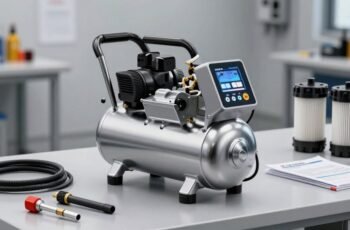
When selecting an air compressor tank, understanding the critical factors that influence performance and safety is essential. We’ll guide you through the different types, sizing considerations, material choices, and maintenance practices. Knowing these details helps warrant your investment is reliable and long-lasting. But making the right choice involves more than just capacity—there are safety standards and features that shouldn’t be overlooked. Let’s explore how to make an informed decision that meets your specific needs.
Key Takeaways
- Choose between horizontal or vertical tanks based on space constraints and stability needs.
- Select the appropriate size by analyzing your airflow demand and operational duration.
- Prioritize tanks with strong safety ratings, certifications (ASME, CE), and reliable safety features like relief valves.
- Opt for durable, corrosion-resistant materials such as steel or aluminum for longevity.
- Regularly inspect, drain moisture, and maintain safety components to extend tank lifespan and ensure safe operation.
What Are the Different Types of Air Compressor Tanks?
Understanding the different types of air compressor tanks is essential for selecting the right equipment for your needs. There are primarily two types: horizontal and vertical tanks. Horizontal tanks are wider and lower-profile, ideal for stable setups with limited vertical space, providing easy access for maintenance. Vertical tanks are taller and narrower, suitable for environments with space constraints, and facilitate better vertical storage. Both types can feature stationary or portable configurations, with portable tanks including wheels for mobility. Material composition is also critical; most tanks are made from welded steel for durability or aluminum for lightweight applications. Additionally, some tanks have integrated drains or safety valves, which are crucial for maintaining safety and efficiency during operation.
How to Determine the Right Size for Your Needs
Selecting the appropriate tank size depends on accurately evaluating your air demand and usage patterns. To do this, we analyze your peak and average airflow requirements, measured in CFM (cubic feet per minute), and your operational cycle duration. Larger tanks provide buffer capacity, reducing compressor cycling frequency, which extends equipment lifespan and improves efficiency. For intermittent, low-demand tasks, a smaller tank suffices; for continuous or high-demand applications, a larger tank is essential. Consider your maximum simultaneous tool usage and the duration of continuous operation to determine the minimum tank volume needed. Precise calculation of airflow needs ensures ideal tank sizing, preventing under- or over-sizing, which can lead to inefficiency or increased costs. This approach guarantees that the tank size aligns with your specific operational demands.
Key Features to Consider When Choosing a Tank
When selecting an air compressor tank, we focus on material durability, capacity, and safety ratings to guarantee reliable operation. The material affects longevity and corrosion resistance, while capacity and size determine fit and performance. Safety and pressure ratings are critical to prevent failures under operational stresses.
Tank Material Durability
The durability of the tank material directly impacts its lifespan and safety, making it a critical factor in choosing the right air compressor tank. Materials like steel and aluminum are common, each with specific properties. Steel tanks offer high strength, resistance to impact, and excellent pressure tolerance, but are susceptible to corrosion unless properly coated or galvanized. Aluminum tanks provide corrosion resistance, are lighter, and maintain structural integrity over time, though they may have lower maximum pressure ratings. The choice depends on operating conditions, environment, and maintenance practices. Ensuring the material meets industry standards for durability, such as ASME certification, guarantees the tank’s capacity to withstand pressure cycles and environmental stresses, ultimately influencing safety and longevity.
Capacity and Size Options
Choosing the appropriate capacity and size for an air compressor tank directly affects operational efficiency and system performance. Larger tanks provide greater air storage, reducing compressor cycling frequency and maintaining consistent pressure. Conversely, smaller tanks are suitable for portable or light-duty applications, minimizing space and weight. Factors to take into account include:
- Air demand: Match tank size to the volume of tools and equipment used.
- Duty cycle: Higher usage rates require larger capacity for sustained operation.
- Space constraints: Assess available installation area to determine feasible tank dimensions.
- Compressor capacity: Guarantee tank size complements compressor output for ideal efficiency.
- Future expansion: Anticipate potential increases in air demand to select scalable options.
Selecting the correct size ensures system reliability, energy efficiency, and operational longevity.
Safety and Pressure Ratings
Have you considered how safety and pressure ratings impact the reliability and security of your air compressor tank? These ratings define the maximum pressure the tank can withstand safely, ensuring structural integrity under operational conditions. The working pressure rating indicates the maximum pressure the tank is designed to handle during regular use, while the burst pressure rating specifies the point at which the tank could fail catastrophically. Selecting a tank with appropriate safety margins is essential to prevent failure, leaks, or explosions. Always verify compliance with industry standards such as ASME or CE certification, which affirm rigorous safety testing. Proper understanding of these ratings helps you choose a tank that maintains performance without compromising safety, ensuring long-term durability and protection during operation.
How to Evaluate Material and Build Quality
When evaluating material and build quality, we focus on durability, resistance to corrosion, and overall structural integrity. We examine construction precision, weld quality, and guarantee wall thickness aligns with safety standards. These factors directly influence the tank’s longevity and safe operation under pressure.
Material Durability and Resistance
Evaluating the material durability and resistance of an air compressor tank is essential to guarantee long-term performance and safety. The material must withstand internal pressure, corrosion, and environmental factors without degradation. Key indicators include the type of metal used, such as steel or aluminum, and its resistance to oxidation. Additionally, the presence of protective coatings enhances durability. Consider the tank’s thickness; thicker walls typically offer greater resistance. Check for corrosion-resistant features like galvanization or epoxy lining. Finally, assess manufacturer specifications for load capacity and stress tolerance to ensure the tank can handle operational demands.
- Material composition (steel, aluminum)
- Corrosion resistance (galvanization, coatings)
- Wall thickness and gauge
- Protective linings or coatings
- Stress and pressure ratings
Construction Precision and Welding
To assure the construction quality of an air compressor tank, we must scrutinize the precision of its fabrication and the integrity of its welds, as these directly impact durability and safety. High-quality tanks exhibit consistent manufacturing with minimal dimensional deviations, ensuring proper fit and structural coherence. Welds should be uniform, free of cracks, porosity, or undercuts, indicating controlled heat application and skilled craftsmanship. We evaluate weld quality through visual inspection and, if possible, non-destructive testing methods like dye penetrant or ultrasonic analysis. Proper welding guarantees even stress distribution and prevents failure points. Additionally, fabrication precision minimizes weak spots and deformation under pressure, contributing to overall tank resilience. These factors collectively assure a robust, long-lasting tank capable of safely withstanding operational demands.
Thickness and Wall Integrity
The thickness of an air compressor tank’s walls is a crucial factor that directly influences its strength and longevity. To evaluate material and build quality, consider these key points:
- Material grade: Verify the tank is made from high-quality steel or aluminum, which offers excellent durability and corrosion resistance.
- Wall thickness specifications: Confirm the manufacturer’s specified thickness, typically measured in millimeters or gauge; thicker walls generally provide greater structural integrity.
- Seam and weld quality: Inspect welds for uniformity, penetration, and absence of cracks or porosity, which are essential for maintaining wall integrity.
- Corrosion protection: Look for coatings or galvanization that prevent rust and degradation over time.
- Test certifications: Confirm compliance with industry standards (e.g., ASME, ISO), indicating rigorous material and construction quality.
Tips for Proper Maintenance and Longevity
Regular maintenance is essential to guarantee your air compressor tank operates efficiently and lasts over time. We recommend inspecting the tank regularly for signs of corrosion or damage, especially around weld seams and fittings. Drain moisture from the tank weekly to prevent internal rust and pressure inconsistencies, using a drain valve designed for this purpose. Replace air filters and check safety relief valves periodically to ensure proper function. Maintain consistent pressure levels within manufacturer specifications to avoid undue stress on the tank walls. Employ corrosion-resistant coatings if operating in humid environments. Keep detailed maintenance records to track service intervals and component replacements. Proper adherence to these procedures minimizes wear, prevents tank failure, and extends the operational lifespan of your compressor system.
Common Questions About Air Compressor Tanks
Understanding the common questions surrounding air compressor tanks helps guarantee proper selection, operation, and maintenance. Key concerns include tank capacity, pressure ratings, material construction, safety features, and lifespan.
- What is the ideal tank size for my needs?
- How do pressure ratings impact safety and performance?
- Which materials offer durability and corrosion resistance?
- What safety devices should be included?
- How long can I expect my tank to last with proper care?
Addressing these questions ensures informed decisions when choosing a tank. Knowing capacity requirements prevents over- or under-sizing. Recognizing pressure limits safeguards against failure. Material understanding enhances durability. Incorporating safety features minimizes risk, and awareness of lifespan guides maintenance schedules.
Frequently Asked Questions
How Loud Are Different Air Compressor Tanks During Operation?
Different air compressor tanks produce varying noise levels, typically ranging from 60 to 90 decibels. We find that reciprocating models are louder, while rotary screw compressors operate more quietly, depending on design and insulation quality.
Can I Use an Air Compressor Tank Outdoors Safely?
Can an air compressor tank be used outdoors safely? Absolutely, if it’s rated for outdoor use, properly protected from weather, and regularly maintained to prevent corrosion or damage. Would you trust equipment exposed to the elements?
What Safety Precautions Should I Follow With Compressed Air Tanks?
We always inspect tanks regularly for corrosion, damage, and pressure integrity. We guarantee safety valves function correctly, avoid over-pressurization, and follow manufacturer guidelines strictly, wearing protective gear and keeping the area clear during operation.
How Often Should I Drain Moisture From the Tank?
We recommend draining moisture from the tank daily to prevent corrosion and maintain efficiency. Regular removal avoids moisture buildup, which can cause damage, decrease lifespan, and compromise safety during compressed air use.
Are There Portable Air Compressor Tanks Suitable for Travel?
Yes, there are portable air compressor tanks designed specifically for travel. These compact tanks are lightweight, easy to carry, and often come with integrated handles or wheels, making them ideal for on-the-go inflation tasks and short-term use.
Conclusion
In summary, selecting the right air compressor tank isn’t just about capacity—it’s about understanding the precise needs of your application and ensuring safety and durability. Proper evaluation of materials, adherence to industry standards, and regular maintenance are critical for maximum performance and lifespan. While some believe larger tanks always outperform smaller ones, data shows that matching tank size to demand and maintaining safety features are the true indicators of efficiency and reliability in compressor systems.