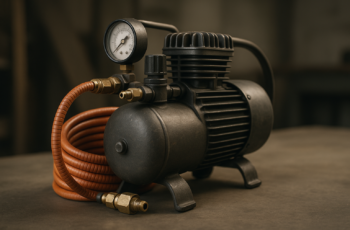
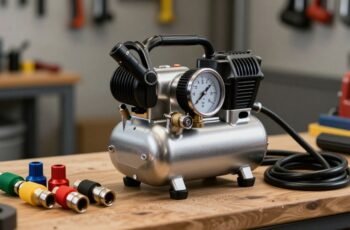
Like the gears that keep a machine running smoothly, the right air compressor accessories are critical to maintaining ideal performance and safety. They serve as the unseen forces that enhance efficiency and extend equipment lifespan, often determining the success of a project. Understanding which accessories truly make a difference requires a careful, analytical approach—one that balances technical specifications with practical application. To guarantee your setup operates at peak potential, examining these essential components becomes indispensable.
Key Takeaways
- Essential safety and operational accessories like pressure gauges, safety valves, and quick-connect couplers ensure safe, efficient compressor use.
- High-quality air filters and attachments improve performance, protect the system, and facilitate maintenance.
- Spray guns, nozzles, and compatible hoses enhance precision and efficiency for painting and finishing tasks.
- Time-saving accessories such as automatic drain valves and quick-connect fittings streamline workflow and reduce downtime.
- Regular maintenance and proper component matching extend equipment lifespan and optimize compressor performance.
What Are the Essential Air Compressor Accessories You Need?
To operate an air compressor efficiently and safely, it’s essential to equip it with the right accessories. These components guarantee maximum performance, extend equipment lifespan, and maintain safety standards. First, air hoses are vital for delivering compressed air to tools and machinery; selecting durable, high-pressure-rated hoses minimizes leaks and pressure drops. Next, pressure gauges help monitor system pressure precisely, preventing over-pressurization that could cause damage or failure. Safety valves safeguard against excessive pressure buildup, releasing excess air when needed. Additionally, quick-connect couplers facilitate rapid tool changes, improving workflow efficiency. Finally, lubricators, when compatible, help maintain internal component lubrication, reducing wear and tear. Incorporating these accessories into your system guarantees reliable operation, safety compliance, and enhanced productivity.
How to Choose the Right Air Filters for Your Compressor
Selecting the appropriate air filters for your compressor is critical to guaranteeing ideal performance and longevity. Proper filters prevent contaminants from entering the system, reducing wear and maintaining air quality. When choosing filters, consider filtration efficiency, pressure drop, and compatibility with your compressor’s specifications. High-efficiency filters trap smaller particles but may increase airflow resistance, impacting performance. Compatibility ensures the filter fits securely and functions correctly without restricting airflow.
| Filter Type | Filtration Efficiency | Pressure Drop |
|---|---|---|
| Coalescing Filter | Removes oil aerosols | Moderate |
| Particulate Filter | Traps dust and debris | Low |
| Activated Carbon | Eliminates odors | Variable |
Choosing wisely balances filtration needs with system efficiency.
Best Spray Guns and Nozzles for Precise Painting Jobs
Selecting the appropriate spray gun and nozzle is critical for achieving precise, uniform coatings in detailed painting tasks. Fine spray patterns and proper nozzle size directly influence application quality and material efficiency. Analyzing these parameters helps optimize control and finish quality for specialized painting jobs.
Fine Spray Patterns
Have you ever wondered what makes a spray gun ideal for detailed, precision work? The key lies in its ability to produce fine, controlled spray patterns that minimize overspray and guarantee uniform coverage. Precise spray patterns rely on high-quality nozzles and consistent airflow, enabling meticulous application even on intricate surfaces. These tools optimize material transfer efficiency and reduce waste, essential for fine finishing tasks.
| Feature | Benefit |
|---|---|
| Narrow spray fan | Enhances control for detailed work |
| Low atomization | Produces smooth, fine coatings |
| Consistent airflow | Ensures uniform pattern and thickness |
| Adjustable pattern | Allows customization for complex surfaces |
| High-quality nozzles | Maintains pattern precision over multiple uses |
Nozzle Size Selection
How does the size of a nozzle influence the quality and precision of a paint job? The nozzle size directly impacts spray pattern, atomization, and material flow rate, all essential for achieving detailed results. Smaller nozzles (e.g., 1.0-1.4 mm) produce finer sprays, ideal for intricate work, thin coatings, or delicate surfaces, ensuring minimal overspray and more control. Larger nozzles (e.g., 1.8-2.0 mm) allow higher material flow, suitable for thicker paints or faster coverage, but may sacrifice detail. Correct nozzle selection balances pressure, viscosity, and desired finish, preventing defects like runs or uneven coverage. Precise nozzle sizing optimizes atomization, reduces waste, and enhances overall finish quality, making it fundamental for tasks requiring accuracy and a professional appearance.
Top Attachments to Improve Safety and Maintenance
To enhance safety and streamline maintenance procedures, incorporating specific attachments onto air compressors is essential. Safety attachments like blow-off guns with adjustable pressure regulators ensure controlled operation, reducing the risk of sudden releases. Automatic drain valves prevent moisture buildup, minimizing corrosion and extending equipment lifespan. Quick-connect fittings facilitate rapid component changes, decreasing downtime and exposure to high-pressure lines. Safety cages or covers protect operators from moving parts and high-pressure hazards during maintenance, guaranteeing compliance with safety standards. Additionally, inline pressure regulators and gauges enable precise monitoring, reducing the likelihood of over-pressurization. These attachments collectively improve operational safety and maintenance efficiency by reducing manual intervention, preventing damage, and fostering a safer working environment through reliable, predictable control mechanisms.
Must-Have Hoses and Connectors for Flexibility and Convenience
Choosing hoses and connectors with durable materials guarantees longevity under demanding conditions, while quick-connect compatibility streamlines setup and changes. Flexible length options provide adaptability to various workspace configurations, enhancing overall efficiency. By focusing on these key features, users can optimize both flexibility and convenience in their pneumatic systems.
Durable Material Options
What material options provide the best durability and flexibility for air compressor hoses and connectors? Reinforced rubber, polyurethane, and braided stainless steel are top contenders due to their resilience under stress and flexibility. Reinforced rubber offers excellent abrasion resistance, maintaining integrity in harsh environments. Polyurethane provides superior flexibility with minimal kinking, ideal for tight spaces. Braided stainless steel combines durability with corrosion resistance, ensuring longevity in demanding applications.
| Material | Flexibility | Durability | Resistance |
|---|---|---|---|
| Reinforced Rubber | High | Excellent | Abrasion, ozone |
| Polyurethane | Very High | Good | Kinking, chemical |
| Braided Stainless Steel | Moderate | Very High | Corrosion, impact |
| Thermoplastic Elastomers | High | Good | UV, temperature |
| Hybrid Composites | Variable | Superior | Multiple stressors |
Quick-Connect Compatibility
Have you ever struggled with connecting or disconnecting air hoses during a busy workflow? Quick-connect compatibility addresses this challenge by providing standardized fittings that streamline attachment and removal processes. These fittings guarantee secure, airtight connections while minimizing downtime and potential leaks. The key advantage lies in their universal design, enabling compatibility across a variety of hoses and tools, which enhances operational efficiency. When selecting hoses and connectors, it’s vital to verify that quick-connect fittings meet industry standards—such as ANSI or ISO—to guarantee interoperability. Proper compatibility reduces the risk of accidental disconnections under pressure, maintaining safety and performance. Overall, quick-connect systems optimize workflow by balancing ease of use with reliable, airtight sealing, making them essential in high-demand settings.
Flexible Length Choices
How do we guarantee ideal maneuverability and reach in dynamic work environments? The answer lies in selecting hoses with appropriate length options. Flexible hoses provide essential adaptability, allowing operators to navigate confined spaces or extended distances without repositioning the compressor. Longer hoses reduce the need for multiple connections, minimizing pressure loss and potential leak points, which improves efficiency. Conversely, shorter hoses enhance control and reduce slack, preventing tripping hazards. Quality connectors enable seamless extension or retraction, ensuring a secure, airtight fit. Material choice also impacts flexibility; rubber hoses offer durability and pliability, while reinforced synthetic options balance strength and flexibility. By carefully matching hose length and connector quality to specific tasks, we optimize operational efficiency, safety, and convenience across diverse applications.
Accessories to Increase Efficiency and Save Time
Could optimizing your air compressor setup substantially boost productivity? Implementing accessories designed to enhance efficiency can reduce cycle times and minimize downtime. Quick-connect fittings enable rapid tool changes, cutting setup time during projects. Air flow regulators and filters enhance pressure stability, ensuring consistent performance and reducing energy waste caused by pressure fluctuations. Additionally, automatic drain valves eliminate manual maintenance, preventing moisture buildup that can impair tool operation. Using high-quality hoses with optimized diameters reduces pressure drops, maintaining ideal airflow. These accessories work together to streamline workflows, lower operational costs, and extend equipment lifespan. By integrating these efficiency-focused components, we can achieve faster turnaround times and maximize overall productivity, making the investment in such accessories a strategic move for any professional or industrial setup.
Troubleshooting Common Issues With Air Compressor Accessories
When troubleshooting issues with air compressor accessories, it’s essential to systematically identify the root causes to minimize downtime and maintain peak performance. First, assess pressure inconsistencies—these often indicate leaks or blockages in hoses or fittings. Next, inspect the connection points for wear, corrosion, or improper seating, which can cause airflow restrictions. If accessories are not functioning correctly, verify compatibility with the compressor’s specifications, as mismatched components lead to inefficiency. Be alert to abnormal noises or vibrations, which suggest mechanical failures or loose fittings. Finally, check for dirt, debris, or damage on filters and seals that can impair airflow. A structured diagnostic approach helps isolate issues quickly, preventing further damage and ensuring reliable operation of your accessories.
How to Maintain and Extend the Lifespan of Your Accessories
Maintaining and extending the lifespan of air compressor accessories requires a proactive approach to routine care and inspection. Regularly checking for wear, corrosion, and leaks helps identify potential issues before failure occurs. Proper lubrication of moving parts reduces friction and prevents premature deterioration. Confirming filters and vents are clean maintains ideal airflow and prevents dust buildup that can impair performance. Monitoring pressure levels and replacing worn components according to manufacturer specifications minimizes stress on accessories. Additionally, storing accessories in a controlled environment prevents exposure to moisture and temperature fluctuations that accelerate degradation. Implementing these disciplined maintenance practices not only prolongs the operational life of accessories but also guarantees consistent performance, reducing downtime and repair costs over the equipment’s lifespan.
Frequently Asked Questions
Can I Use Universal Accessories With Any Air Compressor Model?
Yes, we can generally use universal accessories with any air compressor model, but we must verify compatibility with specifications like fitting sizes, pressure ratings, and threading to guarantee safe and ideal performance across different equipment.
Are There Specific Accessories Recommended for Industrial Versus DIY Use?
Think of accessories as tools in a toolbox: industrial needs demand heavy-duty, specialized gear, while DIY projects benefit from versatile, user-friendly options. We recommend selecting accessories tailored to your specific application for peak performance and safety.
How Do I Identify Compatible Accessories for My Compressor’s Brand?
We identify compatible accessories by checking your compressor’s model number, manufacturer specifications, and mounting standards. Cross-referencing these details with manufacturer catalogs guarantees precise compatibility, optimizing performance and safety while preventing potential damage from incompatible attachments.
What Safety Gear Should I Use With Different Air Compressor Accessories?
Like a shield protecting a warrior, we recommend wearing safety goggles, hearing protection, gloves, and a dust mask when using different air compressor accessories, ensuring safety from debris, noise, and potential hazards during operation.
Are There Eco-Friendly or Sustainable Accessory Options Available?
Yes, eco-friendly accessories like biodegradable lubricants, energy-efficient filters, and sustainable rubber hoses are available, helping us reduce environmental impact while maintaining ideal compressor performance. We prioritize these options for sustainable, responsible usage.
Conclusion
In summary, selecting the right air compressor accessories is vital for optimizing performance, safety, and longevity. When properly matched and maintained, these components can elevate your workflow to levels of efficiency that seem almost superhuman, preventing downtime and costly repairs. By understanding the technical nuances and making informed choices, we guarantee our equipment operates at peak capacity—maximizing productivity and safeguarding our investments against the relentless march of time and wear.