Many assume that a high-capacity air compressor automatically operates efficiently, but this isn’t always the case; efficiency depends on how effectively it converts input energy into compressed air. Understanding the efficiency rating can reveal hidden costs and performance issues that aren’t apparent at first glance. Recognizing these nuances is vital for optimizing operational costs and environmental impact, prompting us to explore how these ratings are determined and what factors influence them.
Key Takeaways
- Efficiency rating indicates how effectively an air compressor converts input energy into compressed air.
- It is measured using metrics like power consumption relative to airflow (CFM per kW).
- Higher efficiency ratings mean lower energy use and operational costs.
- Monitoring efficiency involves assessing power, air quality, noise levels, and performance data.
- Proper maintenance and operational adjustments can improve and sustain compressor efficiency ratings.
What Is an Air Compressor Efficiency Rating and Why Does It Matter?
Understanding an air compressor efficiency rating is essential because it directly reflects the device’s energy performance and operational cost. This rating evaluates how effectively the compressor converts input energy into compressed air, impacting overall operational expenses. Additionally, effectiveness influences air quality, as higher-rated models tend to produce cleaner, more consistent output with reduced moisture contamination. Noise levels are also affected; more efficient compressors often operate more quietly due to optimized motor and component design. By analyzing these factors, we can determine the compressor’s suitability for specific applications, ensuring minimal energy waste and maintaining high standards for air quality. Ultimately, a comprehensive efficiency rating helps us select equipment that balances performance, environmental impact, and workplace safety.
How Is the Efficiency of an Air Compressor Measured?
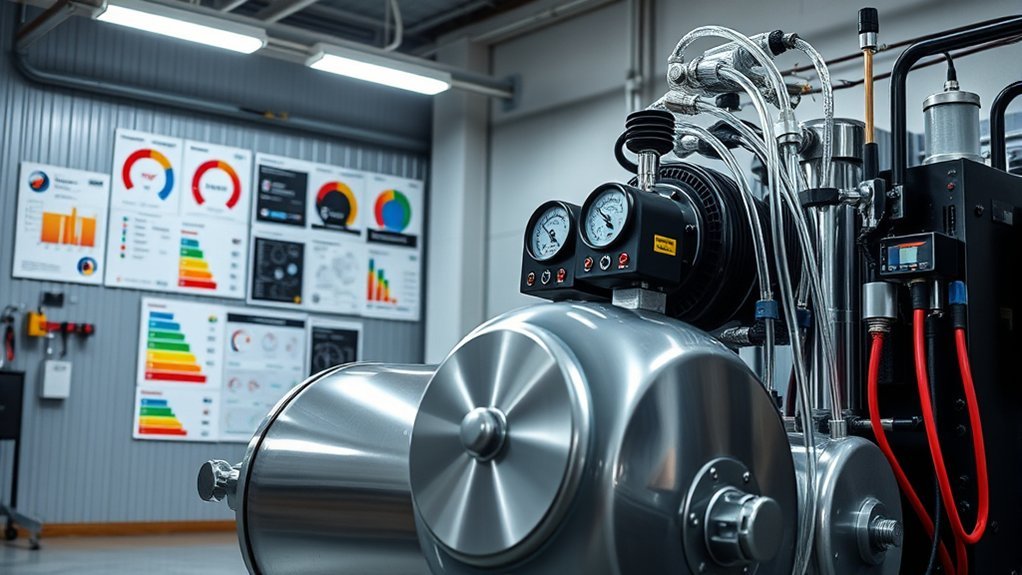
Measuring the efficiency of an air compressor involves analyzing specific performance metrics that quantify how effectively it converts electrical or mechanical energy into compressed air. Key indicators include power consumption relative to airflow output, often expressed as cubic feet per minute (CFM) per kilowatt. We also assess air quality, guaranteeing minimal contamination and moisture that could impact system performance. Noise levels are vital, as excessive sound indicates energy losses and mechanical inefficiencies. By monitoring these parameters, we gain an all-encompassing understanding of the compressor’s operational effectiveness. Precise efficiency measurement enables us to identify energy waste, optimize performance, and uphold compliance with environmental and safety standards, all while maintaining high air quality and acceptable noise levels.
Key Factors That Influence an Air Compressor’s Efficiency
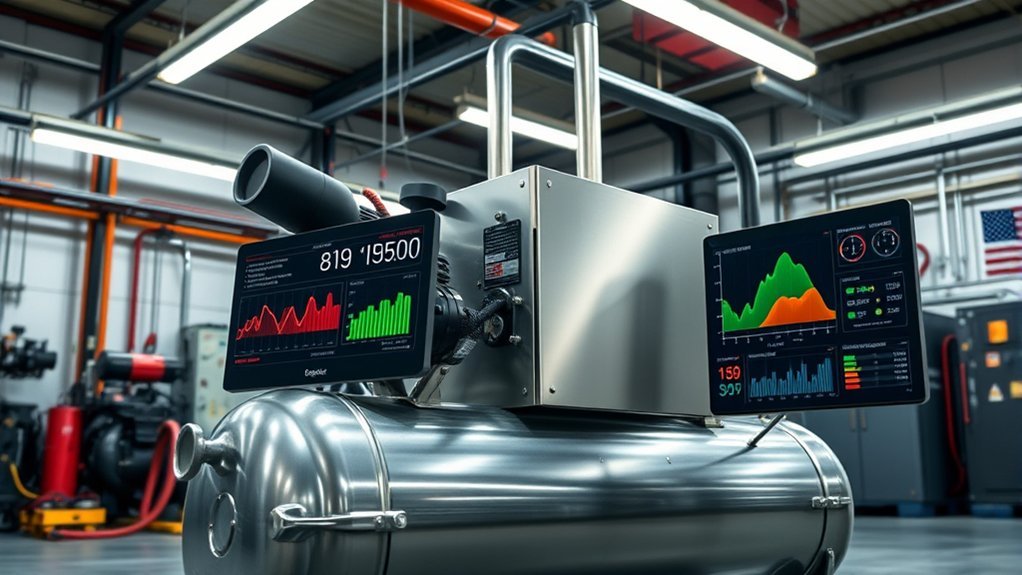
Effective load management minimizes unnecessary energy consumption by matching compressor operation to demand, thereby optimizing efficiency. Regular maintenance guarantees that components function correctly, reducing energy losses caused by wear or dirt buildup. Together, these factors critically influence the overall performance and efficiency of an air compressor system.
Load Management Strategies
Optimizing load management is crucial for enhancing an air compressor’s efficiency, as it directly influences energy consumption and operational performance. Effective strategies ensure the compressor operates within ideal load ranges, reducing unnecessary energy use and minimizing fluctuations in air quality and noise levels. Proper load management prevents short cycling, which can degrade air quality and elevate noise emissions.
| Load Condition | Impact on Efficiency |
|---|---|
| Low Load | Increased energy waste, poor air quality |
| Optimal Load | Max efficiency, stable noise levels |
| Overload | Equipment stress, higher noise levels |
| Underload | Energy waste, inconsistent air quality |
Maintenance and Upkeep
Regular maintenance and upkeep are essential for guaranteeing an air compressor operates at peak efficiency, as neglect can lead to performance degradation and increased energy consumption. Proper lubrication, filter replacement, and component inspections minimize wear and prevent unnecessary strain on the system. Consistent maintenance also supports noise reduction by preventing vibrations and loose parts that amplify sound levels. Adhering to safety protocols during upkeep reduces risks associated with high-pressure systems and ensures safe operation. Additionally, routine checks of pressure settings and cooling systems maximize energy use and prevent overheating. By systematically addressing these factors, we maintain ideal compressor performance, prolong equipment lifespan, and enhance overall efficiency. Ultimately, diligent maintenance is a cornerstone for achieving consistent, safe, and energy-efficient operation.
Comparing Different Types of Air Compressors Based on Efficiency
When comparing air compressor types, energy consumption differences markedly impact operational costs and efficiency. Maintenance requirements and durability also play vital roles in long-term performance, affecting overall lifecycle costs. Analyzing these factors helps identify which compressor offers the best balance of efficiency and reliability.
Energy Consumption Variances
Different types of air compressors exhibit significant variations in energy consumption, primarily driven by their underlying compression mechanisms and design efficiencies. These variances directly influence operational costs, noise levels, and environmental impact. For example:
- Rotary screw compressors typically offer higher efficiency for continuous operation but generate more noise.
- Reciprocating compressors often consume more energy during startup, impacting overall efficiency.
- Centrifugal compressors provide lower energy consumption at high capacities, reducing environmental impact.
- Scroll compressors excel in energy efficiency and produce less noise, minimizing environmental footprint.
Understanding these differences helps us evaluate how each compressor type affects energy use, noise pollution, and environmental sustainability, enabling more informed, efficiency-focused choices.
Maintenance and Durability
While efficiency is a key factor in selecting an air compressor, maintenance requirements and durability considerably influence long-term performance and operational costs. Different compressor types demand varying lubrication techniques, impacting both reliability and ease of maintenance. For example, oil-lubricated models generally offer enhanced durability but require regular oil changes, while oil-free compressors reduce maintenance but may have shorter lifespans. Noise reduction features also play a role in durability, as quieter units often incorporate advanced soundproofing and vibration damping, decreasing wear and tear. These factors directly affect operational longevity and downtime costs. Selecting a compressor with appropriate lubrication methods and noise mitigation can optimize maintenance schedules, extend service life, and guarantee consistent efficiency over the unit’s lifespan.
How to Read and Interpret Efficiency Ratings on Specification Sheets
Understanding how to read and interpret efficiency ratings on specification sheets is essential for accurately evaluating an air compressor’s performance. First, review the Efficiency Percentage, which indicates how well the compressor converts input energy into compressed air, directly affecting air quality. Second, examine the Power Consumption ratings; lower values suggest higher efficiency and reduced operational costs. Third, analyze Noise Levels to ensure suitability for your environment, as quieter models often indicate better design efficiency. Fourth, assess Air Quality Ratings, which reflect filtration and moisture control, impacting both efficiency and output reliability. By systematically analyzing these metrics, you can determine the compressor’s overall effectiveness, operational costs, and suitability for your specific needs, guaranteeing peak performance.
Practical Tips to Improve Your Air Compressor’s Efficiency
Optimizing your air compressor’s efficiency requires implementing targeted operational strategies and maintenance practices. Maintaining ideal air quality ensures the system doesn’t work harder than necessary, reducing energy consumption and prolonging component life. Regularly inspecting and replacing filters prevents contamination and maintains consistent airflow, which directly impacts efficiency. Controlling noise levels through proper enclosures or vibration isolation minimizes energy loss caused by mechanical vibrations and supports a safer work environment. Additionally, monitoring air quality and noise metrics can identify inefficiencies early, enabling corrective actions before major issues develop. Consistent maintenance, coupled with precise adjustments based on operational data, ensures the compressor operates at peak efficiency, conserving energy and reducing operational costs. These practices are essential for maximizing performance and sustainability.
Common Mistakes That Can Lower Compressor Efficiency and How to Avoid Them
Many common mistakes directly compromise compressor efficiency by causing unnecessary energy consumption or mechanical stress. First, inadequate air compressor lubrication leads to increased friction and wear, reducing operational lifespan. Second, neglecting noise reduction techniques can cause vibrations that strain components, lowering efficiency. Third, improper maintenance schedules, such as delayed filter or oil changes, restrict airflow and increase power draw. Fourth, running the compressor at non-optimal loads or pressure settings results in excess energy use. Addressing these issues involves ensuring proper lubrication levels, implementing effective noise mitigation methods, adhering to maintenance routines, and optimizing operational parameters. By focusing on these areas, we can notably improve compressor efficiency, minimize mechanical stress, and extend equipment longevity.
Why Choosing a High-Efficiency Air Compressor Saves You Money in the Long Run
Choosing a high-efficiency air compressor can considerably reduce operational costs over time because it consumes less energy to perform the same workload as less efficient models. This energy savings directly lower electricity bills and decrease overall operating expenses. Additionally, high-efficiency models often improve air quality by maintaining consistent pressure and reducing moisture carryover, which minimizes contamination in downstream processes. Noise levels are also markedly reduced, creating a safer and more comfortable work environment. These compressors typically feature advanced control systems that optimize performance and prevent wasteful energy use. Over the long term, the initial investment in a high-efficiency compressor yields considerable savings through lower energy consumption, reduced maintenance costs, and improved air quality, making it a financially sound choice for sustainable operations.
Frequently Asked Questions
How Often Should I Recalibrate My Air Compressor’s Efficiency Rating?
We recommend recalibrating your air compressor’s efficiency rating annually, or whenever you notice efficiency fluctuations. Regular calibration guarantees accurate performance data, helping maintain ideal operation and preventing unnecessary energy consumption or system failures.
Do Environmental Conditions Affect an Air Compressor’s Efficiency Rating?
Environmental impact, like a ripple in still water, greatly influences an air compressor’s efficiency rating. Temperature fluctuations can alter internal components and airflow, making it essential to monitor environmental conditions for ideal performance and accurate efficiency assessments.
Can Maintenance Practices Improve an Existing Compressor’s Efficiency?
We believe maintenance practices, like lubrication optimization and component upgrades, considerably enhance compressor efficiency by reducing friction and wear, minimizing energy loss, and optimizing performance, ultimately leading to prolonged equipment lifespan and operational cost savings.
What Is the Typical Lifespan of an Air Compressor Based on Efficiency?
We find that air compressors typically last around 10 to 15 years, guided by efficiency metrics and performance benchmarks, as diligent maintenance and operational practices can extend their lifespan, ensuring sustained efficiency and ideal output over time.
Are There Industry Standards for Rating Air Compressor Efficiency?
We find that industry standards for rating air compressor efficiency include established efficiency benchmarks and performance metrics set by organizations like ISO and ASME, ensuring consistent evaluation and comparison of compressor performance across different models and applications for technical accuracy.
Conclusion
Just as a finely tuned engine maximizes performance while conserving fuel, selecting and maintaining a high-efficiency air compressor guarantees ideal energy use and cost savings. By understanding efficiency ratings and addressing common pitfalls, we can avoid unnecessary waste and operational costs. Ultimately, a strategic focus on compressor efficiency transforms it from a mere technical metric into a crucial component of sustainable, reliable industrial systems—echoing the precision and foresight of a well-engineered machine.