Studies show that proper maintenance can extend an air compressor’s lifespan by up to 50%. Yet, many operators overlook routine checks, risking costly breakdowns and safety hazards. Ensuring ideal operation requires adherence to precise safety protocols and regular component inspections. As we explore essential maintenance practices and safety measures, you’ll discover how to maximize efficiency while safeguarding personnel and equipment—an essential balance for any facility relying on compressed air systems.
Key Takeaways
- Regularly perform lubrication, filter changes, and component inspections to extend compressor lifespan and ensure efficient operation.
- Use appropriate PPE and conduct pre-operation safety checks to prevent accidents during compressor use.
- Monitor pressure, temperature, and vibration levels to detect early signs of malfunction or safety hazards.
- Tighten loose components, replace worn bearings, and address noise issues promptly to maintain safety and performance.
- Follow manufacturer guidelines for startup, shutdown, and emergency procedures to ensure safe and reliable operation.
How Regular Maintenance Extends Your Air Compressor’s Lifespan
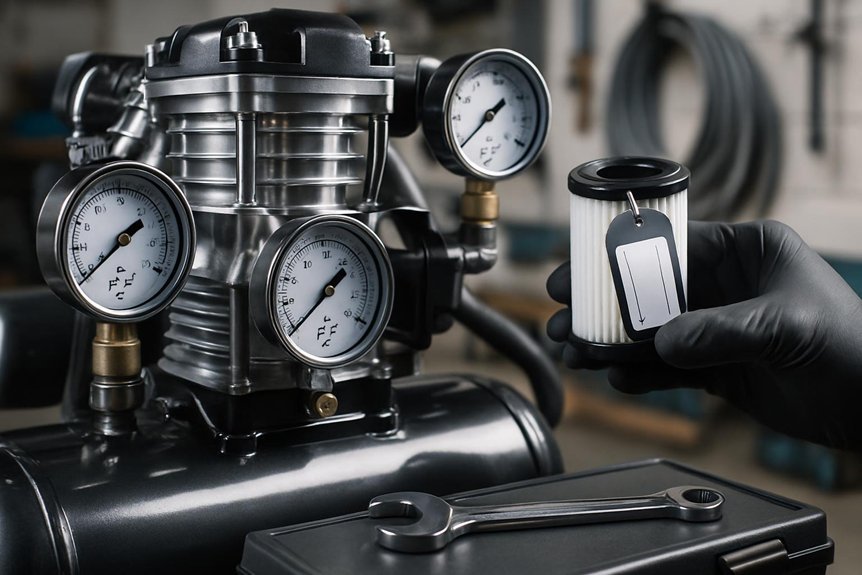
Regular maintenance is essential for maximizing the operational lifespan of your air compressor. Adhering to proper lubrication schedules guarantees that components operate smoothly, reducing wear and preventing premature failure. Consistent lubrication minimizes friction, heat buildup, and metal-on-metal contact, which are critical factors in extending service life. Additionally, implementing noise reduction techniques during maintenance helps identify issues early and prevents excessive operational stress that could accelerate component degradation. Proper lubrication and noise management contribute to the overall efficiency and durability of the compressor, decreasing downtime and repair costs. By maintaining strict schedules and monitoring noise levels, we can assure peak performance, preserve critical parts, and prolong the compressor’s functional life.
Key Safety Practices to Prevent Accidents During Operation
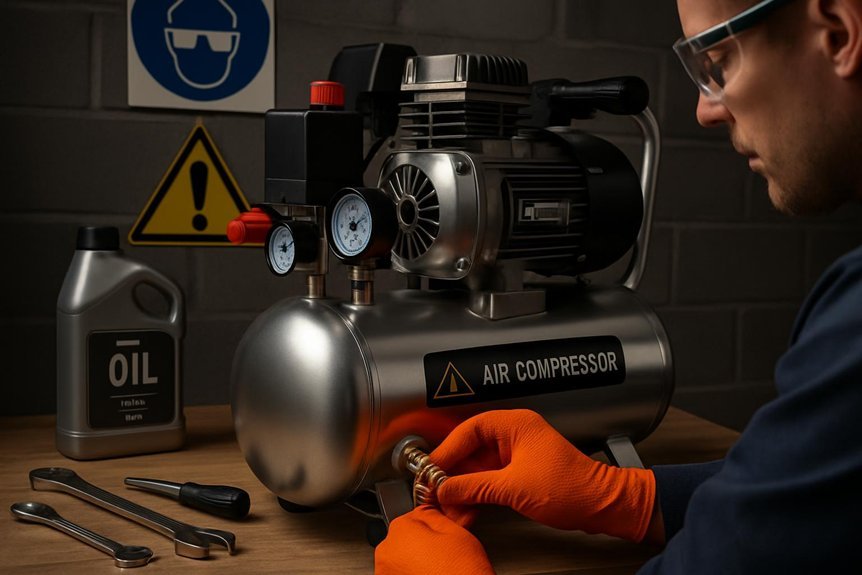
Maintaining proper safety practices during compressor operation is essential to prevent accidents and ensure a secure work environment. Adhering to established procedures reduces risks associated with high-pressure systems. Always guarantee personnel wear appropriate personal protective equipment (PPE), including safety glasses, ear protection, and gloves. Regularly review emergency procedures so all team members know how to respond swiftly to malfunctions or accidents. Key safety practices include:
Prioritize safety with PPE, regular checks, and emergency preparedness for secure compressor operation.
- Conducting pre-operational safety checks before starting the compressor
- Ensuring all safety guards and shields are in place
- Monitoring pressure gauges continuously for abnormal readings
- Training staff on emergency procedures and lockout/tagout protocols
These measures considerably minimize hazards and promote safe compressor operation.
Troubleshooting Common Air Compressor Issues
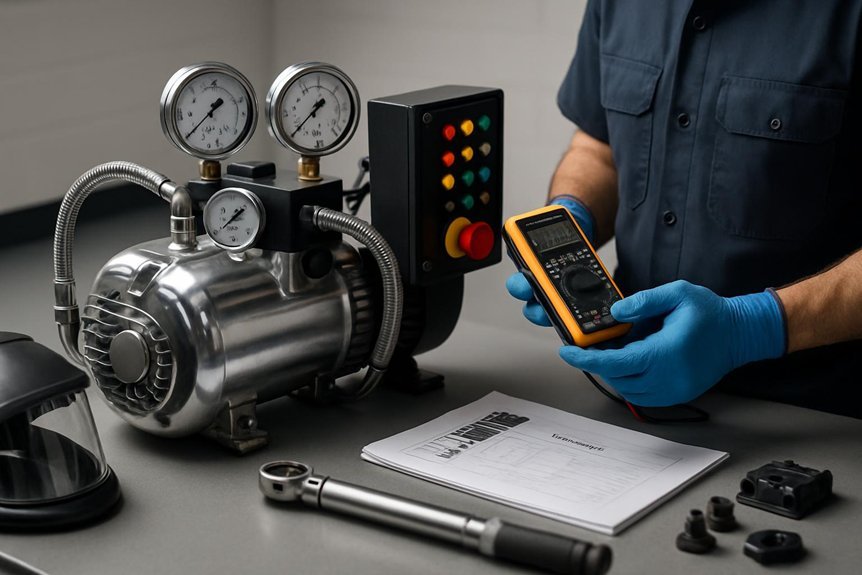
When an air compressor malfunctions, quick and accurate troubleshooting is essential to minimize downtime and prevent further damage. Common issues include excessive noise, pressure fluctuations, or inconsistent airflow. To address noise, inspect for loose panels or worn bearings; noise reduction may require component lubrication or replacement. For pressure regulation problems, verify the pressure switch settings and ensure the regulator is functioning correctly. Below is a troubleshooting guide:
| Issue | Solution |
|---|---|
| Excessive noise | Tighten components, replace worn bearings |
| Fluctuating pressure | Adjust pressure switch, check for leaks |
| Insufficient airflow | Clean or replace air filters, inspect valves |
| Pressure inconsistencies | Calibrate pressure regulator, inspect control system |
Essential Components to Inspect and Replace Periodically
To guarantee peak performance and safety, we must routinely inspect and replace key components of the air compressor. Critical components include lubrication protocols, filters, valves, and belts. Proper lubrication ensures smooth operation and prevents premature wear, making regular checks of oil levels and quality critical. Filter replacement is essential to prevent contaminants from entering the system, maintaining air quality and compressor longevity. Valves should be inspected for leaks or wear, ensuring proper pressure regulation. Belts must be checked for cracks or slack, as they drive essential compressor functions. Neglecting these components can lead to inefficiencies, increased energy consumption, or system failure. Regular maintenance of these elements ensures reliable operation and extends the compressor’s service life.
Best Practices for Safe and Efficient Air Compressor Use
Implementing best practices for safe and efficient air compressor use is essential to maximize performance and prevent accidents. Ensuring ideal air compressor efficiency involves regular maintenance, such as checking for leaks and verifying proper pressure settings. Proper lubrication reduces wear and extends compressor lifespan, while maintaining clean air filters prevents contamination and improves operation. Noise reduction strategies, like installing silencers or sound enclosures, minimize sound levels and enhance safety in the workspace. Adhering to manufacturer guidelines for startup and shutdown procedures also minimizes risks associated with pressure surges. Consistent monitoring of temperature and vibration levels detects potential issues early, preventing costly breakdowns. By systematically applying these practices, we promote safe operation, optimize efficiency, and create a more productive work environment.
Frequently Asked Questions
How Often Should I Schedule Professional Inspections for My Air Compressor?
We recommend scheduling professional inspections for your air compressor at least annually, aligning with a maintenance schedule that guarantees peak performance and safety. Inspection frequency may increase based on usage intensity and operating conditions.
What Are the Environmental Considerations for Safe Air Compressor Operation?
Like a tightrope walker balancing carefully, we monitor emissions regulations and noise pollution to guarantee safe compressor operation, minimizing environmental impact while complying with standards, and safeguarding surrounding communities from excessive noise and harmful emissions.
Can I Upgrade Parts to Improve My Air Compressor’s Safety Features?
Yes, we can upgrade parts to enhance safety features, including safety upgrades and part enhancements, guaranteeing better protection and operational reliability. Always guarantee compatibility and consult manufacturer guidelines before implementing any upgrades for maximum safety.
How Do I Safely Dispose of Old or Damaged Compressor Parts?
We safely dispose of old or damaged compressor parts by following recycling procedures and properly managing hazardous waste, ensuring compliance with environmental regulations. Always use certified disposal facilities to prevent contamination and protect environmental health.
What Training Is Recommended for New Operators of Air Compressors?
We recommend new operators pursue formal operator certification programs emphasizing safety protocols, technical skills, and equipment handling. This training guarantees they understand compressor operation, maintenance procedures, and emergency responses, promoting safe, efficient, and compliant air compressor use.
Conclusion
Regular maintenance is crucial; it can extend an air compressor’s lifespan by up to 50%. By adhering to safety protocols and performing routine inspections, we can reduce accidents and downtime, ensuring peak performance. Staying proactive with component checks and safety practices not only safeguards personnel but also maximizes efficiency. Ultimately, diligent care and adherence to guidelines are our best defenses against costly breakdowns, helping us keep operations running smoothly and safely.