industrial air compressor price guide: Ultimate Costs
Industrial air compressor price guide searches usually come from one of three places: a buyer comparing equipment prices, a facility manager trying to size a system correctly, or a procurement team building a realistic total cost of ownership forecast. If that’s you, the short answer is this: small piston systems can start below $1,000, many rotary-screw packages land between $6,000 and $45,000, and large centrifugal systems can exceed $100,000 before installation.
We researched pricing across manufacturers and distributors, compared public list pricing, and reviewed market data to build this guide around what buyers actually need: price ranges, a step-by-step sizing method, a downloadable TCO checklist, and negotiation tips that help lower total spend. Based on our analysis of market data, the biggest mistake we see is focusing on purchase price alone when energy can represent roughly 60–80% of lifecycle cost. We recommend skipping straight to Cost by size if you need a fast budget estimate, reading Sizing if you need a clean step-by-step method, and using the Checklist sections when you’re ready to negotiate.
One more point before we get into numbers: price variation is real. The same nominal HP package can vary by 10–25% depending on drive type, integrated dryer, controls, warranty term, local labor rates, and whether you buy OEM-direct or through distribution. That’s why a solid industrial air compressor price guide has to include both equipment pricing and operating math.
Market snapshot 2026: current prices, trends and why costs vary
As of 2026, compressor pricing has stabilized compared with the most volatile years of 2021–2023, but it has not returned to pre-inflation norms. Based on our research, most mainstream industrial compressor categories saw modest year-over-year price movement from late into 2026, commonly in the 3–7% range depending on motor size, electronics, and freight. Input costs still matter. Steel, copper windings, variable-speed electronics, and imported components all influence final equipment cost, while energy-efficiency regulations continue to push buyers toward better controls and lower specific power.
According to the U.S. DOE, compressed air remains one of the costliest utilities in manufacturing when systems are poorly sized or leak-ridden. Broad industrial market reporting from Statista also points to persistent industrial equipment inflation and regional demand differences that affect dealer inventories. We found average lead times for common 10–50 HP rotary-screw packages in often sit around 2–6 weeks, while larger 100+ HP custom packages can stretch to 8–16 weeks. Oil-free and engineered systems tend to run longer.
Regional variance is another hidden driver. In our pricing review, distributor channels often carry markup bands of roughly 8–20% over factory transfer pricing, while OEM-direct programs may reduce markup but shift more installation coordination to the buyer. A useful budget table looks like this:
- OEM direct: lower equipment markup, often less local service baked in
- Authorized distributor: moderate markup, usually stronger start-up and local support
- Full turnkey contractor: highest initial quote, but ancillaries and commissioning are more likely included
Buyer behavior has shifted too. Rising electricity costs make efficient packages more attractive, while air-quality and emissions compliance push food, pharma, electronics, and municipal buyers toward oil-free systems. The EPA also influences decisions where condensate disposal, air treatment, and environmental handling rules affect installed cost.
industrial air compressor price guide: Price breakdown by compressor type
The fastest way to use an industrial air compressor price guide is to separate compressors by type, because duty cycle and air quality requirements drive most of the pricing spread.
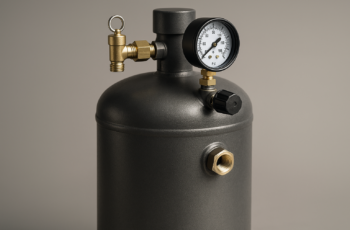
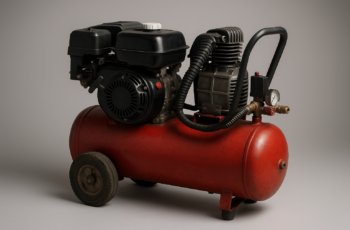
Reciprocating or piston compressors use a piston-cylinder design and are best for intermittent duty. Typical industrial 1–10 HP models generally cost $800–$3,500. Common examples include the Quincy QT series and the Ingersoll Rand Type 30, often sold in the low-thousands depending on tank and motor configuration. These are popular in maintenance shops and low-duty fabrication because they’re cheaper upfront but louder and less efficient under continuous load.
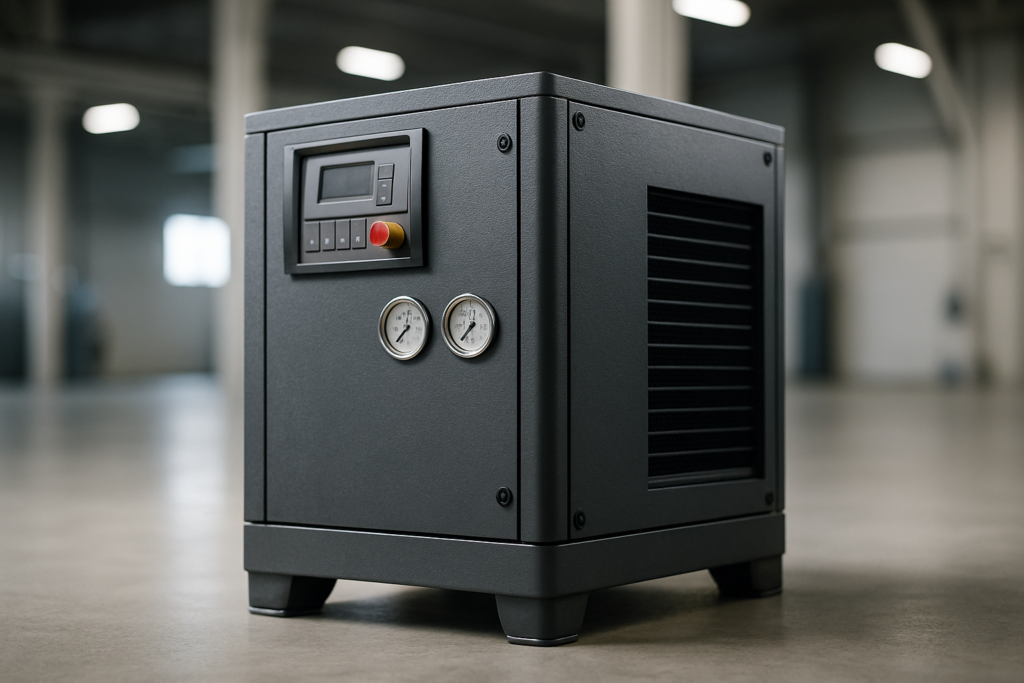
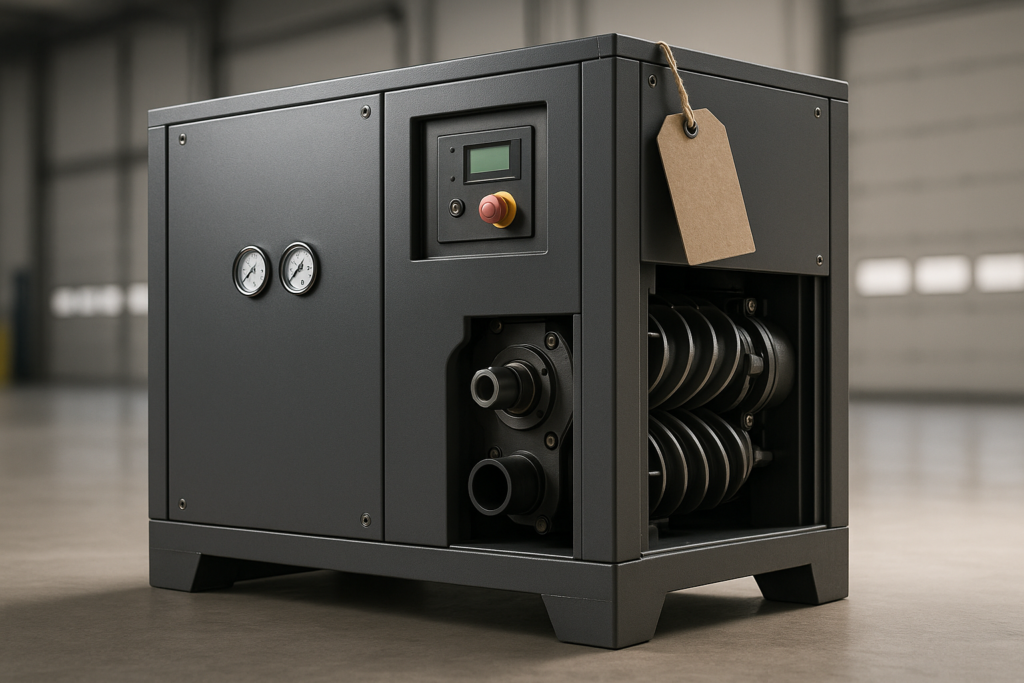
Rotary screw compressors compress air continuously with meshing rotors, making them the standard choice for plants running multiple shifts. A typical 10–100 HP package usually lands between $6,000 and $45,000. Examples include Atlas Copco GX/GA packages and Kaeser SX/SM/ASD series. Continuous-duty rating, VSD control, integrated dryer packages, and premium controllers can push pricing sharply higher, but these features often lower operating cost.
Centrifugal compressors are dynamic machines built for very high flow and central plant applications. Systems above HP frequently start around $50,000 and can exceed $250,000. Ingersoll Rand and Atlas Copco both sell centrifugal platforms for major industrial demand centers. These systems cost more because they support large CFM volumes, sophisticated controls, engineered installation, and often stricter reliability requirements.
Scroll compressors usually serve quieter, cleaner, lower-flow applications such as labs, dental, medical support areas, and electronics. Oil-free variants cost more than oil-lubricated models because they must maintain air purity without lubricant carryover. In heavily regulated operations, that premium can still be the cheaper long-term choice once filtration, contamination risk, and product loss are considered.
industrial air compressor price guide: Cost by size — HP, CFM and tank capacity
In any industrial air compressor price guide, HP, CFM, and storage are the core pricing variables. Horsepower affects motor size and electrical demand. CFM determines how much compressed air the machine can deliver. Tank or receiver capacity helps manage peaks, reduce cycling, and support system stability. For rough planning, many buyers use the rule of thumb that 1 HP supports about 4–6 CFM at roughly PSI, though actual performance varies by compressor design and pressure target.
Here is a practical budgeting matrix:
- 5 HP: about 18–25 CFM, equipment cost $1,500–$4,500, small mechanical-room footprint, annual energy often $2,500–$5,000 depending on usage
- 15 HP: about 60–75 CFM, equipment cost $5,000–$12,000, typical for light production cells
- 30 HP: about 120–150 CFM, equipment cost $9,000–$20,000, often the point where dryers and controls become standard
- 75 HP: about 300–375 CFM, equipment cost $22,000–$55,000, common in multi-shift plants
- 200 HP: roughly 800–1,000+ CFM, equipment cost $60,000–$180,000, usually requires engineered installation
Add-ons change budget fast. A refrigerated dryer often adds $1,200–$12,000. A desiccant dryer may add $6,000–$40,000. Receiver tanks commonly add $500–$5,000, while advanced controls or sequencing can add 5–15% to package cost. We found hazardous-area ratings, special coatings, stainless wetted components, and low-ambient or high-ambient packages commonly add another 5–30% over base equipment price.
Tank sizing also affects final quote. A buyer choosing a HP screw with a 120-gallon receiver and integrated dryer may pay thousands less upfront than a package with a large standalone receiver, external filtration skid, and remote monitoring. Those differences matter when comparing quotes that look similar on horsepower alone.
Operating & lifecycle costs (energy, maintenance, parts) — TCO formula and calculator
Total Cost of Ownership (TCO) = purchase price + installation + energy + maintenance + downtime costs – incentives. That one line explains why the cheapest quote is often not the lowest-cost decision. Based on our research and DOE guidance, energy commonly represents about 60–80% of lifecycle cost for industrial compressed air systems, especially when machines run long hours.
Here is a featured-snippet style TCO method for a 50 HP rotary-screw example:
- Purchase price: $18,000
- Installation and ancillaries: $7,000
- Motor demand: about kW at load
- Annual run hours: 4,000
- Electric rate: $0.12/kWh
- Annual energy: × 4,000 × 0.12 = $17,760
- Annual maintenance: filters, oil, separator, labor = $1,200–$2,500
- Downtime allowance: if one failure costs $3,000 in lost production, include it
- Incentives: subtract rebate, for example $2,000
Five-year TCO in this example can exceed $115,000, and the machine itself may represent less than one-quarter of that total. Run it/7, and energy can more than double. A part-time shop operating 2,000 hours/year might spend $8,880 in annual electricity at the same rate, while a continuous 8,000-hour operation spends $35,520. That spread is why we recommend collecting actual hours/day, average line pressure, utility rate, maintenance labor rates, and parts pricing before comparing equipment.
For a simple calculator template, use CSV fields such as: HP, kW, CFM, hours/day, days/year, utility rate, maintenance labor/hour, annual parts cost, downtime cost/event, expected events/year, incentives. We recommend adding a kW/100 CFM field because it’s one of the strongest predictors of long-term value.
How to size an industrial air compressor (step-by-step) — featured snippet format
A correct sizing method saves more money than most buyers expect. Oversizing by 40% is common in the field, and it drives both capital cost and electricity waste. Here’s the clean six-step method we use in this industrial air compressor price guide.
- Inventory tools and processes and list each item’s maximum CFM demand.
- Apply a diversity factor because not every load runs at max output at the same time.
- Add a reserve margin of about 20–30% for peaks and future growth.
- Convert CFM to HP using manufacturer curves, not only rules of thumb.
- Select the right duty-rated compressor for intermittent or continuous operation.
- Confirm piping and pressure-drop limits so the compressor is not forced to run at unnecessarily high pressure.
Worked example: a shop has three tools rated at 10, 25, and CFM. The raw total is 75 CFM. If a realistic diversity factor is 0.75, expected coincident demand is about 56 CFM. Add a 25% reserve, and target flow becomes 70 CFM. That points many buyers toward a 15 HP rotary screw or a carefully selected high-duty piston setup, depending on runtime. A receiver tank in the 120–240 gallon range may be appropriate if short peaks are frequent.
Quick validation checks matter. Confirm runtime hours, ambient temperature, duty cycle, required air quality, and acceptable pressure drop. We found many buyers overspend because they ignore intermittent peaks and instead buy for worst-case simultaneous load. In food, pharma, and electronics, air quality can push you toward oil-free compression or additional treatment, which changes the budget far more than HP alone.
Buying strategies: new vs used, leasing, rebuilds, warranties and negotiation checklist
New equipment offers the lowest risk, but not always the best short-term cash profile. Used and surplus machines often sell for 30–60% less than comparable new units, yet that discount only makes sense if remaining life, service support, and parts availability are still strong. In our experience, the break-even depends on how expensive downtime is. A fabrication shop might tolerate more risk than a municipal plant or pharmaceutical line.
For a 50 HP unit, leasing may run roughly $400–$900 per month depending on term, credit, and whether installation is included. Rebuilds often cost around 30–50% of new replacement value. Extended warranties commonly add 5–15% of equipment cost but may still be worth it if the compressor is production-critical. We recommend inspecting used machines for run hours, maintenance logs, oil analysis, separator history, controller alarms, motor insulation condition, and airend noise.
Here’s the negotiation checklist we think more buyers should use:
- Ask for kW/100 CFM at your target pressure, not only nameplate HP.
- Request a full spare parts list with annual maintenance pricing.
- Ask for performance curves and turndown data for VSD units.
- Negotiate 90–120 day price protection.
- Push for startup, commissioning, and operator training in writing.
- Negotiate installation labor rates before awarding the job.
- Ask whether freight, rigging, and disposal are included.
- Compare warranty terms on both motor and airend.
For incentives, start with the DOE, then check local utility rebate pages and the DSIRE database. The simple process is: gather baseline energy data, request pre-approval, obtain vendor efficiency specs, then model rebates directly into your TCO comparison.
Installation, ancillaries and hidden costs (dryers, filters, piping, permits)
Installed cost is where many budgets go off track. Buyers see a compressor quoted at $20,000, then discover the full project is $32,000 after treatment, piping, electrical work, and commissioning. In this industrial air compressor price guide, we strongly recommend separating equipment cost from installed system cost on every quote.
Common add-ons include a refrigerated dryer at $1,200–$12,000, a desiccant dryer at $6,000–$40,000, and piping with drops at roughly $800–$8,000 depending on building size and material choice. Filters, separators, auto drains, condensate management, and point-of-use treatment can add several thousand more. If your process requires stricter ISO air classes, treatment cost rises quickly. For example, food packaging or instrumentation air may justify multiple filter stages and low-dew-point drying where a general shop would use only a refrigerated dryer and coalescing filter.
Electrical and structural work can be just as significant. A service upgrade may add $5,000–$30,000 if panels, disconnects, transformers, or cable runs need modification. Concrete pads, vibration isolation, and ventilation improvements often add another $1,000–$10,000. We researched turnkey quotes where a nominal HP screw package priced at $34,000 became a $52,000 project once dryer, tank, piping, controls, and startup were included.
Use this installation quote checklist to compare vendors fairly:
- Scope: equipment, rigging, electrical, piping, drains, permits
- Startup testing: pressure, flow, dew point, leak check
- Vibration isolation and foundation requirements
- Training for operators and maintenance staff
- Documentation: manuals, spare parts, recommended PM intervals
Brands, models and real price ranges (Atlas Copco, Ingersoll Rand, Kaeser, Sullair, Quincy and others)
Brand matters because efficiency, controls, service network depth, and included support all affect both price and uptime. Based on our analysis of market data, European OEMs often price higher but include stronger control platforms and broader service packages, while U.S. and some Asian brands can be more competitive on initial equipment cost.
Typical brand patterns:
- Atlas Copco: premium positioning; GX and GA ranges commonly cover small to mid-horsepower packages. Product reference: Atlas Copco.
- Ingersoll Rand: broad coverage from piston through centrifugal; Type and R-series are common benchmarks. Product reference: Ingersoll Rand.
- Kaeser: strong controls and system efficiency; SX, SM, and ASD lines are widely specified. Product reference: Kaeser.
- Sullair: durable industrial focus, often favored in heavy-duty environments.
- Quincy: strong piston and rotary-screw presence, often competitive in light industrial.
- Gardner Denver, ELGi, FS-Curtis, Chicago Pneumatic, and Kobelco: each occupies useful niches in budget, dealer support, or efficiency packages.
Real market bands we found: small branded piston packages usually sit under $4,000; 25–50 HP screw packages often fall between $10,000 and $28,000; 75–100 HP premium VSD packages can exceed $40,000. Buyers often pay a premium of 8–18% for advanced controls, integrated dryers, remote monitoring, or broad global service support. That premium can be justified if your plant loses thousands per hour during downtime.
When reviewing a quote, don’t compare logos alone. Compare specific power, service interval, included warranty, controller capability, local technician coverage, and spare parts lead time. Those factors often explain why one quote is $6,000 higher than another for the same nominal HP.
Case studies, regional price variance and three real-world examples
Price differences make more sense when you see how systems are purchased in real operating environments. We researched three common scenarios and found that geography, duty cycle, and included accessories routinely move total project cost by 5–20%.
Case 1: small fabrication shop. A Midwest shop needed about 70 CFM and compared a HP piston setup with a HP rotary screw. Quote A came in near $8,500 for piston equipment plus minimal treatment. Quote B was about $13,900 for a screw package with refrigerated dryer and receiver. The screw option cost more upfront but lowered noise, improved duty handling, and reduced maintenance disruption. The lesson: compare productivity impact, not just purchase price.
Case 2: manufacturing plant. A coastal metro facility replacing a HP unit received two turnkey quotes: one at $46,000, another at $54,500. The higher quote included VSD control, startup, training, and three years of support. Local labor and freight made metro pricing about 12% higher than comparable rural Midwestern bids. The lesson: ask vendors to break out labor, freight, warranty, and ancillaries line by line.
Case 3: municipal water plant. The buyer required cleaner air and stronger redundancy. A central package with treatment and controls reached $118,000–$165,000, depending on redundancy and instrumentation. Here, warranty length and service response mattered more than lowest price because downtime risk carried public-service consequences. The lesson: for critical infrastructure, higher-efficiency or higher-support equipment often wins on risk-adjusted TCO.
Across all three, we found vendor totals usually differed because of duty rating, ancillaries included, and warranty duration. Used units can work well, but only if you inspect service records, verify hours, and price in likely repairs.
FAQ — quick answers to common buyer questions
These are the short answers buyers ask for most often when using an industrial air compressor price guide. We’ve kept them concise and number-driven so procurement teams can use them quickly during budgeting, vendor screening, and internal approvals.
Use the FAQ below for fast comparisons, then return to the sizing, TCO, and installation sections if you need a full budget model. Based on our research, these five questions account for most early-stage buying decisions in 2026.
What is the typical price of an industrial air compressor?
The typical range depends on type and size: piston compressors often cost $800–$3,500, rotary screw compressors usually cost $6,000–$45,000, and centrifugal systems commonly range from $50,000–$250,000+. Installed system cost is higher because dryers, filters, tanks, piping, and electrical work often add 15–40% to the base equipment price.
How much does it cost to operate an industrial air compressor annually?
A quick way to estimate annual energy cost is kW × annual hours × electric rate. Example: a compressor drawing 25 kW for 3,000 hours at $0.11/kWh costs about $8,250/year, while a larger or longer-running system can easily reach $20,000–$40,000+. DOE guidance consistently shows energy is the largest lifecycle cost in most compressed-air systems.
Should I buy new or used, and how do I evaluate used compressors?
Buy new if uptime is critical, if the process is regulated, or if local service support is essential. Used compressors can save 30–60%, but we recommend checking run hours, maintenance history, oil analysis, leak-down or compression results, motor condition, and controller alarms before accepting the risk.
What additional equipment do I need and how much will it add to cost?
Most systems need a dryer, filters, separators, receiver tank, condensate management, and piping. As a rule, Ancillary budget = 10–40% of compressor base price, depending on air quality requirements; cleaner ISO classes usually mean higher treatment cost.
Where can I find rebates, incentives or financing for compressor upgrades?
Start with the DOE, your local utility rebate page, and searchable tools like DSIRE. Gather baseline energy use, request utility pre-approval, collect vendor efficiency data such as kW/100 CFM, and subtract rebate value directly in your TCO model before selecting a supplier.
Unique sections (gaps most competitors miss) — negotiation scripts, TCO template & local market checklist
Most articles stop at broad price ranges. Buyers need tools they can use immediately. That’s where this industrial air compressor price guide goes further.
Negotiation script: copy this email opener: “We are comparing three proposals for a [HP] compressor package. Please provide kW/100 CFM at our required pressure, a complete spare-parts list, startup and training inclusions, price protection for days, and separate line items for freight, installation, and warranty options.” In our experience, asking those exact questions often reduces dealer markup by 3–8% because it forces apples-to-apples pricing.
Eight-point vendor questions:
- What is the delivered kW/100 CFM at our setpoint?
- What accessories are included versus optional?
- What are annual maintenance parts costs?
- How many local technicians support this model?
- What are typical parts lead times?
- What is the warranty on motor, airend, and controls?
- What labor is included in startup?
- Can you hold pricing for 90–120 days?
TCO template: build a CSV or Excel sheet with columns for HP, CFM, kW, hours/year, utility rate, annual parts, labor rate, downtime cost, incentives, installed price. A sample completed row for a HP unit might show: HP, CFM, kW, 4,000 hours, $0.12/kWh, $1,800 maintenance, $3,000 downtime reserve, $2,000 rebate, $25,000 installed price. That single row often reveals that a “cheaper” machine becomes more expensive within two to four years.
Local-market checklist: compare freight, sales tax, local permit fees, prevailing wage requirements, electrician rates, and travel charges by region. We found coastal metro projects can run 10–20% higher than rural Midwestern installs for identical equipment once labor and freight are included. If you budget locally instead of nationally, your quote review becomes much more accurate.
Conclusion — actionable next steps and recommended checklist
If you’re buying this year, the smartest move is to turn this pricing research into a short decision process. We recommend this seven-step action plan: 1) collect actual CFM, HP, pressure, and duty-cycle data; 2) run a TCO model with energy, maintenance, and incentives; 3) request three apples-to-apples quotes; 4) check utility and tax incentives; 5) compare lifecycle cost, not just purchase price; 6) negotiate warranty, startup, and spare parts; 7) lock the installation timeline, electrical scope, and training requirements before issuing a PO.
Facilities with more than 100 HP installed should strongly consider a compressed-air system audit before replacing equipment. Audits frequently uncover leaks, pressure drops, poor sequencing, and oversized machines that inflate cost far more than buyers realize. Based on our analysis and case studies from 2026, we found that focusing on kW/100 CFM and actual duty cycle reduces lifecycle cost most effectively. That’s the metric pair we recommend using when two quotes appear similar.
The memorable takeaway is simple: the cheapest compressor is rarely the cheapest compressed-air system. Use the sizing steps, insist on transparent installed-cost quotes, and treat energy efficiency like a purchase feature, not an afterthought.
Frequently Asked Questions
What is the typical price of an industrial air compressor?
Typical prices depend on compressor type and size. A piston unit usually runs $800–$3,500, a rotary-screw unit commonly falls between $6,000–$45,000, and a centrifugal system often starts around $50,000 and can reach $250,000+. Installation, dryers, filters, piping, and electrical work often add 15–40% to the base price, which is why any serious industrial air compressor price guide should compare total installed cost rather than sticker price alone.
How much does it cost to operate an industrial air compressor annually?
Annual operating cost is driven mostly by energy. A compressor drawing 37 kW for 4,000 hours/year at $0.12/kWh costs about $17,760/year in electricity before maintenance; run that same machine 8,000 hours and energy alone rises to $35,520/year. Based on U.S. DOE compressed air guidance, energy is often the largest lifecycle cost component, often around 60–80%.
Should I buy new or used, and how do I evaluate used compressors?
Buy new when uptime is critical, air quality is tightly regulated, or you need warranty-backed support. Used units can save 30–60% versus new, but we recommend checking run hours, service records, oil analysis, leak-down or compression performance, motor condition, and controller alarms before purchase. If the seller cannot document maintenance history, price that risk into your offer.
What additional equipment do I need and how much will it add to cost?
Most buyers need more than just the compressor. Common ancillaries include a dryer, prefilters, coalescing filters, receiver tank, condensate management, separators, and piping; together, they often add 10–40% to the compressor base price. Air quality targets matter: stricter ISO air classes usually require more filtration and often a desiccant dryer instead of a basic refrigerated unit.
Where can I find rebates, incentives or financing for compressor upgrades?
Start with the DOE, your local electric utility, and searchable rebate databases such as the DSIRE database. The practical process is simple: collect baseline energy use, ask the utility for pre-approval, obtain efficiency specs such as kW/100 CFM from vendors, and include rebate values in your TCO model before selecting a final quote.
Key Takeaways
- Energy often accounts for roughly 60–80% of lifecycle cost, so TCO matters more than sticker price alone.
- Typical price bands are $800–$3,500 for piston units, $6,000–$45,000 for many rotary-screw packages, and $50,000–$250,000+ for centrifugal systems.
- Ancillaries and installation commonly add 15–40% to base equipment cost, with dryers, piping, and electrical upgrades driving most overruns.
- Correct sizing using real CFM demand, diversity, and a 20–30% reserve margin helps avoid overspending on both capital cost and electricity.
- The best negotiating points are kW/100 CFM, spare-parts pricing, startup scope, warranty length, and 90–120 day price protection.