Have we ever wished our air compressor could be powerful enough for serious work, yet quiet and clean enough to use in a shared space without bothering everyone around us?
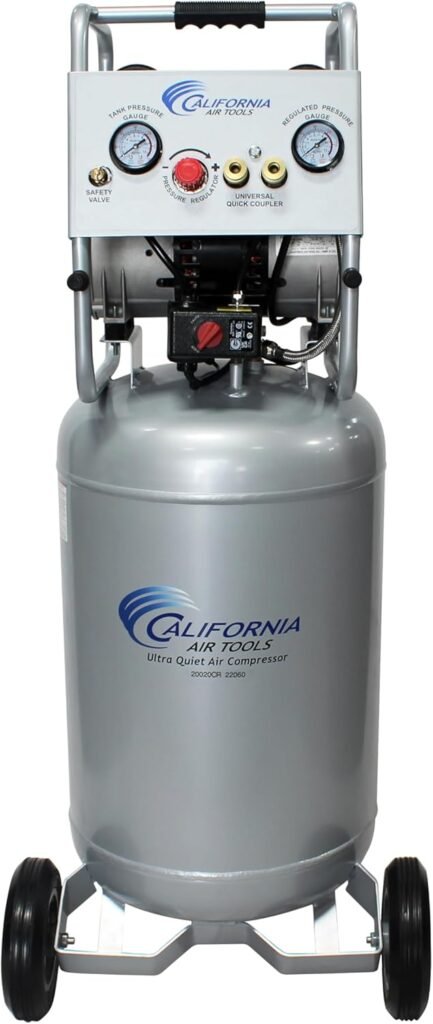

What Makes the CALIFORNIA AIR TOOLS 20020CR-22060 Stand Out?
When we look at air compressors, we usually end up trading noise for power or convenience for durability. With the CALIFORNIA AIR TOOLS 20020CR-22060 Ultra Quiet & Oil-Free Continuous Run 2.0 Hp 20 Gallon Air Compressor, we notice a different approach. This model aims to give us strong performance, quieter operation, and low maintenance in one package.
This unit is designed for users who want professional-style performance at home or in a small shop, without the roar that usually comes with big compressors. We get a 2.0 HP motor, a 20-gallon tank, and continuous-run capability, all tuned for relatively quiet operation.
Key Specifications at a Glance
Sometimes it helps to see the basics laid out clearly before we go into details. This compressor brings together capacity, power, and convenience features that matter when we are working day in and day out.
Here is an overview of the core specifications and what they mean for us in real-world use:
| Feature | Specification | What It Means for Us |
|---|---|---|
| Model | CALIFORNIA AIR TOOLS 20020CR-22060 | 2.0 HP, 20-gallon, continuous run, ultra-quiet design |
| Motor Power | 2.0 Horsepower | Strong enough for many shop tools and continuous work |
| Tank Size | 20 Gallons | Good air reserve for longer tool use without constant cycling |
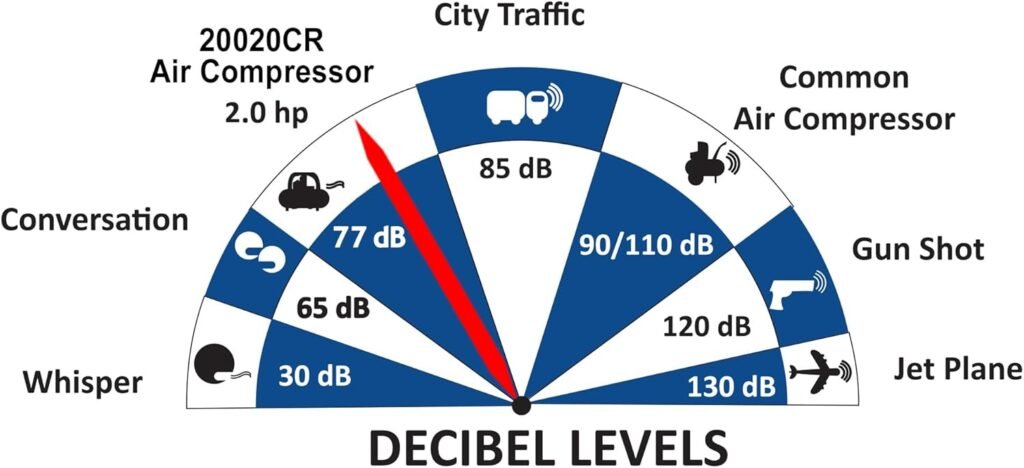
| Noise Level | 77 dB (decibels) | Much quieter than typical shop compressors; easier on our ears |
| Pump Type | Oil-free | Cleaner air output and less maintenance over time |
| Maximum Pressure | 125 PSI | Suitable for most air tools, nailing, inflating, and light-to-medium spraying |
| Power Requirements | 220 Volt / 60 Hertz / Single Phase / 7 Amps | Runs on 220V circuits commonly found in shops and garages |
| Outlet Requirements | Dedicated 15 amp outlet | Needs its own circuit for reliable operation |
| Generator Requirement | 3000 Watt (running) generator | Can be used on a sufficiently powerful generator in remote or jobsite locations |
| Extension Cord Spec | 14 gauge, up to 100 ft | Long-cord capable if we use heavy enough gauge |
| Quick Connectors | Two female industrial “push to connect” quick connectors | Easy setup for multiple tools or fast tool changes |
| Pressure Gauges | Two pressure control gauges | Lets us monitor both tank and outlet pressure for accurate settings |
| Pressure Switch | Condor pressure switch | Reliable automatic start/stop control |
| Protection | Thermal overload protector | Helps protect the motor from overheating |
| Ambient Operating Temp Range | 0 to 50°C (32 to 122°F) | Wide temperature range for garages and workshops |
This table gives us a useful snapshot, but the real story is how these numbers feel in actual day-to-day work. That is where this compressor starts to justify its place in our shop.
Ultra Quiet Operation: How Quiet Is 77 dB?
Noise is often the reason we put compressors in another room, out in the garage, or even outside if we can. With this model, we can realistically keep it in the same workspace and still carry on a conversation.
At 77 decibels, we are nowhere near silent, but we are far from the harsh, ear-rattling sound of traditional piston compressors. We can think of it like this: 70–80 dB is roughly the sound of a loud conversation or a vacuum cleaner. That makes this unit noticeably quieter than many shop compressors that easily exceed 90 dB.
In practice, this quieter design means we can:
- Use it in a home garage without disturbing the rest of the house as much
- Run it in a small shop where we actually want to hear each other talk
- Reduce fatigue from constant noise, especially during longer projects
It is not whisper quiet, but for the amount of air and power we are getting, the sound level is impressively tame.
Oil-Free Pump: Cleaner Air and Less Maintenance
The oil-free pump is a major advantage if we care about low maintenance and clean output. Traditional oil-lubricated compressors require us to:
- Check oil levels regularly
- Change oil periodically
- Worry about oil mist in the air lines potentially reaching our tools or finishes
With an oil-free design, we avoid that entire maintenance category. We are not dealing with oil changes, and we lessen the risk of oil contamination in our air lines. That is especially helpful for:
- Painting and finishing work
- Any job where we use air for cleaning surfaces
- DIYers who do not want one more maintenance task on their to-do list
We still want to use proper filters and dryers if we are doing sensitive finish work, but the absence of oil in the pump itself simplifies our setup. Long term, this also means fewer consumables and lower upkeep costs for us.
20-Gallon Tank: Balancing Capacity and Portability
A 20-gallon tank sits right in the sweet spot between small portable units and massive stationary shop compressors. We get a volume that lets us run tools for a decent amount of time without the motor constantly starting and stopping.
In day-to-day use, a tank of this size is ideal for:
- Air nailers and staplers (finish, brad, framing)
- Blow guns for cleaning work surfaces and tools
- Inflating tires and sports equipment
- Short bursts of impact wrench or ratchet use
- Light spraying tasks, with proper tool and duty cycle management
We are not in the territory of large body shop compressors meant for continuous heavy-duty sanding and painting on multiple bays. Instead, we are in a very capable middle ground: serious enough for real work, yet still compact enough to move or reposition when we need to.
Continuous Run Capability: What It Means for Our Work
The product description highlights continuous run capability, which is a big deal for certain types of work. Many compressors are designed for intermittent duty; we use them for a while, let them rest, and repeat. With this model, we get a design that can stay on and keep going within its specified limits.
Continuous run capability gives us:
- Better support for longer tasks with fewer breaks
- A more stable air supply when we are running tools steadily
- Peace of mind that the unit is built to handle extended sessions
That said, continuous run does not mean unlimited abuse. We still want to respect the limits of 125 PSI maximum pressure and the overall air delivery capability. We also want to keep the area ventilated so the compressor can shed heat efficiently. But compared with lighter-duty consumer units, this design is much more comfortable running for serious, extended projects.

Power and Electrical Requirements
Before we bring any larger compressor into our shop, we need to make sure we can actually power it properly. The CALIFORNIA AIR TOOLS 20020CR-22060 runs on:
- 220 Volt
- 60 Hertz
- Single Phase
- 7 Amps
This means we will need a 220V outlet, not a standard 110/120V household outlet. Many garages and workshops already have 220V circuits for welders, dryers, or other large tools, but we should verify that we have:
- A dedicated 15 amp outlet, as recommended
- Proper wiring and breaker size in line with local electrical codes
- No other major devices sharing that circuit while the compressor is running
The relatively modest 7-amp draw at 220V is actually easier on our wiring and breakers compared with a similar-power compressor attempting to run on 110V. The spread to 220V reduces the current needed, which is usually good for longevity and reliability.
Using a Generator or Extension Cord
One thoughtful part of the specification is that the manufacturer clearly states suitable conditions for generators and extension cords. That helps us avoid guesswork and risky setups.
We are told:
- Generator: Needs a 3000 Watt (running) generator
- Extension Cord: Use a 14 gauge cord up to 100 ft
- GFCI: GFCI outlets are fine
If we use a generator on a jobsite or in a remote location, we want at least 3000 running watts (not just starting watts). This gives the compressor enough room to start and run properly without bogging the generator down.
For extension cords, 14 gauge up to 100 ft is a clear guideline. Thinner cords or longer runs with insufficient gauge can cause voltage drop, which stresses the motor and may cause overheating or failures. We should stick to the recommended gauge or thicker if we are going shorter. If we can avoid an extension cord and plug in directly, that is even better.
125 PSI Maximum Pressure: What Can We Actually Do?
The 125 PSI maximum pressure rating places this compressor in a comfortable range for a broad variety of typical tasks. Most air tools have recommended pressures in the 90–120 PSI range, so we are nicely covered.
Here are some common uses that fit well within 125 PSI:
- Running most nail guns (framing, finish, roofing, brad)
- Operating air blow guns for cleaning or drying
- Inflating car, truck, or bike tires
- Using an impact wrench occasionally for wheel lugs (depending on the tool’s air demand)
- Running air ratchets, small grinders, or cutters on an intermittent basis
If we are doing heavy industrial sandblasting or running multiple high-CFM tools at once, we would likely want a higher-capacity, higher-PSI, larger-tank compressor. But for a home garage, small shop, or serious hobby setup, 125 PSI is more than adequate.
Condor Pressure Switch and Dual Gauges: Control and Feedback
We often do not pay attention to the pressure switch until something goes wrong, but the Condor pressure switch brand is a nice indicator of quality. This switch handles:
- Automatic cut-in and cut-out of the motor
- Consistent pressure management
- Reliable cycling at the set thresholds
In daily use, we just experience smooth, automatic control. It starts when pressure drops to the lower limit, stops at the upper limit, and helps keep the tank within a safe and useful range.
Alongside that, we get two pressure control gauges, typically showing:
- Tank pressure: The pressure stored in the 20-gallon tank
- Regulated outlet pressure: The pressure we have set for our tools
Having both gauges means we can keep an eye on the entire system at a glance. We see how full the tank is, and we can quickly adjust the regulated outlet to match tool requirements. This reduces trial and error, and it lets us run sensitive tools—like finish nailers or spray guns—at just the right pressure.
Dual “Push to Connect” Quick Connectors
We often work with more than one tool during a project or switch tools frequently. The inclusion of two female industrial “push to connect” quick connectors is a welcome convenience.
These connectors let us:
- Keep two hoses or tools connected at the same time
- Switch between tools without constantly disconnecting and reconnecting
- Save time during projects that use multiple air tools in succession
The push-to-connect design is user-friendly. We simply pull back the sleeve, push in the fitting, and release; it locks into place securely. For anyone who has fought with cheaper or stubborn couplers, this alone can feel like an upgrade.
Thermal Overload Protection: A Safety Net for the Motor
Compressors generate heat, especially when they run hard or for long periods. The thermal overload protector built into this unit gives us a safety margin.
If the motor temperature climbs too high due to:
- Overloading
- Blocked ventilation
- Excessive ambient heat
- Voltage issues
the thermal protector can shut things down before permanent damage occurs. We want to see features like this on equipment designed for serious use. It is not a license to abuse the machine, but it improves the chances that a mistake or difficult condition will not immediately end in a burnt-out motor.
Ambient Temperature Range: 0 to 50°C (32 to 122°F)
Many of us keep compressors in garages or shops that get cold in winter and hot in summer. The specified ambient operating temperature range of 0 to 50°C (32 to 122°F) covers a wide span of real-world conditions.
Within this range, the compressor is built to function as intended. That means:
- It can start and run in a chilly garage at freezing temperatures
- It can handle typical summer heat in non-air-conditioned spaces
We still want to avoid extremes when we can. If our shop gets colder than 32°F, we might want to warm the space a bit or bring the compressor inside before extended use. Likewise, in very hot conditions approaching 122°F, good airflow and ventilation around the unit become even more important.
Who Is This Compressor Best For?
Although many different users could make good use of this compressor, some groups stand out as especially well-matched for the CALIFORNIA AIR TOOLS 20020CR-22060.
We think it is particularly well-suited for:
-
Serious DIYers and hobbyists
Those of us who want pro-style tools at home and need enough capacity to do real work without going to a full industrial setup. -
Home garages and small workshops
Users who share space with others or operate in attached garages where noise can be a problem. -
Woodworkers and carpenters
Especially when running nailers, staplers, and blow guns, where we want a steady, quiet source of air. -
Light automotive work
Tire inflation, intermittent use of impact wrenches, ratchets, and small air tools for car maintenance or restoration. -
Mobile or jobsite setups
When we have a suitable 3000W generator and want a quieter, more refined compressor option for fieldwork.
If we are running multiple high-demand air tools all day, every day, we might eventually step up to a larger, industrial compressor. But for most small-shop and home applications, this model hits a very practical balance.
Day-to-Day Usability: How It Feels to Live With
It is one thing to list features and another to imagine what it is like to walk into the shop, flip the switch, and start working. This compressor has several characteristics that affect daily use in a good way.
Over time, we are likely to appreciate:
-
Lower stress from noise
The quieter operation makes us more willing to turn it on for small tasks, not just big jobs. -
Less maintenance
No oil checks and changes. We will still drain condensation from the tank, but overall upkeep is easier. -
Stable air supply
With a 20-gallon tank and continuous-run design, we can often work without constantly waiting on the compressor to catch up. -
Simple connections
Dual quick connectors and clear gauges make getting setup and adjusting pressure much faster.
In other words, this unit aims not only for performance but also for a smoother, more pleasant working environment.
Noise Comparison in Real Terms
We often see decibel numbers tossed around, but they can feel abstract until we put them into context. At 77 dB, this compressor sits closer to the sound of:
- A typical vacuum cleaner
- Normal urban street noise
- A busy office with lots of conversation
By contrast, many older or cheaper piston compressors can easily hit 90–100 dB, which is more like:
- A motorcycle at close range
- A lawnmower right next to us
- Very loud traffic or a rock concert at the back of the venue
The difference is not subtle in a closed shop. That reduction can mean less need for hearing protection during shorter tasks and allows us to use the compressor later in the evening without feeling like we are disturbing the entire neighborhood.
Maintenance and Longevity
While the oil-free design cuts down on certain tasks, we still want to treat the compressor properly if we expect it to last. For this type of unit, good habits include:
-
Draining the tank regularly
Moisture accumulates inside any air tank. Draining it helps prevent rust from forming inside the tank. -
Keeping air filters clean
If our setup includes intake filters or inline filters, we want to check and clean or replace them on a regular schedule. -
Maintaining proper electrical supply
Using a dedicated 15 amp circuit, appropriate extension cords, and avoiding constant under-voltage conditions. -
Ensuring airflow around the unit
We should leave room for air to circulate around the compressor so it can cool itself properly.
If we follow these straightforward steps, an oil-free, continuous-run compressor like this can offer many years of dependable service with relatively little fuss.
Performance for Common Tool Types
To decide whether this compressor fits our needs, it helps to think through the types of tools we actually use. While exact air consumption depends on the specific tools, we can sketch a general idea of compatibility.
Nailers and Staplers
For framing nailers, brad nailers, finish nailers, and staplers, this compressor is more than capable. These tools typically use short bursts of air and modest CFM. The 20-gallon tank and 2.0 HP motor should keep us going through entire projects with minimal interruptions.
We can comfortably handle:
- Building decks or framing walls
- Installing trim, molding, and baseboards
- Upholstery and furniture stapling
Impact Wrenches and Ratchets
Automotive work is often a big reason we bring compressed air into our garage. For impact wrenches and ratchets:
- Occasional use to remove and install lug nuts or bolts is realistic
- Longer, continuous operation may cause the compressor to cycle more frequently
If we are running a half-inch impact gun continuously, we might occasionally wait for pressure to rebuild, but for general home and hobby auto work, this setup is quite practical.
Air Blow Guns and Cleaning
Blow guns for cleaning sawdust off equipment, clearing shavings from work surfaces, or drying parts are an easy match with this compressor. We get:
- Enough air to clean thoroughly
- A big enough tank to give us sustained bursts
As long as we keep an eye on pressure and do not hold the trigger indefinitely, we should feel well-supported here.
Light Spraying and Finishing
For light painting tasks, such as small projects or touch-up jobs, this compressor can work if our spray equipment’s air consumption matches the compressor’s capacity. We want to:
- Check the CFM requirement of our spray gun
- Match that against the air delivery of this 2.0 HP, 20-gallon system
- Use proper filtration and moisture control to keep air quality high
For full-scale automotive or industrial painting operations, we would usually seek a larger system specifically designed for high-volume, sustained spraying. But for smaller jobs, craft projects, and occasional finishing, this compressor is a solid option.
Portability and Footprint
A 20-gallon compressor is not a small handheld unit, yet it is not a giant stationary behemoth either. We can expect:
- A moderate footprint that fits easily in a one- or two-car garage
- Enough weight that we will probably wheel it around rather than carry it
- A layout designed to stand securely while in use
Portability matters if we occasionally need to reposition it in our shop or roll it outside for certain tasks. While we may not want to lift it into a vehicle by ourselves, using a ramp or two-person lift is realistic if we need to relocate it entirely.
Safety Considerations
Any time we are dealing with pressurized air and electric motors, safety is a serious topic. This compressor covers several key points, but we should still use good judgment.
Key safety aspects include:
- Thermal overload protection for motor safety
- Condor pressure switch for controlled cycling and pressure management
- Clear gauges to monitor pressure at all times
- Designed to operate within clearly stated temperature ranges
On our side, we want to:
- Wear hearing and eye protection when using loud air tools or blow guns
- Avoid exceeding the recommended extension cord length and gauge
- Never tamper with safety valves or override built-in protections
- Drain the tank regularly as part of safe operation and longevity
Handled properly, this compressor can be a safe and reliable member of our workshop for years.
Pros and Cons Overview
To give ourselves a balanced view, it helps to step back and summarize the strengths and limitations of the CALIFORNIA AIR TOOLS 20020CR-22060 Ultra Quiet & Oil-Free Continuous Run 2.0 Hp 20 Gallon Air Compressor.
Advantages
We see several clear advantages with this model:
- Quieter operation (77 dB) compared to many similar-capacity compressors
- Oil-free pump, reducing maintenance and eliminating oil contamination risk
- Continuous-run capability, helpful for longer sessions
- 20-gallon tank, offering a strong middle ground for capacity and size
- 220V power with 7-amp draw, efficient for workshop electrical setups
- Dual quick connectors for convenient tool changes and dual-hose setups
- Thermal overload protection for added motor safety
- Clear electrical and extension cord requirements spelled out by the manufacturer
These features combine to give us a compressor that feels thoughtful and user-oriented, not just powerful on paper.
Limitations
Every tool involves trade-offs, and this model is no exception:
- Requires 220V power, which not every household garage currently has
- 125 PSI max is ample for many tasks but may be on the lighter side for demanding industrial setups
- 20-gallon tank, while generous for home use, may not satisfy heavy multi-tool industrial operations
- Weight and size are greater than small portable units, so it is not a grab-and-go solution
For most home, hobbyist, and small professional settings, these limitations are reasonable. For full-scale industrial shops, a larger compressor might be needed.
How It Compares to Typical Compressors in Its Class
When we put this unit next to a typical 20-gallon shop compressor, we often notice:
- Less noise due to the ultra-quiet engineering
- Lower maintenance thanks to the oil-free pump
- Better clarity on power requirements, including generator and extension cord specs
Many competitor models in this size range either prioritize raw output with little noise control, or they come with less detailed guidance on safe and effective operation. This compressor stands out by taking user comfort and usability into serious account.
Long-Term Value and Ownership Experience
Part of judging any piece of equipment is asking ourselves how it will feel not just on day one, but after a year, two years, or five years of use. With this compressor, the long-term value stems from:
-
Reduced maintenance tasks
No oil changes, fewer consumables, and simple upkeep. -
Lower noise over its lifetime
A quieter machine from the beginning makes us more likely to use it regularly and comfortably. -
A versatile sweet spot of power and size
Large enough for serious work, small enough to fit into many different shop layouts.
When we invest in this kind of tool, we are effectively buying not just airflow, but also a better day-to-day shop experience. Less noise, fewer hassles, and solid performance can significantly improve how we feel about working in our space.
Final Thoughts: Is This the Right Compressor for Us?
Choosing the right air compressor usually comes down to matching our real-world needs with the capabilities of the machine. The CALIFORNIA AIR TOOLS 20020CR-22060 Ultra Quiet & Oil-Free Continuous Run 2.0 Hp 20 Gallon Air Compressor is built for users who want:
- Strong, reliable air delivery for common tools
- A quieter environment that is easier on our ears and those around us
- Low maintenance operation with an oil-free design
- Clear and practical power requirements, including generator and extension cord guidance
If our work falls into the categories of woodworking, light automotive projects, home renovation, and general shop use—and we care about reducing noise and maintenance—this unit fits that profile very well.
On the other hand, if we:
- Have no access to 220V power
- Need to run multiple high-demand tools non-stop in an industrial setting
- Want extremely high PSI or huge tank capacity
we might instead look at a larger, more industrial-grade system.
For many of us, though, this compressor offers an appealing combination of quiet operation, oil-free convenience, meaningful capacity, and thoughtful design. It is the kind of tool that, once in our shop, can quickly become something we rely on for project after project, with less noise, less fuss, and more time spent actually getting things done.

Disclosure: As an Amazon Associate, I earn from qualifying purchases.