Have we ever wished our air compressor could be powerful, quiet, and easy to move without feeling like we’re dragging a small car behind us?
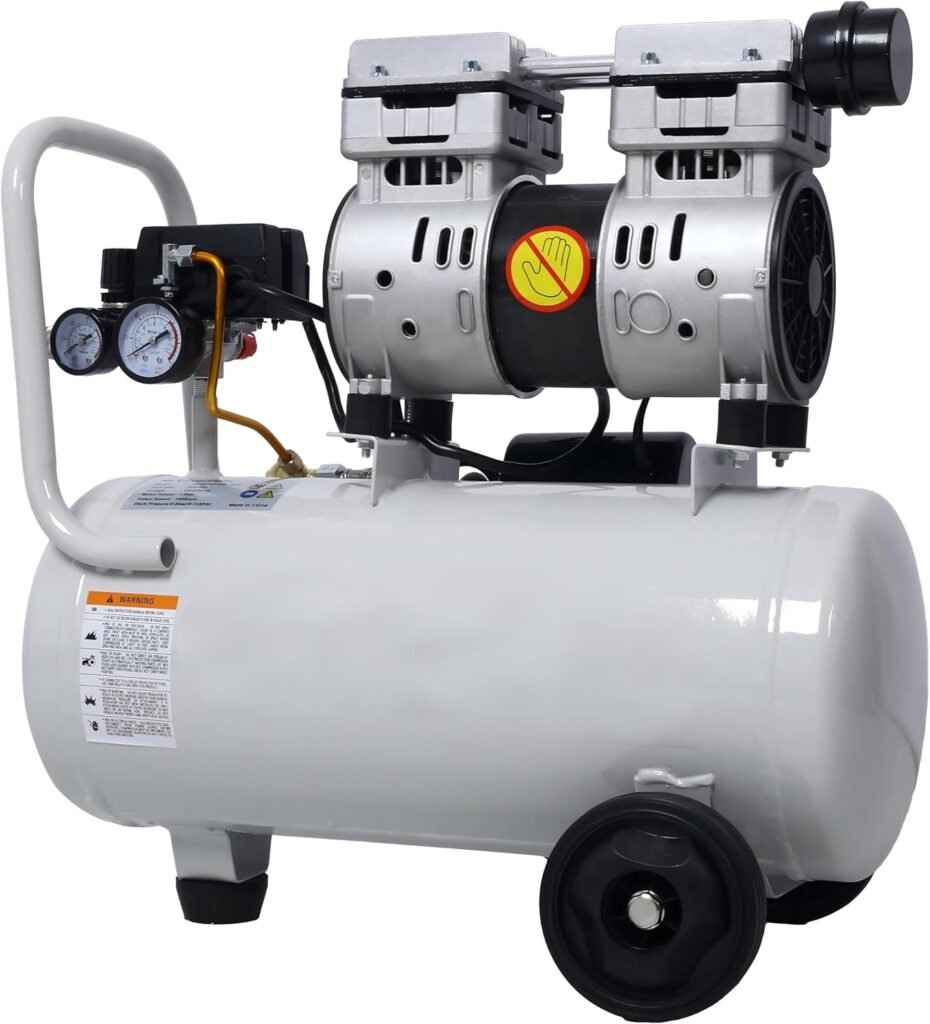

What Stands Out About the LuckyNote 1.5HP Silent Oil-Free Air Compressor
This compressor gives us an interesting combination: decent power, low noise, and true portability. It feels like it was designed for those of us who need real performance in a garage, workshop, or small job site but don’t want constant noise or high maintenance.
The LuckyNote 1.5HP Silent Oil-Free Air Compressor 8 Gallon aims to be a practical all‑rounder—strong enough for common pneumatic tools, quiet enough for shared spaces, and simple enough that we hardly need to think about upkeep.
Key Specifications at a Glance
Before we talk about real‑world use, it helps to see the main specs laid out. These details tell us right away whether this unit fits our typical tools and working style.
| Feature | Specification |
|---|---|
| Motor Power | 1.5 HP |
| Air Delivery @ 90 PSI | 4.0 CFM |
| Air Delivery @ 40 PSI | 5.2 CFM |
| Maximum Pressure | 115 PSI |
| Tank Capacity | 8 gallons |
| Noise Level | 70 dBA |
| Pump Type | Oil‑free |
| RPM | 1400 RPM (low speed, quieter operation) |
| Weight | ~42 lbs |
| Dimensions | 21 x 12 x 21.25 inches |
| Mobility | Built‑in wheels and handle (portable design) |
| Tank Material | Aluminum (rust‑resistant) |
| Drain System | Automatic drain valve |
| Power Source | Electric (standard shop/household use) |
These numbers place the LuckyNote unit squarely in the “serious homeowner / light professional” category. It’s not a tiny hobby compressor, but it’s also not a massive shop machine that needs a dedicated corner.
Power and Performance in Real Use
We want our compressor to keep up with us, not the other way around. The 1.5HP motor and 8‑gallon tank give us a sweet spot between portability and usable power.
CFM Output and Tool Compatibility
At 90 PSI, the LuckyNote puts out 4.0 CFM, and at 40 PSI, 5.2 CFM. Those numbers tell us how well it will run typical air tools.
In practical terms, this means we can comfortably use:
- Brad nailers and finish nailers
- Staple guns
- Air blow guns for cleaning dust and debris
- Tire inflators
- Light impact wrenches for occasional lug nut work (with some pauses)
- Touch‑up or small HVLP spray guns (with careful settings)
We should think of it as a strong midrange unit. It’s more than enough for carpentry work, automotive light duty, and general shop tasks—but we won’t want to run multiple high‑demand tools at once.
Maximum Pressure and Duty Style
With a max pressure of 115 PSI, this compressor suits most tasks around a garage or workshop. It may not match a 150 PSI high‑capacity shop unit, but for most nailers, inflators, and short bursts of higher‑demand tools, it does the job well.
In day‑to‑day use, we’ll notice that:
- It cycles on when pressure drops and recovers fairly fast
- It handles intermittent use extremely well (typical for DIY or light pro work)
- It’s best when we avoid long, continuous-demand tools like large sanders for extended periods
Ultra‑Quiet Operation: How Quiet Is 70 dBA?
Noise is one of the biggest reasons many of us avoid bigger air compressors. With this LuckyNote model rated at about 70 dBA and running at a low 1400 RPM, it aims to be noticeably quieter than typical shop units.
What 70 dBA Sounds Like in a Shop
To put 70 dBA in context, it’s roughly comparable to:
- A normal conversation
- A dishwasher in the next room
- A quiet vacuum at a distance
So instead of shouting over the compressor or constantly wearing hearing protection, we can often work around it with far less strain. That’s especially helpful in:
- Home garages attached to living spaces
- Basements or indoor workshops
- Small commercial shops where customers or coworkers are nearby
We might still prefer ear protection if we’re close to it for long stretches, but the noise level is much more tolerable than the sharp, harsh sound of many older oil-lubed units.
Low RPM and Smooth Operation
The 1400 RPM figure is another quiet-friendly detail. Many louder compressors spin much faster, which:
- Increases noise
- Adds vibration
- Often results in more mechanical wear over time
Here we get a slower, smoother motor and pump speed, which:
- Reduces harsh mechanical noise
- Helps the unit feel more refined
- Makes it less jarring when it kicks on automatically
Portability and Ergonomics: Moving It Around
Weighing in at about 42 pounds and rolling on built‑in wheels, this compressor is genuinely portable. That matters if we’re working in:
- Different areas of one property
- Multiple bays in a shop
- On‑site jobs at customers’ locations
Weight, Size, and Storage
At 21 x 12 x 21.25 inches, this unit has a compact footprint. For many of us, storage space is just as important as performance.
We can expect:
- Easy fit under workbenches
- Simple storage along a garage wall
- Reasonable lifting if needed (though the wheels mean we rarely have to)
It’s light enough that one person can reposition it, lift it into a vehicle with a bit of care, or roll it around a job site without fuss.
Wheels and Handling in Practice
The combination of wheels and a handle makes a real difference. Instead of wrestling a squat, awkward tank, we can:
- Tilt it slightly and roll it like a small cart
- Navigate over flat surfaces in the garage or driveway
- Move it between rooms, bays, or sites without straining
This is especially useful if we use it for tasks like trim work, finishing projects, or mobile repair jobs where we frequently change locations.
Rapid Recovery Time: Working Without Constant Waiting
One of the standout features is the 95‑second recovery time from no load to full load. That sounds technical, but it has a very clear benefit: we don’t spend as much time waiting for the tank to build pressure again.
What 95 Seconds of Recovery Means
Recovery time refers to how long it takes the compressor to go from a lower pressure back up to its max working pressure. Around a minute and a half for this size and power class is quite respectable.
In typical shop use, this means:
- With nailers and staplers, we’ll almost never feel limited by recovery; it keeps up easily
- With intermittent impact wrench use, we may pause occasionally, but it refills quickly
- With moderate spray work or blowing tasks, we get a usable rhythm instead of long dead time
We might still need short breaks when using very air‑hungry tools, but compared to smaller pancake or 1‑gallon units, this is a big step up in practicality.
Continuous Operations vs. Light Duty
This compressor shines in intermittent or cyclical tasks:
- Driving nails or staples in bursts
- Filling multiple tires in a row
- Blowing off workpieces between steps
If we try to run continuous high‑CFM tools for a long time, we’ll bump into its limits. But in the target use cases—general shop and garage work—the quick recovery keeps the workflow smooth.
Maintenance‑Free Oil‑Free Design
One of the biggest selling points is the oil‑free pump. That means no checking oil levels, no changing oil, and fewer leaks and messes to worry about.
Advantages of Oil‑Free Operation
Oil‑free compressors have a few clear benefits, especially for home and light professional users:
- No oil changes or regular lubrication maintenance
- Less risk of oil contamination in air lines (good for painting or finish work)
- Cleaner overall operation—no oily residues around the pump
- Typically easier to store and transport without worrying about tilt or leakage
For many of us, this translates into a “plug it in and go” experience. We just focus on the work, not the compressor itself.
Aluminum Tank and Rust Resistance
The tank is made of aluminum, which adds another layer of low‑maintenance appeal:
- Aluminum doesn’t rust the way steel does
- It tends to stay lighter in weight
- We’re less likely to deal with interior corrosion over the long term
We still want to drain moisture from the tank, but the underlying material gives us more peace of mind about long‑term durability, especially if the unit lives in a humid or unheated space like a garage.

Automatic Drain Valve: Why It Matters
Moisture buildup is a common issue with any compressor. Typically, we need to manually open a drain valve at the bottom of the tank to let out the water. With this model, we get an automatic drain valve.
Convenience and Longevity
An automatic drain valve does two important things for us:
- Saves us from having to remember to drain the tank regularly
- Helps extend the tank’s life by reducing moisture accumulation
In day‑to‑day use, that means:
- We reduce the chance of internal tank damage from sitting water
- We get more consistent, drier air output over time
- We cut down on general fuss and routine tasks
It’s a small feature, but it shows that this unit is designed for people who want reliability without babysitting their equipment.
Noise, Comfort, and Where We Might Use It
Because the compressor is relatively quiet and not too big, it opens up some options we might avoid with noisier units.
Ideal Environments
We can picture using it comfortably in:
- Attached garages where family members are inside the house
- Basement workshops where noise travels
- Small commercial spaces where we don’t want to annoy everyone around us
- Rental properties where we’re conscious of neighbors
The reduced noise means we can work earlier in the morning or later in the evening with less guilt and fewer complaints, as long as we’re considerate.
Comfort Over Long Work Sessions
When we’re working for several hours—say, hanging trim, building cabinets, or doing detail work—noise fatigue becomes a real thing. A quieter compressor:
- Cuts down on stress and irritation
- Makes it easier to talk to others in the same space
- Allows a more relaxed working environment
We still get the mechanical hum and pumping sound, but it’s noticeably softer than traditional loud, high‑RPM units.
Typical Use Cases: Where This Compressor Fits Best
To get a clear sense of whether this model fits our needs, it helps to think through specific jobs.
Carpentry, Trim, and Finish Work
For nailers and staplers:
- The 4.0 CFM at 90 PSI is more than enough
- The 8‑gallon tank gives us a comfortable buffer
- The quiet operation is perfect for indoor projects
We can run brad nailers, finish nailers, and even framing nailers (with some pauses) without feeling like the compressor is lagging behind us.
Automotive and Garage Tasks
In the garage, we’ll find it useful for:
- Inflating tires and sports equipment
- Running a small to medium impact wrench occasionally
- Blowing dust and debris off parts or work areas
- Powering small pneumatic ratchets or tools for short bursts
We won’t want to run a heavy-duty impact wrench nonstop, but for doing brakes, rotating tires, or light mechanical work, it’s a solid match.
Light Painting and Finishing
Because it’s oil‑free and reasonably quiet, it makes sense for:
- Touch‑up spray painting
- Stain or clear coat work with small guns
- Hobby projects that need compressed air but not industrial volume
We do need to make sure our spray gun’s CFM requirements are compatible and be aware that longer, constant spraying may require pauses for recovery, but for smaller jobs it’s very workable.
Design and Build Quality
The overall design tries to balance toughness and portability with user‑friendly features. That mix makes it appealing for a wide audience.
Compact but Functional Layout
The 8‑gallon aluminum tank forms the base, with:
- A motor and pump mounted for easy access
- Controls and gauges in reachable positions
- Wheels and handle integrated so the unit feels coherent, not cobbled together
We get the impression of a purpose‑built, shop‑ready compressor instead of a purely budget, no‑frills machine.
Durability and Construction
Between the aluminum tank and oil‑free design, we’re looking at:
- Lower risk of internal rust issues
- No worries about oil leaks or oil breakdown
- Fewer consumables to maintain
We still want to treat it reasonably—avoid dropping it, protect it from constant rain exposure, and don’t leave it in freezing, damp conditions without thought—but the construction supports steady, regular use.
Usability and Day‑to‑Day Experience
When we think about living with a tool, we care about more than numbers. We care about how often we get frustrated, how often we need to fiddle with it, and whether we trust it to work when we need it.
Setup and Getting Started
For most of us, setup will be straightforward:
- Place it on a flat, stable surface
- Check any recommended startup steps in the manual
- Connect our air hose and tool
- Plug it in and power it on
- Let it build up pressure, then start working
Because it’s oil‑free, we don’t have the extra step of checking and filling oil. That’s one less barrier between unboxing and getting to work.
Everyday Operation
In daily use, we can expect:
- The compressor kicks on automatically as pressure drops
- It runs with a steady hum instead of a sharp, rattling roar
- We see tank pressure on the gauge and adjust outlet pressure for specific tools
- The automatic drain quietly does its job
We mostly interact with it through the power switch, pressure adjustments, and hose connections—even for those of us who are not tool experts, the learning curve is gentle.
Pros and Cons Summary
To get a balanced view, it helps to step back and organize the strengths and limitations.
What We Might Really Like
-
Quiet operation (70 dBA)
Much easier on ears and nerves, especially in home or shared spaces. -
Oil‑free, low‑maintenance design
No oil changes, no messy checks, fewer points of maintenance failure. -
Portable and lightweight (about 42 lbs with wheels)
Easy to move around a workshop or job site, and not a storage headache. -
Good power for size (4.0 CFM at 90 PSI)
Strong enough for nailers, inflators, and many light‑to‑medium air tools. -
Rapid 95‑second recovery time
Reduces waiting and keeps workflow moving smoothly. -
Aluminum tank
Rust‑resistant and lighter than many steel‑tank alternatives. -
Automatic drain valve
Helps protect the tank and saves us a routine chore.
Where We Might Feel Limited
-
Not a high‑CFM industrial unit
Heavy, continuous air demands can surpass its comfort zone. -
115 PSI max pressure
Perfect for many tools, but not as high as some 135–150 PSI shop compressors. -
Single‑user focus
Best suited to one person using one pneumatic tool at a time.
When we see it as a quiet, portable shop partner rather than a huge industrial workhorse, these trade‑offs make sense.
Who This Compressor Is Best For
Matching the tool to the user is crucial. This LuckyNote compressor doesn’t try to be everything to everyone, but it fits certain users extremely well.
Ideal Users
We think it suits:
-
Homeowners with active garages or workshops
Those of us who like doing our own projects—furniture building, home repair, automotive basics. -
DIY enthusiasts and hobbyists
Model builders, woodworkers, or makers who need air tools but don’t want the hassle of high‑maintenance equipment. -
Light professional users
Trim carpenters, small repair services, or independent contractors who value quiet, mobility, and reliable performance. -
Shared or sensitive environments
Anyone working where noise is a concern: attached housing, small storefront shops, or community maker spaces.
Less Ideal Users
It’s probably not the best choice if we:
- Run multiple high‑demand tools at once
- Need to power big sanders, grinders, or paint guns all day long
- Require a dedicated industrial‑grade system for a large shop
In those cases, a larger, higher‑pressure, and higher‑CFM compressor would be a better fit, even if that means more noise and more maintenance.
Comparing It to Typical Alternatives
When considering this compressor, we’re likely weighing it against two broad categories: very small, ultra‑portable units, and larger, loud shop compressors.
Versus Small Pancake or 1–3 Gallon Compressors
Compared to smaller units, this LuckyNote offers:
- A much larger tank (8 gallons vs. 1–3)
- Better CFM output and faster recovery
- Similar or slightly higher noise levels, but far more usable power
- More versatility for a wider range of tools
If we’re upgrading from a tiny compressor that struggles with anything more than inflating tires, this feels like a real step into “shop‑ready” territory.
Versus Large, Traditional Shop Compressors
Compared to big, often oil‑lubed shop units:
- It’s quieter and more neighbor‑friendly
- It’s far easier to move and store
- It doesn’t need oil checks or changes
- It may have less maximum pressure and CFM
So, we trade hardcore, continuous industrial performance for convenience, quietness, and flexibility—something many of us prefer for home and light professional work.
Practical Tips for Getting the Most Out of It
Even though it’s designed to be low‑maintenance, there are still a few simple habits we can adopt to keep this compressor performing well for a long time.
Match Tools to Its Capabilities
We’ll get the best experience if we:
- Check CFM requirements on our air tools
- Use nailers, staplers, blow guns, and light impact tools as primary tools
- Keep high‑demand tools for short bursts, not constant, all‑day use
Staying within its comfort zone keeps both us and the compressor happy.
Use Quality Hoses and Fittings
For a smoother experience:
- Use hoses rated appropriately for 115 PSI and beyond
- Check for leaks at fittings—leaks can make the compressor cycle more often
- Consider quick‑connect couplers for faster tool changes
These small details can make day‑to‑day use noticeably easier.
Keep It in a Reasonable Environment
While it’s robust, we help it last longer by:
- Avoiding leaving it in standing water or extremely damp locations
- Protecting it from heavy rain or direct outdoor weather if stored outside
- Allowing some space around it during use so it can cool and vent properly
We don’t need to baby it, but a little common‑sense care goes a long way.
Longevity and Cost of Ownership
When we buy a compressor, we’re often thinking years down the road. The combination of oil‑free design, aluminum tank, and automatic draining points toward a product designed for low ongoing costs.
Fewer Consumables and Service Needs
Because it’s oil‑free, we’re not spending money on:
- Compressor oil
- Oil filters or related accessories
- Professional servicing for oil changes
We essentially reduce ongoing costs to basic accessories like hoses, fittings, and any filters or regulators we choose to add for specific tasks.
Built‑In Features That Protect the Unit
Rust‑resistant tank material and automatic draining both contribute to longer usable life. Compared to basic steel‑tank compressors that are never drained, this is a meaningful advantage over the years.
We still have moving parts that can eventually wear—pistons, seals, valves—but the basic design is about simplicity and fewer points of user error.
Our Overall Impression
Putting it all together, the LuckyNote 1.5HP Silent Oil-Free Air Compressor 8 Gallon presents itself as a thoughtful balance of:
- Quiet operation
- Practical power
- Portability
- Low maintenance
- Long‑term durability
We see it as a strong fit for those of us who want a “set it and forget it” shop companion that:
- Handles most common air tool tasks
- Doesn’t overwhelm our space with noise
- Doesn’t demand constant attention or servicing
If we’re after a huge industrial rig, this isn’t it. But if we want a reliable, quiet, portable compressor that fits naturally into a home workshop or light professional setting, this model checks a lot of important boxes and should serve us well for the types of jobs most of us actually do.

Disclosure: As an Amazon Associate, I earn from qualifying purchases.