Have we ever stood in our workspace, wishing for a quieter, more reliable source of compressed air that doesn’t need constant maintenance or refilling with oil?

What Makes This 10 Gal Oil-Free Air Compressor Stand Out?
When we look at air compressors, we usually care about three things: power, noise level, and durability. This 10 Gal Oil-Free Air Compressor, 1HP Ultra Quiet Air Compressing Machine 115PSI Industrial Standard Adjustable Pressure Vertical Compressor Steel Tank Compressing Air Equipment aims to balance all three.
We get a 10-gallon vertical steel tank, an ultra-quiet 1HP motor, and an oil-free design that cuts down on maintenance. It has an industrial-level pressure capability up to 115 PSI, which suits many professional and DIY tasks without being excessively loud or heavy to handle.
Key Features at a Glance
Before we look at how this compressor fits into our daily work, we might find it helpful to see the main specifications grouped together. It helps us quickly judge if it matches our needs.
Here is a simple overview:
| Feature | Specification / Benefit |
|---|---|
| Tank Capacity | 10 gallons (vertical steel tank) |
| Motor Power | 1 HP, all-copper motor |
| Maximum Pressure | Up to 115 PSI |
| Operation Type | Oil-free, no engine oil lubrication required |
| Noise Level | Ultra quiet (much lower than many traditional models) |
| Materials | Copper, iron, aluminum, and plastic |
| Portability | Side handles for easier moving |
| Cooling System | Large-diameter cooling fan for heat dissipation |
| Safety Components | Solenoid valve, oil-water separator, adjustable pressure control |
| Intended Use | Industrial standard, workshop, home garage, small business applications |
Looking at that list, we can already see that this compressor is set up as a low-maintenance, quiet, and durable piece of equipment that can handle a broad range of tasks.
Build Quality and Materials
Sturdy Steel Tank and Solid Construction
We like knowing that our equipment can handle bumps, scratches, and long-term use. This compressor uses a vertical steel tank paired with structural components made of copper, iron, aluminum, and plastic.
That mix of materials gives a good balance between strength and weight. The steel tank and iron components provide rigidity, while aluminum and plastic keep things from getting unnecessarily heavy without sacrificing necessary durability.
Impact and Rust Resistance
The product description highlights that it is impact-resistant and rust-resistant. For us, that means we do not have to baby the machine in a busy workspace, where tools and equipment often get dragged around, knocked, or exposed to humidity.
Rust resistance matters particularly if we keep it in a garage or workshop where moisture and temperature swings are common. Over time, that can make the difference between a compressor that looks and functions well for years and one that starts to corrode prematurely.
Motor Power and Performance
All-Copper Motor for Consistent Output
An all-copper motor is a big plus. Copper windings typically offer better conductivity and efficiency than motors using cheaper materials or mixed metals. We can expect steadier performance under load and better long-term reliability.
With 1 horsepower, this compressor sits in a practical middle range. It is not a heavy industrial 5HP beast, but it is significantly more capable than the smallest consumer compressors. For inflating, nailing, stapling, light spraying, and intermittent use of air tools, 1HP paired with a 10-gallon tank and 115 PSI is a sensible combination.
Stable Performance for Daily Tasks
The stable performance means we can run tasks without worrying that pressure will wildly fluctuate. For example:
- Operating a brad nailer or finish nailer for trim work
- Running a framing nailer intermittently
- Inflating car and bike tires
- Blowing dust off workbenches or out of filters
- Powering small pneumatic tools in a home workshop
As long as we understand that it is best for light to moderate load cycles, we can count on it to do its job consistently.

Oil-Free Design and Maintenance
No Engine Oil Needed
One of the biggest conveniences here is the oil-free design. Traditional compressors often require:
- Regular oil checks
- Periodic oil changes
- Careful transport to avoid oil leaks
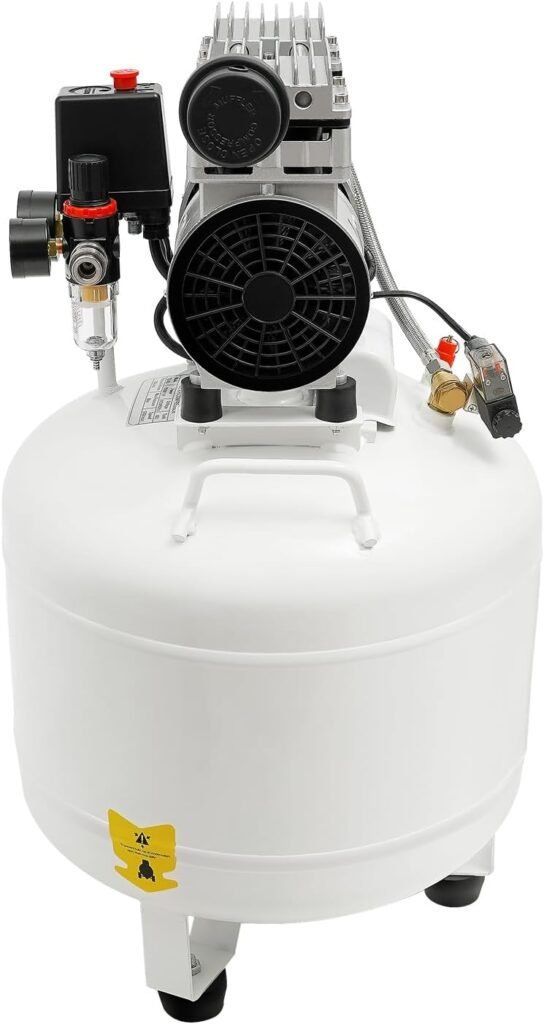
With this oil-free system, we simply avoid all that. The internal design uses components and coatings meant to run without oil lubrication, which is ideal if we do not want to track maintenance schedules or deal with messy fluids.
Reduced Maintenance and Cleaner Air
Because we are not dealing with oil, the compressed air is less likely to be contaminated with oil mist. That is especially useful for:
- Painting or finishing (where oil can ruin surfaces)
- Light-duty airbrushing
- Cleaning dust from electronics or sensitive machinery (with proper precautions)
We still need to drain condensation from the tank, as with any compressor, but not having to manage engine oil reduces both cost and effort over the life of the unit.
Noise Level and Comfort of Use
Ultra Quiet Operation Compared to Typical Compressors
Traditional piston compressors can be jarringly loud, often forcing us to wear hearing protection or step away from the unit while it runs. This model is described as “ultra quiet,” which is a significant quality-of-life improvement, particularly if we work in a shared space or at home.
While exact decibel ratings are not listed in the description we have, the “ultra quiet” claim typically indicates a noticeable reduction in noise compared with standard models of similar size. We are talking about a sound level closer to a loud conversation or a dishwasher rather than the sharp, metallic hammering that older compressors are known for.
Better for Home and Small Shop Environments
A quieter compressor can make a huge difference in where and when we work. We can run tools early in the morning or in the evening with less risk of disturbing neighbors or family members.
It also means we can be near the machine without quickly getting fatigued by noise. For those of us who need to use compressed air regularly, working with a quieter setup makes our whole workshop feel more comfortable.
Cooling System and Heat Management
Large-Diameter Cooling Fan
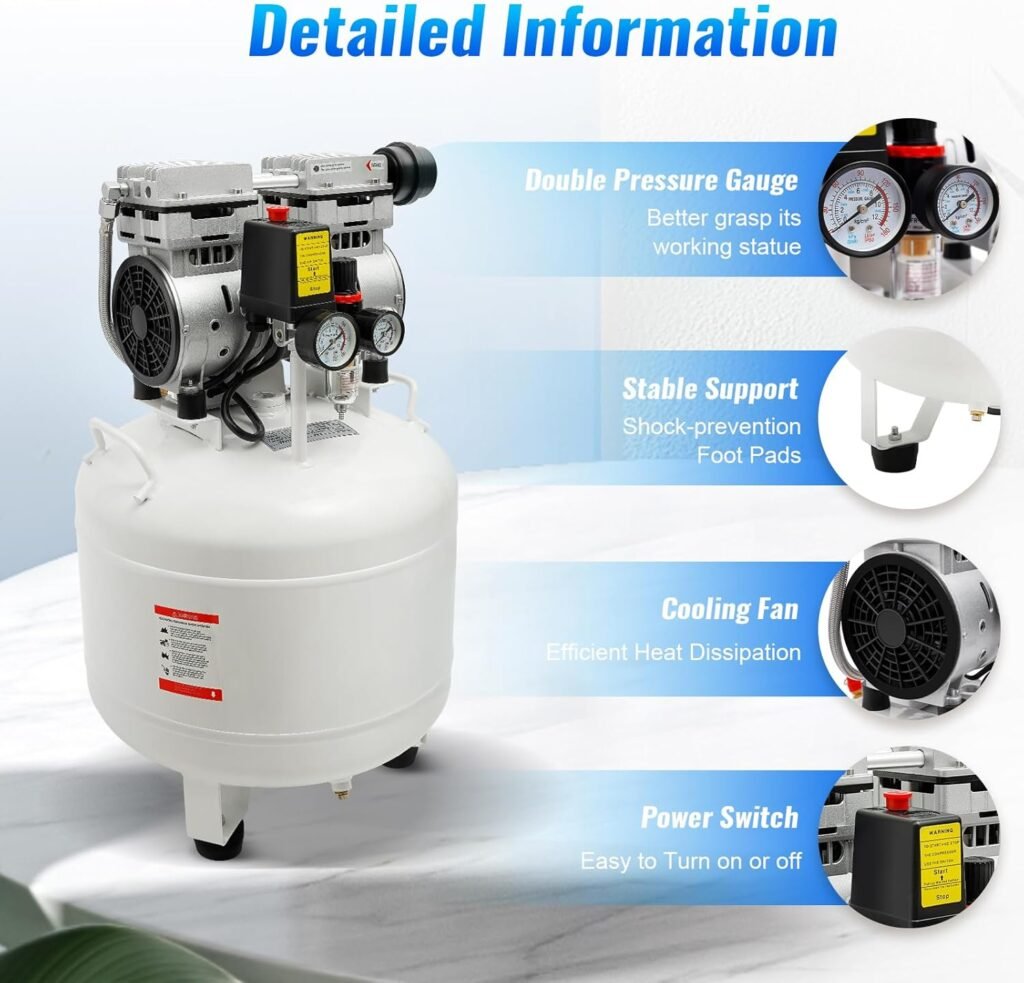
Heat is one of the main enemies of motors and compressors. This model includes a large-diameter cooling fan, which helps pull heat away from the motor and compressor head more efficiently.
That matters most during longer running periods. The better the cooling system, the lower the risk of overheating, which protects:
- Internal seals
- Electrical windings
- Bearings and moving parts
Protection During Prolonged Use
While we still want to respect duty cycles and avoid running any compressor endlessly under heavy load, improved cooling increases the safety margin. It helps us work through longer tasks with fewer breaks and lowers the chances of heat-related failures over time.
Safety Features and Protective Components
Solenoid Valve for Power Failure Protection
The built-in solenoid valve is a thoughtful safety component. Its main role is to protect the motor if there is a sudden power cut. An abrupt loss of power can sometimes lead to pressure imbalances or startup strain when the power returns.
With this valve in place, the system can better manage those scenarios, reducing the risk of the motor burning out or suffering internal damage. It is one of those features we might not notice day-to-day, but we will be grateful for it when power interruptions occur.
Adjustable Pressure and Safe Operation
The adjustable pressure feature allows us to control the output to match our tool or project requirements. Running tools at the correct pressure is key for both performance and safety:
- Nail guns function more reliably and avoid over-driving fasteners
- Inflating tires becomes more precise and reduces the risk of overinflation
- Air tools live longer when they are not being forced beyond their recommended pressure
Being able to dial in and read our pressure properly makes the compressor more versatile and safer to use across different tasks.
Oil-Water Separator for Cleaner Output
The built-in oil-water separator is another strong point. Even in an oil-free compressor, moisture from the air condenses inside the system. This separator helps remove water droplets (and any residual oil or impurities) from the air stream, resulting in cleaner output.
For painting, finishing, or any work where moisture can cause defects, this separation is critical. It reduces the chance of:
- Water spots in paint
- Corrosion on tools or fittings
- Moisture-related inconsistencies in pneumatic equipment
Ease of Transport and Ergonomics
Side Handles for Easier Moving
Even though the tank is made of steel, the design includes handles on both sides, making it easier to move the compressor around our workspace. Instead of wrestling with a bulky cylinder, we have purposeful grip points that help us lift or shift the unit safely.
This is especially useful if we:
- Move between job sites
- Rearrange our workshop frequently
- Need to store the compressor when it is not in use
Vertical Tank Footprint
The vertical tank design saves floor space. Rather than a wide, horizontal layout that takes over a section of the shop, this compressor occupies a more compact area.
That smaller footprint matters when we are working in a single-bay garage, a basement, or a small commercial space where every bit of floor area counts. We get 10 gallons of capacity without giving up too much room.
Performance in Real-World Scenarios
DIY and Home Workshop Use
For home workshops and DIY enthusiasts, this compressor fits very neatly into a typical range of tasks. We can confidently use it for:
- Inflating tires, sports equipment, and inflatable items
- Running light-to-medium air tools (staplers, nailers, small impact tools with intermittent use)
- Occasional spraying or painting with proper setup
- Cleaning sawdust and debris from tools and surfaces
We should still keep in mind the tank size and motor power. For continuous heavy sanding or large-scale automotive painting, we would likely want a higher CFM and larger tank. For most home projects, though, this machine delivers enough air while staying quiet and easy to manage.
Light Industrial and Small Business Tasks
For small shops, craft businesses, or light manufacturing setups, this compressor is best suited as a primary unit for light duty or a secondary backup unit. Its industrial standard pressure capacity means it can integrate with typical shop tools, as long as we respect its limits.
Examples of fitting applications include:
- Small upholstery or woodworking studios running staple guns and brad nailers
- Sign-making or small fabrication shops needing compressed air for routine tasks
- Maintenance teams that require a portable yet reliable compressed air source
In those contexts, the oil-free, quiet operation makes it an appealing option where a large, noisy compressor would be overkill.
Comparing to Traditional Compressors
Oil-Free vs Oil-Lubricated Units
Oil-free compressors like this one excel in convenience and cleanliness. We gain:
- No oil checks or changes
- Cleaner air with less chance of oil contamination
- Easier positioning and transport (no worry about oil leaks)
Oil-lubricated units sometimes have an edge in very heavy-duty use and longevity under constant industrial loads, but for most home and light professional applications, the reduced hassle of oil-free operation is a strong argument in its favor.
Noise, Size, and Practicality
Many older or cheaper compressors are noticeably louder and bulkier. If we have ever used a budget horizontal unit that rattles the whole room, we know how unpleasant that can be.
In contrast, this 10-gallon vertical model offers:
- A more compact footprint
- Significantly lower noise levels
- A more modern feature set (cooling fan, solenoid valve, oil-water separator)
That combination makes it more attractive for modern workshop setups, especially where we share space with others.
Benefits for Different Types of Users
For Homeowners and Hobbyists
If we mainly handle household and hobby tasks, we will likely appreciate:
- Simple, oil-free operation
- Easy storage thanks to the vertical design
- Enough capacity for most inflating and fastening tasks
- Reduced noise, making it less intrusive around the house
We do not need industrial power, but we do want reliability and quiet operation, which this compressor aims to deliver.
For Contractors and Mobile Professionals
For contractors or techs who move between sites, the side handles and robust construction help. While it may not be as compact as tiny pancake compressors, the extra tank capacity and 1HP motor give more versatility.
It can serve as a solid middle ground between very small portable units and huge stationary compressors. We get:
- Portable enough design with secure grip points
- Stronger performance than ultra-compact units
- Less noise on client sites, which presents a more professional, considerate image
For Small Shops and Commercial Users
Small shops often need dependable compressed air without the budget or space for large industrial setups. This compressor is suitable as:
- A main unit for light operations
- A supplementary unit where one large compressor already exists
- A backup system for critical tasks that cannot be interrupted
Its oil-free, low-maintenance nature means we are unlikely to spend much time dealing with upkeep, letting us focus on the work itself.
Pros and Cons Summary
Sometimes it helps to lay out the strengths and tradeoffs clearly. Here is a quick summary.
| Pros | Cons / Considerations |
|---|---|
| Oil-free design: no oil changes or checks | Not ideal for very heavy, continuous industrial loads |
| Ultra quiet operation | Tank size (10 gal) limits run time for high-CFM tools |
| 10-gallon vertical steel tank | Weight may still require two-hand lifting despite handles |
| 1HP all-copper motor with stable performance | May not support large spray guns for big projects nonstop |
| Rust-resistant, impact-resistant materials | Requires typical care: draining condensation, proper use |
| Large-diameter cooling fan for heat control | Power requirements restrict use where outlets are limited |
| Solenoid valve protects against power issues | No oil lubrication means relying on internal design quality |
| Oil-water separator for cleaner air output | Users with massive shops might prefer a higher capacity |
| Adjustable pressure for various tools | |
| Handles on both sides for easier moving |
We can see that this compressor targets a sweet spot: capable and durable, with modern conveniences, but not a replacement for huge industrial air systems.
Practical Tips for Getting the Best from This Compressor
Setup and First Use
When we first bring the compressor into our workspace, we can:
- Place it on a flat, stable surface
- Ensure good airflow around the cooling fan for proper heat dissipation
- Check all connections and fittings for tightness
- Familiarize ourselves with the pressure controls, gauges, and outlet valves
Running it for a short break‑in period (if recommended by the manufacturer) can help ensure everything is functioning correctly before we rely on it for important tasks.
Regular Care and Longevity
Even though the unit is oil-free, a bit of regular attention will keep it performing well:
- Drain condensation from the tank regularly to prevent internal rust
- Inspect hoses, fittings, and tools for leaks to avoid constant running
- Keep dust and debris away from the cooling fan intake
- Store the compressor in a reasonably dry area, away from extreme conditions
With those simple habits, we increase the lifespan and reliability of the machine without much effort.
Who This Compressor Is Best Suited For
Ideal Users
This 10 Gal Oil-Free Air Compressor is particularly well-suited for:
- Homeowners who want a step up from tiny inflators
- DIY enthusiasts with regular projects in wood, metal, or automotive work
- Small workshops and studios needing quiet, reliable air
- Contractors and tradespeople who value low noise and reasonable portability
If our needs revolve around medium-duty, intermittent use with a strong preference for quiet operation and minimal maintenance, this model aligns well.
Who Might Need Something Else
We might need to look at a larger or more specialized compressor if:
- We run multiple high-demand air tools at the same time all day long
- Our work involves continuous sandblasting, grinding, or large spray painting operations
- We need extremely high CFM output for industrial-scale production
In those cases, a bigger tank, higher horsepower, and possibly an oil-lubricated industrial compressor would be more appropriate.
Final Thoughts on the 10 Gal Oil-Free Air Compressor
When we put all the details together, this 10 Gal Oil-Free Air Compressor, 1HP Ultra Quiet Air Compressing Machine 115PSI Industrial Standard Adjustable Pressure Vertical Compressor Steel Tank Compressing Air Equipment presents itself as a thoughtful, user-friendly choice for many workshops and home garages.
We get a combination of:
- Quiet operation that respects our ears and our environment
- Oil-free convenience that cuts out messy maintenance
- Strong build quality with rust-resistant, impact-resistant materials
- Safety features like a solenoid valve, cooling fan, and oil-water separator
- A practical 10-gallon vertical tank that supports a wide range of tasks
For many of us who want a reliable, low-hassle compressor that fits comfortably into a home or small shop setting, this model offers a solid balance of performance, durability, and ease of use. It is not trying to be an industrial giant; instead, it focuses on being a dependable, quiet partner for everyday compressed air needs.

Disclosure: As an Amazon Associate, I earn from qualifying purchases.