Have we ever wished our air compressor could be powerful, quiet, low-maintenance, and compact all at the same time?
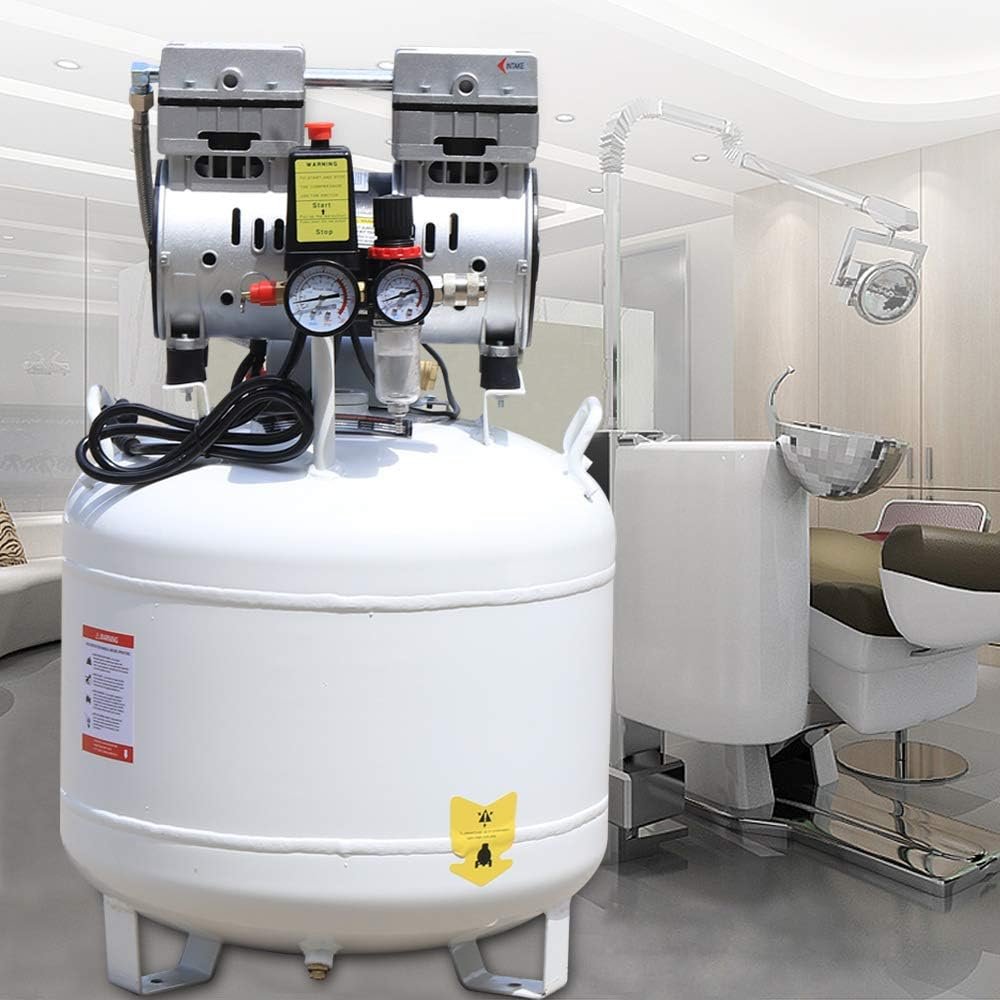

Overall Impression of the 40L Oil-Free Air Compressor
We see this 40L Air Compressor Oil Free 110V (36 Gal/min, peak 8 psi) as a purpose-built, compact solution for tasks that need clean, quiet, and consistent air. It is clearly designed for medical, dental, and light professional environments, but it can also fit into small workshops, studios, and home labs.
What stands out for us is the combination of an oil-free pump, a steel storage tank, noise reduction features, and an auto drain valve. These features together give us a machine that is easier to live with day to day, especially when we care about a clean environment and minimal disturbance.
Key Specifications and What They Mean for Us
Before we go deeper into usability, it helps to look at the primary specs and translate them into everyday performance. When we understand the numbers, it becomes easier to see if this compressor fits our needs.
Core Specs at a Glance
We often see compressors listed with a pile of technical data. To make sense of this one, we summarized the most important points in a simple table.
| Feature | Detail / Spec | What It Means for Us |
|---|---|---|
| Tank Capacity | 40L (approx. 10.5 gallons) | Enough air storage for short bursts and light continuous tasks |
| Air Volume | 36 Gal/min (approx. 4.8 CFM) | Suitable for light-duty tools and medical/dental equipment |
| Peak Pressure | 8 psi (low-pressure, high-volume style) | Great for devices that do not need high pressure but need steady flow |
| Voltage | 110V | Ready for standard North American household or office outlets |
| Pump Type | Oil-free | Cleaner air, less maintenance, no oil changes |
| Tank Material | Steel | Durable, long-lasting storage tank |
| Noise Control | Air filter silencer + quiet pump design | Lower operating noise, better for clinics and offices |
| Auto Drain Valve | Automatic condensate drainage | Reduced need for manual draining and better long-term tank health |
| Protection | Electromagnetic valve + pressure switch | Added safety and protection for the motor |
| Use Cases | Den-tistry, me-dical equipment, lab and light duty | Designed with clean, quiet professional environments in mind |
We appreciate that the design leans toward reliability and hygiene rather than brute force. This is not meant to be a heavy-construction or high-pressure shop compressor; it is built for clean, controlled environments.
Design and Build Quality
We like to look at build quality not just as how it feels out of the box, but how it is likely to hold up after months or years of use. With this unit, the emphasis on a steel tank and solid electrical components suggests durability.
Steel Tank and Compact Footprint
The 40L steel tank gives us a reasonable amount of stored air while keeping the overall footprint manageable. Steel construction usually offers better strength and resilience than cheaper materials, especially when we are dealing with pressurized air over long periods.
We find the balance between tank volume and physical size works well for clinics, office rooms, small shops, and home workbenches. It is not a huge industrial floor unit, which makes placement far easier.
Oil-Free Pump Construction
The oil-free pump is one of the core design choices here. Instead of using lubricating oil in the compression chamber, this pump uses materials and coatings that operate without oil contamination.
This matters for us in two big ways: maintenance is simpler because there is no oil to check or change, and the air output is cleaner, which is especially desirable in dental and medical environments or any application involving breathing zones or clean tools.
Noise Level and the Air Filter Silencer
Noise is often the deciding factor when we are putting a compressor in a working environment with patients, clients, or colleagues. That is where the air filter silencer comes into play.
How the Air Filter Silencer Helps
The built-in air filter silencer is engineered to reduce the noise made by the intake of air. When an air compressor runs, a lot of the sound we hear comes from the air moving rapidly through the intake; by filtering and muffling this, the overall operating noise goes down.
We also benefit from a high-efficiency filter, which means cleaner intake air and less contamination reaching the internals of the compressor. At the same time, the design keeps flow resistance low, so we do not sacrifice performance just to reduce noise.
Low-Maintenance Air Filtration
Another positive is that the filter is described as essentially maintenance-free. Instead of frequent cleaning or replacement, the design aims to maintain efficiency over time with minimal intervention from us.
For us, this means we spend less time fussing with filter elements and more time just turning the compressor on and using it without second thoughts. In a busy practice or workshop, that reduction in routine tasks matters.
Motor Protection and the Electromagnetic Valve
One of the most critical aspects of compressor reliability is how well the motor is protected. Unexpected shutdowns, power interruptions, and pressure spikes can shorten the life of a motor if it is not properly managed.
Role of the Electromagnetic Valve
The electromagnetic valve functions as a protective component that reacts to sudden power cuts or abnormal conditions. When power is interrupted, the valve helps prevent harmful back-pressure or rapid, uncontrolled changes that might damage the motor.
From our perspective, it is like a safety gate for the compressor’s heart. It reduces the stress placed on the motor over repeated start-stop cycles and unpredictable electrical events, which should translate into longer service life.
Longer Life and More Consistent Performance
Because the motor does not have to fight against locked pressure or abrupt flow changes after power restoration, it can restart more smoothly. Over time, that reduced strain can lead to fewer breakdowns, fewer overheating incidents, and more predictable performance.
We like that this safety-focused design decision is clearly meant to support professional users who cannot afford frequent equipment failure or downtime.
Power Switch and User Control
The power switch on this compressor is described as an “enhanced vertical switch.” It may sound like a small detail, but convenient and clear power control is crucial for safety and usability.
How the Power Switch Works
The switch is designed to be easy to start and stop, with a push-style control: unplug or lift it to open (on), press it to close (off). This vertical design often feels intuitive and reduces accidental activation.
We also appreciate that the instructions specifically tell us what to do after a sudden power failure: ensure the pressure switch button is in the off state before restarting. This reminds us to reset the system safely rather than letting it attempt to restart under unknown conditions.
Safety Habits and Good Operating Practice
Using the pressure switch properly is a simple step, but it makes a big difference. By turning the switch off after a power loss and then starting again once everything is stable, we help protect the compressor, the motor, and the attached equipment.
We like that the design encourages safe habits rather than leaving us to guess what the correct restart sequence should be.
Heat Management and Large-Caliber Heat Dissipation
Heat is one of the main enemies of any electric motor or compressor. Effective heat dissipation can significantly influence performance, reliability, and the safe duty cycle of the machine.
Why Large-Caliber Heat Dissipation Matters
The compressor uses a large-caliber heat dissipation design, which essentially means more surface area and better airflow around the areas that get hot. By allowing heat to escape quickly, the compressor is less likely to overheat during continuous or repeated use.
For us, this means we can work with more confidence that the unit will maintain efficiency during longer sessions, without slowing down or triggering a thermal safety cut-off too quickly.
Better Efficiency During Operation
When heat is managed well, the compressor does not need to struggle or run under high thermal stress. That helps maintain consistent output capacity and pressure, and it may also reduce the need for extended cooling pauses between cycles.
We appreciate that this focus on cooling works hand in hand with the motor protection features, giving us a system that is designed to be safe, powerful enough for its intended uses, and long-lasting.

Auto Drain Valve and Moisture Management
Any compressor that stores air in a tank will accumulate moisture. If that moisture is not managed, it can lead to rust, contamination, and even reduced performance of tools or medical devices connected to it.
Benefits of the Auto Drain Valve
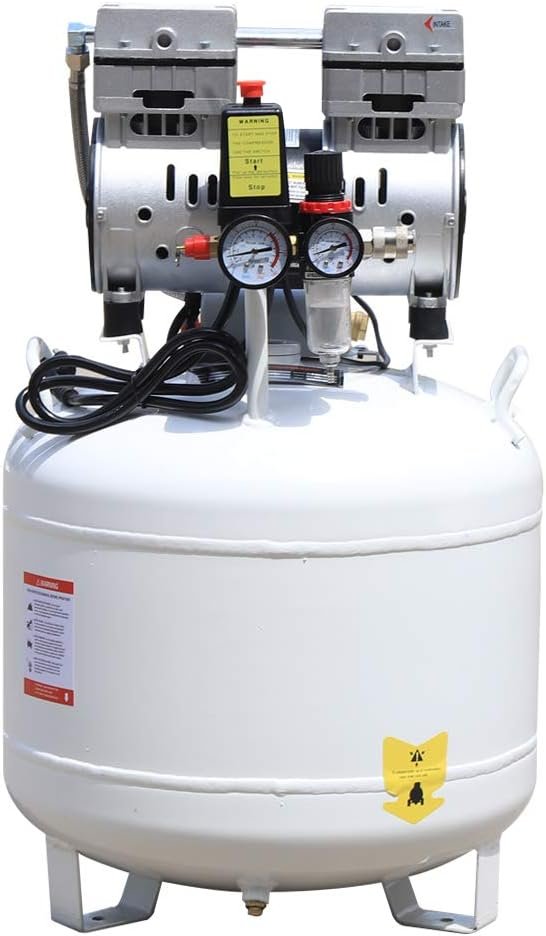
The built-in auto drain valve is a big convenience feature. Instead of us having to remember to manually open a drain at the bottom of the tank regularly, the compressor can automatically evacuate condensed water as needed.
This helps keep the inside of the steel tank drier over time, which is essential for durability. It also helps ensure that the air heading out to our devices is less contaminated with water droplets.
Reduced Maintenance and Improved Air Quality
From a daily-use perspective, an auto drain valve means one less task on our checklist. We can trust that moisture is being handled without constant manual intervention, which is very helpful in busy clinics or shops.
We also gain better peace of mind that our lines and equipment are not taking on extra moisture, which can interfere with the function of some medical and dental tools as well as airbrushes and sensitive instruments.
Oil-Free Operation and Clean Air Output
Oil-free compressors are often chosen specifically because of the quality of the air they deliver. This is particularly important wherever hygiene and cleanliness are priorities.
Why an Oil-Free System Is Valuable
An oil-free design means that oil is not used inside the compression chamber. That eliminates the risk of oil mist or vapors getting into the output air. For dental and medical equipment, this is extremely important; we do not want oil residue reaching patients, tools, or sterile environments.
It also means we do not have to manage oil levels, track oil change schedules, or worry about oil leaks. These may seem like small issues, but when added together, they can significantly reduce ongoing maintenance demands.
Consistency for Medical and Dental Applications
In environments like den-tistry or me-dical labs, consistent, clean air is part of safe operation. Hygiene protocols often depend on equipment that does not introduce contaminants.
We see this oil-free design as central to the product’s suitability in those fields. Clean air supports both patient safety and the longevity of delicate instruments that are not designed to handle oil-laden air.
Real-World Use Cases and Suitability
It helps to picture specific situations where this compressor fits naturally, so we can judge whether it lines up with what we want to do.
Dental and Medical Environments
Here, the combination of oil-free operation, quiet performance, clean air filtration, and moisture control is exactly what makes this unit appealing. Many dental chairs, suction systems, and other equipment require low-to-moderate pressure but extremely clean, dry, oil-free air.
We can set this compressor in a back room or equipment area and run lines to the chairs or tools, confident that noise and contamination are minimized. Its protective and cooling features also support continuous daily use, which is typical in clinics.
Small Workshops, Studios, and Home Use
Although it is clearly targeted at professional medical and dental fields, we can also see this compressor being a good fit for home workshops, maker spaces, or studios where quiet is appreciated. For example:
- Airbrushing and painting
- Light pneumatic tools that run on lower pressure
- Cleaning delicate parts with gentle air flow
- Running lab or testing equipment that needs clean air
We do need to remember the peak pressure is around 8 psi, which is lower than many conventional shop compressors that run at 90–120 psi. This means it is not designed for heavy-impact wrenches, high-pressure nail guns, or industrial machinery.
Ease of Use and Day-to-Day Operation
A compressor like this becomes part of our daily routine, so usability makes a big difference to overall satisfaction.
Simple Start-Up and Operation
Thanks to the enhanced vertical power switch and clear guidance on restarting after power interruptions, we have a straightforward operating experience. Plug it into a 110V outlet, ensure the switch is in the correct state, and we are ready to use it.
Most of the key tasks—like moisture drainage and intake silencing—are already integrated into the design, so there is very little we need to do aside from normal safety checks.
Maintenance Tasks We Should Expect
While the unit is designed to be low-maintenance, no compressor is completely maintenance-free. Over the long term, we should:
- Periodically check connections and hoses for leaks
- Verify that the auto drain is functioning correctly
- Keep the unit in a clean, ventilated area for proper cooling
- Inspect the filter area occasionally for dust or blockage
These are relatively minor tasks, and they align with how we would treat any equipment we plan to rely on.
Performance and Practical Limitations
Understanding both what this compressor does well and what it is not intended for helps us avoid disappointment or misuse.
Where It Performs Best
We find it most suitable in these scenarios:
- Clean, quiet environments: clinics, labs, offices
- Low-pressure, steady-flow applications
- Operations that value low noise more than extreme power
- Use cases where oil contamination is unacceptable
In those settings, the combination of noise control, oil-free performance, auto draining, and motor protection translates into a durable, trustworthy air supply.
Where It May Not Be Ideal
Because the peak pressure is around 8 psi, this is not a replacement for a high-pressure industrial compressor. If we are planning to:
- Run automotive impact tools
- Operate heavy-duty framing nailers
- Sandblast surfaces
- Power large pneumatic machinery
Then we are likely to find this compressor underpowered. It is better suited to the medical/dental and light-duty niche it was designed for.
Safety Features and Peace of Mind
Whenever we work with compressed air and electric motors, safety should be at the front of our minds. This model offers a few helpful features in that regard.
Built-In Motor and System Protection
The electromagnetic valve stands out as a key protector, but it is working in tandem with:
- Pressure switch controls
- Sensible start/stop design
- Heat dissipation features
Together, these reduce the chance of overheating, damaging restart events, or unexpected pressure behavior that might put strain on the system.
Recommended Safe Practices
Even with good built-in safety, we should always:
- Use properly rated air hoses and fittings
- Keep the compressor on a stable, level surface
- Avoid overloading electrical circuits
- Follow manufacturer guidelines for duty cycle and rest periods
When we treat the compressor as a piece of professional equipment and follow safe operating habits, we get the best performance and longevity out of it.
Installation and Placement Considerations
Where we put the compressor and how we connect it can strongly affect our experience.
Choosing the Right Location
Because this compressor is quiet compared to many traditional units, we have more flexibility in where we place it. Still, we should choose a spot that:
- Has decent ventilation, so heat can escape
- Is relatively clean and free from heavy dust
- Provides enough room around it for airflow and access
- Is close to a suitable 110V power outlet
For medical and dental use, an equipment room, closet, or dedicated corner of a back office often works well, as long as ventilation is adequate.
Connecting to Our Equipment
Once the compressor is in place, we can run air lines to the devices that need it. For clinics, that may be chair units or integrated tools; for small workshops, that might be a small manifold or quick-connect station.
We just need to ensure hoses and fittings are compatible with the pressure and air volume, and that we keep line lengths reasonable to reduce pressure drop.
Customer Support and After-Sales Service
When investing in a compressor, we want to know help is available if something goes wrong or if we have questions.
Responsive Support
The product description emphasizes that if we have any questions about the purchased product, we can contact support and expect a response within 24 hours. That kind of responsiveness is important, especially in professional environments where downtime must be minimized.
We see this as a reassuring sign that the manufacturer understands the needs of medical and dental users, who rely on consistent equipment uptime.
Value of Good After-Sales Backing
With something like an air compressor, parts, guidance, and troubleshooting support can make the difference between a minor hiccup and an expensive replacement. Knowing that questions will be answered promptly helps us feel more comfortable choosing a unit for long-term use.
Pros and Cons Summary
To help us decide quickly whether this model aligns with our needs, it helps to list the main strengths and limitations in one place.
What We Like About This Compressor
We see several clear advantages:
- Oil-free pump for clean air and low maintenance
- Quiet operation supported by an air filter silencer
- Steel tank construction for durability
- Auto drain valve to manage moisture without constant manual effort
- Electromagnetic valve to protect the motor from power issues
- Large-caliber heat dissipation to support cooler, efficient operation
- User-friendly power switch for easy and safe control
- Designed for den-tistry and me-dical environments, where clean, quiet air is essential
- 110V compatibility, suitable for standard outlets
Taken together, these features make this compressor a strong candidate for clean, controlled, and professional indoor spaces.
Potential Downsides to Keep in Mind
There are also some limitations we should be aware of:
- Low peak pressure (around 8 psi) makes it unsuitable for high-pressure industrial tools
- Niche focus means it is not a universal replacement for all shop compressors
- Dependence on proper installation and ventilation for best performance
If our tasks require extremely high pressure or heavy-duty pneumatic power, we may need a different type of compressor. However, for its intended applications, the design choices make sense.
Who This Compressor Is Best For
Choosing any piece of equipment is easier when we match it to clear user profiles. This compressor particularly suits a few types of users.
Ideal Users and Environments
We see it as a strong fit for:
- Dental clinics needing quiet, oil-free compressed air for chairs and instruments
- Medical and laboratory environments where clean, dry air is important
- Small studios and labs using airbrushes, light equipment, or testing devices
- Offices or small workrooms that require low-noise operation and reliable air flow
In these spaces, its low noise, oil-free air, and auto-drain convenience make daily use straightforward and comfortable.
Users Who May Need a Different Option
On the other hand, we might want a different compressor if we:
- Run a heavy mechanical workshop with impact wrenches and high-pressure tools
- Need a portable, battery-powered solution for field work
- Require very high PSI (e.g., sandblasting or large-scale industrial uses)
In such cases, a more traditional high-pressure or industrial compressor would be more appropriate.
Final Thoughts: Is the 40L Oil-Free Air Compressor Right for Us?
Putting everything together, we see the “40L Air Compressor Oil Free 110V, 36 Gal/min Air Volume, Peak 8 psi Air Compressor Small Air Pump, Steel Tank Electric Air Compressor Noiseless with Auto Drain Valve, Den-tistry Me-dical Equipment” as a specialized but very practical solution.
For us, the main strengths are:
- Oil-free, clean operation ideal for medical and dental environments
- Quiet performance thanks to the air filter silencer
- Built-in protections like the electromagnetic valve and effective cooling
- Convenient features like the auto drain valve and user-friendly power switch
- Durable steel tank and design aimed at consistent daily use
If our primary needs revolve around quiet, clean, low-pressure air—especially in clinical, dental, or lab settings—this compressor aligns very well with those requirements. It is not a heavy-duty industrial powerhouse, but that is not what it aims to be.
We would choose this model when we want a dependable, hygienic, low-maintenance air source that fits comfortably into professional indoor spaces and supports our work without adding noise, mess, or complicated upkeep.

Disclosure: As an Amazon Associate, I earn from qualifying purchases.