Have we been searching for a serious, shop-ready air compressor that actually keeps up with our tools instead of slowing us down?

What Is the DeWalt DXCM201 20 Gal. 200 PSI Air Compressor?
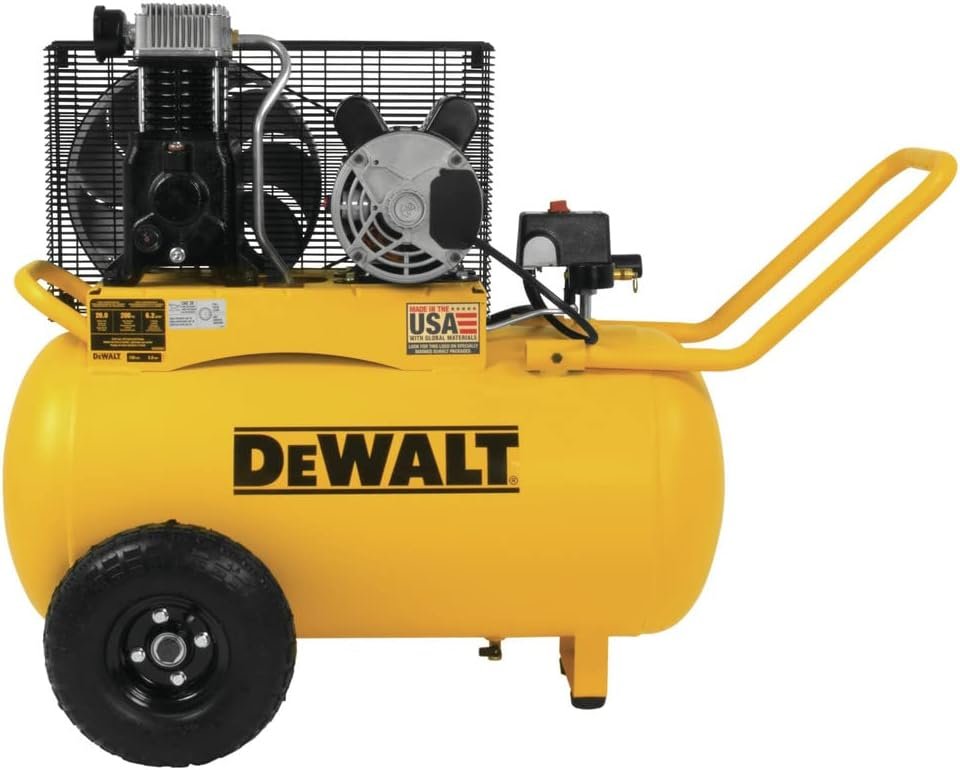
When we look at the DeWalt DXCM201, we’re looking at a 20-gallon, 200 PSI, oil-lubed, belt-drive electric air compressor that’s clearly aimed at serious DIYers, small shops, and light professional use. It isn’t a tiny portable unit, and it isn’t a huge stationary shop compressor either—it lands right in that sweet spot of power, portability, and durability.
This compressor combines a high maximum pressure, solid air delivery, and quieter operation than many direct-drive units. It’s built around a 2-stage performance design, which means we get more efficient compression and longer run times for our air tools.
Key Specifications and Features at a Glance
Sometimes it helps to see the main specs in one place. This way we can quickly decide if this compressor fits our kind of work or not.
| Feature | Specification / Benefit |
|---|---|
| Tank Size | 20 gallons |
| Maximum Pressure | 200 PSI |
| Air Delivery | 6.2 SCFM at 90 PSI |
| Pump Type | Oil-lubed, belt-drive |
| Performance | 2-stage performance (industry leading for this size) |
| Noise Level | 78 dBA (quieter than many direct-drive oil-free compressors) |
| Mobility | 10 in. heavy-duty pneumatic wheels |
| Regulator & Coupler | High-flow design for maximum air delivery to tools |
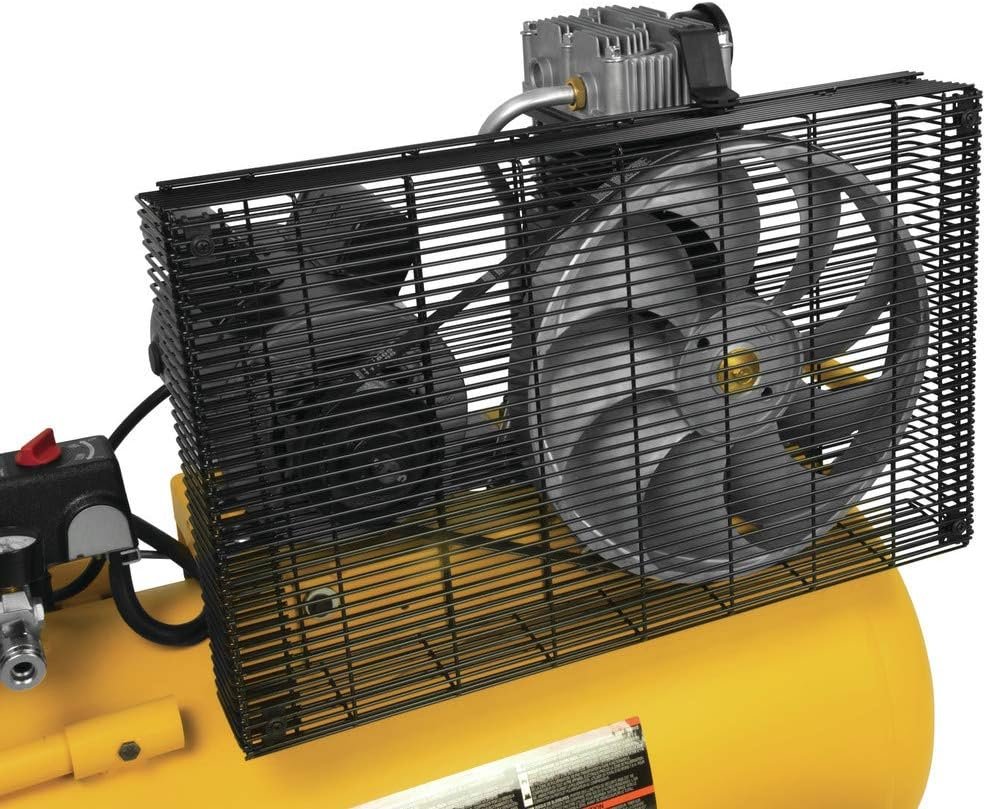
| Flywheel | High-efficiency aluminum flywheel (better air flow and lower start-up amps) |
| Pump Components | Aluminum head and valve plate; precision automotive-style pistons; superior O-ring seals |
| Intended Use | Shop, garage, and job site applications requiring more run time and higher pressure |
These specs set the tone for how this compressor performs in real-world tasks—from running impact wrenches and ratchets to spraying, grinding, and inflating.
Performance: How Does the DeWalt DXCM201 Actually Work in the Shop?
We care most about one thing: performance under real working conditions. This unit is designed around a 2-stage performance system and a high maximum PSI, so we’re not constantly waiting on the tank to refill.
DeWalt claims 53% longer tool run time compared with 20-gallon belt-drive compressors that top out at 155 PSI. In practice, that means our tools keep running longer before the compressor has to cycle, and when it does, it recovers efficiently and keeps our workflow moving.
200 PSI Maximum Pressure: Why It Matters
We might ask ourselves, “Do we really need 200 PSI?” In many cases, the answer is yes—especially if we’re using higher-demand tools or working in bursts where pressure drop can be a problem.
Running at up to 200 PSI lets the compressor store more energy in the same 20-gallon tank. That higher pressure provides a couple of advantages:
- We get longer continuous use before the pressure drops to the cut-in level.
- Our tools see steadier performance because the system isn’t hovering on the edge of under-supplying air.
Compared to a 155 PSI unit of the same size, we can feel the difference in how long our impact wrench or die grinder keeps full power before the compressor kicks back on.
6.2 SCFM at 90 PSI: Matching Tools to Airflow
The 6.2 SCFM at 90 PSI rating is a key number. Most air tools list their requirements at 90 PSI, so this tells us what we can reasonably run.
With 6.2 SCFM, we can comfortably operate a variety of tools, including:
- Impact wrenches (especially 3/8″ and many 1/2″ models)
- Air ratchets
- Finish nailers and framing nailers
- Blow guns and inflators
- Light to moderate duty grinders and sanders
- Some paint guns, depending on their SCFM requirements
Continuous-duty sanders or large HVLP spray guns that require very high SCFM might push this compressor closer to its limits. For intermittent or moderate-duty use, though, 6.2 SCFM at 90 PSI is very workable.
2-Stage Performance and Belt-Drive Design
The 2-stage performance and belt-drive design work together to give us an efficient and durable compressor that doesn’t feel strained under load. This is part of why we’d consider this model a step up from basic homeowner units.
What 2-Stage Performance Means for Us
In compressor terms, 2-stage performance means the air is compressed in two steps rather than only once. In practical terms, we see benefits like:
- Higher maximum pressures without excessive heat
- More efficient compression and better performance per unit of power
- Longer life because the compression workload is shared in stages
Even though this is a 20-gallon portable unit, the 2-stage performance puts it closer in spirit to more serious shop compressors, instead of the simple hobby-level models.
Belt-Drive vs Direct-Drive: Why It’s a Big Deal
This compressor uses a belt-drive system, not a direct-drive motor. That comes with a few benefits:
- Reduced vibration: The belt helps isolate the motor from the pump.
- Longer life: The pump can be optimized for durability rather than compactness alone.
- Quieter operation: Belt-drive units generally make less harsh mechanical noise.
Direct-drive oil-free compressors are often louder, more disposable, and less smooth. Here, the belt-drive system contributes significantly to the overall quieter and more robust feel of the DXCM201.

Noise Level: Working at 78 dBA
Noise matters a lot when we’re working in a garage or small shop. With a 78 dBA rating, this compressor is significantly quieter than many direct-drive models, which often climb into the mid-80s or even 90 dBA range.
What 78 dBA Feels Like in Real Use
While we still know the compressor is running, the sound is more of a steady mechanical hum rather than a harsh, rattling roar. We can often carry on a conversation in the shop without shouting, and if we’re using hearing protection already for other tools, the compressor’s sound doesn’t feel overwhelming.
The reduced noise level is not just a comfort issue; it also makes it more feasible to use this unit in a home garage without immediately annoying everyone around us.
Build Quality and Durability
When we invest in a compressor at this level, we’re really paying for reliability over time. The DeWalt DXCM201 leans heavily into build quality, from its pistons to its seals.
Precision Automotive-Style Pistons
DeWalt uses precision automotive-style pistons in this compressor, which gives us:
- Better balance and smoother operation
- Reduced internal wear and tear
- More stable performance under continuous cycling
The automotive-style design hints at tighter tolerances and a pumping action that doesn’t feel rough or uneven. Over years of use, this can mean fewer issues like excessive vibration, noisy operation, or mechanical failure.
Aluminum Head and Valve Plate
The head and valve plate are made from aluminum, which is ideal for:
- Maximizing heat dissipation
- Reducing weight compared with full cast-iron components
- Keeping operating temperatures more under control during extended use
Lower temperatures help with both performance and longevity. Heat is the enemy of compressor pumps, and good heat dissipation is essential if we’re going to run our compressor frequently.
Superior O-Ring Seals
Oil-lubed compressors often suffer from small leaks over time, especially around fittings and seals. DeWalt uses superior O-ring seals to combat this:
- Less chance of annoying oil drips under the unit
- More stable lubrication levels over the life of the compressor
- Reduced mess around the shop floor and tank base
That may sound like a small detail, but anyone who has dealt with a slowly seeping compressor knows how frustrating that can be in daily use.
Oil-Lubed Pump: Pros and Responsibilities
The DXCM201 is an oil-lubed compressor, which does require some maintenance, but in return offers better durability and smoother operation.
Advantages of an Oil-Lubed System
With oil lubrication, we generally see:
- Longer pump life under heavy or frequent use
- Smoother, quieter mechanical action
- Better cooling and less friction in the pump
If we’re using our compressor frequently for automotive work, woodworking, or job site tasks, the oil-lubed design is usually a better choice than a small oil-free unit.
Maintenance We Need to Plan For
We do have to stay on top of maintenance for an oil-lubed compressor:
- Check oil level regularly
- Change oil according to the manual’s recommended intervals
- Make sure we use the correct type of compressor oil
- Drain the tank of condensed moisture to prevent rust
These are routine tasks, but we should be honest with ourselves—if we don’t want to deal with basic upkeep, this might not be our ideal style of compressor. For those of us comfortable with regular maintenance, the trade-off in longevity and performance is worth it.
Portability and Design for Movement
Even though this is not a tiny pancake compressor, the DXCM201 is still very much designed with mobility in mind. The combination of a 20-gallon tank with heavy-duty wheels makes it easier to navigate around different work areas.
Heavy-Duty 10-Inch Pneumatic Wheels
The 10-inch pneumatic wheels are a major benefit when we need to roll the compressor around:
- They handle cracks, cords, and rough shop floors better than small plastic casters.
- They make it easier to move the compressor from the garage to the driveway or across a job site.
- Pneumatic tires provide some shock absorption, reducing vibrations transmitted from the ground to the unit.
For any of us who often reposition our compressor during work, wheel design is not a trivial detail—it can be the difference between a smooth workflow and a constant hassle.
Balanced Layout and Handle Design
The compressor is laid out to keep the weight balanced around the wheel axle. This helps when we tilt the unit back to move it, as it doesn’t feel as if it’s going to tip over or twist unexpectedly.
The handle and overall shape give us decent control during movement. We still know we’re handling a substantial piece of equipment, but it’s not unwieldy in the way some tall, narrow compressors can be.
Air Delivery: Regulator, Coupler, and High-Flow Design
The air that the pump generates only helps if it actually reaches our tools efficiently. DeWalt includes a high-flow regulator and coupler to make sure we’re not bottlenecking performance at the outlet.
High-Flow Regulator
The high-flow regulator is designed to:
- Maintain consistent downstream pressure under load
- Reduce pressure drop when tools cycle on and off
- Provide a more responsive adjustment when switching between different tools
With some cheaper compressors, we might notice a lag or sag in pressure when pulling the trigger on higher-demand tools; a high-flow regulator reduces those issues and helps keep tool performance more consistent.
High-Flow Coupler
The high-flow coupler works hand-in-hand with the regulator:
- Allows more air to pass through the connection
- Minimizes restriction at the fitting
- Helps us get closer to the full 6.2 SCFM capability
For many of us, upgrading to high-flow fittings and couplers across our hoses and tools can noticeably improve tool performance. Having the compressor itself already set up for higher flow is a smart starting point.
Efficiency and Electrical Considerations
The efficiency of the DeWalt DXCM201 shows up not just in its performance but also in how it starts and runs in a typical shop environment.
High-Efficiency Aluminum Flywheel
The aluminum flywheel is more than just a cosmetic feature; it helps with:
- Improved air flow over the pump for cooling
- Lower start-up amperage by providing smoother rotational inertia
- Reduced weight compared with heavier iron flywheels
This is especially helpful if we’re using the compressor on typical 120V circuits where start-up current spikes can trip breakers. A more efficient start reduces the likelihood of nuisance trips.
Start-Up and Power Needs
While the exact motor specifications and voltage requirements depend on the version and local configuration, we should treat this as a serious, higher-demand electric tool. We’ll want:
- A properly rated circuit
- Minimal use of long, undersized extension cords
- Attention to circuit sharing with other high-draw tools
If we set it up on a dedicated or lightly loaded circuit, we’re far more likely to enjoy trouble-free operation.
Real-World Uses: What Can We Actually Do With It?
We can own an impressive compressor on paper, but what really matters is how it performs in the tasks we care about. The DXCM201 is well-suited for a variety of shop and garage projects.
Automotive and Mechanical Work
For vehicle work, this compressor fits nicely into the role of primary shop unit:
- Impact wrenches: It can handle most lug nut removal and suspension work with a 3/8″ or many 1/2″ impacts.
- Ratchets and drivers: Great for assembly and disassembly tasks where air tools speed up repetitive work.
- Blow guns: Perfect for cleaning parts, filters, or work surfaces.
The 200 PSI capacity and decent SCFM help reduce pressure drops when using tools in quick succession. We get more “on-time” between cycles, which is noticeable when buzzing off multiple fasteners.
Woodworking and Construction
In a small shop or on a job site, we can cover a lot of ground:
- Nailers and staplers: Run framing, finish, brad, and roofing nailers without difficulty.
- Sprayers: Handle many paint and finish guns, especially for intermittent or moderate-duty projects.
- Random orbital sanders: For short bursts or moderate use, the compressor can manage light sanding tasks.
For continuous heavy sanding or large-scale spraying, we might want even more air volume, but for typical remodeling, furniture building, or trim work, this unit holds its own.
General Household and Shop Tasks
Even outside heavy-duty work, the compressor proves useful:
- Inflating tires for cars, trucks, trailers, and bikes
- Running air blowers for cleaning dust and debris
- Powering small grinders or cut-off tools for shorter tasks
Because it’s quieter and reasonably mobile, we can keep it in the garage and roll it where we need it without too much trouble.
Pros and Cons Summary
To get a clear picture, it helps to consider the main strengths and potential drawbacks side by side.
Advantages We Appreciate
- High maximum pressure (200 PSI): Provides longer run times vs 155 PSI compressors.
- Solid air delivery (6.2 SCFM at 90 PSI): Supports a wide range of air tools within a 20-gallon format.
- Quieter operation (78 dBA): Easier on our ears and more pleasant for garage work.
- Oil-lubed, belt-drive pump: Generally more durable and smoother than direct-drive oil-free designs.
- Precision automotive-style pistons: Better balance and reliability.
- High-flow regulator and coupler: Helps us get the most from the compressor’s capability.
- Aluminum head and valve plate: Improved heat dissipation for longevity.
- Superior O-ring seals: Reduces oil leaks and mess.
- 10-inch pneumatic wheels: Enhanced portability across a variety of surfaces.
- Efficient aluminum flywheel: Better cooling and reduced start-up amp draw.
Trade-Offs and Considerations
- Regular maintenance required: Oil checks, oil changes, and tank draining are not optional.
- Heavier and larger than small portable units: Not ideal for quick, ultra-light tasks where a tiny compressor would suffice.
- SCFM still moderate for industrial use: Heavy continuous-use tools may still stretch its capability.
- Likely 120V/15–20A considerations: We should treat it like any high-draw tool and plan circuits accordingly.
If we’re expecting the power of a large stationary 60 or 80-gallon shop compressor, we’ll be asking too much. But within the 20-gallon class, this unit offers a strong combination of pressure, performance, and durability.
Who Is the DeWalt DXCM201 Best Suited For?
Matching the tool to the user is crucial. The DXCM201 shines for certain types of users and might be overkill or underpowered for others.
Ideal Users
We are good candidates for this compressor if:
- We run air tools regularly in a garage or small shop.
- We want more than a tiny homeowner unit but don’t have the space or need for a massive stationary compressor.
- We appreciate quieter operation and better build quality.
- We don’t mind performing basic maintenance like oil changes and tank draining.
- We need good mobility while still retaining serious performance.
This describes a lot of auto enthusiasts, serious DIYers, small contractors, and tradespeople who want a strong portable compressor without going fully industrial.
Who Might Want Something Else
We might prefer a different type of compressor if:
- We only need air occasionally for inflating tires and blowing dust; a small pancake compressor might be sufficient.
- We run high-SCFM, continuous-use tools all day long; a larger stationary unit could be more appropriate.
- We aren’t inclined to maintain an oil-lubed system and just want “plug and forget” operation; in that case, an oil-free model (with its trade-offs) might make more sense.
Understanding our own needs and work style helps us decide whether the DXCM201 is an optimal choice or more than we truly require.
Long-Term Ownership and Reliability
When we think beyond the first few uses, we want a compressor that remains consistent and dependable over years. The design details on the DXCM201 point toward long-term reliability when properly maintained.
Durability-Focused Components
The combination of:
- Automotive-style pistons
- Aluminum head and valve plate
- Quality O-ring seals
- Belt-drive design
- Efficient cooling via aluminum flywheel
all speak to a compressor that’s not just built to hit impressive numbers out of the box, but to keep delivering them after many hours of operation.
Maintenance Practices That Keep It Strong
To make the most of this design, we should:
- Check and change the oil at the intervals recommended in the manual.
- Drain condensation from the tank regularly to prevent internal tank rust.
- Keep an eye on fittings and hoses for leaks.
- Ensure adequate ventilation around the compressor during use so heat can dissipate properly.
If we treat it as a key piece of shop equipment rather than a disposable tool, we’re far more likely to enjoy solid service life and consistent performance.
User Experience: Day-to-Day Living With the DXCM201
Owning a compressor is about more than specs; it’s about how it feels to use it regularly. This model aims to make daily use as smooth as possible, especially in a home or small shop environment.
Setup and First Use
Setting up usually involves:
- Positioning the compressor on a flat, stable surface.
- Connecting the electrical plug to a suitable outlet.
- Installing air fittings and hoses as needed.
- Filling or verifying oil level according to the manual.
- Running an initial break-in procedure if required.
Once that’s done, adjusting the regulator for our tool, connecting our hose, and starting the compressor become quick, routine steps.
Living With the Noise and Size
In daily use, the 78 dBA noise level and moderate footprint feel manageable. We still know this is a serious machine, but it doesn’t dominate the garage the way a huge stationary unit can, nor does it scream like many smaller direct-drive models.
For many of us, the balance of performance, noise level, and mobility feels right for a shop that needs real capability but isn’t operating as a huge industrial facility.
Comparing It to Typical 20-Gallon, 155 PSI Compressors
Since DeWalt highlights the comparison with 155 PSI units, it’s worth summarizing what we gain with the DXCM201.
Longer Run Time and Better Tool Feel
With 200 PSI versus 155 PSI, we get:
- Roughly 53% longer tool run time between cycles (as claimed by DeWalt).
- Better performance under sustained or repeated use of higher-demand tools.
- Fewer moments where we’re waiting for the compressor to catch up.
The difference is noticeable if we’re doing extended mechanical work or using tools in quick bursts. Instead of dealing with frequent pressure dips, we enjoy more continuous, confident operation.
Higher-End Construction and Noise Reduction
Compared with many typical 20-gallon units, we also see:
- Quieter operation, making the compressor more pleasant to be around.
- More robust internal components and sealing.
- A focus on durability and balanced operation rather than minimal initial cost.
If we value a quality feel and quiet power over rock-bottom price, the DXCM201 makes a strong argument in its favor.
Final Thoughts: Is the DeWalt DXCM201 the Right Compressor for Us?
When we take everything into account, the DeWalt DXCM201 20 Gal. 200 PSI Oil LUBED Belt Drive Electric Air Compressor presents itself as a substantial step above basic homeowner compressors while still remaining compact and portable enough for garages and job sites.
We get:
- High pressure and solid SCFM for longer, stronger tool performance.
- A quieter, smoother-running belt-drive, oil-lubed pump.
- Durable components like precision pistons, aluminum head and valve plate, and superior O-ring seals.
- Good mobility with 10-inch pneumatic wheels and a practical design.
- A high-flow regulator and coupler that help unlock the unit’s full potential.
In our view, this compressor fits best in the hands of users who care about build quality, expect to use air tools regularly, and are willing to perform basic maintenance. For that group, it delivers an impressive mix of power, durability, and usability that can anchor a serious home shop, small business, or job site setup for years.

Disclosure: As an Amazon Associate, I earn from qualifying purchases.